Why forage comes first
Every other variable in bass fishing — temperature, oxygen, pressure, light, structure — matters because it changes where forage goes and how vulnerable it becomes. Wind doesn't pull bass shallow directly; it pushes shad shallow, and bass follow. Cold fronts don't move crawfish directly; they make craws bury in the rocks, and bass shift accordingly. If you understand the forage, the bass position itself becomes obvious. This pillar sits alongside the weather guide and structure guide as the three drivers behind every pattern.
Shad: the default southern forage
In most southern reservoirs and large mid-Atlantic lakes, threadfin and gizzard shad are the dominant forage species. They school in massive numbers, suspend in open water, and migrate seasonally — and bass behavior follows them step for step.
- Threadfin shad: typically 2 to 4 inches, schooling near the surface, intolerant of cold water (the reason for shad die-offs every winter). Match with small swimbaits, jerkbaits, and underspins.
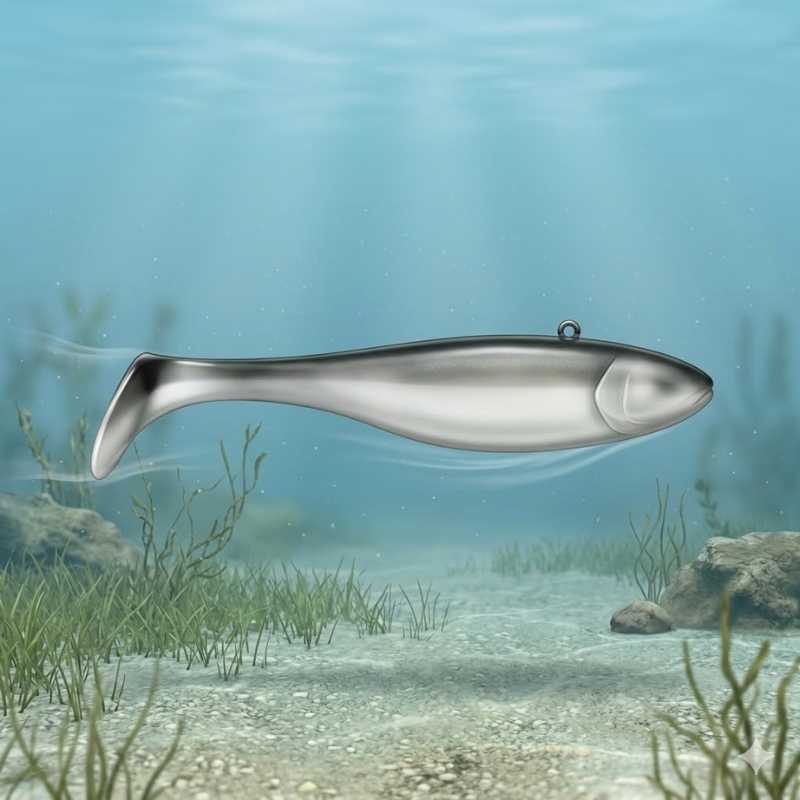
- Gizzard shad: grow much larger (6 to 12+ inches), tougher, and tolerate colder water. Match with full-sized swimbaits, big spinnerbaits, and glide baits when targeting trophy bass.
The shad calendar drives bass patterns: spring shad spawn against hard cover (full pattern here), summer schooling in open water near thermocline edges (thermocline positioning), fall migration into creek arms (fall bait guide), and winter die-offs that fuel jerkbait fishing.
Wind concentrates shad against windward banks — see wind, shad, and ambush zones. Their depth migrates with the season and the thermocline — the baitfish depth migration guide covers exactly when they push up or down. The threadfin vs gizzard comparison walks through how to tell them apart and what each tells you about bait size to throw.
Bluegill: the year-round cover forage
Bluegill (and other sunfish — pumpkinseed, redear, green sunfish) are the dominant forage in northern natural lakes and a critical secondary forage almost everywhere bass live. Unlike shad, bluegill are cover-oriented — they hang in grass, around docks, on bream beds, and near laydowns. Bass that live on cover live on bluegill.
The bluegill spawn is one of the most predictable patterns of summer — see bluegill spawn positioning. The big-fish lure category for bluegill imitation includes hollow-body frogs, bluegill-pattern swimbaits, beaver-style flipping baits, and big jigs with bluegill-colored trailers. Throw these around grass lines, laydowns, and docks.
Crawfish: the protein driver
Crawfish are the highest-protein meal in the bass food chain and they drive bass feeding hardest during two windows: late winter through pre-spawn (when bass are bulking for the spawn) and early fall (during the molt). Craws live in rock, wood, and pea gravel — anywhere they can find shelter — and they emerge to feed when water temps push past the upper 40s.
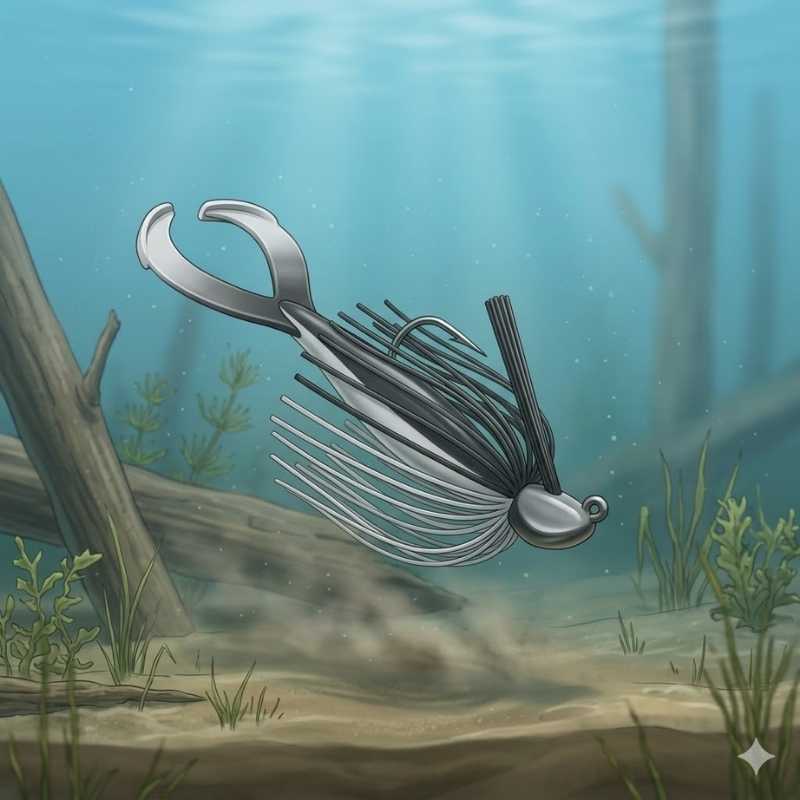
Match crawfish with jigs, craw-style soft plastics on a Texas rig or weighted swimbait hook, lipless crankbaits in red, and squarebill crankbaits in craw patterns. See crawfish movement and bass feeding for the seasonal timing and transition banks for the structure to target. Color rotates with the season: dark and brown in late winter, bright red and orange during the spring molt, brown and orange in fall.
Other baitfish: shiners, herring, alewives, yellow perch
- Golden shiners are a backwater and grass-bed forage common across most of the country. Match with white spinnerbaits, swim jigs, and unweighted soft jerkbaits.
- Blueback herring and alewives are the dominant forage on many southeastern and northern reservoirs respectively. Both are deeper, more pelagic — match with flutter spoons, flukes, jerkbaits, and topwater walkers fished over deep structure.
- Yellow perch are the apex forage in much of the upper Midwest and Northeast. Match with deep-diving crankbaits and swimbaits in perch color, especially during spring and fall.
- Smelt and ciscoes on extreme northern lakes — match with long, slender jerkbaits, jigging spoons through the ice, and large soft jerkbaits.
Forage comparison: which one is dominant on your lake?
- Stained southern reservoir with creek arms → shad-dominant, crawfish secondary. Spinnerbaits, squarebills, swimbaits, jigs.
- Clear southern reservoir with rock and timber → shad + herring, with sunfish in cover. Jerkbaits, flukes, jigs.
- Northern natural lake with weed beds → bluegill, perch, and shiners. Swim jigs, frogs, swimbaits, jerkbaits.
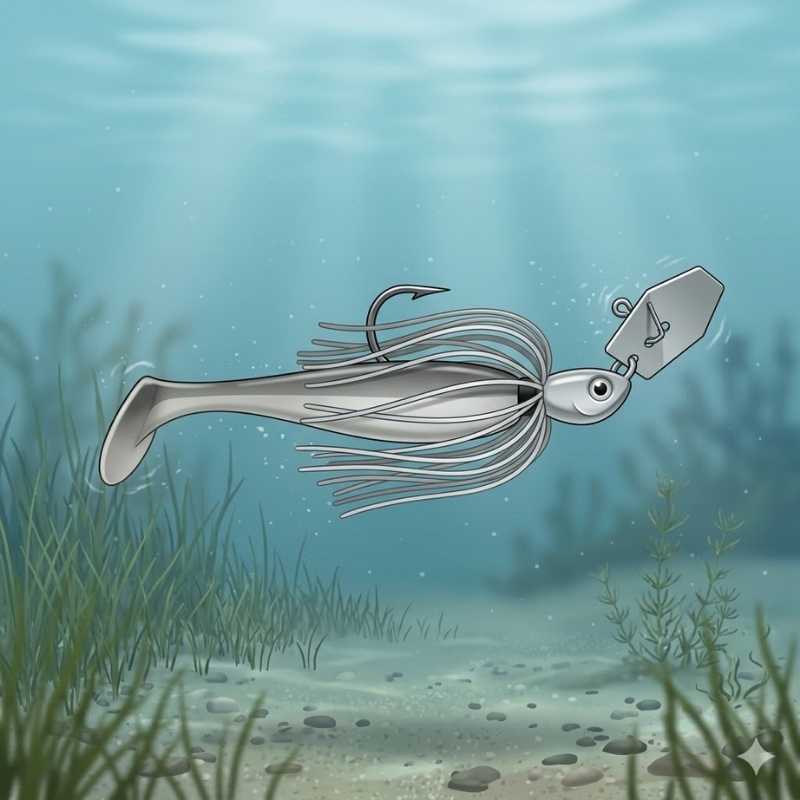
- Tidal river / coastal system → shad, shiners, killifish, and crabs. Chatterbaits, spinnerbaits, soft swimbaits, paddle-tails.
- Highland reservoir with bluff walls → shad and crawfish. Football jigs, deep cranks, jerkbaits.
The forage calendar
Most lakes run a predictable forage calendar that bass feeding aligns with month by month:
- Late winter (Feb-Mar): shad die-offs and crawfish emergence. Jerkbaits and jigs.
- Pre-spawn (Mar-Apr): crawfish primary, shad secondary. Squarebills, chatterbaits, jigs.
- Spawn (Apr-May): bass don't feed heavily but defensively strike bluegill imitations near beds.
- Post-spawn (May-Jun): shad spawn fires up. Spinnerbaits, swim jigs, walking topwater.
- Early summer (Jun-Jul): bluegill spawn dominates shallow cover.
- Summer (Jul-Aug): open-water shad schools become the deep pattern; bluegill stays the shallow pattern.
- Fall (Sep-Nov): shad migrate into creeks; bass follow. Lipless cranks, spinnerbaits, jerkbaits.
- Winter (Dec-Feb): shad balls and crawfish in rock. Slow finesse, jerkbaits in clear water.
Cross-reference with the seasonal bass patterns guide for the corresponding bass position month by month.
Why bass switch forage mid-day
A single bass can eat crawfish at dawn, suspended shad at noon, and a bluegill at dusk — and they often do. The trigger is opportunity. When light penetrates and bait moves vertically, bass shift their focus to whatever is closest and most exposed. Don't lock into one pattern; rotate baits across the same productive water if the bite goes quiet on what was working an hour ago. The baitfish movement guide explains the daily vertical migration that drives these switches.
How to identify the primary forage on your water
- Sonar: shad show as dense clouds in open water; bluegill as scattered marks around cover.
- Visual: dawn and dusk surface activity tells you what's there. Shad flicks vs bluegill swirls look different.
- Stomach contents: if you keep a fish, look at what it's been eating. The most reliable signal you'll ever get.
- Bird activity: gulls and terns on the water mean shad schools. Herons in the back of pockets mean bluegill.
- Local knowledge: marina staff and bait shops know the forage hierarchy on the lake within 30 seconds of conversation.
- Spit-up at the boat: hooked bass often regurgitate recent meals. Inspect what's in the net.
Size and color decision framework
- Clear water + stable conditions → match size exactly, match color naturally, use translucent finishes.
- Stained water + active feeding → match size, bump color a half step brighter for contrast.
- Muddy water + any conditions → upsize profile, add vibration, ignore exact color and pick high-contrast silhouettes.
- Pressured fish, all clarities → downsize one step from the obvious match, change profile (flat-side crankbait instead of round, finesse jig instead of full-size).
- Trophy hunting → upsize 25–50% over the average forage size, accept fewer bites for bigger ones.
Match the hatch, then break it
Matching size and profile is rarely wrong. Matching exact color is correct most of the time. But under stained water, low light, or aggressive reaction-bite windows, contrast beats accuracy — a chartreuse spinnerbait outfishes a perfect shad pattern on a muddy windward bank. See water clarity and lure selection and best baits for windy conditions for when to override the match.
Forage plus structure equals pattern
Forage tells you what; structure tells you where. A creek channel running through a flat with active shad on it is a high-percentage area. A laydown on a transition bank with bluegill around it is another. Cross-reference forage with points, creek channels, grass lines, and current areas and you'll build a pattern that produces all day. For the depth side of the equation, see the baitfish depth changes guide.
Supporting Articles in This Pillar
Shad and Open-Water Forage
Shad drive most southern bass behavior — spawn, summer schools, fall migration, and the winter die-off all matter.
Timing, cover, and the short lure list for the spring shad spawn.
How bass position, feed, and select prey around each shad species.
Forage-driven positioning across the season.
Daily baitfish vertical movement and how bass follow it.
How to follow the fall shad migration into the creeks and stay on feeding bass.
Cold-water shad kills and how bass gorge on dying threadfin.
Bluegill and Sunfish
Bluegill are the cover-oriented forage of summer. Bluegill spawn waves trigger the most predictable shallow bite of the year.
Crawfish
The protein driver — crawfish color cycles and molt timing dictate jig and craw-bait color selection.
Herring and Regional Forage
On herring lakes, the entire bass population follows the bait — and topwater and walking baits dominate.
How This Topic Connects To Other Bass Fishing Factors
No single factor explains bass behavior on its own. Each pillar below covers one of the variables that interacts with this one — read them together for the full picture.
The master framework — forage, temperature, oxygen, light, pressure.
Pressure, wind, fronts, sun — how weather dictates the bite.
Month-by-month bass behavior and lure logic.
Points, channels, grass, wood, docks — where bass live.
Year-round Catawba-chain patterns and herring-driven bass.
Pick the right lure for temperature, clarity, and conditions.