Editor's Pick97%
Roboworm Straight Tail
MM3
View Product →The best drop shot baits for bass — straight-tail worms for pressured bottom-oriented fish and minnow profiles for shad-keyed, suspended, and forward-facing-sonar bass.
Affiliate Disclosure: As an Amazon Associate I earn from qualifying purchases. Recommendations reflect on-the-water testing and the LureLogic ranking engine — not paid placement.
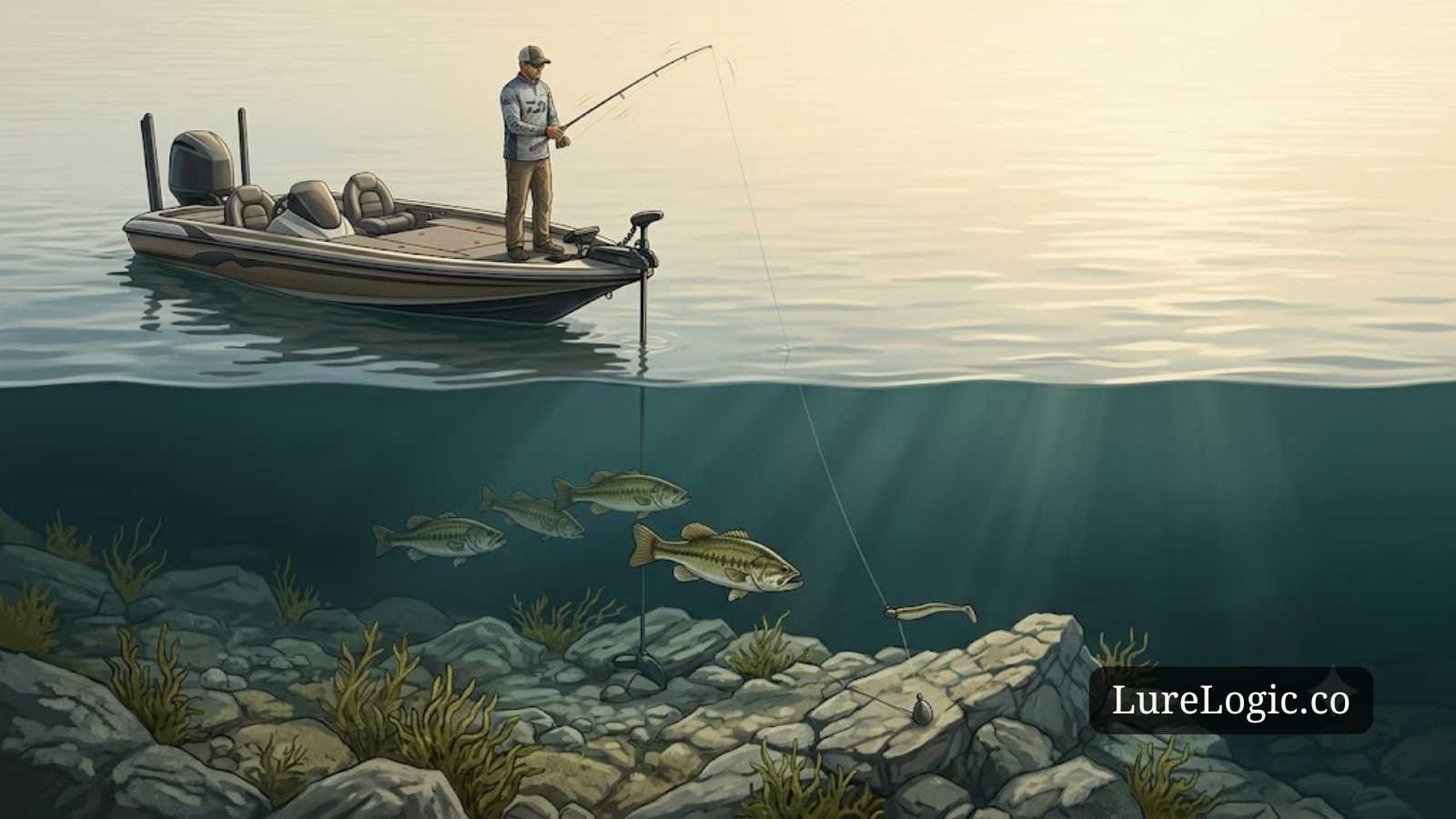
Drop shot is the technique that brings finesse-presentation precision to deep structure and clear-water bass. The setup — a nose-hooked soft plastic on a Palomar-tied hook with a sliding weight tag below — keeps the bait suspended off the bottom at a controlled distance, letting bass inspect it on their terms without committing to a bottom-contact presentation. The right drop shot bait combines a slim profile, natural action on subtle rod-tip movement, and durability to survive multiple fish per bait.
Roboworm Straight Tail — Editor's Pick. The Roboworm in 4.5 or 6 inch is the most productive drop shot bait ever made. The thin profile and salt-impregnated body create a worm that hangs naturally on the hook, undulates with the slightest rod-tip movement, and presents the subtle action bass want when they refuse more aggressive baits. The Morning Dawn color alone has won more drop shot tournaments than any other bait.
Berkley PowerBait MaxScent Flatworm — Best Scented. PowerBait MaxScent technology disperses scent through the water column, drawing bass to the bait and triggering committed strikes from neutral fish. Particularly effective on post-front days, in cold water, and around heavily-pressured fish where added scent makes the difference. The flat profile creates a unique silhouette that bass haven't seen as often as round-bodied worms.
Jackall Crosstail Shad — Best Profile. The Crosstail's split-tail design and minnow body shape create a more obvious baitfish profile that produces around bait-keying fish, on deeper structure, and on lakes with strong herring or alewife populations.
Zoom Finesse Worm — Best Value. The original finesse worm and still one of the most productive. Slimmer profile than the Roboworm, slightly faster action, and a lower price point that lets anglers rig multiple rods without breaking the budget.
Strike King Half Shell — Premium Profile. A smaller minnow-style drop shot bait with a flat-sided body and split tail. Excels on smallmouth lakes and on largemouth keying on small bait.
Additional options worth carrying: Yamamoto Shad Shape Worm (premium finesse profile), Damiki Armor Shad (the original 'Damiki rig' bait, deadly on deep suspended fish), and the Zoom Z Drop (Zoom's modern drop shot evolution).
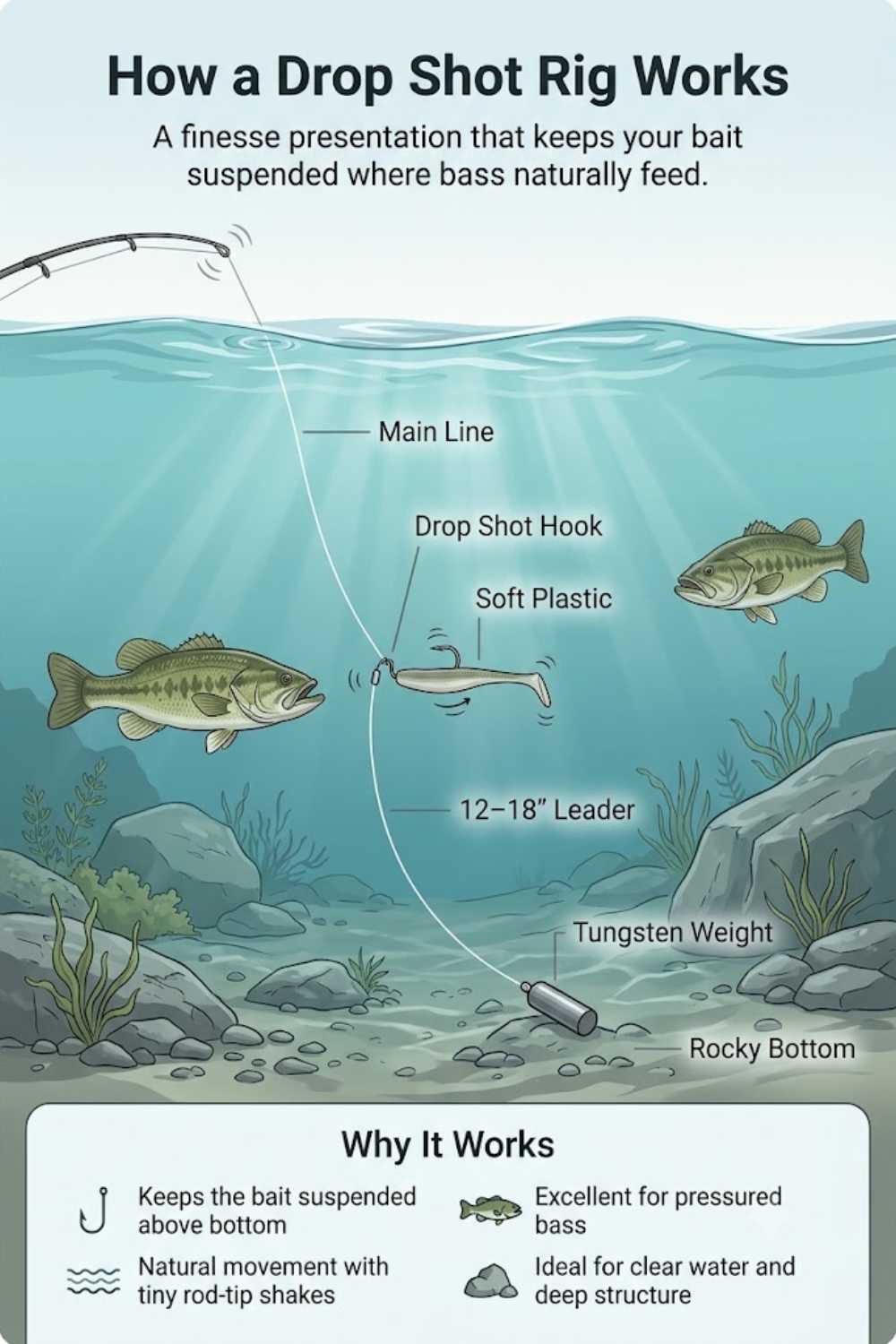
Drop shot works because it isolates the bait from the bottom and presents it at a controlled depth in front of bass that refuse bottom-contact presentations. The single most common refusal pattern in bass fishing is fish that follow a Texas-rig, jig, or shaky head, watch it land, and refuse it because the bait either lays unnaturally on the bottom or doesn't move correctly. A drop shot solves both problems — the bait hovers at a fixed distance off the bottom and moves naturally with any subtle rod-tip input. Bass that refused the bottom-contact presentation often commit to the same bait suspended.
The second reason drop shot works is its compatibility with electronics. Modern forward-facing sonar has made drop shot the dominant technique for fishing suspended bass and bass relating to deep cover. An angler watching the sonar can position the boat over the fish, drop the rig to the exact depth, and shake the bait in front of the bass's face. The hookup percentage on FFS-targeted drop shot fish is among the highest of any technique in bass fishing.
Third, drop shot triggers bites from highly-pressured fish that have been educated against every aggressive presentation in the box. The subtle in-place action — the worm undulating with rod-tip-only movement, the weight tapping bottom occasionally — looks like a baitfish hovering and grazing, not a lure being retrieved. That natural appearance produces on tournament lakes, weekend-pressure fisheries, and post-front conditions where every other technique slows down.
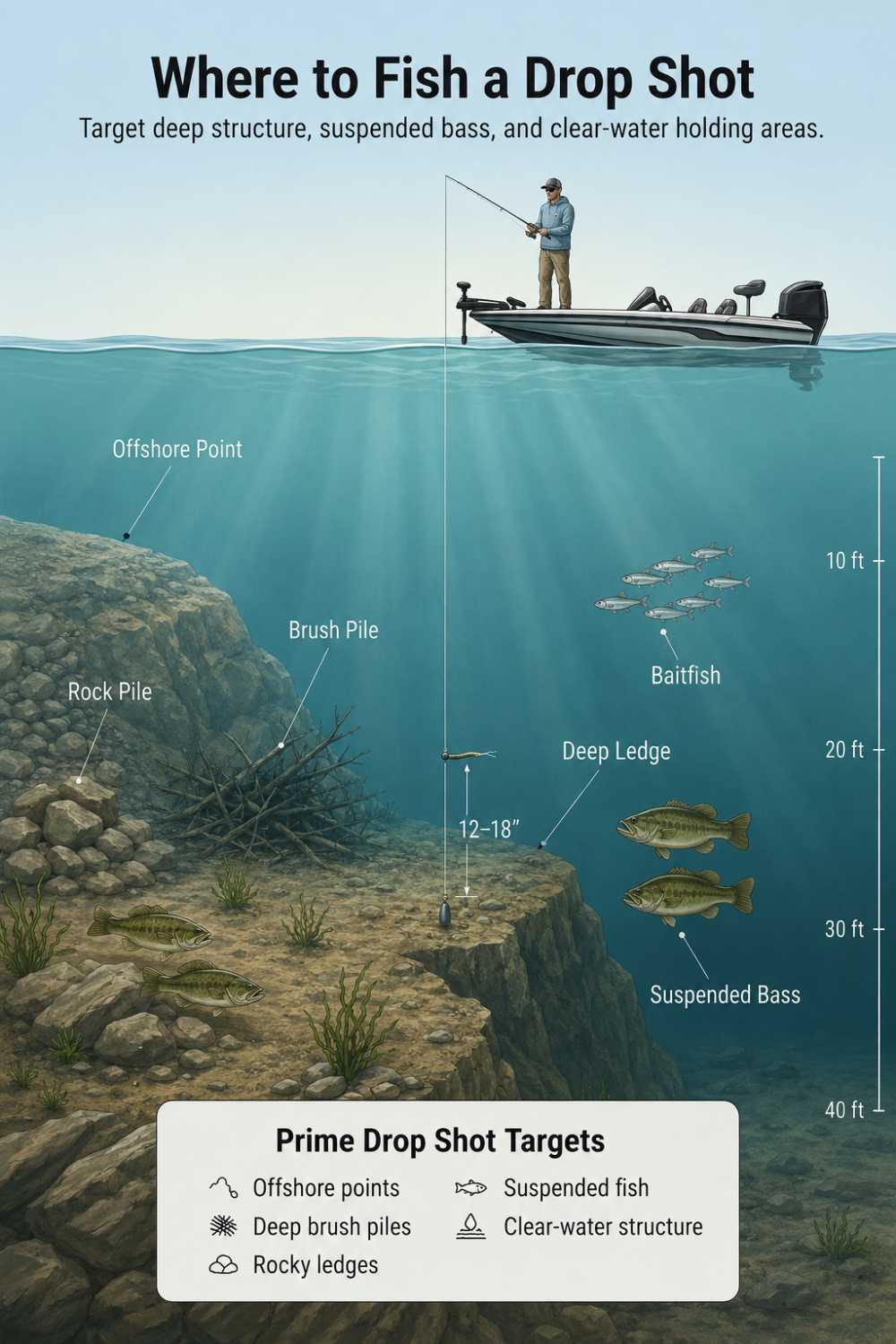
Finally, drop shot is one of the most efficient techniques for fishing offshore structure. A drop shot dropped vertically onto an offshore brush pile, a deep ledge, or a hump fishes the entire structure-relating fish population from top to bottom — something a horizontal-presentation bait struggles to do. Combined with electronics, the technique lets an angler systematically work every fish on a structure without moving the boat. Deep water bass lures covers the offshore playbook.
A drop shot is more sensitive to rigging than most techniques. The wrong knot, hook angle, or weight distance kills the bite.
Knot — Palomar knot, period. Tie a Palomar to the hook, then run the tag end back through the hook eye from the same side as the bait. This positions the hook horizontally and lets the bait nose-hang straight. A non-Palomar drop shot rig produces fewer bites and worse hookups.
Hook — Drop shot hook (Owner, Gamakatsu, VMC) in size 1 for 4.5-inch worms, 1/0 for 6-inch worms, 2/0 for 7-inch+. Nose-hook the bait so it hangs perfectly straight; any curve in the bait kills the action. For weedy cover, switch to a Texas-rig drop shot setup with a wide-gap finesse hook and weedless rigging.
Weight — Tungsten cylinder (or teardrop) weights connected by a tag line below the hook. Weight selection: 1/8 oz for shallow (under 8 ft) and calm; 3/16 oz for moderate depth and wind; 1/4–3/8 oz for deep water and current; 1/2 oz+ for deep clear-water smallmouth situations with strong wind. Tungsten over lead — better sensitivity, smaller profile per weight.
Leader length — Distance from hook to weight. 12 inches is the universal starting point. Shorten to 6–8 inches for bottom-hugging bass; lengthen to 18–24 inches for bass suspended off bottom or above cover. The longer the leader, the more dramatic any subtle rod-tip movement transmits to the bait.
Line — 8–10 lb fluorocarbon main line, or 10–15 lb braid with an 8–10 lb fluorocarbon leader. Braid-with-leader is the modern preferred setup — the braid sensitivity transmits subtle bites, the fluoro leader provides invisibility near the bait.
Rod — Spinning rod, 7'0" to 7'3" medium-light to medium with a fast tip. The fast tip transmits the subtle rod-tip movement to the bait without overloading; the moderate backbone drives the small finesse hook into a bass's mouth on the hookset.
Drop shot color selection follows finesse principles: natural colors in clear water, slight bumps in contrast for stained water, and forage-matched colors when bait pattern is obvious.
Morning Dawn (Roboworm) — The universal clear-water drop shot color. The translucent pink-and-purple blend has produced on every clear-water bass fishery in the country. If you carry one drop shot color, make it Morning Dawn.
Margarita Mutilator (Roboworm) — The smallmouth specialist. Green pumpkin base with red flake. Outproduces every other color on northern smallmouth lakes and on largemouth in clear-to-stained-water lakes with bluegill forage.
Green pumpkin and watermelon-red flake — The lightly-stained-water default. Natural colors that produce on bluegill, gobies, and crawfish-eating fish. Works on 4.5 and 6-inch straight tails alike.
Smoke and ghost shad — The deep-clear-water and herring/alewife color. On northern smallmouth lakes and southern reservoirs with herring populations, a translucent smoke or ghost-shad drop shot worm outproduces darker colors.
Martens Madness (Roboworm) — The post-front specialist. A purple-and-blue blend that produces on bass refusing more conventional colors during high-pressure days. High-pressure bass fishing covers the post-front pattern.
Black and dark colors — The night and deep-water option. On lakes where night fishing is legal, a black drop shot worm produces. Also worth fishing in extremely deep water (25+ ft) where light penetration is limited and dark profiles silhouette best.
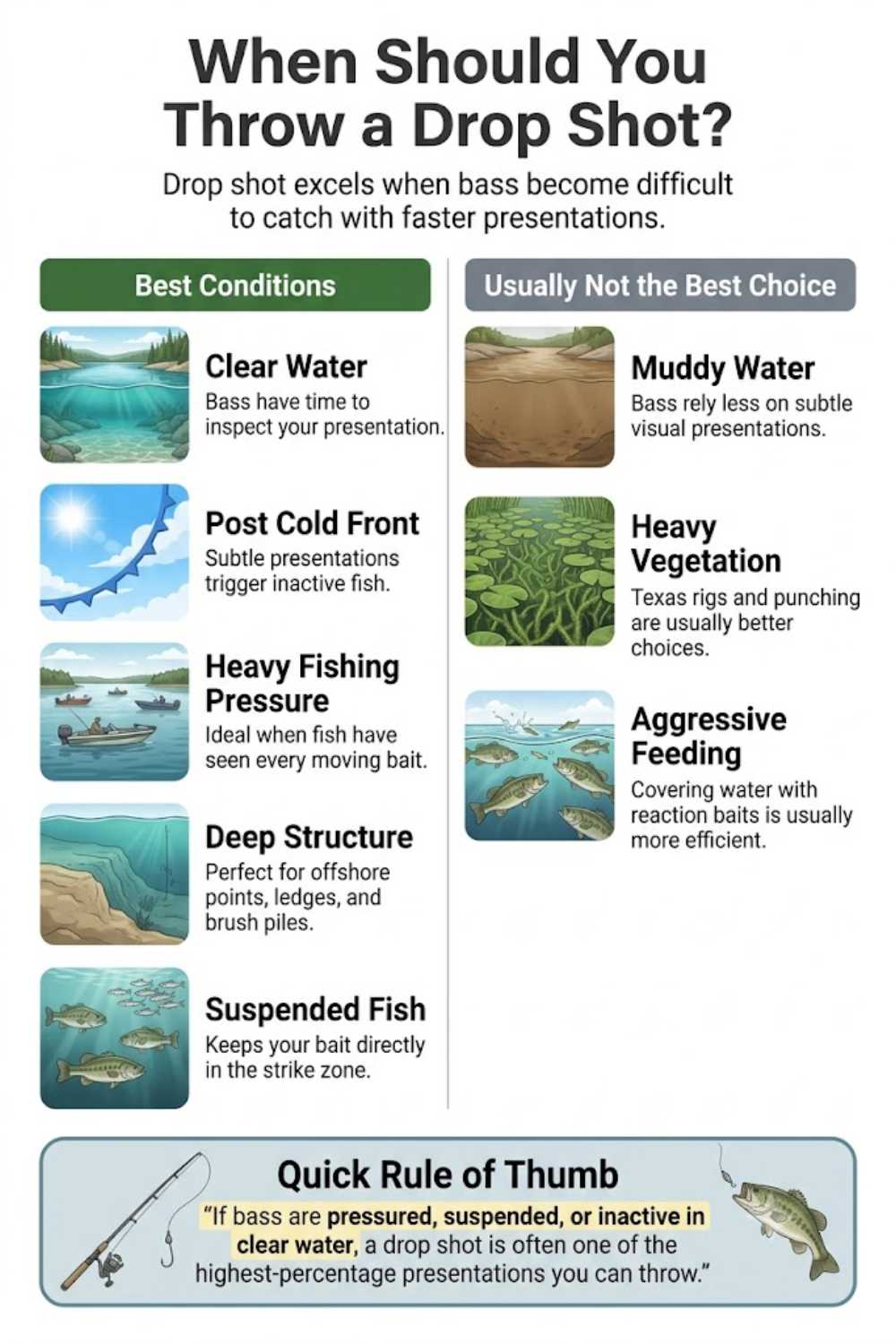
Drop shot is most productive in five distinct scenarios.
Clear water (4+ ft visibility) — The home range. Anywhere bass can inspect the bait, drop shot's subtle natural action produces. Clear water bass lures covers the broader clear-water playbook.
Post-front conditions — When bass refuse moving baits and shut down on bottom-contact presentations, drop shot's hovering subtle action triggers bites from negative fish. The post-cold-front lures guide covers the broader adjustment.
Deep structure (15+ ft) — Offshore brush, deep humps, ledges, and channel swings hold bass that drop shot reaches and presents better than most other techniques. Pair with electronics for surgical efficiency.
Highly-pressured fish — Tournament waters and weekend pressure educate bass against aggressive presentations. Drop shot's subtle profile and natural action produces when nothing else will.
Suspended bass — Drop shot is the premier technique for bass suspended over deep cover, in deep open water following bait, and around deep brush piles where bass position 5–10 ft above bottom. Modern forward-facing sonar combined with drop shot is the most efficient way to catch these fish.
Drop shot is less productive in muddy water (where the visual subtlety becomes a liability), in dense vegetation (where snagless presentations like Texas-rigs outproduce), and during aggressive feeding windows (where moving baits cover water faster). Pick the right tool for the conditions.
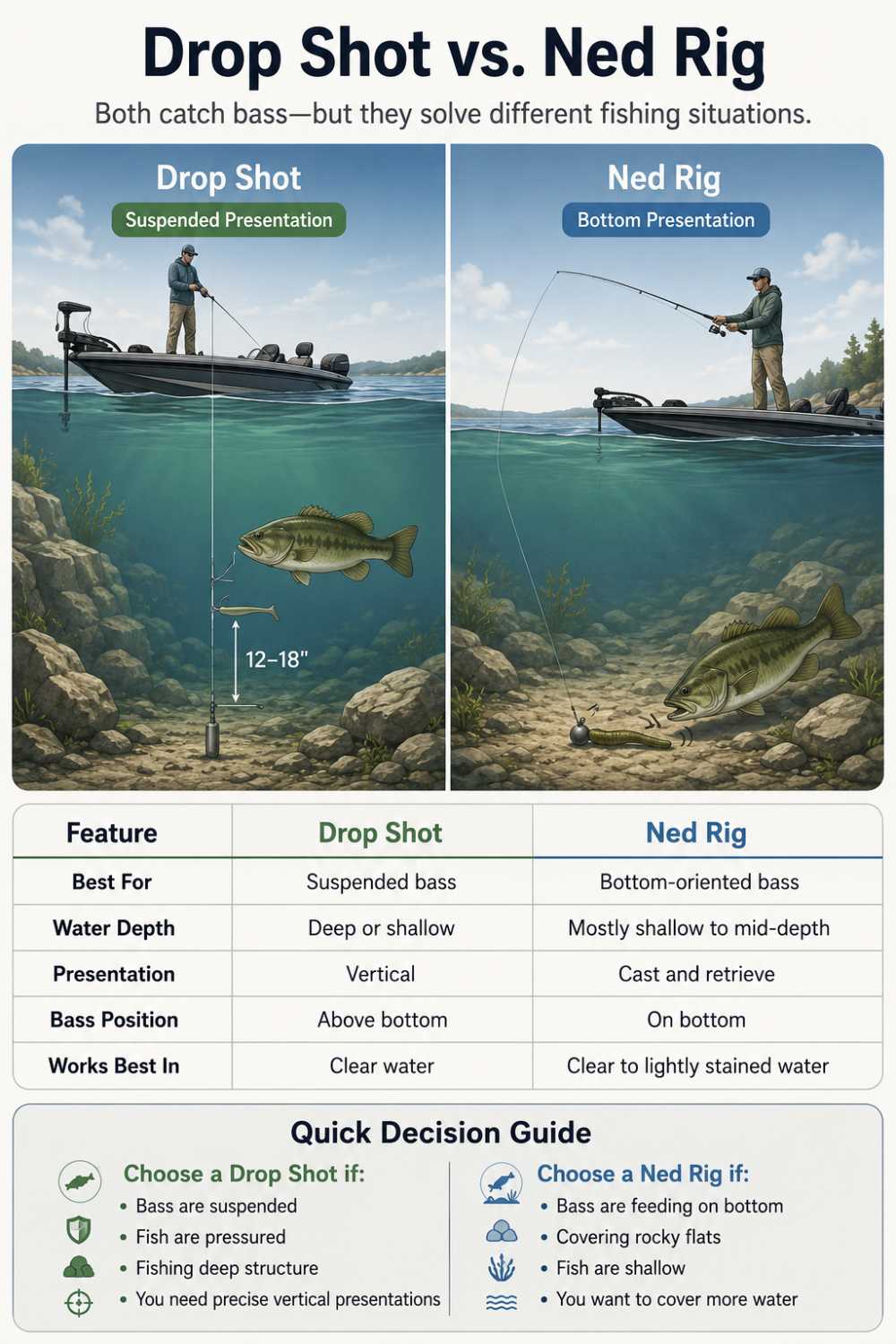
Both are finesse techniques but they trigger different fish.
Drop shot — Best for suspended bass, deep structure, post-front conditions, and clear water. The hovering presentation excels when bass are slightly off bottom or relating to vertical cover.
Ned rig — Best for bottom-relating bass on flats, gravel banks, and shallow structure. The bottom-hugging mushroom-head presentation produces when bass are nose-down on bottom feeding on small forage. See the best Ned rigs guide for the full Ned rig breakdown.
A practical rule: drop shot when you see bass on electronics suspended off bottom; Ned rig when you see bass hugging the bottom. Carry both finesse setups during tough conditions — they cover the two different bass positions and let you adjust without re-rigging.
Drop shot is the precision tool for finesse bass fishing. When bass refuse aggressive presentations, when the lake is clear and pressured, when bass are suspended off bottom, when post-front conditions shut down the bite — drop shot produces. Build a drop shot arsenal with one premium straight tail color in every clarity range, one scented option for tough days, and one minnow profile for bait-keying fish, and the rig will produce when every other technique has slowed down.
For the bottom-relating finesse counterpart, see the best Ned rigs guide. For finesse worm Texas-rig and shaky-head presentations, see the best finesse worms guide. For broader clear-water and post-front strategies, see clear water bass lures and post-cold-front bass lures.
Industry-standard dropshot worm — subtle and proven.
Pressured or deep clear water — vertical shake on rock with a slim worm.
As an Amazon Associate I earn from qualifying purchases.
Temperature-by-temperature lure logic.
The prespawn temperature threshold.
Natural presentations and finesse profiles.
Vibration, dark silhouette, and visibility tactics.
Adjusting across the full clarity spectrum.
Topwater and reaction baits for the dawn window.
Plug in today's water temp, clarity, weather, and forage — the tool returns the highest-confidence presentations.
Build Today's Strategy →