Why laydowns produce
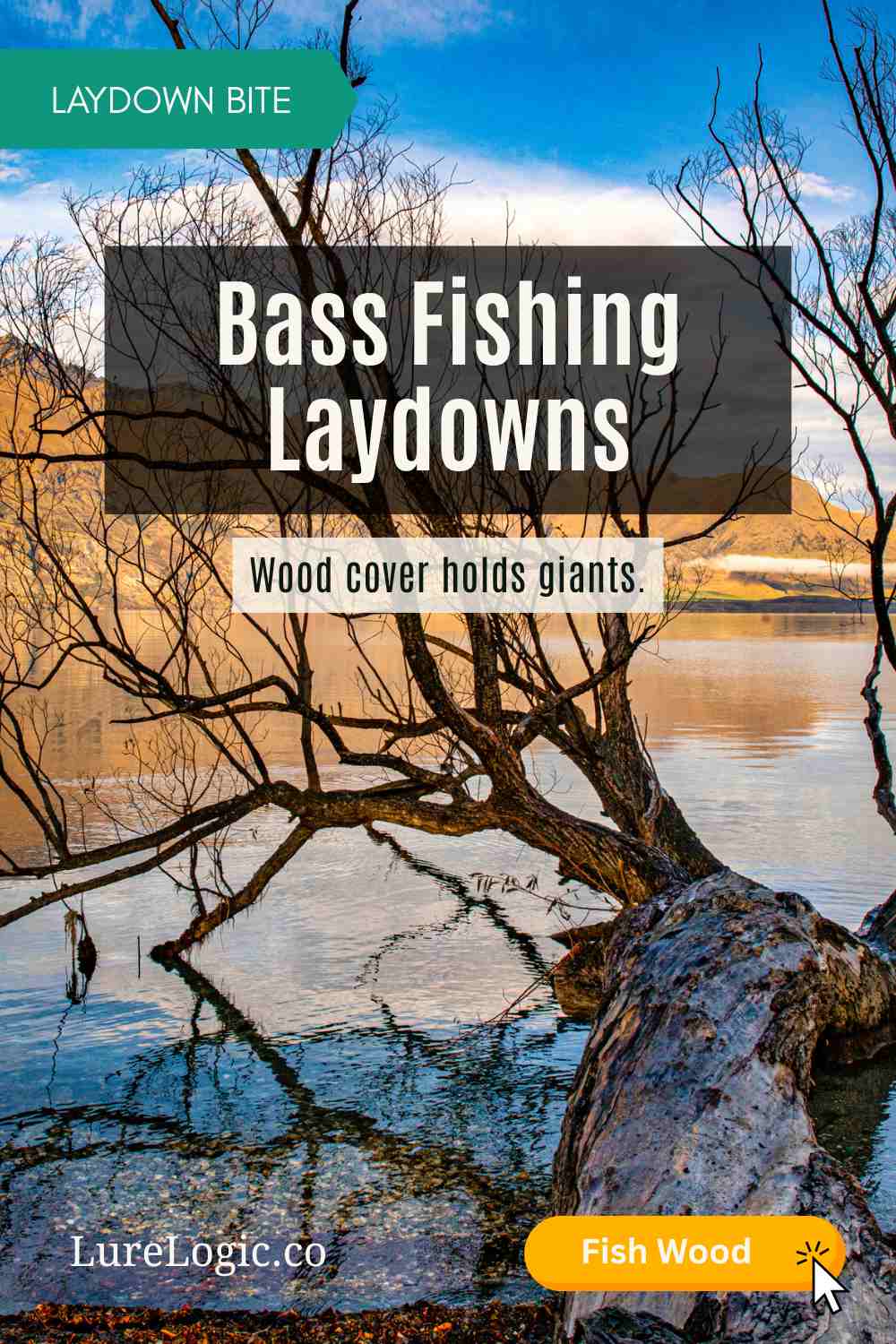
A laydown is a complete bass ecosystem. The trunk creates shade, the limbs offer ambush positions, the root ball traps bait, and the entire structure breaks current. Bass don't need to move — bait comes to them.
Most anglers notice that the biggest laydowns aren't always the best. A small, well-positioned laydown in 6 feet of water with channel access often outfishes a giant tree on a shallow flat bank.
Reading a laydown
- Depth at the tip — laydowns with the end of the tree in 6+ feet of water hold more fish than shallow ones.
- Angle to the bank — trees angled perpendicular to the bank intercept more bait than those running parallel.
- Adjacent structure — laydowns next to grass, points, or channel swings outfish isolated trees.
- Sun orientation — laydowns that throw shade across deep water hold bigger fish midday.
Working the tree
Start at the deepest end and work toward the bank. Pitch parallel to the trunk first to cover the obvious ambush spots, then pick apart the limbs and root ball. The strike usually comes within the first three casts to each position — if not, move on.
Laydown lure rotation
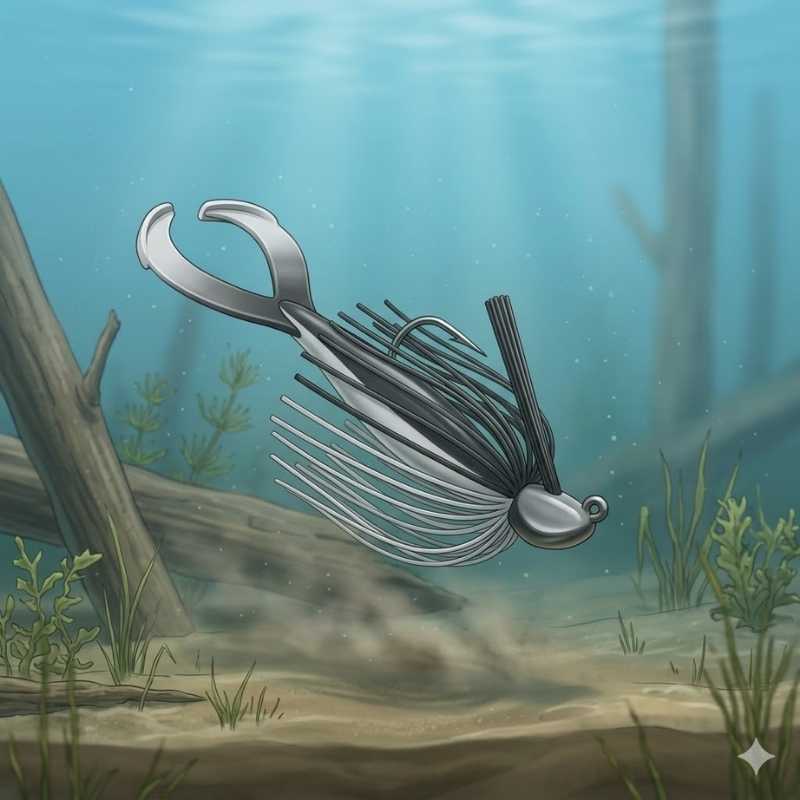
Dirty Jigs Compact Pitchin' Jig
Premium skirt and head shape for pitching tight cover.
Pitch to docks, laydowns, and isolated cover for big fish.
As an Amazon Associate I earn from qualifying purchases.
Alternative Options
- Strike King Structure Jig →Alternative
- Booyah Boo Jig →Budget
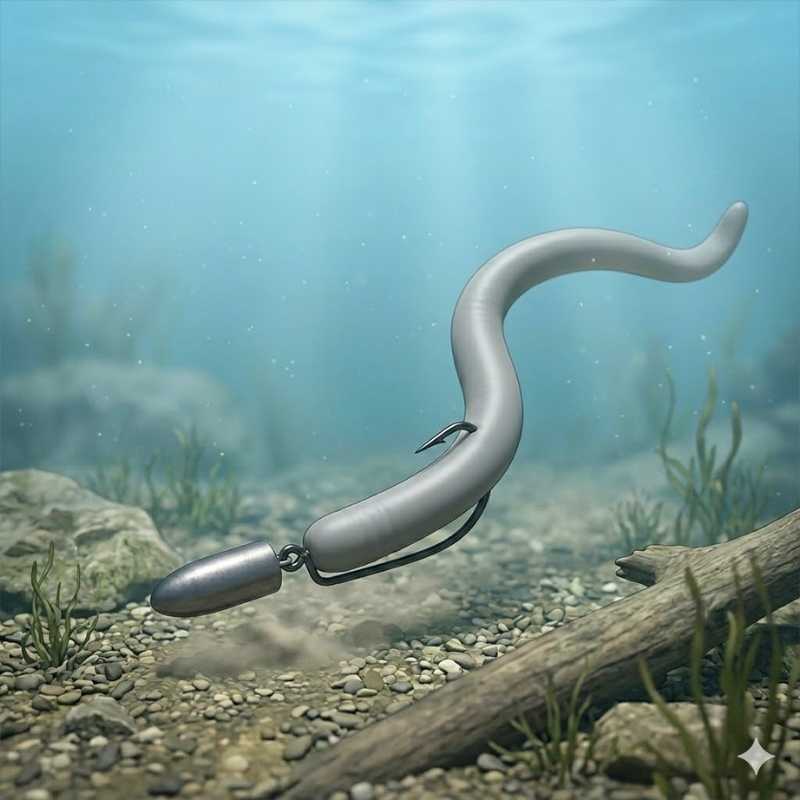
Yamamoto Senko
Dead-stick fall that bass simply can't refuse.
Heavy cover — pitch in, let it sink on slack line.
As an Amazon Associate I earn from qualifying purchases.
Alternative Options
- Zoom Trick Worm →Alternative
- Strike King Rage Craw →Budget
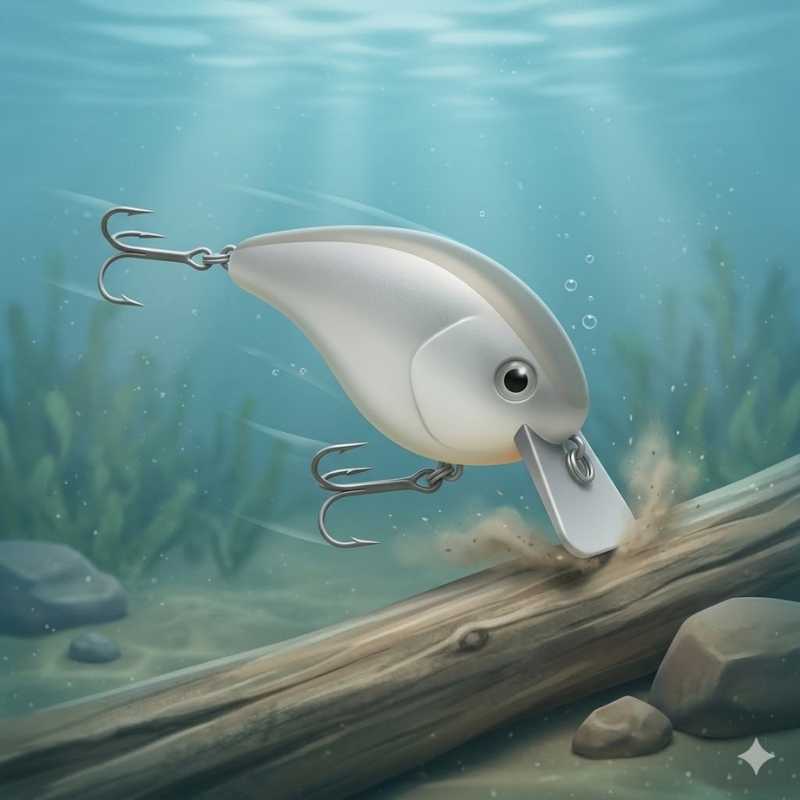
Strike King KVD 1.5
Deflects off cover like nothing else — the go-to shallow crank.
Shallow wood and rock — make it deflect off cover.
As an Amazon Associate I earn from qualifying purchases.
Alternative Options
- Lucky Craft LC 1.5 →Alternative
A squarebill bumped along the trunk triggers reactive strikes that finesse won't produce. The deflection off wood is what gets bit.
The high-percentage spots on every laydown
- The trunk-to-bank junction. Where the tree meets the bank often holds the biggest fish.
- The root ball. If it's still attached, fish it carefully.
- The shaded side of the main trunk. Almost always holds at least one bass in summer.
- Forks in the limbs. Bass tuck into the V created by branching.
Retrieve adjustments
- Pitch with as little splash as possible. Quiet entries draw more bites.
- Let the bait fall on slack line through the limbs. Bites come on the fall.
- Slow down. Laydown fish often watch a bait for several seconds before committing.
What most anglers get wrong
- Fishing only the front of the laydown and skipping the deeper end.
- Using line too light to pull fish out of the wood.
- Throwing one cast at a tree and moving on — laydown fish often need multiple presentations.
What experienced anglers notice
Most of the time, the biggest fish on a laydown is sitting on the deepest end of the tree where the current meets the structure. Smaller fish stack on the limbs and shallower trunk. Fish from the outside in to avoid spooking the best one. For wind-driven laydown fishing, see how wind affects positioning.