Why crawfish matter so much
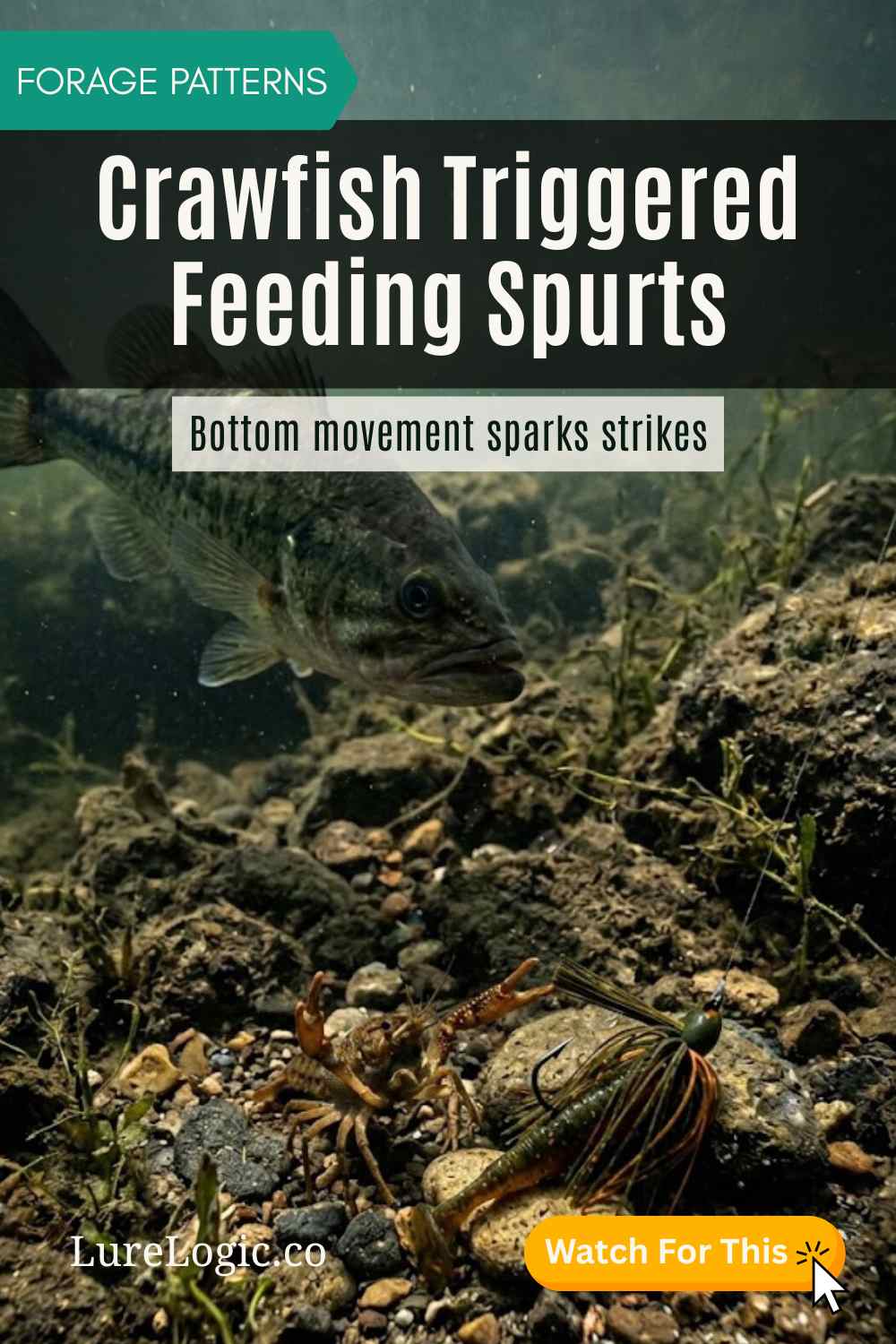
Bass are opportunistic, but big bass are efficient. A 5-pound largemouth that eats one 4-inch crawfish gets more calories with less effort than chasing a small school of shad. That math is why crawfish dominate the diet of adult bass on rocky lakes through most of the year. Stomach-content studies on lakes like Falcon, Guntersville, and many TVA reservoirs consistently show crawfish at or near the top of the forage list for fish over four pounds.
The result: any pattern that puts a believable crawfish profile in the right place catches the biggest fish on the lake.
The crawfish year
- Late winter (water temp 45–55°F) — crawfish start moving out of bottom mud and into shallower rock. They're dark, often with reddish or burgundy tints. First major bite of the year on craw-pattern jigs.
- Spring (55–65°F) — heavy molt period. Soft-shelled, vulnerable crawfish are everywhere on hard bottom. Peak window for jig-and-craw fishing.
- Spawn (60–70°F) — crawfish themselves spawn. Activity stays high but they're more spread out.
- Summer (75–88°F) — crawfish retreat to deeper rock and become less active in the heat of the day. Color leans olive and green.
- Fall (65°F dropping) — second major molt window. Crawfish come back to feed before winter, often shifting to orange and brown.
- Winter (under 45°F) — crawfish bury into mud and rock crevices. Bass still eat them but only when forced into the cover.
How bass position on a crawfish bite
Crawfish-feeding bass aren't roaming open water. They're parked tight to bottom, on hard substrate, usually at structural transitions:
- Chunk rock banks — especially with a 30 to 45-degree slope and broken rock from softball to basketball size.
- Rock-to-mud transitions — crawfish concentrate at the seam where they can feed on the soft side and shelter in the hard side.
- Riprap on bridges and dams — wave-washed rock holds crawfish year-round.
- Bluff bases and ledges — vertical rock with horizontal shelves is prime crawfish habitat.
- Stump fields with rock — wood plus rock creates crevices crawfish use as ambush dens.
Color matching by season
- Pre-spawn — black-blue, brown-purple, red craw, and rust. Match the dark, mineral-stained shells.
- Post-spawn into early summer — green pumpkin, watermelon-red, and natural craw colors. Crawfish are greener as algae grow on their shells.
- Fall — pumpkin-orange, brown-orange, and brown-purple. Match the rust and brown coloration of fall molts.
- Stained water any season — black-blue and black-red stay visible when natural colors disappear.
- Clear water — go more translucent and natural. Solid colors look fake in 6 feet of visibility.
Baits that match the crawfish pattern
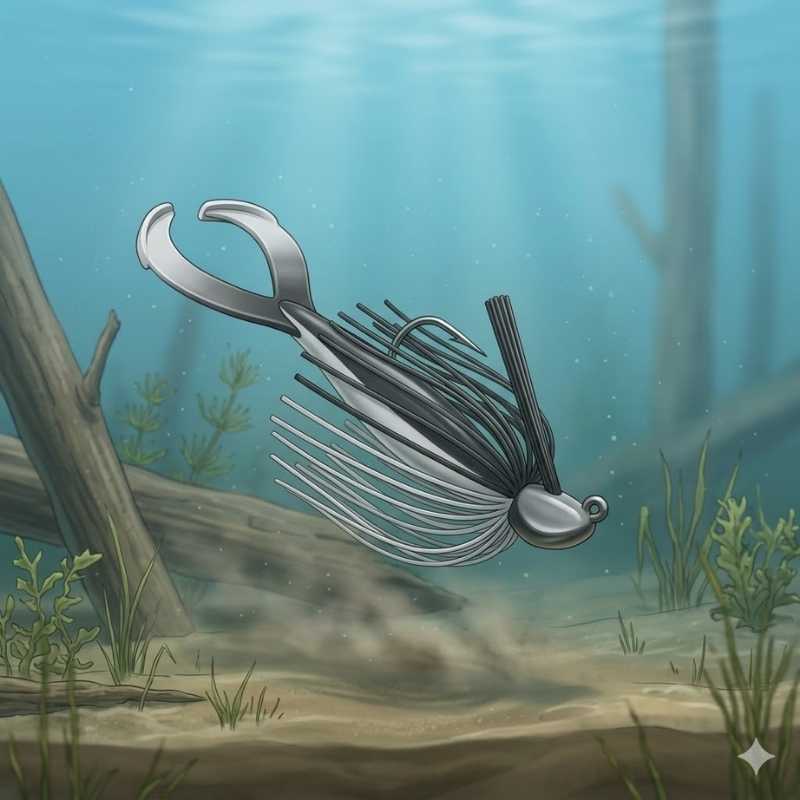
Dirty Jigs Guppy Football Jig
Premium football head built for rock and gravel.
Offshore rock and gravel — slow drag with long pauses.
As an Amazon Associate I earn from qualifying purchases.
Alternative Options
- Strike King Tour Grade Football →Alternative
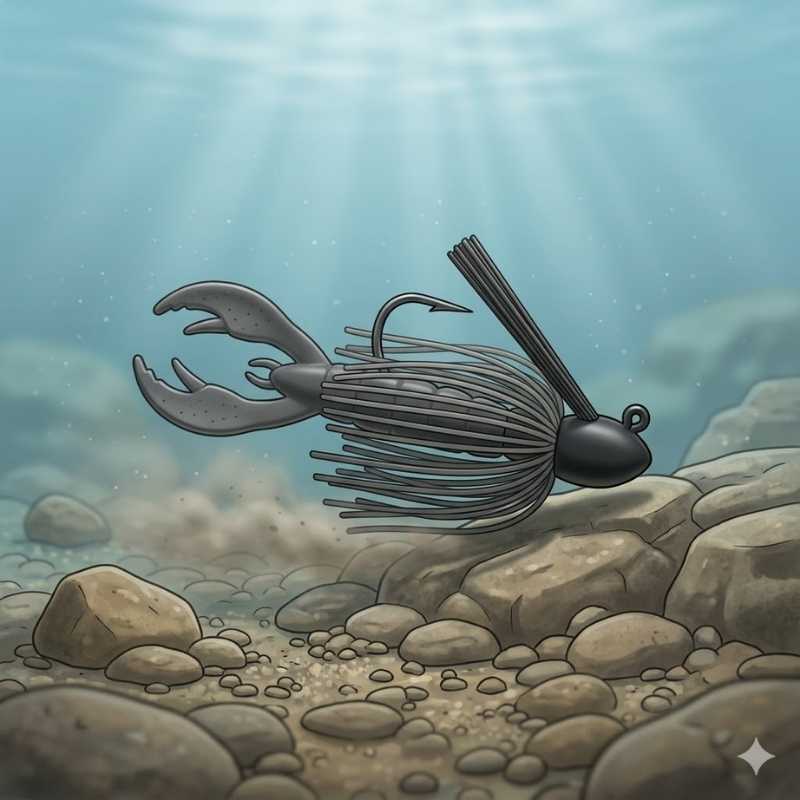
Dirty Jigs Compact Pitchin' Jig
Premium skirt and head shape for pitching tight cover.
Pitch to docks, laydowns, and isolated cover for big fish.
As an Amazon Associate I earn from qualifying purchases.
Alternative Options
- Strike King Structure Jig →Alternative
- Booyah Boo Jig →Budget
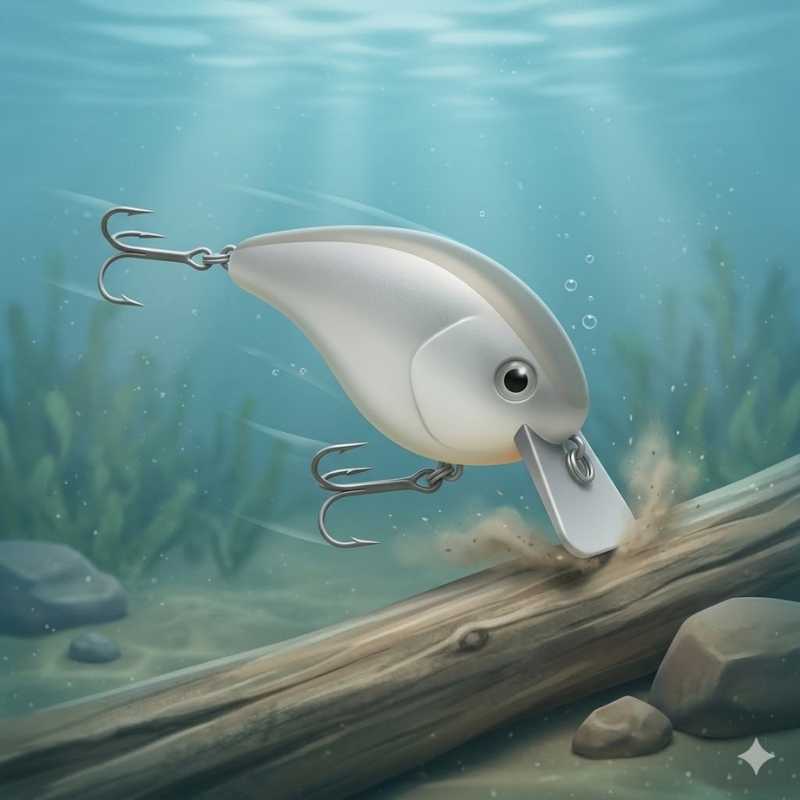
Strike King KVD 1.5
Deflects off cover like nothing else — the go-to shallow crank.
Shallow wood and rock — make it deflect off cover.
As an Amazon Associate I earn from qualifying purchases.
Alternative Options
- Lucky Craft LC 1.5 →Alternative
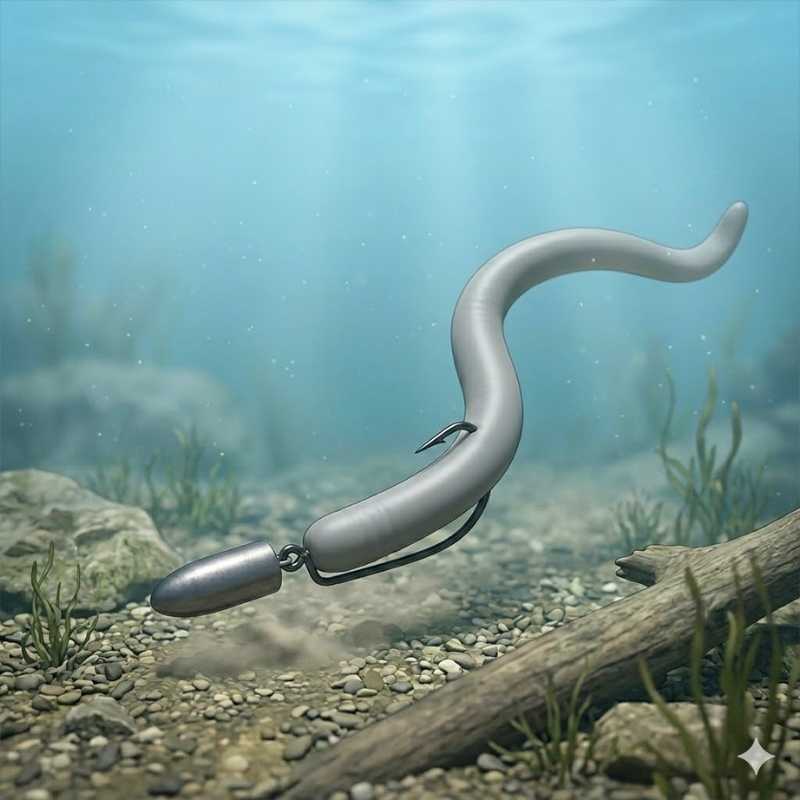
Add a lipless crank for stained-water craw patterns and a Texas-rigged creature bait for flipping rocky cover. The football jig dominates main-lake rock; the flipping jig is the choice for laydowns and wood-plus-rock cover.
Retrieve and presentation
- Drag, don't hop. Real crawfish crawl. A bait that bumps every rock and stops on each one looks more natural than one that's hopped six inches at a time.
- Stop on contact. When the bait deflects off a rock, pause it for two to four seconds. Most strikes come there.
- Use a craw trailer that matches the jig. Color, profile, and claw size should all line up with what's in the lake.
- Squarebill into the rock. Don't just retrieve over it — make the bait bang and deflect. Crawfish flee when something bumps them, and that motion is the trigger.
- Slow down post-front. Crawfish themselves move less in cold high pressure; mimic that.
Reading the bottom
Idle a hard rocky bank at low speed and watch your sonar. A rocky bottom shows as a thick, bright return with a slight haze above it. Sand or clay shows thinner. The seam between the two is the highest-percentage water. Visually, look for banks with broken, irregular rock — uniform riprap holds fewer crawfish than mixed-size chunk rock with crevices.
Common mistakes
- Throwing one color of jig all year. The seasonal color shift is real and meaningful.
- Hopping the bait. Crawfish drag; bass expect that motion.
- Fishing sand banks for craw patterns. Without hard substrate, crawfish aren't there.
- Ignoring the fall molt — many anglers treat fall as a shad-only season.
- Using oversized trailers in cold water. A smaller, slower presentation matches lethargic late-winter crawfish behavior.
For the rock-bank fishing that follows the crawfish pattern, see transition banks during seasonal change. For cold-water cousins of this approach, see winter bass fishing lures. For the spring window when the bite peaks, see pre-spawn bass fishing lures.