Why bait drives bass
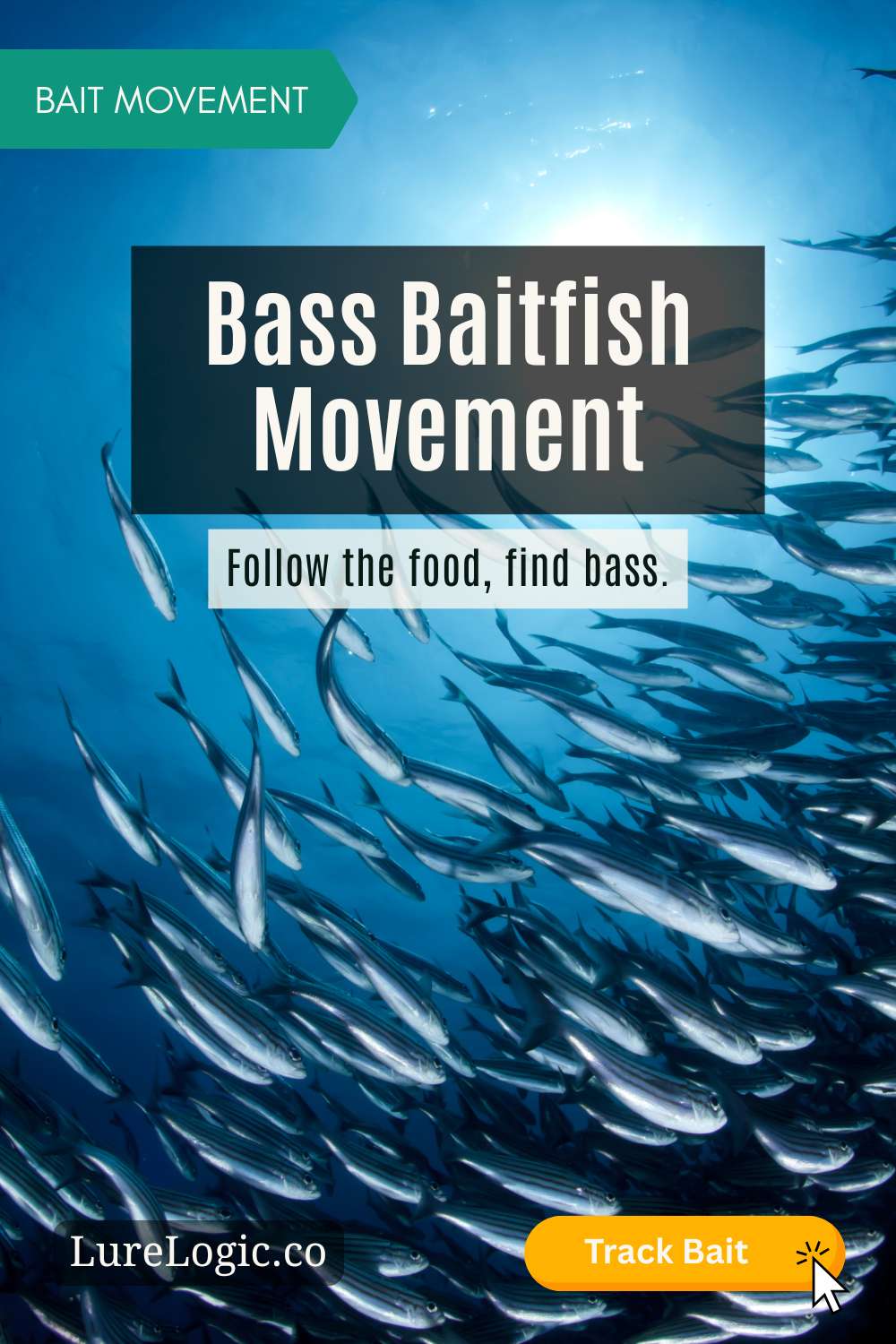
A bass needs to eat. Baitfish are the most efficient calories available in most systems — high in fat, easy to school on, and predictable in their movements. When bait shifts position, bass have to follow or stop eating. For the full forage picture — shad, herring, bluegill, crawfish — start with the bass forage guide, then dig into the threadfin vs gizzard shad breakdown to match the right profile on your lake.
Most anglers notice that an empty-looking bank is empty for a reason. No bait means no bass. The reverse is true: a bank with bait flicking on the surface almost always holds fish — and a few weeks each spring, the shad spawn stacks both on the same hard-bank cover at sunrise.
Seasonal bait movements
- Spring — bait pushes shallow as water warms. Bass follow to creek arms and shallow flats.
- Summer — bait suspends over deep structure in cooler water. Bass form offshore schools.
- Fall — shad migrate into the backs of creeks. Bass follow and gorge before winter.
- Winter — bait stacks on deep hard structure. Bass hold tight and feed in short windows.
Reading bait on sonar
Tight bait balls usually mean active predators below — schools compress when bass are pushing them. Loose, scattered bait often means the predators have moved off or aren't actively feeding. Bait close to structure is the highest-percentage scenario; bait suspended in open water is harder to convert. The bait also rides up and down the column through the day — see baitfish depth changes and bass positioning for how to track that vertical movement.
Visual bait cues
- Surface flicks — small bait jumping signals bass underneath.
- Slick spots — oily slicks on the surface mean bass have crushed bait recently.
- Diving birds — terns, gulls, and herons follow bait. Watch them, not the bank.
- Mud blooms — bait stirring up bottom in the shallows.
Matching bait with lures
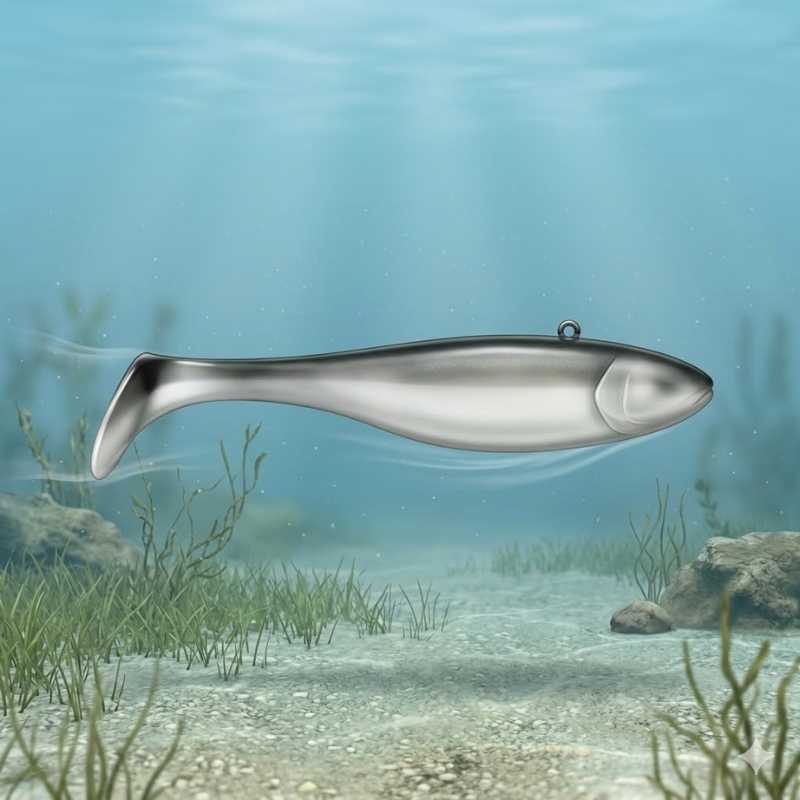
Keitech Swing Impact FAT
Best-in-class paddle-tail action for any swimbait rig.
Imitate shad — steady retrieve over points, flats, and drops.
As an Amazon Associate I earn from qualifying purchases.
Alternative Options
- Berkley PowerBait CullShad →Alternative
- Strike King Rage Swimmer →Budget
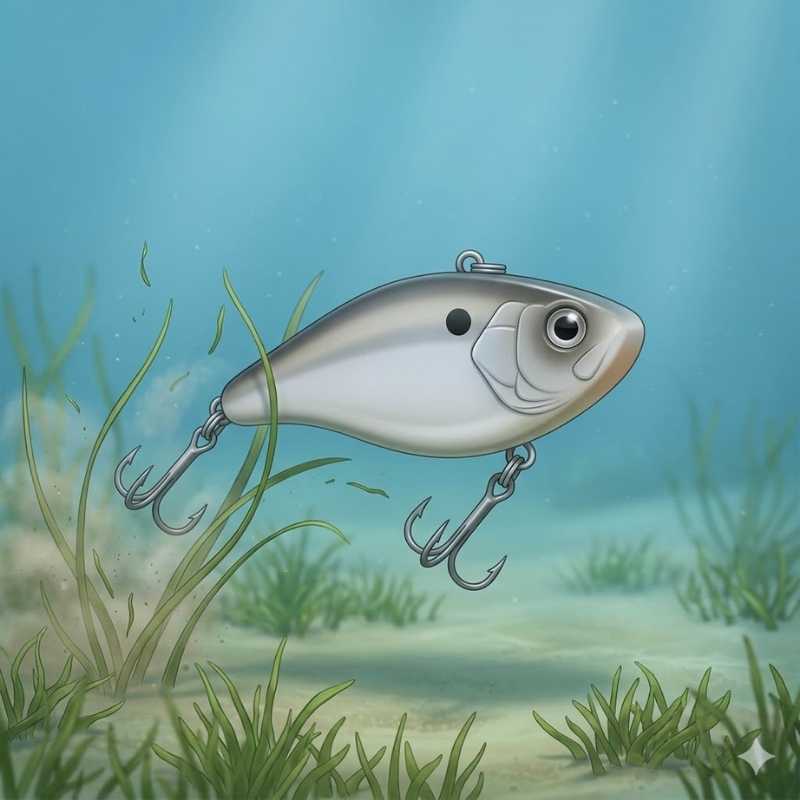
Strike King Red Eye Shad
Excellent flutter on the fall over grass and flats.
Grass flats and creek arms — yo-yo it through the tops.
As an Amazon Associate I earn from qualifying purchases.
Alternative Options
- Bill Lewis Rat-L-Trap →Alternative
Heddon Super Spook
The benchmark walking topwater — long casts and big bites.
Low-light, calm surface — walk the dog over open water.
As an Amazon Associate I earn from qualifying purchases.
Alternative Options
- River2Sea Whopper Plopper →Alternative
- Berkley Choppo →Budget
Retrieve adjustments
- Match the bait size. A 4-inch swimbait around 3-inch shad will get ignored.
- Match the depth band. A bait running 5 feet over 15-foot bait gets nothing.
- Mimic the cadence. Steady-swimming bait calls for steady retrieves; darting bait calls for jerks and pauses.
What most anglers get wrong
- Fishing memory spots even when bait has left them.
- Ignoring birds and surface signs in favor of pre-planned waypoints.
- Throwing oversized baits during shad spawns or bluegill-fry windows.
What experienced anglers notice
Most of the time, the biggest schools of bass in a lake are within 50 yards of the biggest bait concentrations. The exception is during the spawn — when bass are locked on beds and bait location matters less. For the fall bait-following peak, see fall bait guide.