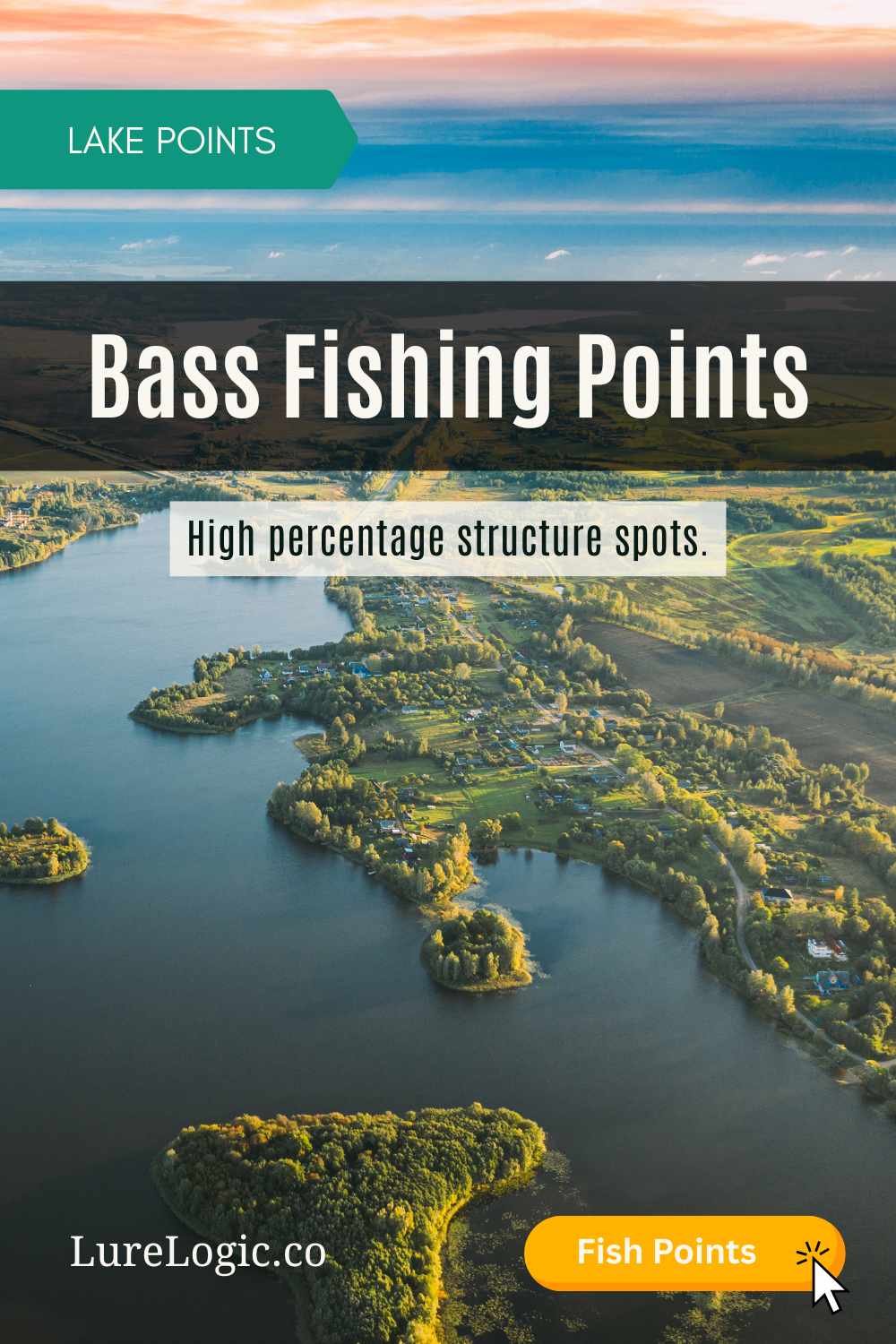
Why points produce year-round
A point is a finger of land or bottom extending into deeper water. That geometry creates a current break, concentrates bait moving along the bank, and gives bass quick access to multiple depths. Every variable bass care about — bait, oxygen, depth, ambush angle — comes together on a good point. Pair this with the structure pillar for the broader cover framework and the forage guide for what's swimming past the tip.
Most anglers notice that the same points produce season after season. The seasonal pattern shifts, but the structure itself remains productive because the geometry doesn't change. A point that holds bass in February will hold them again in August — at a different depth, with a different bait, but on the same piece of bottom.
Bass positioning breakdown
- Tip — biggest schools of offshore fish. Position 5–15 feet deeper than surrounding water.
- Windward side — active feeding fish using the current break. Usually shallower than the tip.
- Leeward side — neutral fish; lower percentage but bigger average size sometimes.
- Saddle / base — where the point connects to the bank; transition fish that move shallow at dawn.
- Inside corner — where the point meets a cove; small ambush spot that holds fish year round.
Types of points
- Primary points — major main-lake points where creek arms meet the main basin.
- Secondary points — smaller points inside creek arms; key prespawn staging structure.
- Submerged points — bottom features invisible from the surface; often the best summer offshore spots.
- Channel-swing points — where the old river channel turns; concentrate fish at depth.
- Bluff points — vertical rock fingers; classic winter and pre-spawn highway. Pair with the shade lines guide.
Seasonal point patterns
- Pre-spawn (Feb–Apr) — secondary points stage prespawn fish; primary points hold the early movers. Slow-rolled chatterbaits and jigs. See pre-spawn lures.
- Spawn (Apr–May) — secondary points adjacent to spawning flats hold cruising males and waiting females.
- Post-spawn (May–Jun) — main-lake points at the mouths of spawning coves stage recovering fish. Post-spawn guide.
- Summer (Jul–Aug) — main-lake points and submerged offshore points hold schools. Football jigs, deep cranks, drop shots.
- Fall (Sep–Nov) — secondary points concentrate migrating shad; bass gorge along them. Lipless cranks and spinnerbaits. Fall bait guide.
- Winter (Dec–Feb) — channel-swing points and the deepest main-lake points hold the most stable fish. Slow drag presentations.
The point lure rotation
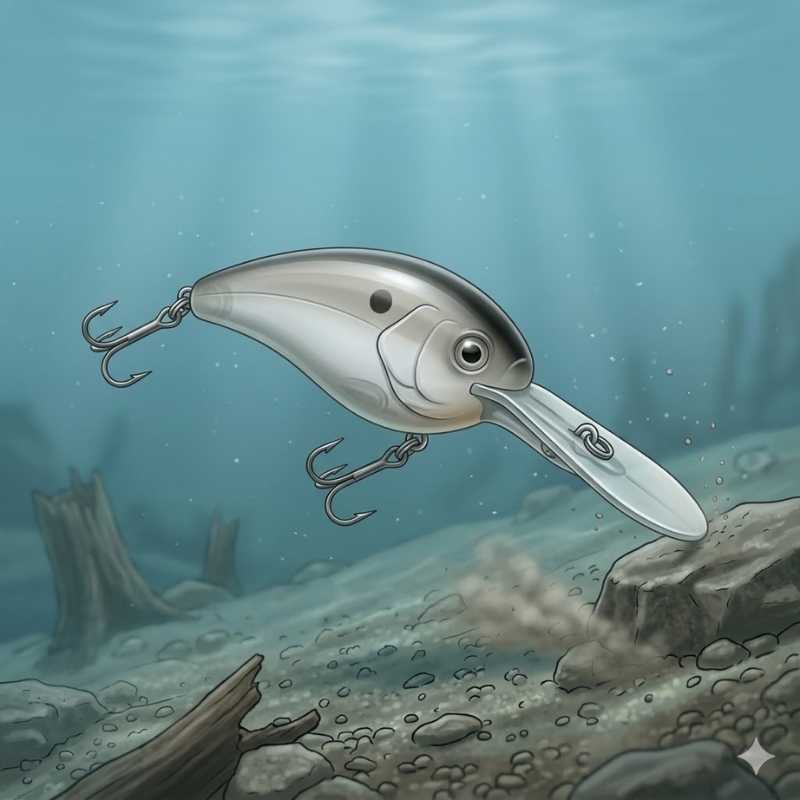
Strike King 6XD
Reaches deep with predictable wobble for offshore ledges.
Offshore ledges and humps — grind it into the bottom.
As an Amazon Associate I earn from qualifying purchases.
Alternative Options
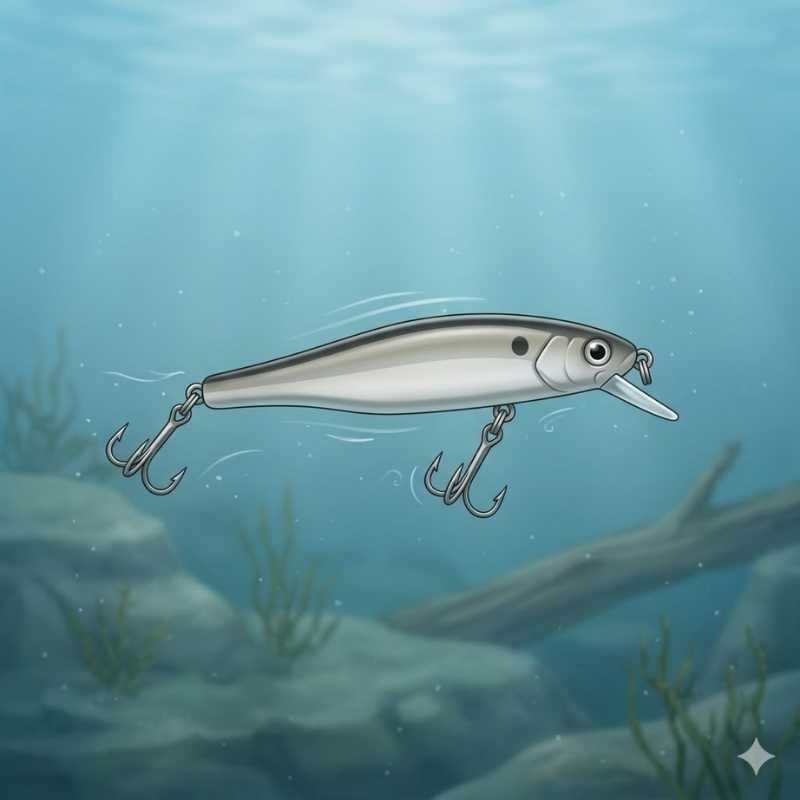
- Rapala DT-16 →Alternative
- Berkley Dredger →Budget
Dirty Jigs Guppy Football Jig
Premium football head built for rock and gravel.
Offshore rock and gravel — slow drag with long pauses.
As an Amazon Associate I earn from qualifying purchases.
Alternative Options
- Strike King Tour Grade Football →Alternative
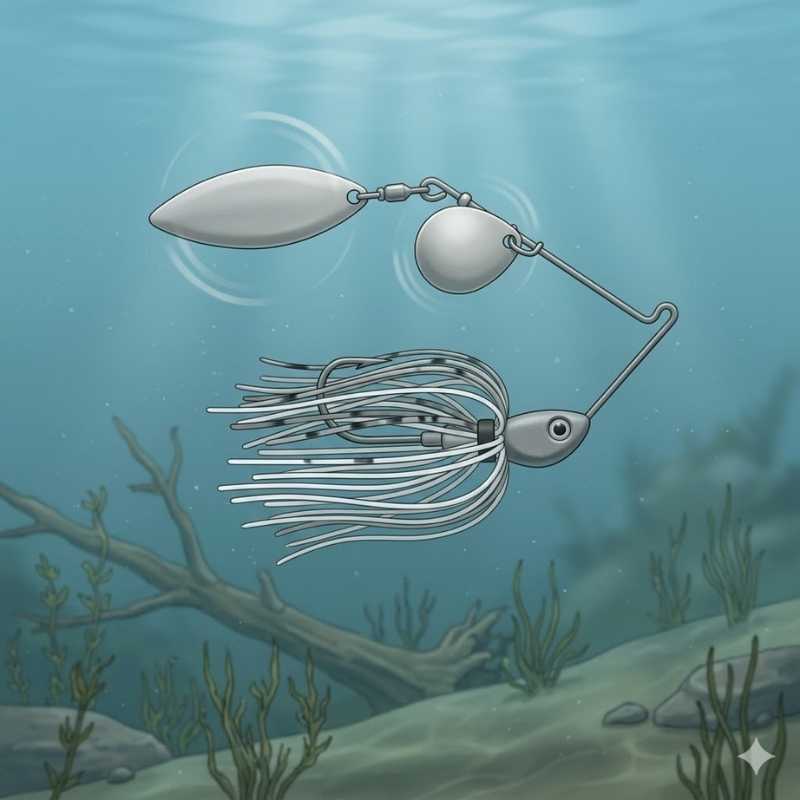
War Eagle Spinnerbait
Classic Colorado/willow combo for windy banks and stained water.
Windy banks and stained water — burn it parallel to cover.
As an Amazon Associate I earn from qualifying purchases.
Alternative Options
- Luck E Strike Legends Spinner Bait →Alternative
Water clarity adjustments
- Clear water points — bass push deeper. Look for fish at 18–25 feet on main-lake structure. Long casts and finesse.
- Stained water points — bass relate at 6–15 feet. Reaction baits dominate.
- Muddy water points — bass push shallower onto the point and tighter to any rock or wood. A chatterbait paralleling the bank is high percentage.
See the water clarity lure selection guide for color and noise picks.
Reading wind on points
Wind blowing into a point is one of the most reliable bass-fishing situations. Bait stacks on the windward side, current breaks form, and bass set up to ambush. Most anglers notice the windward side outproduces the calm side 5-to-1. A 10–15 mph wind pushing directly onto a long tapering point is the highest-percentage scenario you can find. The wind positioning guide covers the full mechanism.
Lure selection logic by point type
- Long tapering main-lake point — fan-cast with deep crank, then dissect tip with football jig.
- Short steep main-lake point — drop shot or jig parallel to the drop-off; fish vertically.
- Secondary point in 6–10 feet — chatterbait, spinnerbait, squarebill. Reaction-bait water.
- Channel-swing point in 25+ feet — football jig, drop shot, deep crank for the contour break.
- Bluff point with vertical walls — jerkbait through the strike zone, jig falling parallel to the wall.
Real-world application: dissecting a point
Pull up 40 yards off the tip. First five casts: fan-cast a deep crankbait over the tip and both sides — this finds active fish quickly. If no bites, switch to a 3/4 oz football jig and drag it from the tip up onto the shallow shoulder, hitting every contour change. Still nothing? Drop a drop shot vertically on the tip and the channel-swing side. By now you've covered the point at three speeds and three depths in 20 minutes. Either it's productive today or it isn't — move to the next one.
Retrieve adjustments
- Fan-cast the tip. Bass position around the point, not just on it.
- Drag bottom-contact baits across the contour break. The depth change is the strike zone.
- Match the depth. Different points hold fish at different depths — confirm before committing.
- Cast parallel. A bait running along the shoulder of a point stays in the strike zone 4x longer than one casted perpendicular.
Common mistakes anglers make
- Fishing only the visible portion of the point and ignoring the submerged extension.
- Casting from the wrong angle — parallel to the point usually produces more than perpendicular.
- Hitting too many points without picking apart the productive ones.
- Ignoring secondary points in spring — they often outproduce primary points for 6 weeks.
- Skipping wind-blown points because they're harder to fish.
What experienced anglers notice
Most of the time, a single point holds productive fish on either the morning or evening side of the day — rarely both. Learn the right bite window for each point you fish. The exception is wind-blown points, which can produce all day in the right conditions. Pair this guide with stable weather positioning for the multi-day point pattern and the creek channel guide for the channel-swing point variant.