What Causes Shad Die-Offs
Threadfin shad evolved in warm water and cannot survive prolonged cold. Their physiology stops functioning effectively below about 45°F, and below 42°F they begin dying in significant numbers. Gizzard shad, by contrast, tolerate cold water into the 30s and keep functioning normally — they're a northern-adapted species. Most southern reservoirs hold both species, so a die-off thins the threadfin population dramatically while leaving gizzard shad untouched. For the species comparison see threadfin shad vs gizzard shad for bass fishing.
The trigger is a rapid temperature drop. Shad acclimate slowly. A lake that cools from 55°F to 42°F over six weeks may see only minor die-off, while the same lake dropping 10°F in a week after a hard arctic front will see massive kills. Pay attention to the trend, not just the absolute temperature.
How Bass React
Bass metabolism is also slow in 40-degree water — they're not running down healthy bait. A dying shad is the perfect prey: it's suspended or sinking, twitching weakly, and incapable of escape. A bass expends almost no energy to eat it. The result is heavy feeding from fish that an angler throwing a chatterbait would write off as inactive.
Positioning follows the bait. Bass stage near where dying shad accumulate — wind-blown points, dam areas, marina entrances, channel intersections where current concentrates floating bait. They suspend at the depth where dying shad sink to (often 10–25 feet) and feed in slow, deliberate bursts. For the broader cold-water framework see winter bass fishing lures and bass fishing by water temperature.
Water Temperature Thresholds
- 45–50°F: stressed threadfin but minimal die-off. Bass start keying on slow-falling baits but the gorging pattern isn't on yet.
- 42–45°F: first dying shad appear. Bird activity ramps up. The pattern is beginning.
- 38–42°F: peak die-off zone. Heaviest bass feeding. Birds are everywhere. White swimbaits and Flukes are the answer.
- 35–38°F: die-off continues but bass metabolism is so slow they only feed in short windows around midday and afternoon warming.
- Below 35°F: die-off may continue but bass feeding is sporadic. Match the temperature with a vertical spoon presentation in deeper water.
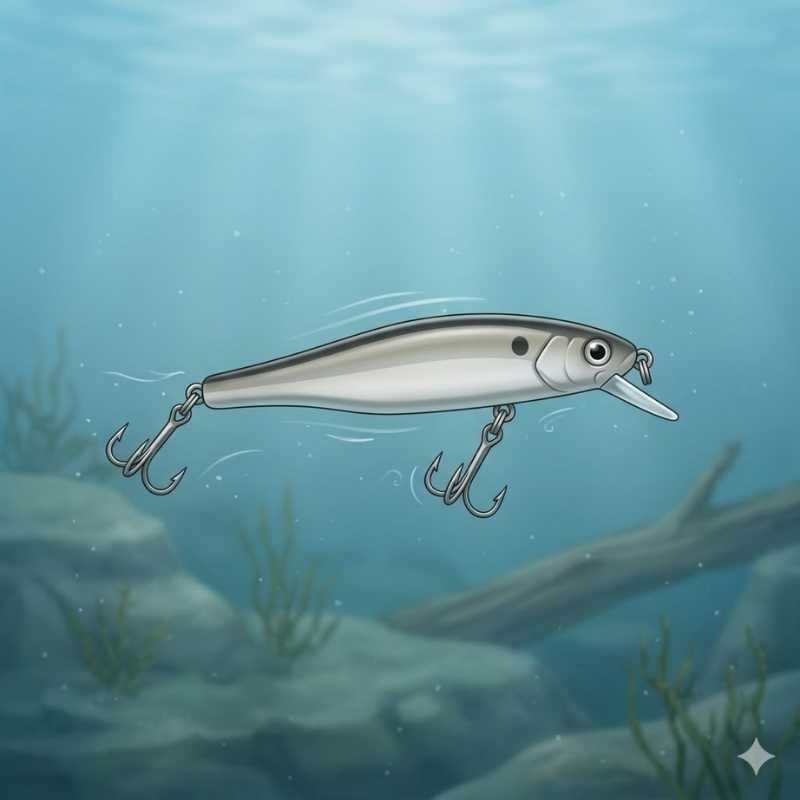
Megabass Vision 110
Industry-standard suspending jerkbait for cold-water bass.
Cold, clear water — long pauses near rock and points.
As an Amazon Associate I earn from qualifying purchases.
Alternative Options
- Rapala Shadow Rap →Alternative
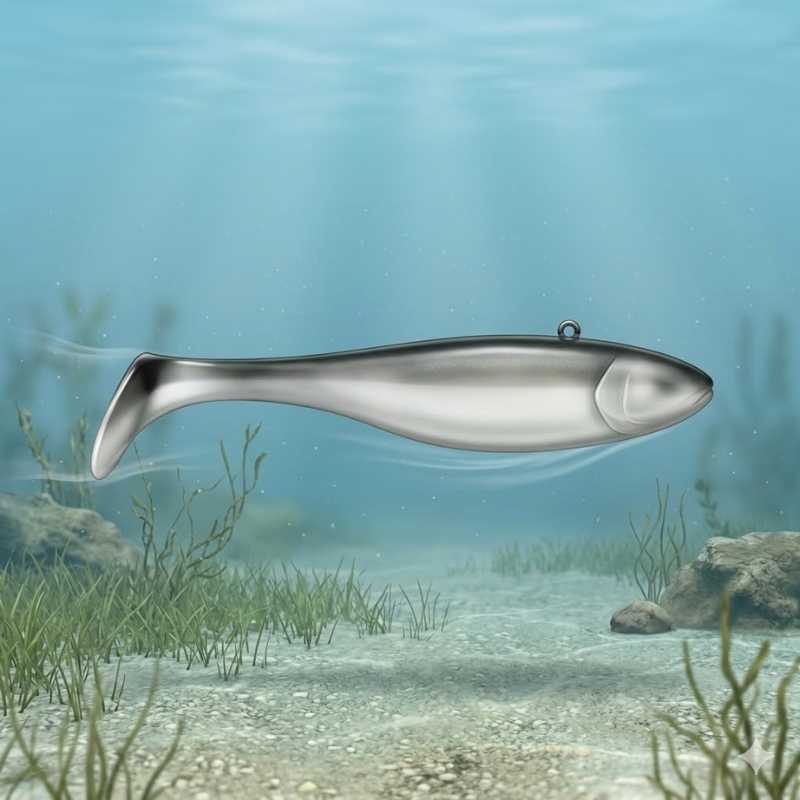
Keitech Swing Impact FAT
Best-in-class paddle-tail action for any swimbait rig.
Imitate shad — steady retrieve over points, flats, and drops.
As an Amazon Associate I earn from qualifying purchases.
Alternative Options
- Berkley PowerBait CullShad →Alternative
- Strike King Rage Swimmer →Budget
Bird Activity Clues
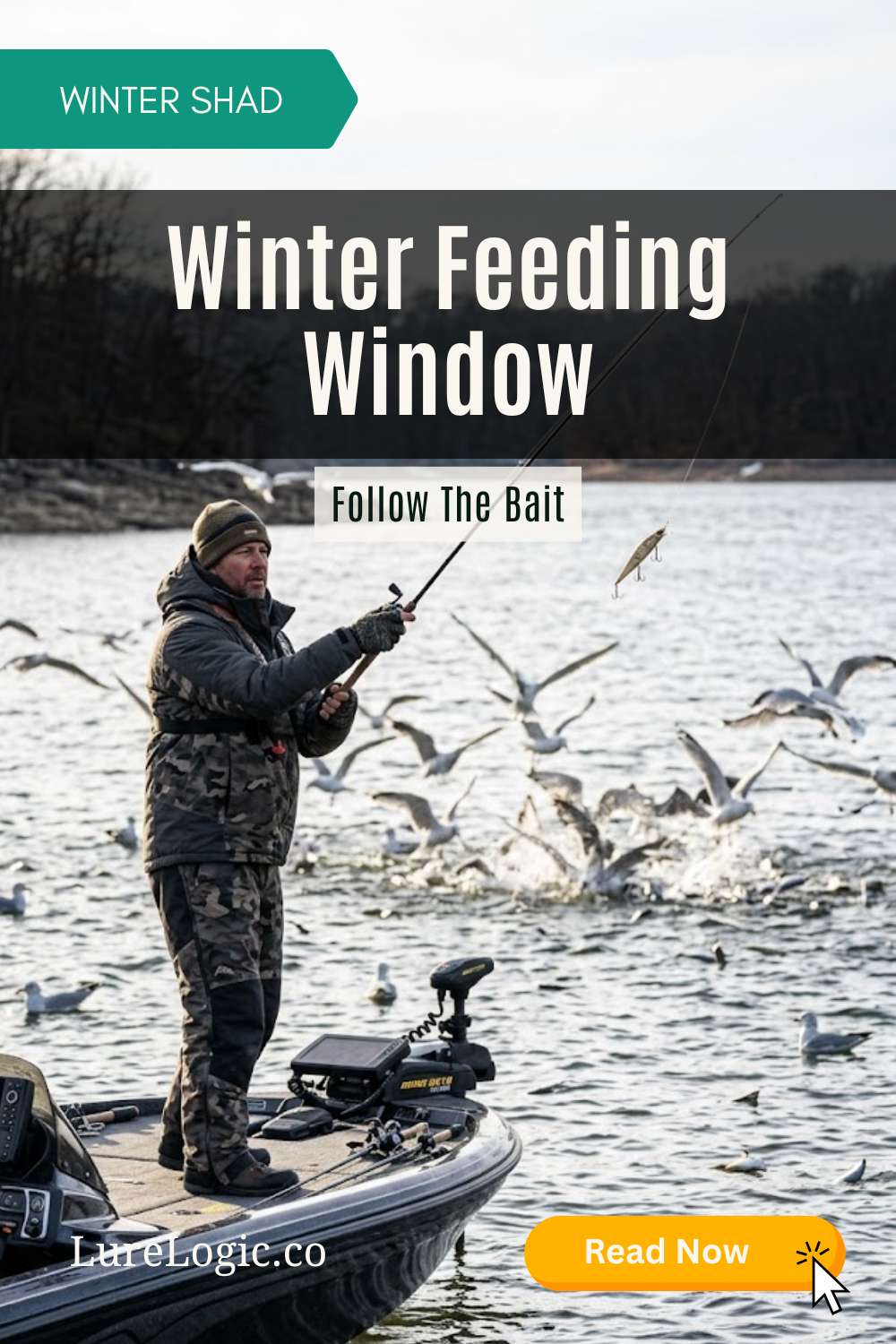
Birds find dying shad before anglers do. Watch for:
- Gulls and terns diving — picking up dying shad off the surface. The most reliable indicator of an active die-off.
- Cormorants and loons working an area — diving birds chasing the threadfin that haven't died yet. Bass are usually mixed in.
- Herons and egrets standing on wind-blown banks — picking up shad washed onto rocks. Bass are off the bank in slightly deeper water.
- Bald eagles circling — high-altitude scouts. If eagles are working an area, there's bait dying there.
Run-and-gun the lake looking for birds. A 30-minute run that locates an active bird school is worth more than 4 hours of casting blind. Once you find the birds, slow down, idle the area, and read electronics for suspended bass before fishing.
Best Lures
Every productive die-off lure has the same characteristic: it can be presented slowly with a long pause or fall. The short list:
- Soft jerkbait (Fluke-style): rigged weightless or with a small belly weight. Twitch twice, let it sink 8 feet, repeat. White, pearl, or albino color. The single most important die-off bait.
- Suspending hard jerkbait: 6+ inch pauses, then a single twitch. Bone, ghost shad, or chrome.
- Slow-rolled swimbait: 3.8 to 5-inch paddle tail on a 1/4–3/8 oz head. Crawled along the bottom at the depth of the dying bait. For more on category-by-category jerkbait selection see best jerkbaits for bass fishing.
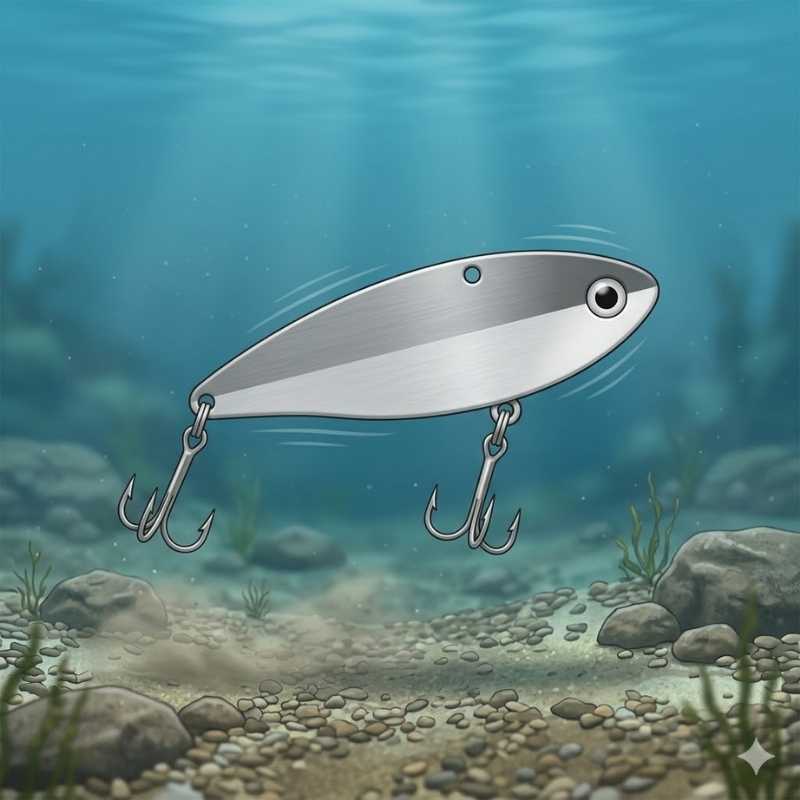
- Jigging spoon: 3/4 to 1 oz silver spoon worked vertically over schools shown on electronics. The cold-water deep option.
- Underspin with a small swimbait: mid-water column presentation for suspended bass that won't commit to a sinking bait.
Damiki Vault Blade Bait
Tight vibration — an ideal winter vertical blade.
Cold water on deep structure — short rips with long pauses.
As an Amazon Associate I earn from qualifying purchases.
Alternative Options
- Steel Shad →Alternative
- Heddon Sonar Flash →Budget
Timing Windows
Two windows matter most. The first is the 3-day stretch immediately after a hard cold front pushes water temperature below 42°F — that's when the heaviest die-off occurs and bird activity is at its peak. The second is the warming trend that follows, typically 5–10 days later, when sun and stable weather warm the surface by 2–4°F and bass shift from completely dormant to actively feeding on the lingering dead shad.
Within a day, the best windows are 11 AM to 3 PM. Cold-water bass need solar warming to activate even slightly, and the surface is at its warmest in early afternoon. Don't show up at dawn during a die-off — you'll wait 4 hours for the bite to start.
Common Mistakes
- Fishing too fast. A retrieve that catches summer bass moves 5x too fast for die-off bass. Pause for 10+ seconds on every cast.
- Wrong color. White, pearl, and translucent baits imitate dying threadfin. Dark colors don't.
- Ignoring birds. Anglers fixate on their map and ignore the most reliable real-time forage indicator on the lake.
- Fishing too shallow. Dying shad sink. Most die-off bass are caught in 8–25 feet, not on the bank.
- Giving up after a slow morning. The bite is a midday and afternoon event. Don't bail before noon.
- Targeting gizzard-shad-only lakes. Without threadfin in the system, the die-off pattern doesn't exist meaningfully.
Related Guides
The shad die-off is one piece of a larger cold-water forage cycle that includes shad migration in fall and herring spawn in spring. For the full forage picture see our complete guide to bass forage, and for the broader cold-water lure framework see best bass lures by water temperature.