Why transitions hold fish
A bottom change is an edge. On one side, you have hard bottom — gravel, rock, clay — that holds heat, attracts crawfish, and bounces sonar back clean. On the other side, you have soft bottom — mud, silt, sand — that holds different forage. Bass set up on the seam to access both. The structure bass fishing guide covers how transitions fit alongside points, channels, and cover in the broader structure picture.
Most anglers notice that bites on transitions come in clusters. One spot produces three fish, the next 200 yards is dead, and another transition 200 yards later produces three more. The pattern peaks during seasonal transition windows, especially pre-spawn — see pre-spawn bass fishing lures for the bait rotation, and the seasonal bass patterns guide for where transitions sit on the year-round calendar.
Common transitions
- Gravel to clay — classic prespawn and post-spawn transition.
- Rock to sand — summer and fall hard-bottom edge.
- Pea gravel to chunk rock — both sides are hard; the change itself concentrates crawfish.
- Hard bottom to grass — the edge where vegetation starts.
- Channel edge to flat — where the deep bottom meets the shelf.
Reading transitions visually
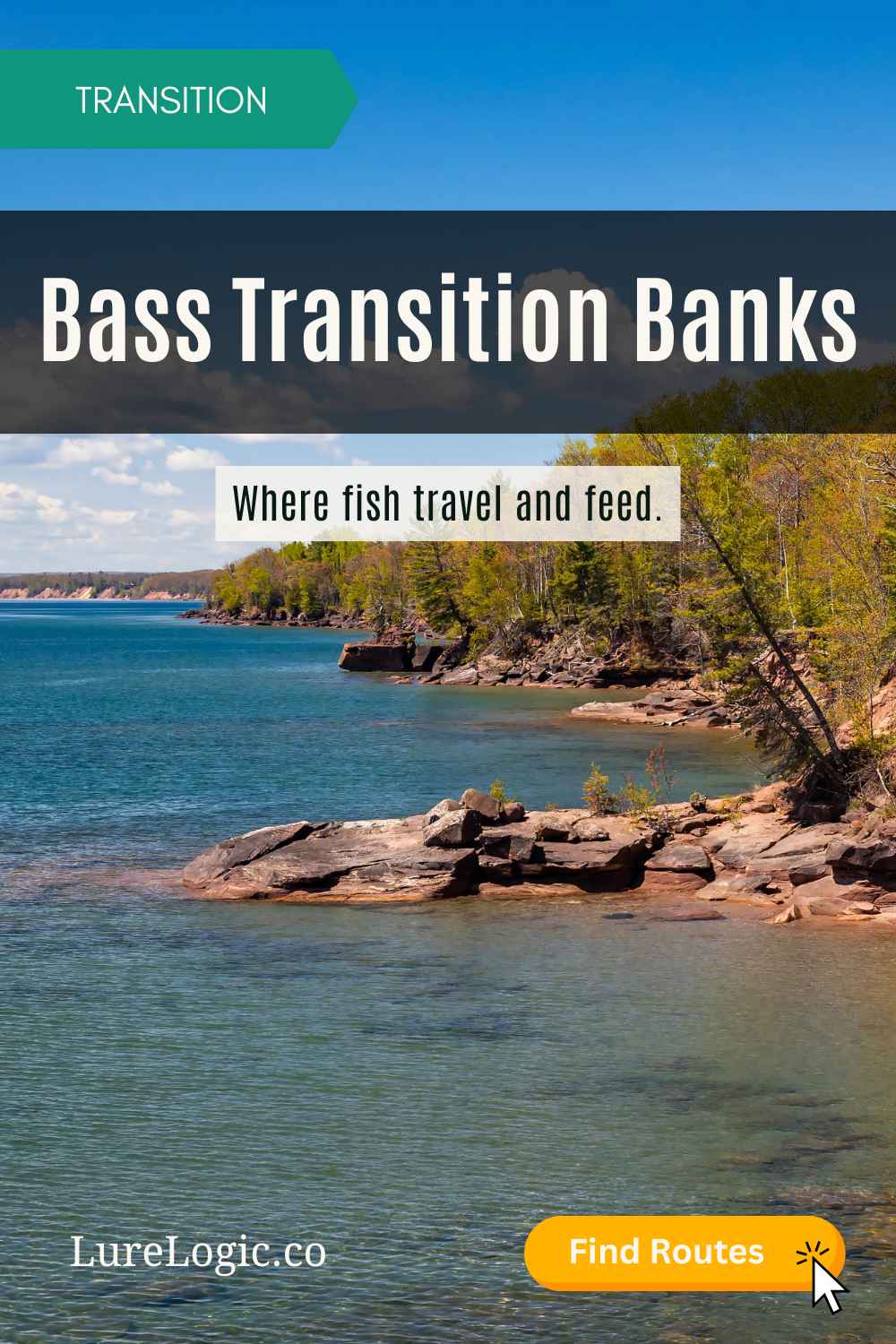
Many bottom changes are visible from the bank. A red-clay bank that turns into gray rock signals an underwater transition that often runs out into the lake. Where the bank shifts color or texture, the bottom usually does the same thing several feet underwater.
The transition lure rotation
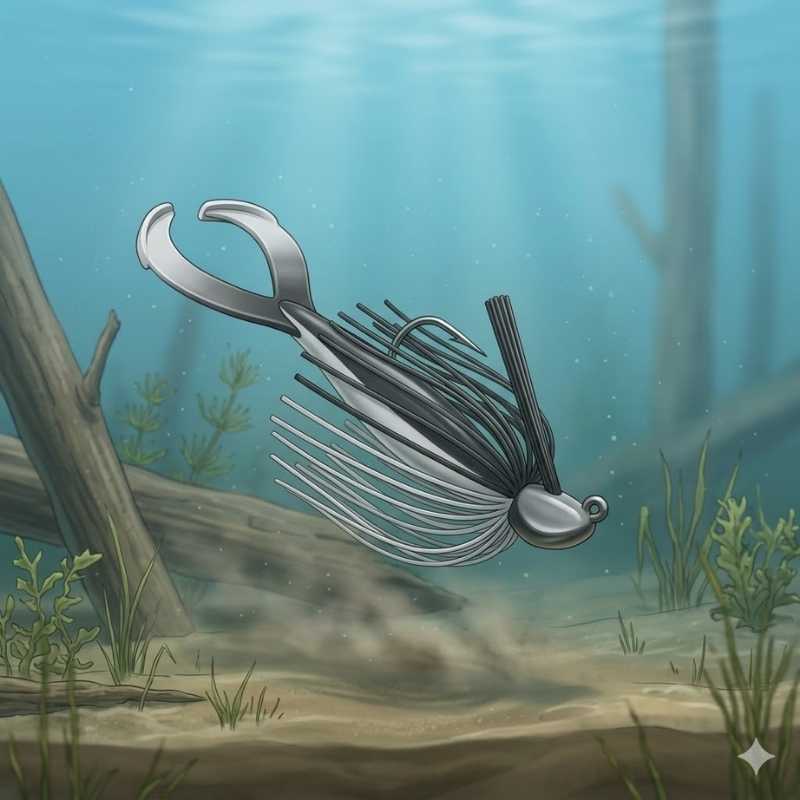
Dirty Jigs Guppy Football Jig
Premium football head built for rock and gravel.
Offshore rock and gravel — slow drag with long pauses.
As an Amazon Associate I earn from qualifying purchases.
Alternative Options
- Strike King Tour Grade Football →Alternative
Strike King 6XD
Reaches deep with predictable wobble for offshore ledges.
Offshore ledges and humps — grind it into the bottom.
As an Amazon Associate I earn from qualifying purchases.
Alternative Options
- Rapala DT-16 →Alternative
- Berkley Dredger →Budget
Yamamoto Senko
Dead-stick fall that bass simply can't refuse.
Heavy cover — pitch in, let it sink on slack line.
As an Amazon Associate I earn from qualifying purchases.
Alternative Options
- Zoom Trick Worm →Alternative
- Strike King Rage Craw →Budget
Retrieve adjustments
- Drag, don't hop. A football jig dragged across the change feels the transition through the rod tip.
- Slow down at the seam. When the bait crosses the change, pause. Most strikes happen there.
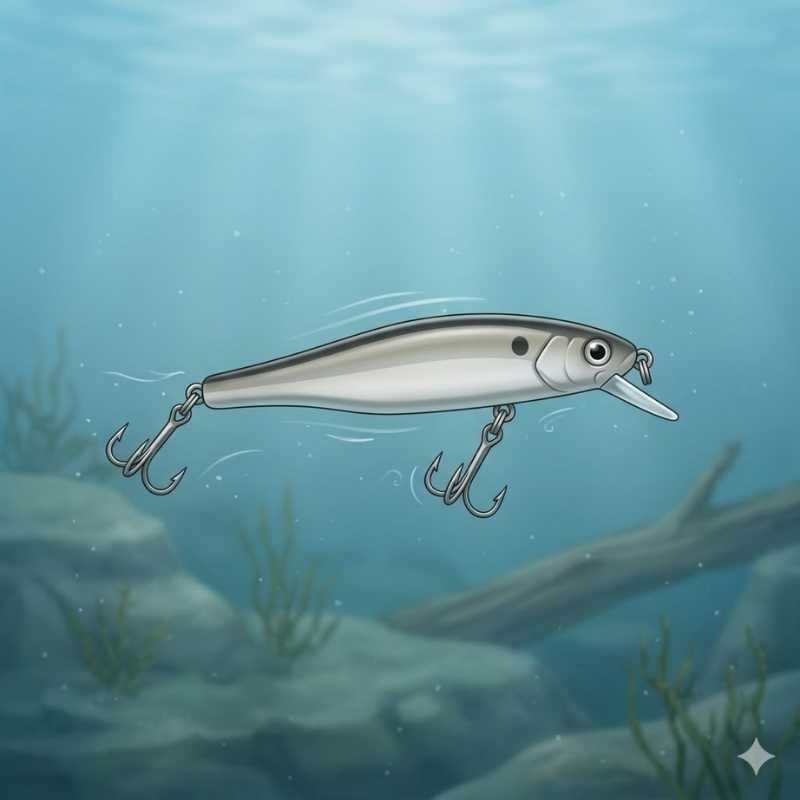
- Match crankbait depth to the transition depth. A bait that doesn't tick the change misses the productive zone.
Time of year for transitions
Transition banks produce year-round, but they peak in spring (prespawn craws) and fall (bait migration). In summer, deeper transitions on offshore structure carry the load. In winter, transitions in 15–25 feet of water hold concentrated fish.
What most anglers get wrong
- Looking for cover instead of structure. Transitions don't have visible features but hold fish.
- Fishing past the change without pausing or feeling for the bottom shift.
- Ignoring transition banks because they look "empty" — emptiness is the point. The fish are on the seam, not scattered.
What experienced anglers notice
Most of the time, the same transition produces year after year. Mark them aggressively. The exception is after a major lake-level change — drawdown or flood — which can shift where the productive transitions are by exposing or covering different bottom. For shallow transition fishing, see the post-front lures guide.