Why Creek Channels Matter
A reservoir was a river system before it was flooded. The original riverbed and every creek that fed into it still exists under the water — now those channels are the deepest, most defined structural features on the lake. Bass orient to them year-round because they offer three things at once: depth (security and temperature options), an edge (the break between deep and shallow water), and a route (a way to move between zones without crossing exposed flats).
Anywhere the channel touches structure — a point, a hump, a brushpile, a bridge — bass stack up. Anywhere the channel makes a hard bend, fish hold on the swing. Anywhere the channel cuts close to a spawning flat, bass stage on it before and after the spawn. Mapping out the channels on your lake gives you a year-long playbook.
Pre Spawn Movements
In late winter and early spring, bass start drifting up the creek channels from their deep winter holes toward the spawning flats. They don't crash the bank — they move in stages, holding on each piece of structure along the channel for days at a time as the water warms. The classic pre-spawn migration path is: deep main-lake hole → main-lake point → secondary point in a creek arm → channel swing closest to a spawning flat → flat itself.
Find the channel that leads to a known spawning pocket, then identify every structural break along that channel — every brushpile, rock pile, stump field, and bend — and you've mapped the staging spots. Bass will hold on each one until water temps and weather push them to the next. See pre-spawn bass fishing lures for what to throw at each stage.
Summer Channel Highways
As surface water heats and a thermocline sets up, bass push back off the bank and live on the channel edge — usually right at or just above the thermocline depth. Main-lake channel edges, channel-related humps, and the outside bends of creek channels become the summer addresses for most adult bass in the system.
What you're looking for in summer is a channel edge with cover sitting on it — a brushpile in 18 feet, a rock pile on a 22-foot swing, standing timber along the drop. Bass sit on the cover and feed on shad pulling along the channel. Offshore is where the bigger fish live in summer, and the channel edge is the address.
Fall Migration Routes
In fall, the pattern reverses. As surface temps cool and shad start migrating back into the creek arms, bass follow. They use the same channels as highways heading the other direction — from main-lake offshore structure, up the creek channel, into the backs of the creeks. The migration tracks the bait. Find the bait pods on your electronics, follow the channel back, and you'll find bass at every staging point along the way.
Fall channel fishing is some of the easiest reaction-strike fishing of the year. Bass are gorging on shad, the bait is concentrated in defined zones, and a moving bait pulled along the channel edge gets crushed. See fall bass fishing bait guide for the lure progression.
Winter Holding Areas
In winter, bass collapse into the deepest, most stable water they can find — almost always on a main-lake channel or in the deepest hole inside a major creek arm. Look for channel intersections (where a creek channel meets the main river channel), deep channel swings with steep banks, and any structure (brush, timber, rock) that sits in 25 to 50 feet on the channel edge. Bass stack up vertically in winter; finding one usually means finding fifty.
This is when forward-facing sonar earns its keep. Bass holding on a winter channel are often suspended just off the bottom on a piece of cover, and seeing them in real time lets you put the bait exactly where they are. See winter bass fishing lures for cold-water presentations.
Electronics Clues
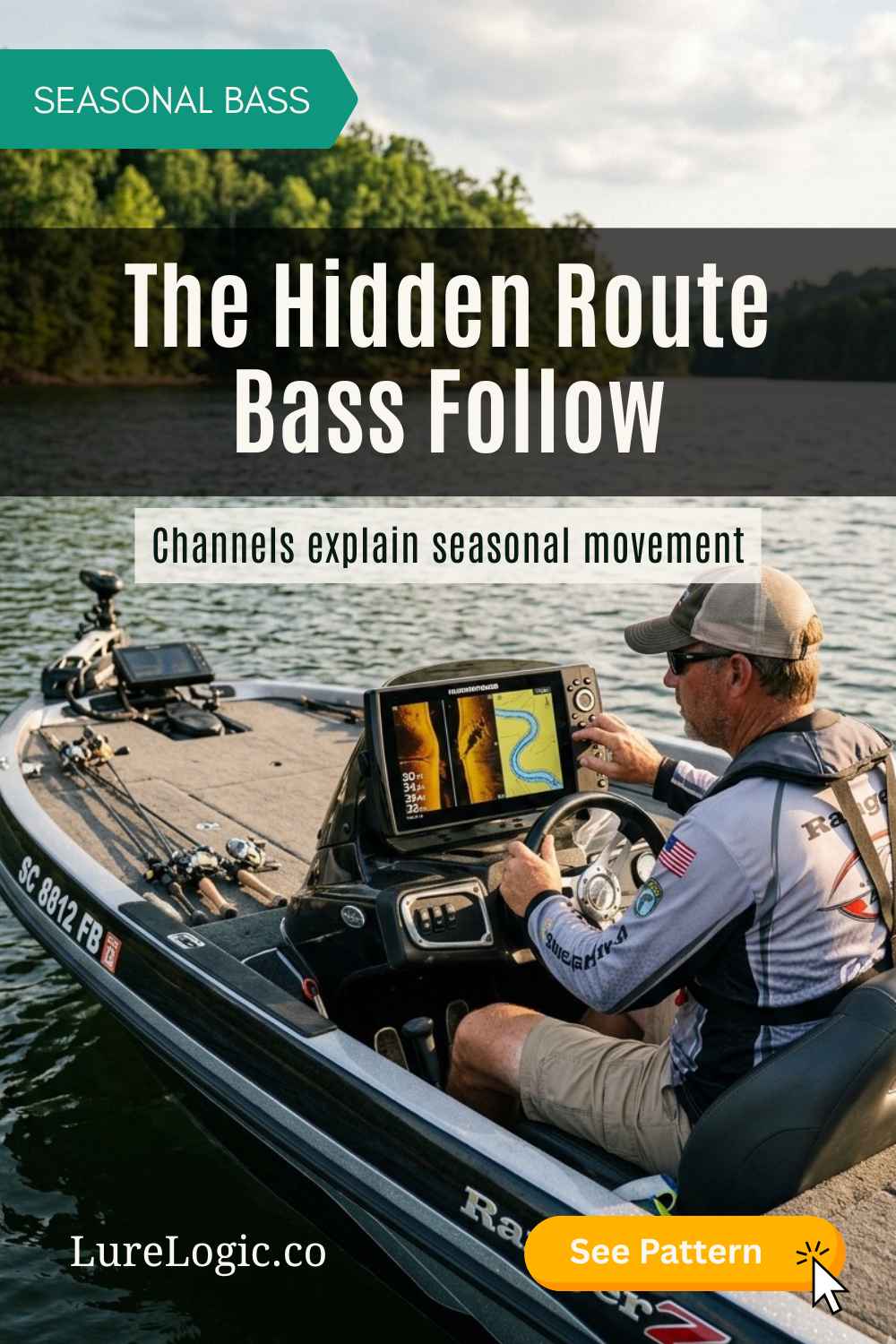
- Side imaging at 80–120 feet per side to map the channel edge and pick out cover sitting on it.
- Down imaging with the chirp dialed in to confirm whether marks on the cover are bass, bait, or trash.
- Forward-facing sonar to see exactly where fish are positioned on the structure before you cast — saves dozens of blind casts.
- A high-resolution contour chart overlaid on your GPS so you can follow the channel even when the structure is featureless.
- Mark waypoints aggressively on every channel feature. A milk run of 15 channel spots is more productive than fishing one bank all day.
Channel Swings and Ambush Points
Channel swings — the outside bends of the underwater channel — are the single highest-percentage feature on most lakes. The current (whether from dam generation, river inflow, or wind) accelerates around the bend and creates a natural ambush spot. Bait gets swept around the bend, and bass park on the slack-water side of the swing exactly the way they park on a current seam in a river.
The biggest swings, where the channel makes a hard 90-degree bend or where two channels intersect, hold the most fish. Layer in cover — a brushpile, a rock pile, standing timber — sitting on the swing and you have an A-grade spot that produces year-round.
Top Lures for Channel-Edge Bass
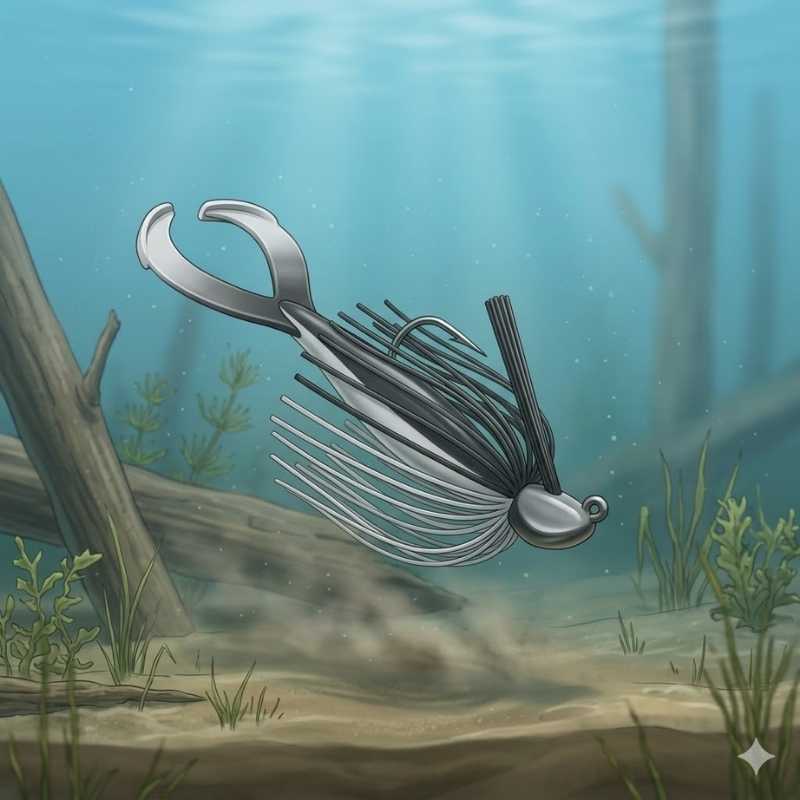
Dirty Jigs Guppy Football Jig
Premium football head built for rock and gravel.
Offshore rock and gravel — slow drag with long pauses.
As an Amazon Associate I earn from qualifying purchases.
Alternative Options
- Strike King Tour Grade Football →Alternative
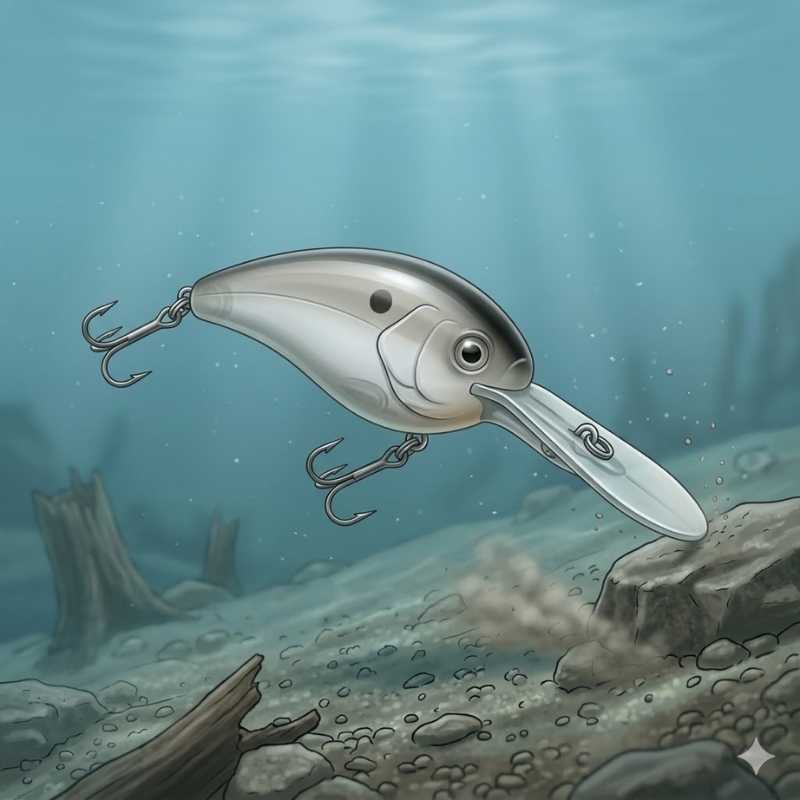
Strike King 6XD
Reaches deep with predictable wobble for offshore ledges.
Offshore ledges and humps — grind it into the bottom.
As an Amazon Associate I earn from qualifying purchases.
Alternative Options
- Rapala DT-16 →Alternative
- Berkley Dredger →Budget
Roboworm Straight Tail
Industry-standard dropshot worm — subtle and proven.
Pressured or deep clear water — vertical shake on rock with a slim worm.
As an Amazon Associate I earn from qualifying purchases.
Alternative Options
- Berkley Bottom Hopper →Alternative
- Berkley MaxScent Flatworm →Budget
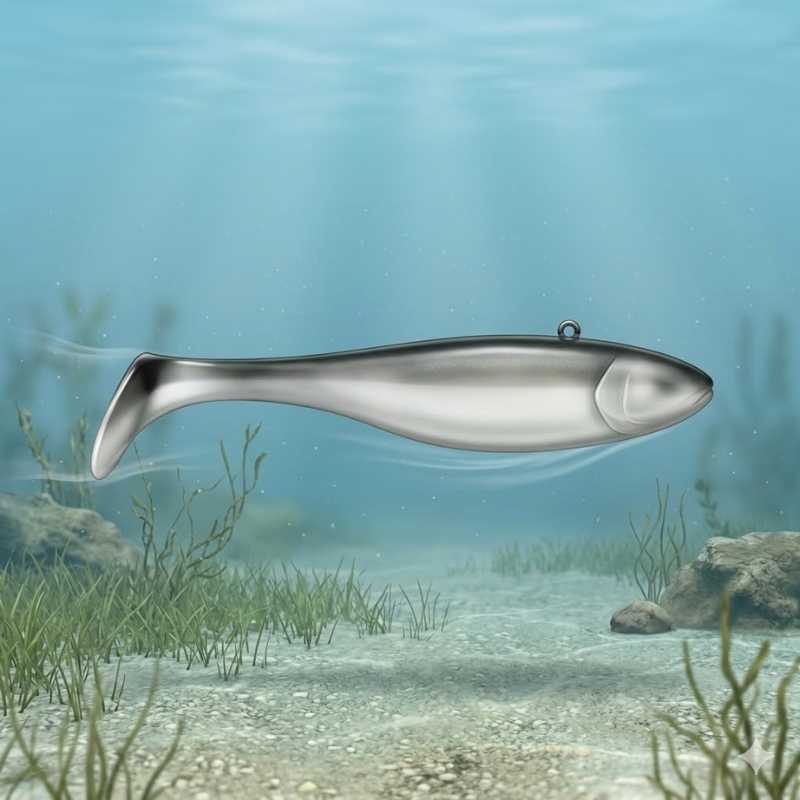
Add a Carolina rig for slow-dragging across long flat channel edges and a flutter spoon for stacked fish off the swing. Jighead minnows on forward-facing sonar are the modern winter and summer suspended-fish presentation. Match the depth, match the bait, and let the structure dictate the angle.
Common Mistakes
- Fishing channels without electronics. You can't fish what you can't see. Map the channel first, fish it second.
- Ignoring the cover on the channel. The channel edge itself rarely holds fish — the brush, rock, or timber sitting on the edge does.
- Fishing too fast over offshore structure. Channel fish often want a slow, vertical presentation, not a horizontal burn.
- Sitting on top of the spot. Position the boat off the channel and cast across it so the bait works through the strike zone naturally.
- Quitting on a channel spot too soon. Bass on channels are often there but neutral; switching baits and slowing down often triggers a bite on the third or fourth pass.
For the broader logic on how bass relate to structure between seasons, see bass transition banks in seasonal change. For the suspension pattern that channels produce, see why bass suspend during seasonal transitions. For the points that connect channels to shorelines, see bass fishing points.