What a Thermocline Actually Is
As surface water heats in late spring, it stays at the top because warm water is less dense than cold. With no wind or current to mix the column, a sharp boundary develops between the warm surface layer (the epilimnion) and the cold bottom layer (the hypolimnion). The transition zone — usually two to five feet thick — is the thermocline. Temperature can drop ten degrees or more across just three feet of depth. For what happens when oxygen collapses above that line too, see low-oxygen summer bass strategies and the summer oxygen crash guide.
Most Southeastern reservoirs stratify by mid-June, hold the layer through September, and turn over in October when surface temperatures finally cool enough to sink and mix the column. During those four months, the thermocline is the single most important environmental feature on the lake — more than wind, more than cloud cover, more than current. It controls where bait lives, where bass feed, and which 80 percent of the water column is essentially dead. For the full midday playbook, see our midday summer bass fishing guide.
Why Bass Position on the Thermocline
Three things stack on the same band in summer, which is why bass have no reason to be anywhere else:
- Oxygen ceiling — below the thermocline, dissolved oxygen drops fast. Bass need 4 to 5 mg/L minimum to feed; the hypolimnion often runs under 2 by August.
- Temperature comfort — water just above the thermocline is the coolest oxygenated water in the lake. Metabolism stays high without overheating.
- Bait concentration — shad, alewives, and blueback herring all stack on the thermocline for the same reasons. Where the food is parked, the bass are parked.
Where Bass Actually Sit Relative to It
- On top of the thermocline — schooling fish over deep humps and main-lake points, suspended over the thermal break itself. This is the same behavior covered in why bass suspend.
- On structure that intersects it — brushpiles, standing timber, rock piles, and channel edges that come up through the thermocline are gold. Bass stage exactly where the structure meets the thermal layer.
- Just above it on the windy side — wind pushes bait toward one bank, and bass slide to the upwind side of the structure to intercept it.
- Never below it — if your bait is 25 feet down on a 22-foot thermocline, you're fishing dead water.
Why Oxygen Matters More Than Temperature
Anglers obsess over water temperature because it's easy to measure. But below the thermocline, the more important variable — dissolved oxygen — collapses. Once stratification sets in, oxygen in the hypolimnion is consumed by decomposing organic matter on the bottom and is not replenished from the surface. By August on a typical reservoir, oxygen below the thermocline can drop below 2 mg/L. Bass need 4 to 5 mg/L to survive comfortably and 6+ to feed actively.
This is why a 90-degree summer afternoon on a stratified lake is not a temperature problem for bass — it's an oxygen ceiling. Bass can tolerate 85-degree surface water briefly. They cannot tolerate 2 mg/L of oxygen for any length of time at all. The thermocline is, in practical terms, the floor of the bass's world from July through September. The temperature framework that controls everything else is detailed in our best bass lures by water temperature guide.
How Baitfish Reveal the Productive Layer
Threadfin shad — the dominant forage on most stratified Southern reservoirs — are even more oxygen-sensitive than bass. They cannot survive below the thermocline at all and pack into the layer of water directly above it. On most lakes in July you'll mark dense bait clouds at exactly the same depth across the entire lake. That depth is the productive layer. Find it once, and the bait will be there at the same depth on every main-lake point, every offshore hump, and every channel swing for the next two months. For the deeper dive into how bass follow bait, read how bass follow baitfish movement.
The threadfin/gizzard distinction matters here too. Threadfin pack tight above the thermocline; gizzard shad will roam shallower and over structure that intersects the surface. The full breakdown is in our threadfin shad vs gizzard shad guide.
Electronics Clues
Modern sonar makes finding the thermocline simple once you know what to look for:
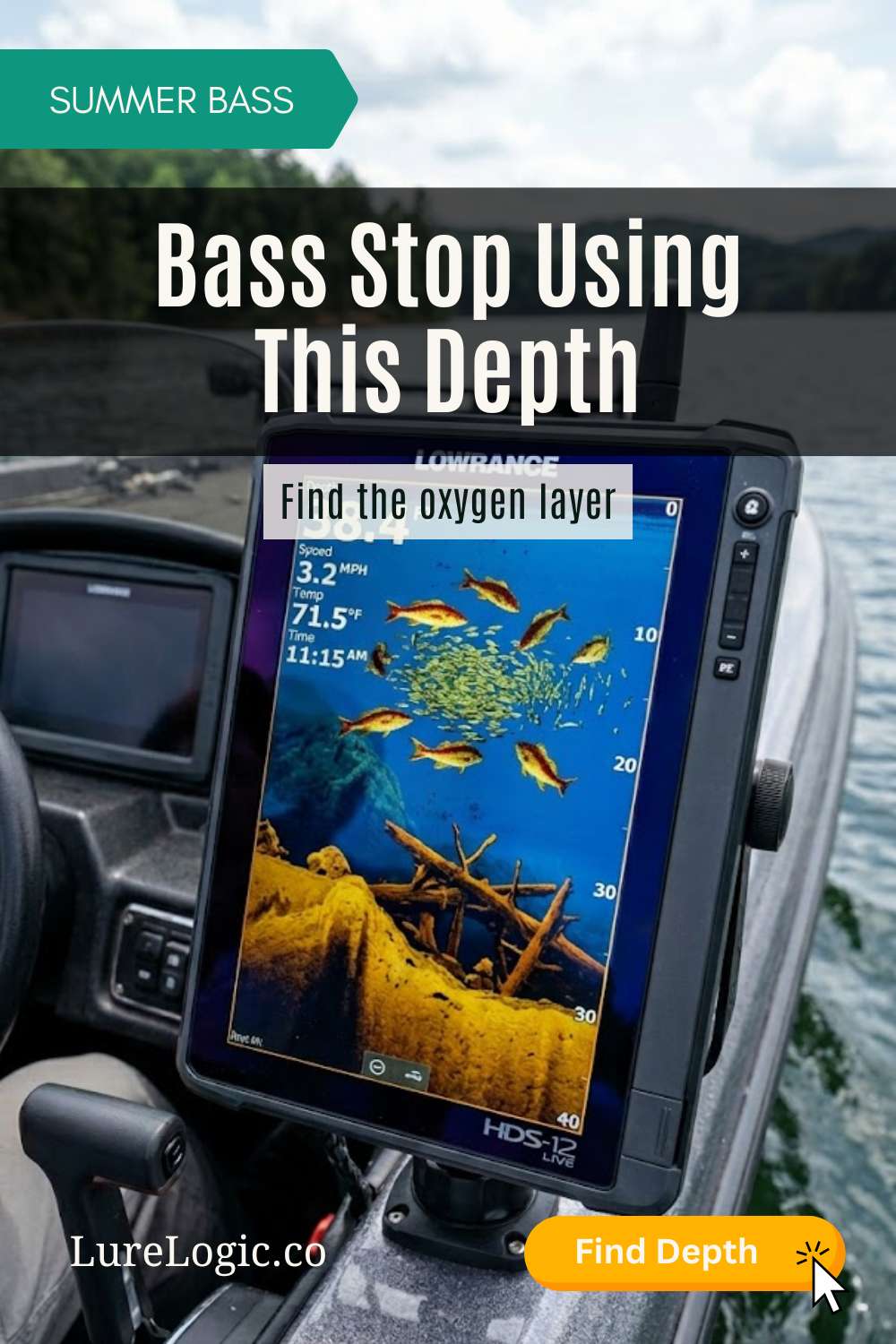
- Faint horizontal clutter band — the temperature/density change scatters the sonar return into a fuzzy line at a consistent depth across the lake.
- Bait stacked above it — dense clouds or stringy clusters that all share a top depth.
- Nothing below it — no game-fish arches, no scattered returns. Bottom returns look stronger because nothing is suspended in the water column above the bottom.
- The line tightens at midday — when surface heats and surface mixing stops, the boundary gets crisper.
Drop down sensitivity until the screen looks empty, then bring it back up slowly. The thermocline appears before the bait clouds reappear.
Reservoir vs Natural Lake Differences
Highland reservoirs with deep water and minimal current — Lanier, Hartwell, Murray, Smith Mountain — stratify the hardest and hold the thermocline the longest. Shallower lowland reservoirs with constant generation or river flow may not stratify at all because the current keeps the column mixed. On the Catawba chain, the upper-lake stretches of Lake Wylie rarely stratify cleanly because Allen Steam Station generation keeps water moving through the system. The lower lake near the dam stratifies more reliably. Always check your specific lake — generation patterns and incoming river flow change the rules.
Best Lures Around a Thermocline
Bass holding two to five feet above the thermocline are usually offshore on hard structure, suspended near brush, or schooling over deep humps. Pick the presentation that matches that depth — not generic "summer" baits. For the full offshore playbook, see our best bass lures for deep water guide.
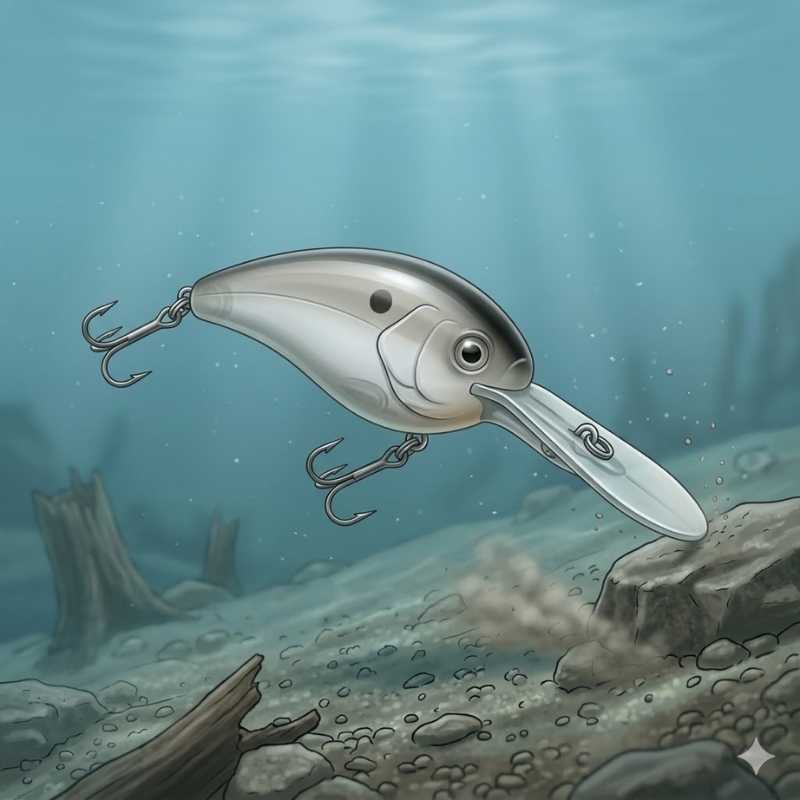
Strike King 6XD
Reaches deep with predictable wobble for offshore ledges.
Offshore ledges and humps — grind it into the bottom.
As an Amazon Associate I earn from qualifying purchases.
Alternative Options
- Rapala DT-16 →Alternative
- Berkley Dredger →Budget
Dirty Jigs Guppy Football Jig
Premium football head built for rock and gravel.
Offshore rock and gravel — slow drag with long pauses.
As an Amazon Associate I earn from qualifying purchases.
Alternative Options
- Strike King Tour Grade Football →Alternative
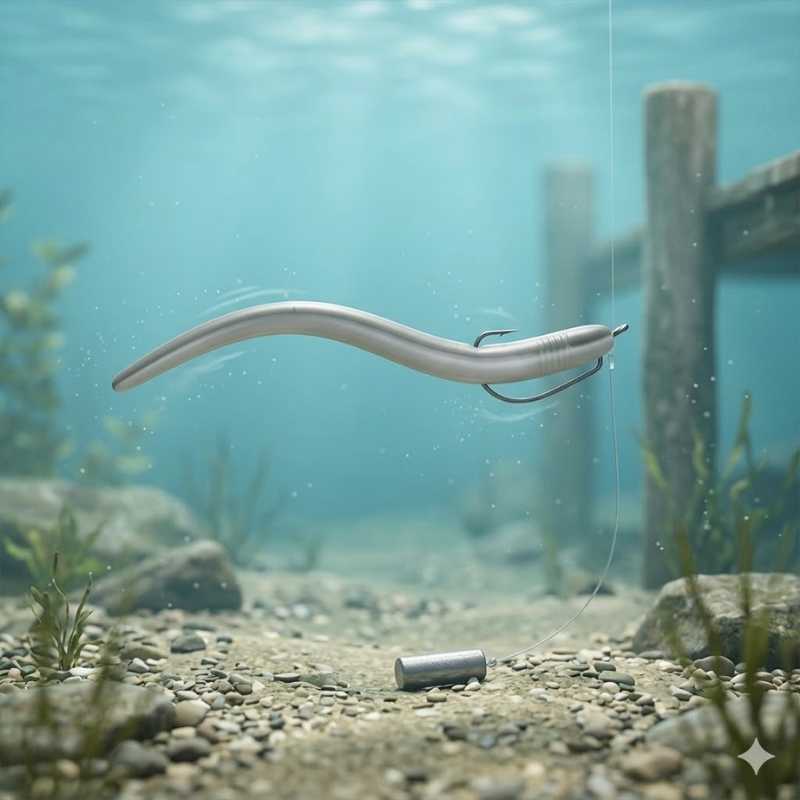
Roboworm Straight Tail
Industry-standard dropshot worm — subtle and proven.
Pressured or deep clear water — vertical shake on rock with a slim worm.
As an Amazon Associate I earn from qualifying purchases.
Alternative Options
- Berkley Bottom Hopper →Alternative
- Berkley MaxScent Flatworm →Budget
Damiki Vault Blade Bait
Tight vibration — an ideal winter vertical blade.
Cold water on deep structure — short rips with long pauses.
As an Amazon Associate I earn from qualifying purchases.
Alternative Options
- Steel Shad →Alternative
- Heddon Sonar Flash →Budget
Add a flutter spoon or tail-spinner for vertical work over schooled fish, and a big swimbait if blueback herring are in the lake. The cleanest pattern of all is a deep crank that just ticks the top of the thermocline — bass crush it on the deflection.
Retrieve Adjustments
- Deep crank — slow-and-deflect over hard bottom; don't burn it. Bass commit to baits that bump and pause.
- Football jig — drag, don't hop. Stop on every rock and contour change.
- Drop-shot — long pauses. Twelve seconds of nothing, two seconds of subtle shake, repeat.
- Spoon or blade bait — rip up two feet, give controlled slack on the fall. Strikes almost always come on the drop.
How the Thermocline Moves Through Summer
The layer is not fixed. It deepens slowly through July and August as warm water mixes downward — a 16-foot thermocline in early June is often 22 feet by late August, and the offshore depth that produced on the Fourth of July is wrong by Labor Day. Re-check it every trip. Once nights start cooling in September the band weakens, shallows, and finally breaks during lake turnover, which temporarily ruins the offshore bite and pushes fish into transition behavior.
Common Mistakes
- Fishing 35-foot brush in August. If the thermocline is at 22, that brush sits in dead water. Move shallower until you're above the layer.
- Ignoring the bait line on sonar. The bait depth IS the answer. Match it.
- Reeling deep-diving crankbaits straight to the bottom. They drag through dead water — keep the lip just above the bait band.
- Assuming every lake stratifies. Shallow, current-fed lakes don't. Use sonar before you commit to a deep pattern.
- Burning through the productive layer too fast. Bass at 18 feet on a 95-degree day are not chasing — they're picking off easy targets. Slow down.
- Assuming the depth is the same on every lake — or all summer. Highland reservoirs run deeper thermoclines than shallow lowland lakes, and the number drifts deeper every week until turnover.
- Ignoring it on shallow-water days. Even when you're fishing docks, the bass holding off the end are sitting at thermocline depth.
When Bass Ignore the Thermocline
Three situations break the rule: heavy generation current, sustained strong wind, and the early-morning low-light window. Generation through a dam can stir oxygen down into the hypolimnion locally, briefly opening up structure 30+ feet down near the channel — covered in reservoir current bass feeding. Sustained 15+ mph wind on a long fetch can locally collapse the thermocline near the windward bank. And during the first 90 minutes of light, shallow oxygenation lets bass push up onto 5- to 10-foot points before retreating to the layer. Those are also the windows where the morning topwater bite happens — see summer topwater bass fishing. Outside those exceptions, fish the layer.