The wind-to-fish food chain
Wind doesn't just blow water around. It blows the bottom of the food chain. Plankton drifts wherever the wind pushes it, concentrating along windward banks. Shad eat plankton, so shad follow the drift. Bass eat shad, so bass set up where the shad pile up. The whole sequence happens in hours, not days, and reverses just as quickly when the wind dies or shifts.
This is why a single wind direction can completely rearrange where the fish are biting on a lake you've fished for years. The bank you caught them on last Saturday in a south wind is dead today in a north wind, and the bank that was dead last week is loaded.
How shad position in wind
- Surface schools push into the corners and pockets of the windward shoreline, where the wave action concentrates them against the bank.
- Deeper shad hold tight to the windward side of points, humps, and roadbeds — anything that interrupts the wind-driven current below the surface.
- Disorientation increases. Chop on the surface breaks up the bait's lateral-line awareness, and they school tighter, which makes them easier targets.
- Migration speed picks up. A shad school that was crawling along a flat at first light moves three times faster once 15-mph wind develops.
Where bass set up to ambush
Bass don't randomly chase shad — they pin them against something. The most productive ambush zones are spots where wind-driven bait runs into a hard edge:
- Windward points — bait riding the bank gets squeezed around the point; bass sit on the upwind side waiting.
- Corner pockets — the dead-end of a wind drift. Bait stacks in the back of these pockets and bass move in from the mouth.
- Riprap and bridge causeways — long hard edges that intercept wind-pushed bait. Almost always loaded under wind.
- Grass-line edges on the windward side — bait pushes against the grass, bass ambush from inside or just outside the edge.
- Wind-blown bluffs — vertical structure plus current plus concentrated shad. One of the highest-percentage setups in summer.
Baits for windy ambush zones
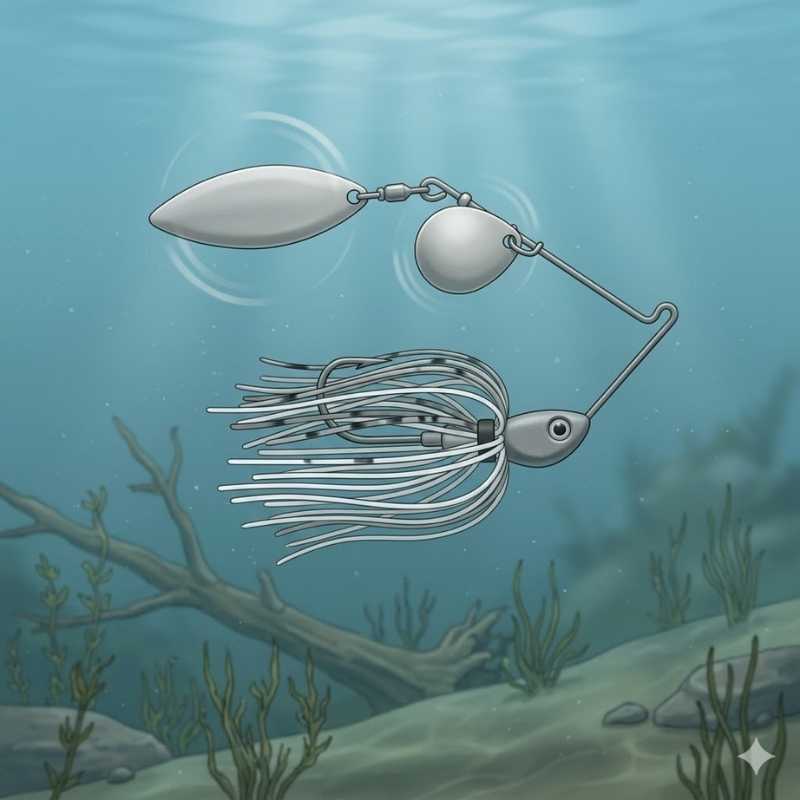
War Eagle Spinnerbait
Classic Colorado/willow combo for windy banks and stained water.
Windy banks and stained water — burn it parallel to cover.
As an Amazon Associate I earn from qualifying purchases.
Alternative Options
- Luck E Strike Legends Spinner Bait →Alternative
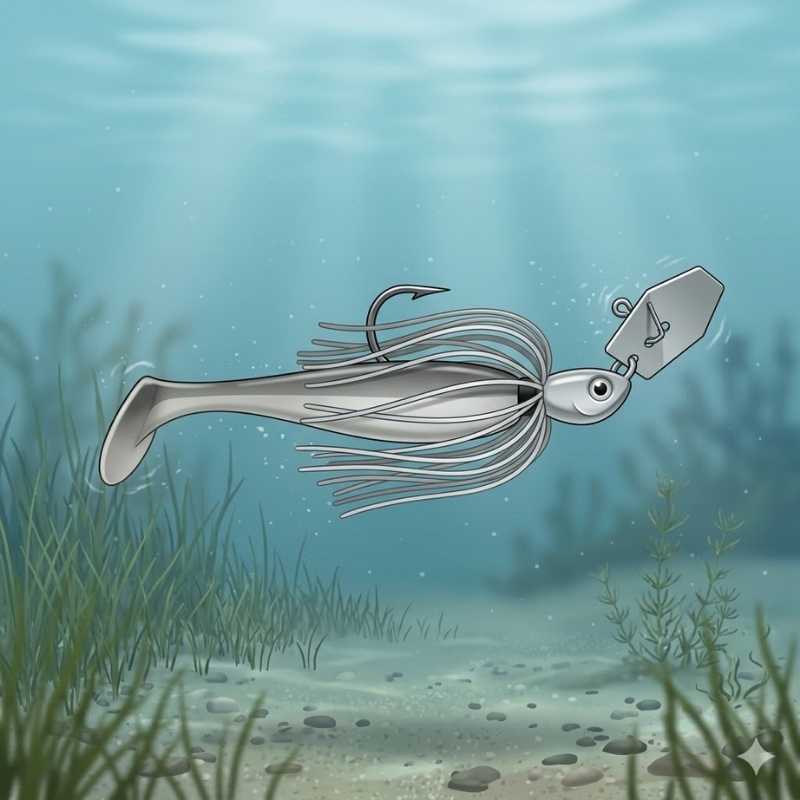
Z-Man JackHammer ChatterBait
The benchmark bladed jig — premium hardware and perfect vibration.
Stained water, wind, scattered grass — moderate-paced reaction bait.
As an Amazon Associate I earn from qualifying purchases.
Alternative Options
- Strike King Thunder Cricket →Alternative
Strike King KVD 1.5
Deflects off cover like nothing else — the go-to shallow crank.
Shallow wood and rock — make it deflect off cover.
As an Amazon Associate I earn from qualifying purchases.
Alternative Options
- Lucky Craft LC 1.5 →Alternative
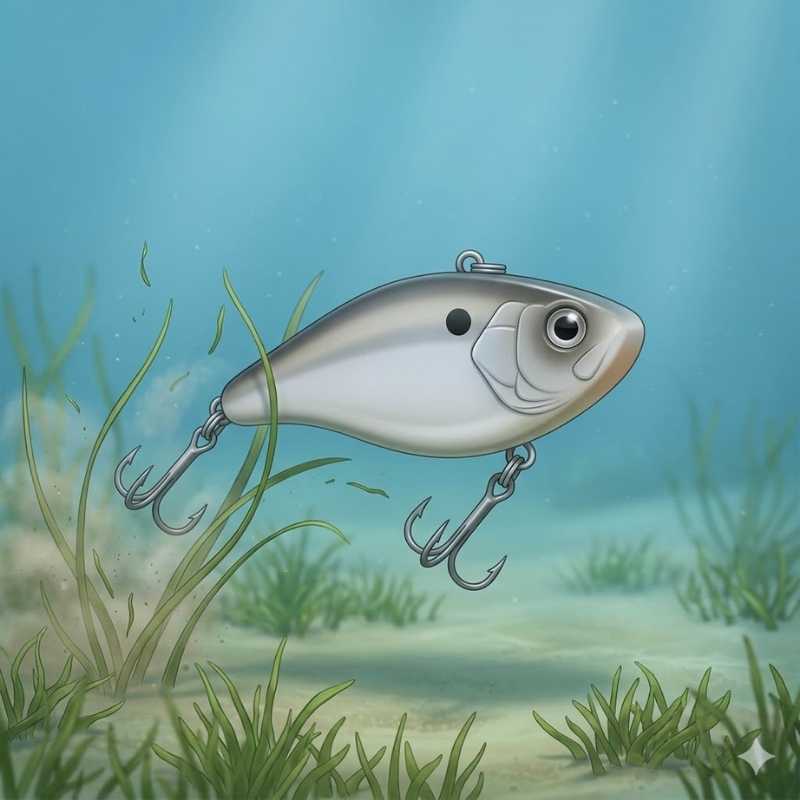
Add a walking topwater for surface-schooling fish and a lipless crank for any windward grass edge. The common thread: flash, vibration, and a profile big enough to be found in chop. Finesse baits drown in this pattern — bass aren't being picky in wind, they're being committed.
Retrieve adjustments for wind
- Fish faster. Wind raises bait activity and bass metabolism. Slow presentations get out-fished.
- Cast into the wind, retrieve with it. Bait drifts with the wind; your lure should too. Casting downwind and reeling against the wind looks unnatural and underperforms.
- Use heavier baits. A 1/2-ounce spinnerbait holds depth in wind better than a 3/8. Same for chatterbaits and crankbaits.
- Stay close to cover. Deflection off cover triggers reaction strikes in chop — the bass can hear it before they see it.
- Boat position matters. Use the wind to drift parallel to the bank instead of fighting it. You'll cover more water and make better presentations.
When wind hurts instead of helps
- Post-frontal north wind — high pressure plus cold wind shuts the bite down even on the windward bank.
- Cold spring wind on warming water — wind that drops surface temps several degrees in a few hours can stall a building pattern.
- Dead calm corners on a windy day — protected pockets that feel comfortable to fish are usually empty.
- Excessive mud — sustained wind on a clear-water bank can stir up so much suspended sediment that fish leave.
Reading wind on the water
Whitecaps on a main-lake point mean bait is being pushed and bass are likely set up. Glassy water in a wind-protected pocket means no bait movement and probably no bite. Watch for shad flicking on the surface in the chop — that's confirmation the food chain is active. If you see birds working a windward bank, fish that exact spot before you do anything else.
Mistakes anglers make in wind
- Running to the protected side because it's more comfortable to fish.
- Fishing too slow — wind rewards reaction, not finesse.
- Using a bait that's too light to hold the right depth in chop.
- Ignoring the wind shift. When direction changes 90 degrees, the bite resets — yesterday's bank is wrong.
- Bailing too early. The wind often peaks mid-afternoon and the bite peaks with it.
For the bigger weather picture that wind sits inside, see falling barometric pressure. For the dirty-water version of this pattern, see muddy-water lures. For overcast days that compound everything wind does, see overcast days.