The forgotten summer forage
Most bass writing fixates on shad. On the right lakes, that's correct — herring and threadfin shad are the dominant forage and drive the offshore pattern. But on a huge percentage of small to mid-size lakes, bluegill outweigh shad in the bass diet from May through September. Big bass particularly target bluegill because the calories-per-meal math favors a 5-inch bluegill over a 2-inch shad. The bluegill spawn just concentrates that forage in predictable, fishable locations.
How the bluegill spawn works
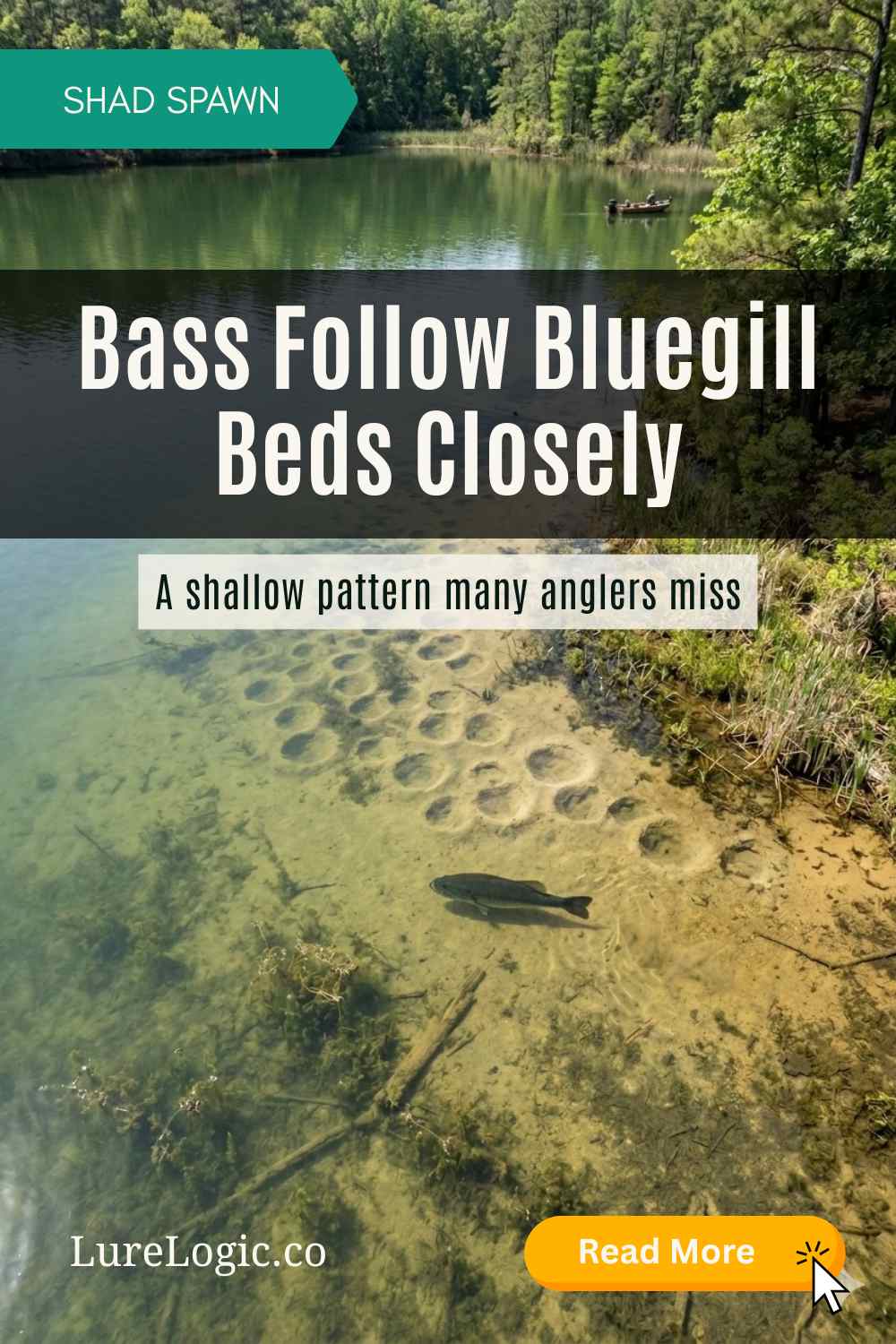
Bluegill don't spawn once. They spawn in waves — typically around every full moon from late May through August on most southern lakes. Each wave brings adult bluegill onto shallow hard-bottom flats where they fan out dinner-plate-sized craters in colonies of 20 to 100 beds. The males guard the eggs and fry, which puts a large group of distracted, vulnerable adult bluegill in one shallow area for roughly a week per wave.
Bass take notice immediately. The biggest females in the lake will pull off summer offshore haunts and camp adjacent to active bluegill colonies. They won't usually attack the bedded bluegill directly — they wait at the edges for adults coming off the bed or for fry leaving the colony. The result is some of the highest-percentage shallow water of the summer.
How to find the beds
- Look in 2 to 5 feet of clear or lightly stained water with hard bottom — sand, gravel, or clay.
- Protected pockets work better than exposed banks. The back third of creeks is prime.
- Adjacent to deeper water — bass need a quick escape route. Beds with a 6-foot drop within 30 feet hold more bass than flats stranded in skinny water.
- Cover edges — bluegill love to bed along grass lines, on the edge of laydowns, or at the corners of dock shade.
- Visual scouting — polarized glasses and idle speed turn this into a sight pattern. The bed clusters look like pale circular dimples on the bottom.
Where bass set up relative to the beds
Bass rarely sit on top of the bluegill colony. They position on the edge, usually on the deep side. The most consistent setups:
- Suspended just off the deep edge of the flat, ambushing bluegill swimming back to the colony.
- Tucked under the nearest piece of shade — a dock, a laydown, or a single overhanging tree.
- In the first patch of grass or wood between the colony and deeper water.
- On the windward side when wind picks up, pushing bluegill against cover.
Baits that mimic adult bluegill
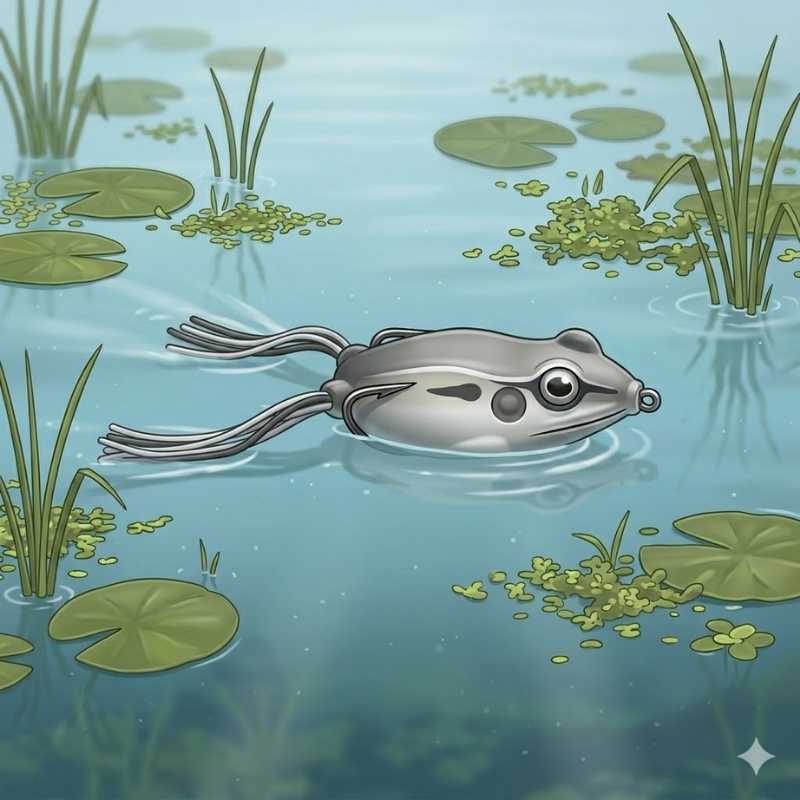
SPRO Bronzeye Frog 65
Walks easily, casts a mile, and clears the pads.
Matted vegetation and lily pads — walk it slowly across openings.
As an Amazon Associate I earn from qualifying purchases.
Alternative Options
- LiveTarget Hollow Body Frog →Alternative
- Booyah Pad Crasher →Budget
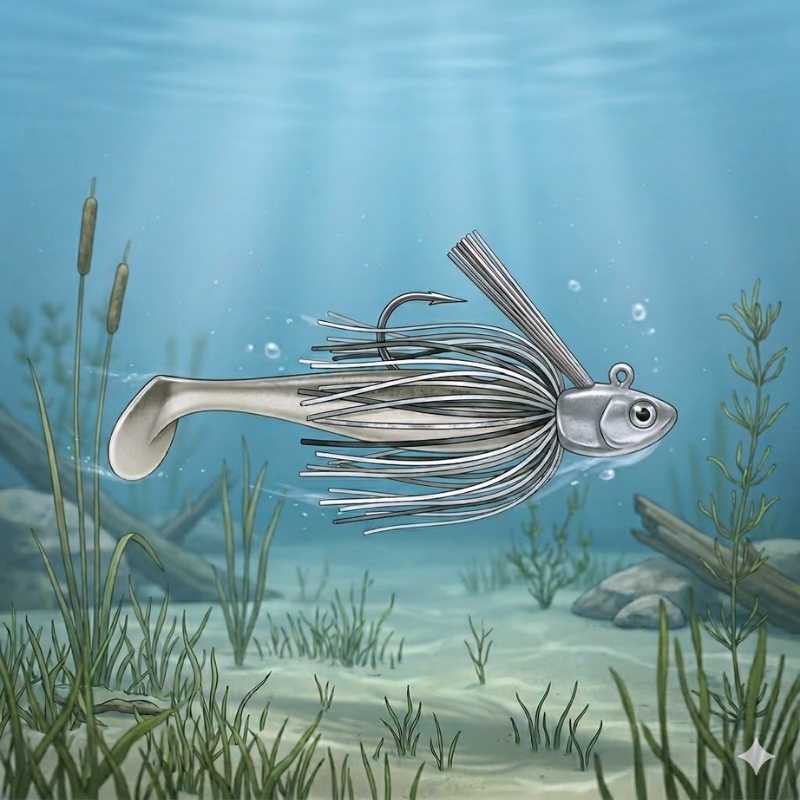
Heddon Super Spook
The benchmark walking topwater — long casts and big bites.
Low-light, calm surface — walk the dog over open water.
As an Amazon Associate I earn from qualifying purchases.
Alternative Options
- River2Sea Whopper Plopper →Alternative
- Berkley Choppo →Budget
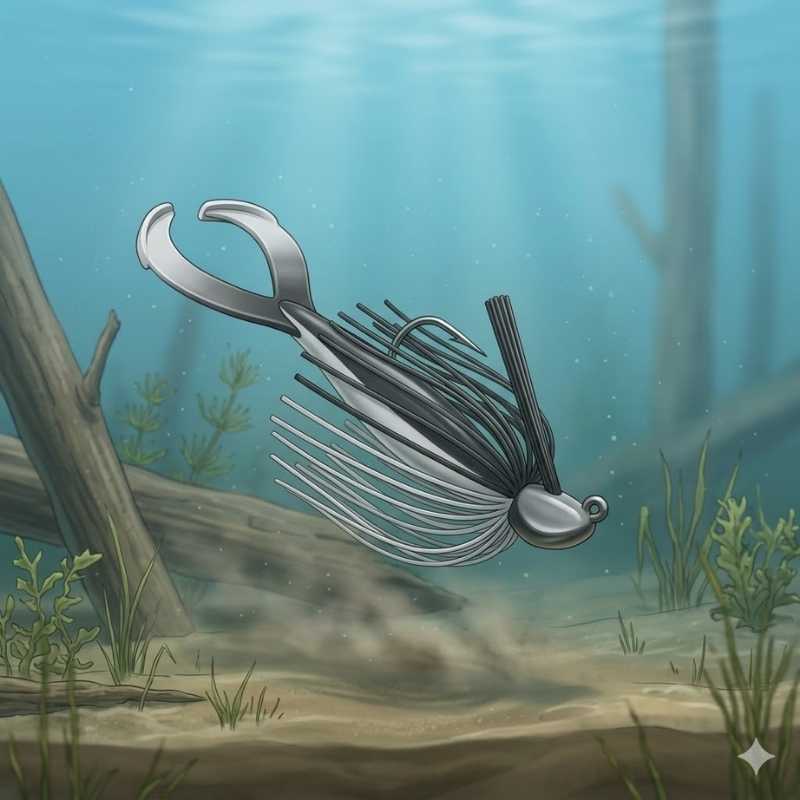
Strike King Hack Attack Swim Jig
Heavy hook and clean swim through grass.
Grass and docks — clean swim, mimic a cruising bluegill.
As an Amazon Associate I earn from qualifying purchases.
Alternative Options
- Berkley Swim Jig →Alternative
Add a weightless fluke in bluegill colors for finesse situations and a bluegill-pattern squarebill for windy days. The principle is profile: tall, oval-bodied baits that push water mimic the bluegill silhouette better than slim shad shapes. Color matters too — green pumpkin, watermelon, and natural bluegill patterns outproduce shad colors on these flats.
Retrieve and timing
- Walking topwater — slow, deliberate cadence over the colony edges at first light and again at sunset.
- Frog — pop and pause across any matted vegetation near the beds. Stop the bait dead in any opening.
- Swim jig — slow-roll a bluegill trailer past the deep edge. Strikes often come on a single twitch.
- Fluke — let it sink and twitch erratically on slack line. Mimics a wounded bluegill.
- Bedded bluegill flare and chase intruders. A bait that pauses and starts looks more like a vulnerable adult than something burned past the colony.
Timing each wave
The peak window for each spawning wave is the three days before the full moon through about five days after. Outside of that window, individual beds still hold fish but the concentration drops. Track the moon phase from May through August — that single calendar habit will line you up on the strongest bluegill-spawn windows of the year.
Common mistakes
- Fishing the beds directly instead of the edges. The bluegill aren't the target; the bass watching the bluegill are.
- Using shad-colored baits. Match the local forage — bluegill colors are different.
- Ignoring the bluegill spawn because it overlaps with offshore summer fishing. The biggest fish in the lake are often shallow during this window.
- Fishing too fast. Bass watching a colony are patient; reaction speed doesn't help here.
- Not checking the same flats every full moon — bluegill use the same areas wave after wave.
For the topwater half of this pattern, see summer topwater bass fishing and early morning bass lures. For the offshore alternative when bluegill aren't active, see thermoclines and summer bass.