Editor's Pick97%
Megabass Vision 110
French Pearl
View Product →After a cold front, throw a suspending jerkbait with 10–20 second pauses, a dropshot, or a compact jig one contour deeper. The six baits, sizes, and colors that produce when bass quit chasing.

Affiliate Disclosure: As an Amazon Associate I earn from qualifying purchases. Recommendations reflect on-the-water testing and the LureLogic ranking engine — not paid placement.
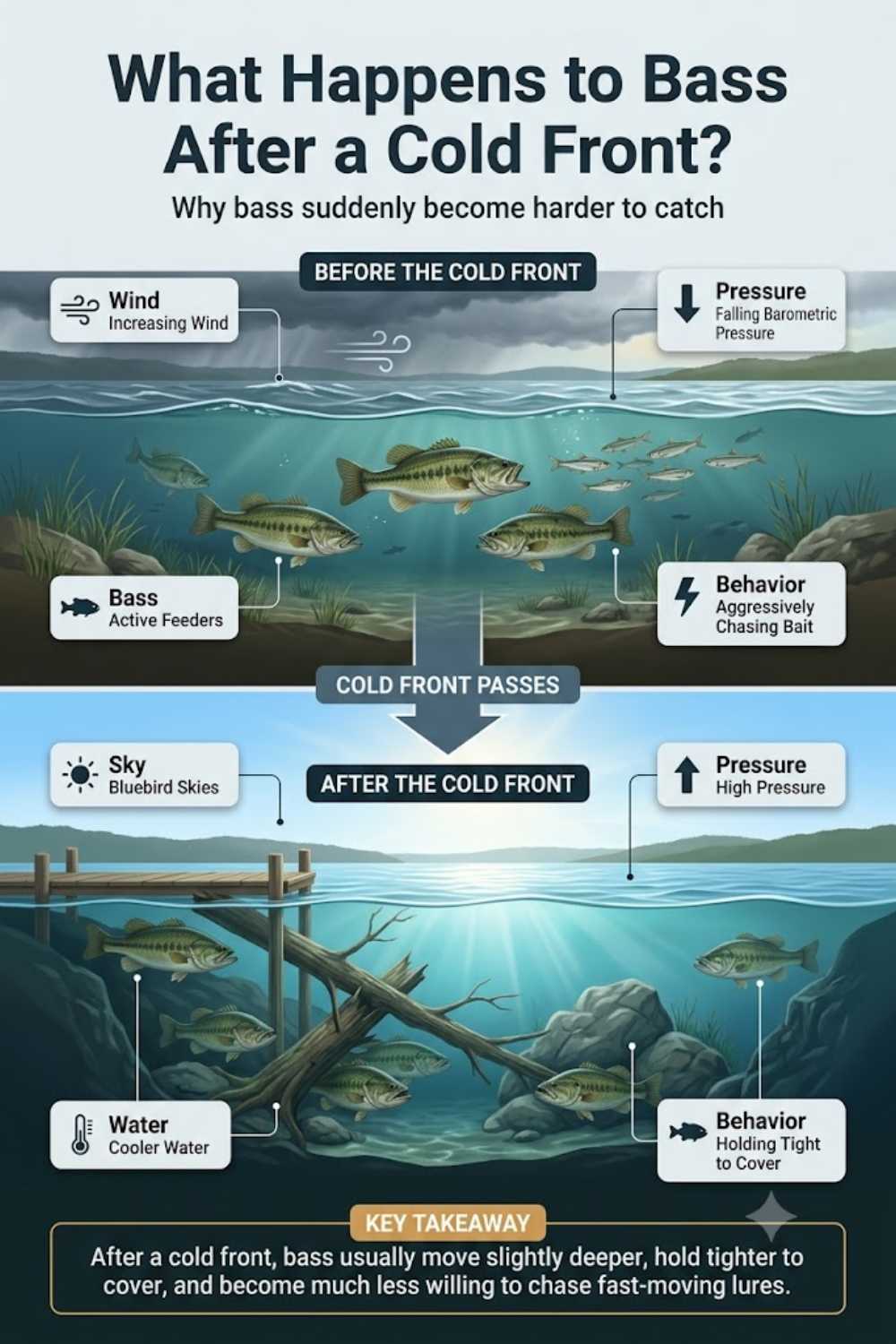
A cold front is the most dramatic short-term weather event in bass fishing. The front itself (the leading edge as it arrives) is a feeding trigger — falling pressure, building clouds, increasing wind, and pre-front instability create one of the best feeding windows of the year. See falling barometric pressure bass feeding and bass fishing before storms for the pre-front feeding pattern.
The post-front conditions are the opposite. Once the front passes, barometric pressure spikes and locks high. Cloud cover dissipates, leaving bluebird skies. Water temperatures often drop 5–15°F over 24–48 hours. Wind dies. The combined effect is bass that move tight to dense cover, slide one or two depth contours deeper, shrink their feeding windows dramatically, and refuse most reaction-bait presentations that worked pre-front.
The post-front lure decision is therefore the opposite of the pre-front decision. Pre-front: fast reaction baits (chatterbaits, spinnerbaits, lipless crankbaits, squarebills) covering shallow water aggressively. Post-front: slow finesse and vertical presentations (drop shots, jerkbaits with long pauses, ned rigs, downsized jigs) fished into the densest available cover.
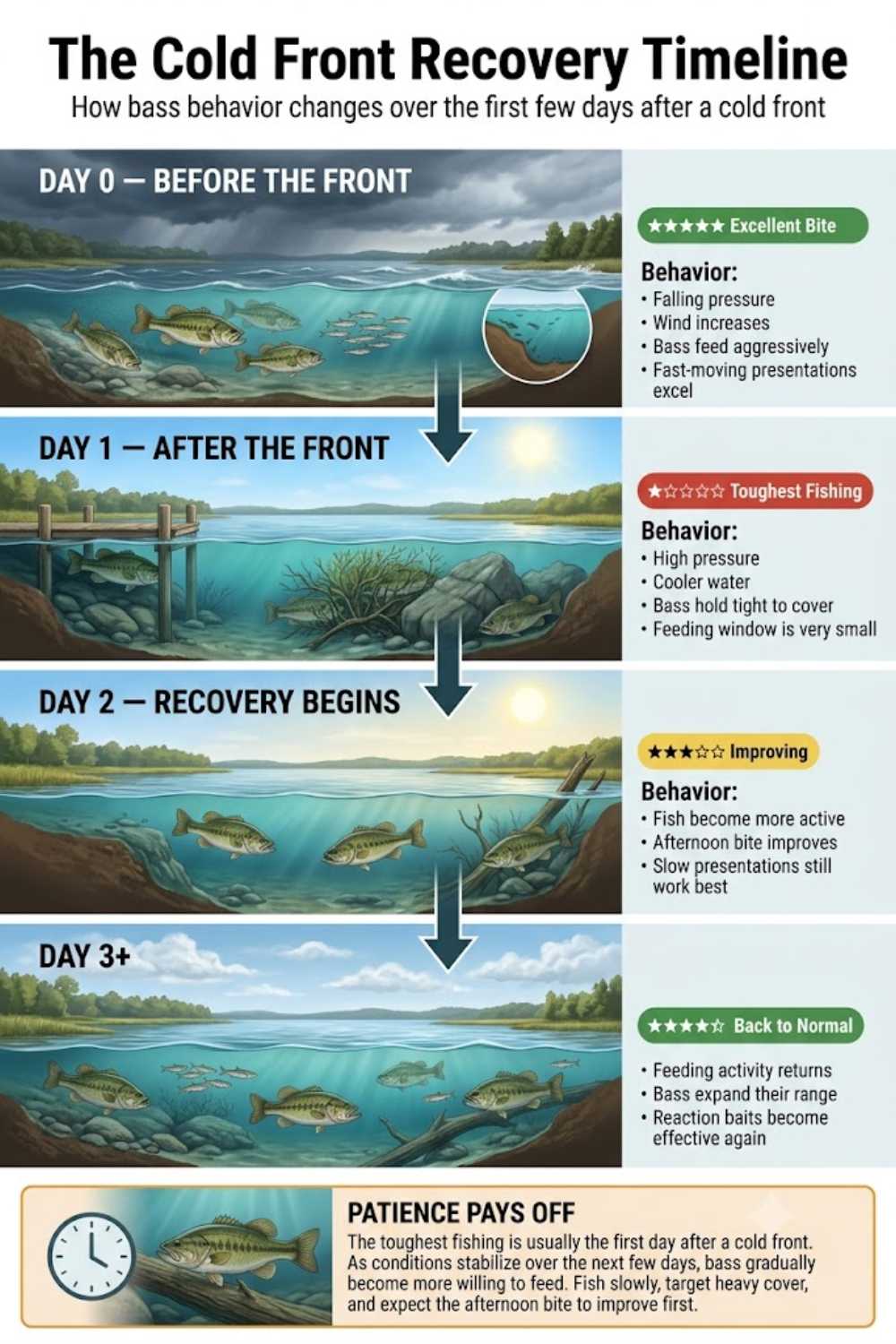
The severity of the post-front effect depends on the strength of the front. A weak front (2–5°F temperature drop, 5–10 mb pressure spike) causes a 1-day mild slowdown. A strong front (10–15°F drop, 15+ mb spike) causes 3–5 days of difficult fishing. A major winter cold front (20°F+ drop) can shut a lake down for a full week. Plan accordingly. For the weather framework see weather bass fishing guide.
Megabass Vision 110 — Editor's Pick. A suspending jerkbait in ghost minnow or ayu fished with extended 10–20 second pauses is the universal post-front reaction bait. The suspending action keeps the bait at depth during the pause; the natural color survives clear-water inspection; the jerk-pause cadence triggers post-front bass that won't commit to anything moving. Critical: extend pauses 3–5x your normal jerkbait cadence. See the jerkbaits guide.
Roboworm Straight Tail (Drop Shot) — Best Finesse. A 4.5 inch Roboworm in Morning Dawn or Aaron's Magic on a drop shot rig fished vertically over post-front cover produces fish that won't commit to any horizontal presentation. Vertical presentation is the single biggest tactical edge in post-front conditions. See the drop shot baits guide.
Dirty Jigs Compact Pitchin' Jig (Downsized) — Best Cover Bait. A 3/8 oz green pumpkin or black-and-blue jig with a 3-inch craw trailer pitched into the densest available shallow cover and dragged slowly produces post-front bass. Downsize from your normal flipping setup — the standard 1/2–3/4 oz jig is too aggressive. See the flipping jigs guide.
Z-Man Finesse TRD (Ned Rig) — Best Pressured-Fish Bait. A 2.75 inch TRD in green pumpkin or PB&J on a 1/15 oz mushroom head dragged slowly through post-front cover produces when nothing else works. The small profile and slow presentation matches the shrunken post-front strike window. See the ned rigs guide.
Gary Yamamoto Senko (Weightless) — Best Versatile Bait. A 5 inch wacky-rigged Senko fished on slack line produces post-front bass across depths and cover types. The slow horizontal fall is the most universal post-front presentation. See the finesse worms guide.
Damiki Vault (Blade Bait) — Best Winter Cold Front. A 3/8 or 1/2 oz blade bait fished vertically on bluff walls and channel ledges produces winter cold-front bass that won't commit to soft plastics. The vibration plus vertical presentation triggers strikes from suspended winter fish. See the blade baits guide.
Lucky Craft Pointer 78 — Best Downsized Jerkbait. A smaller suspending jerkbait for clear-water post-front and pressured situations where the Vision 110 is too large. Same jerk-and-extended-pause cadence. See the jerkbaits guide.
Generally avoid: chatterbaits, spinnerbaits, lipless crankbaits, swim jigs, and large topwater immediately after a cold front. These categories dominate pre-front and stable-weather periods but produce minimally during the 24–72 hour post-front window. The exception is a shad-kill cold-front situation where slow-rolled white spinnerbaits and weightless soft jerkbaits scavenge dead bait on windblown banks.
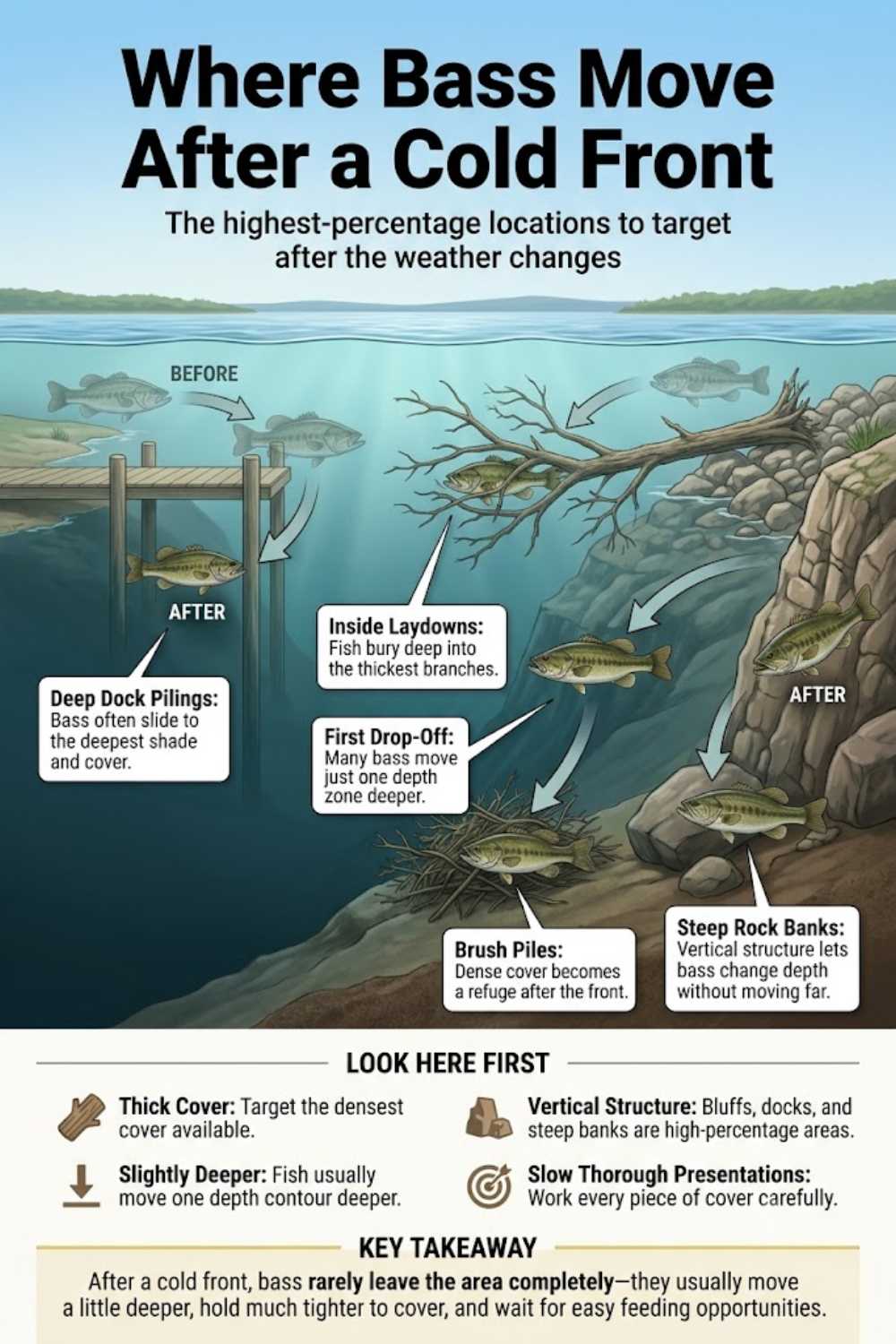
Post-front bass tuck into the densest available cover and slide slightly deeper. Four high-percentage patterns.
Deepest part of shallow cover — Bass that were on outside edges slide to inside edges; bass on the float line of docks slide to the deepest pilings; bass on the front of laydowns slide to the densest interior part. Same cover, deeper and tighter. Throw past the cover and bring the bait through the densest part. Bass fishing laydowns covers the wood-cover adjustment.
Vertical structure — Bluff walls, vertical rock faces, dam riprap, and steep channel-swing banks let bass adjust depth without horizontal movement. The most productive post-front structure type because bass can slide up and down during the recovery window without committing to a new position. Bass fishing points covers steep points; the structure framework lives in structure bass fishing.
Next depth contour — Bass on shallow flats slide to the first depth break. The 3 ft fish becomes a 6 ft fish; the 8 ft fish becomes a 12 ft fish; the 15 ft fish becomes a 22 ft fish. Same structure, deeper position.
Suspended in deep cover — Post-front bass often suspend mid-water in deep brush, on offshore humps, and in standing timber rather than holding on bottom. A vertically-presented dropshot or jerkbait worked through these suspended schools produces.
Reading post-front timing — Day 1 (bluebird morning after the front) is the worst. Fish 1–4 PM only. Day 2 improves significantly. Day 3+ returns to a normal pattern. The hardest tournament day is the post-front day with sun, cold water, and high pressure — accept reduced expectations and fish for quality bites rather than quantity.
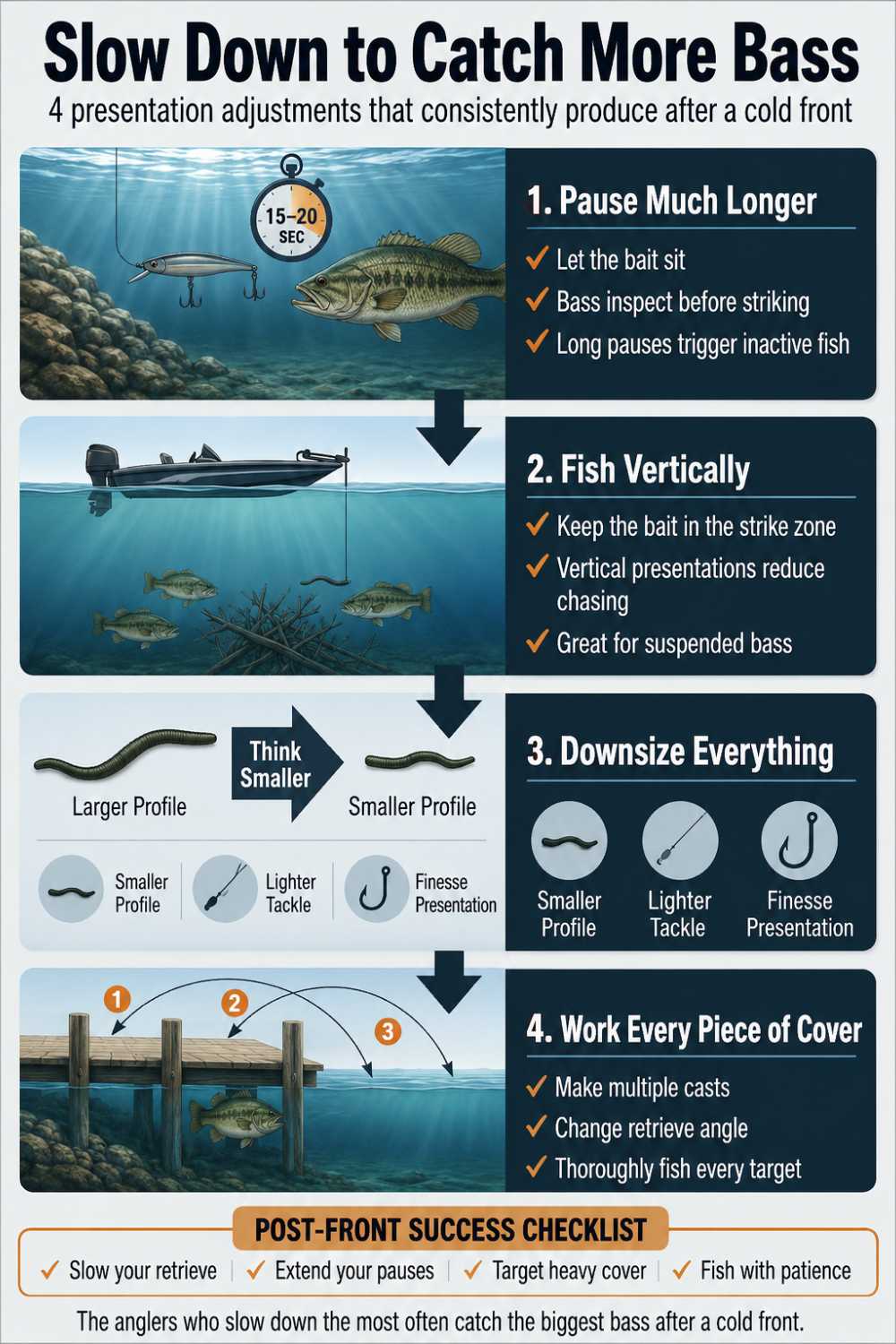
Six critical post-front presentation adjustments.
Extend pauses dramatically. Jerkbait pauses extend from 3–5 seconds (pre-front) to 10–20 seconds (post-front). Senko falls extend from immediate strikes (pre-front) to 30+ second deadsticking (post-front). Drop shot shaking extends from continuous (pre-front) to 6–10 second intervals (post-front).
Fish vertically when possible. Vertical presentations (drop shots, jigging spoons, vertical jerkbait shaking, blade baits) keep the bait in the post-front strike window indefinitely without requiring fish to chase. Vertical presentation is the single biggest tactical edge in post-front conditions.
Downsize profiles. 4.5 inch worms instead of 7 inch; 3/8 oz jigs instead of 1/2 oz; 2.5 inch ned rigs instead of larger soft plastics; 78mm jerkbaits instead of 110mm. The smaller profile matches the shrunken strike window and reduces post-front refusal.
Make multiple casts to the same cover. Pre-front bass commit on the first cast. Post-front bass often need 4–8 looks before committing. Slow down boat movement and work each piece of cover thoroughly.
Downgrade line. Drop one or two line sizes. 8–10 lb fluorocarbon for most post-front finesse, 6–8 lb for drop shots in clear water. Heavier line significantly reduces post-front bite frequency by being visible during the long inspection window.
Watch your line, not your rod. Post-front bites are subtle — soft ticks, slight line jumps, sideways drifts. Set on anything that doesn't look right. The hard rod-thump strikes of pre-front are gone.
Mid-afternoon focus — The 1–4 PM window is typically the only productive window of a day-1 post-front day. The morning bite collapses on bluebird post-front days as light penetration peaks; mid-afternoon surface warming creates a brief feeding window. Plan your day around the afternoon window and accept reduced morning production. See summer midday bass fishing for the midday framework.
Cold front + winter — The most severe combination. A winter cold front dropping water from 50°F to 42°F essentially shuts the lake down for 5–7 days. Suspending jerkbaits with 20–30 second pauses and blade baits fished vertically on bluff walls produce the rare fish willing to commit. See winter bass fishing lures and the 50°F water guide.
Cold front + spawn — Bedded bass mostly ignore the post-front shutdown because they're territorial-oriented rather than feeding-oriented. The post-front spawn bite is often nearly as good as the pre-front bite. Cruising males slow down but still commit on slow-rolled chatterbaits and jerkbaits. See the 65°F water guide.
Cold front + clear water — Toughest combination outside of winter. Visual inspection at maximum, strike commitment at minimum. Drop shots, ned rigs, and downsized jerkbaits with extended pauses are the only reliable producers. See best bass lures for clear water and best bass lures for high pressure.
Cold front + muddy water — More forgiving. Visual inspection time is already limited, so the post-front shutdown is dampened. A black-and-blue chatterbait slow-rolled through muddy-water cover produces post-front fish that wouldn't commit in clear water. See best bass lures for muddy water.
Cold front + river system — Rivers handle cold fronts much better than reservoirs because active current re-oxygenates water and supports more active bass. A reservoir 3-day post-front shutdown may only be a 1-day event on a river. See bass current seams in moving water.
Shad kill cold fronts — A cold front that drops water from 60°F to 45°F can trigger a major shad kill. Bass scavenge dead bait on warm windward banks for 1–3 days. Slow-rolled white spinnerbaits, fluke-style soft jerkbaits in white, and shad-pattern flat-sided crankbaits produce explosive bites in the kill zone. See winter shad die-off.
Multiple-front sequences — Late fall and winter often produce multiple cold fronts spaced 3–7 days apart. Bass barely recover from one before the next arrives. These extended difficult-weather periods reward patient finesse fishing and dramatically reduced expectations.
A cold front is two opposite fishing conditions in 48 hours — aggressive pre-front feeding followed by 24–72 hours of post-front shutdown. The pre-front window rewards fast reaction baits covering shallow water; the post-front window rewards slow finesse and vertical presentations into the densest available cover. Build a cold-front tackle box around suspending jerkbaits, drop shots, downsized jigs, ned rigs, and weightless Senkos. Focus on the densest available cover one depth contour deeper than the pre-front position, fish mid-afternoon hardest, extend your pauses dramatically, and accept that bite frequency will be lower than normal — but the bass that commit during the post-front window are often quality fish willing to push through difficult conditions.
For the broader post-front behavior see high pressure bass fishing after a cold front and high pressure bass fishing. For the high-pressure overlay see best bass lures for high pressure. For pre-front aggressive feeding see falling barometric pressure bass feeding and bass fishing before storms.
Industry-standard suspending jerkbait for cold-water bass.
Cold, clear water — long pauses near rock and points.
As an Amazon Associate I earn from qualifying purchases.
The pre-frontal feeding window, explained.
Pre-storm feeding windows and falling pressure tactics.
Post-front lure adjustments and finesse plays.
Slow, downsized presentations for shrunken strike zones.
Working the toughest condition in bass fishing.
Why clouds extend the feeding window on both ends.
Plug in today's water temp, clarity, weather, and forage — the tool returns the highest-confidence presentations.
Build Today's Strategy →