Editor's Pick97%
Megabass Vision 110
French Pearl
View Product →The best bass lures for clear water (4+ ft visibility) — finesse, natural colors, and long casts. Drop shots, jerkbaits, ned rigs, soft jerkbaits, and the clear-water presentation rules.

Affiliate Disclosure: As an Amazon Associate I earn from qualifying purchases. Recommendations reflect on-the-water testing and the LureLogic ranking engine — not paid placement.
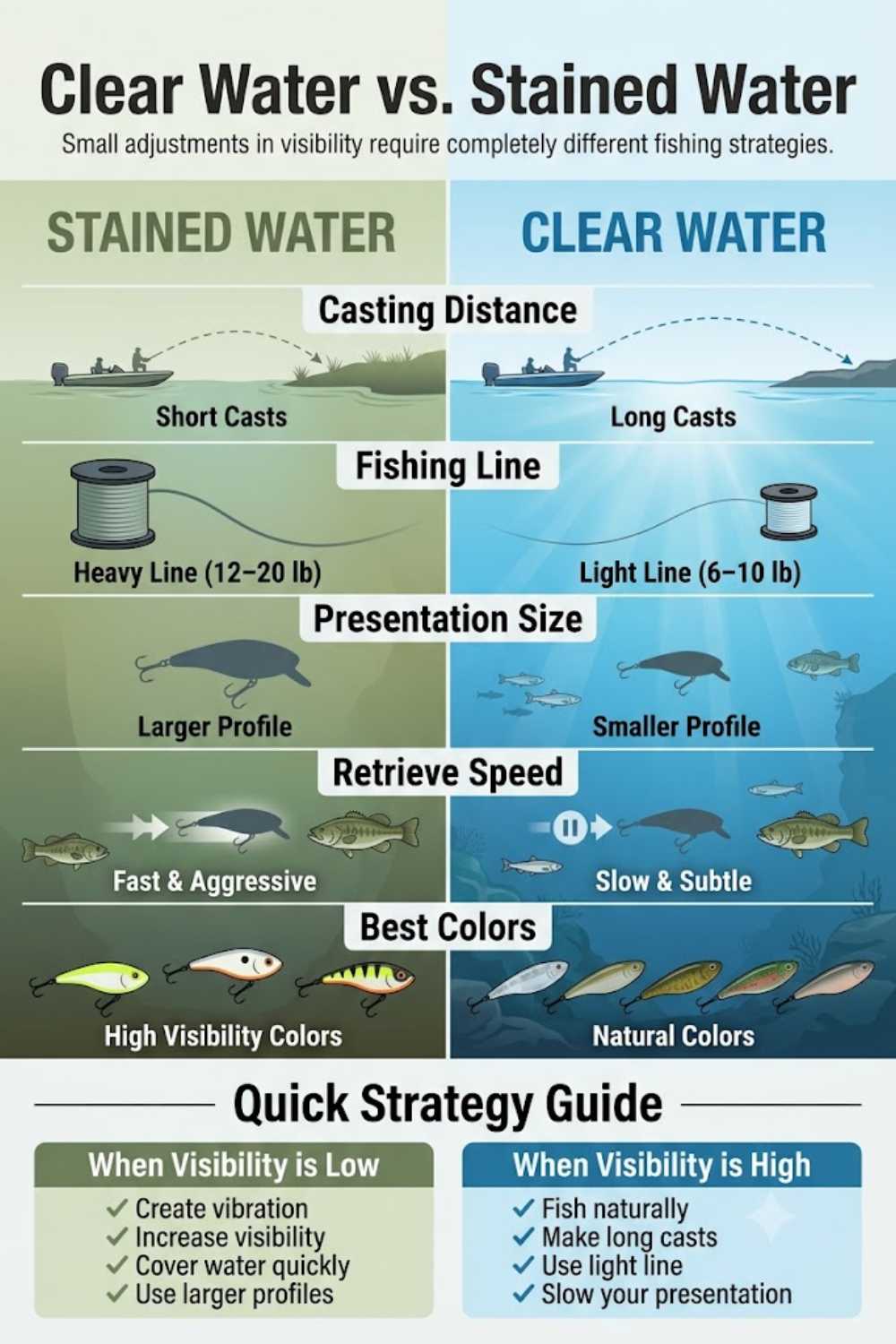
Clear water — 4+ feet of visibility — is the most challenging bass-fishing clarity. The visual feeding mode is fully operational and the lateral line is secondary; bass can inspect baits at distance (10–20 ft chase ranges are common) and for extended duration before committing. The clear-water angler faces fish that have time to identify artificial lures and refuse them — and the technical adjustments required produce a measurably different lure box from stained-water and muddy-water fishing.
The biology is straightforward. Bass in clear water are sight feeders almost exclusively. They locate prey at distance, track it visually, and commit only when the visual signals (profile, color, motion) match expected forage closely enough. Any visual mismatch — too-bright color, too-large profile, unnatural action — gets rejected. Clear-water bass also tend to be more pressured than stained-water bass (clear lakes are popular sight-fishing destinations), so the population is conditioned to refuse common reaction baits.
Clear water also expands the productive depth range. Light penetration supports baitfish and bass to 25–30 ft on many clear lakes, vs 8–10 ft on stained lakes. This means clear-water bass distribute across a much larger water column, and finding concentrations of fish often requires fishing offshore structure and deeper cover than stained-water fishing does.
The clear-water lure box is built around finesse: drop shots, ned rigs, small swimbaits, suspending jerkbaits, weightless soft plastics, and small natural-color reaction baits. The aggressive reaction-bait categories (chatterbaits, large spinnerbaits, lipless cranks) that dominate stained water produce far less in clear water. For the broader clarity framework see water clarity lure selection and the existing clear-water article.
Megabass Vision 110 — Editor's Pick. A suspending jerkbait in ghost minnow, sexy shad, or ayu color is the universal clear-water reaction bait. Cast it on a long 8–10 lb fluorocarbon line, work it with sharp jerks and 5–10 second pauses, and clear-water bass commit on the pause. The Vision 110 outproduces most other jerkbaits in clear water due to its premium hardware and tuning. See the jerkbaits guide.
Roboworm Straight Tail (Drop Shot) — Best Finesse. A 4.5 or 6 inch Roboworm in Morning Dawn, Aaron's Magic, or Margarita Mutilator on a drop shot rig produces on the most pressured clear-water bass. The straight-tail subtle action is the perfect clear-water finesse profile. See the drop shot baits guide.
Z-Man Finesse TRD (Ned Rig) — Best Pressured-Fish Bait. A 2.75 inch TRD in green pumpkin, Coppertreuse, or PB&J on a 1/15 oz Z-Man Finesse ShroomZ head produces on clear-water fish that have refused every other presentation. The ned rig is the highest-percentage clear-water finesse bait on pressured lakes. See the ned rigs guide.
Gary Yamamoto Senko — Best Versatile Bait. A 5 inch wacky-rigged Senko in green pumpkin or watermelon-red flake produces in clear water across cover types. The slow horizontal fall and subtle action is irresistible to clear-water bass. See the finesse worms guide.
Keitech Swing Impact FAT (Swimbait) — Best Swimbait. A 3.3 or 3.8 inch Keitech swimbait on a 1/4–3/8 oz jighead in shad or bluegill color produces on clear-water bass holding offshore. The realistic swimming action matches threadfin shad and herring closely enough to trigger clear-water strikes. See the swimbaits guide.
Strike King KVD HC 1.5 Squarebill — Best Reaction. A 1.5 squarebill in natural shad or bluegill color is the only squarebill that consistently produces in clear water. Use the smaller profile and natural colors; the chartreuse-with-black-back that dominates stained water gets refused in clear water. See the squarebill crankbaits guide.
Lucky Craft Sammy 100 (Walking Topwater) — Best Topwater. A walking bait in clear water works best in dawn and dusk windows. Sexy shad or ghost minnow colors. Smaller profiles produce better than the Spook-class baits that dominate stained water. See the topwater lures guide.
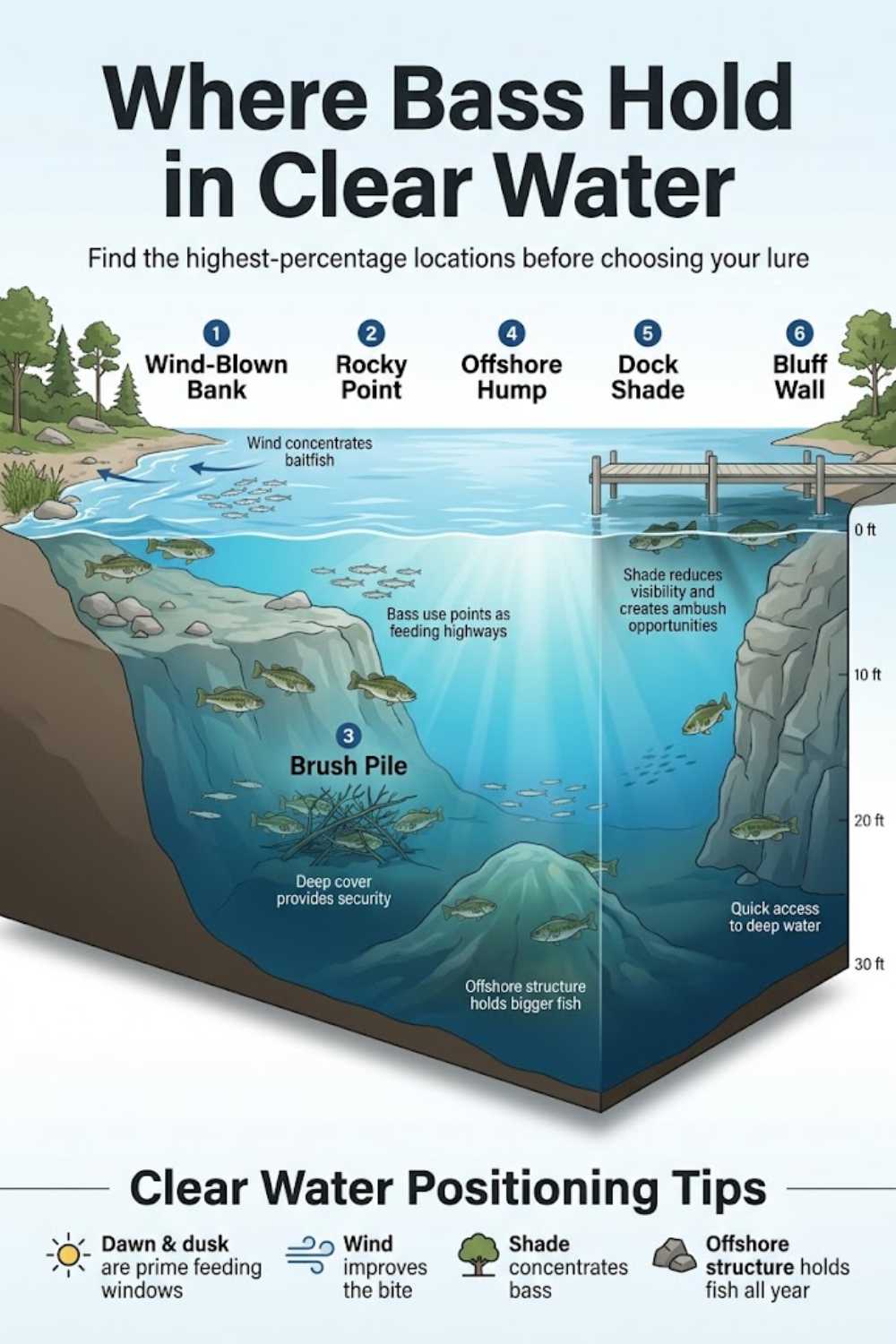
Clear water distributes bass across a wide depth range and offshore structures dominate.
Offshore structure (10–25 ft) — Main-lake humps, points, ledges, and channel swings concentrate clear-water bass. Particularly during summer when shallow water heats up. Structure bass fishing guide covers the offshore patterns.
Deep cover — Submerged trees, brush piles in 12–20 ft, deep dock cabling, and deep rock piles all hold clear-water bass. Drop shots and ned rigs fished vertically on this cover produce.
Shallow cover with deep-water access — Bass that use shallow cover in clear water typically use cover with quick access to deep water (channel-swing banks, the deep end of points, vertical bluff walls). They retreat to deep water when pressured and return to shallow cover during active feeding windows. See bass fishing points.
Shade lines — Clear-water bass relate strongly to shade lines: under docks, beneath overhanging trees, on the shaded side of vertical structure. The shade reduces visual inspection time and lets bass ambush prey. See bass fishing shade lines.
Wind-blown areas — Wind concentrates baitfish on windblown banks and points even more reliably in clear water than in stained water. Wind also stirs surface turbidity that shortens visual inspection time, dramatically increasing the clear-water strike commitment rate. A windblown clear-water point during baitfish-active conditions is the highest-percentage clear-water situation. See wind-blown banks bass positioning.
Time-of-day — Dawn and dusk dominate. The clear-water midday bite is usually a 70–80% reduction from the dawn/dusk windows. Night fishing is also a productive clear-water option — see night bass fishing summer.
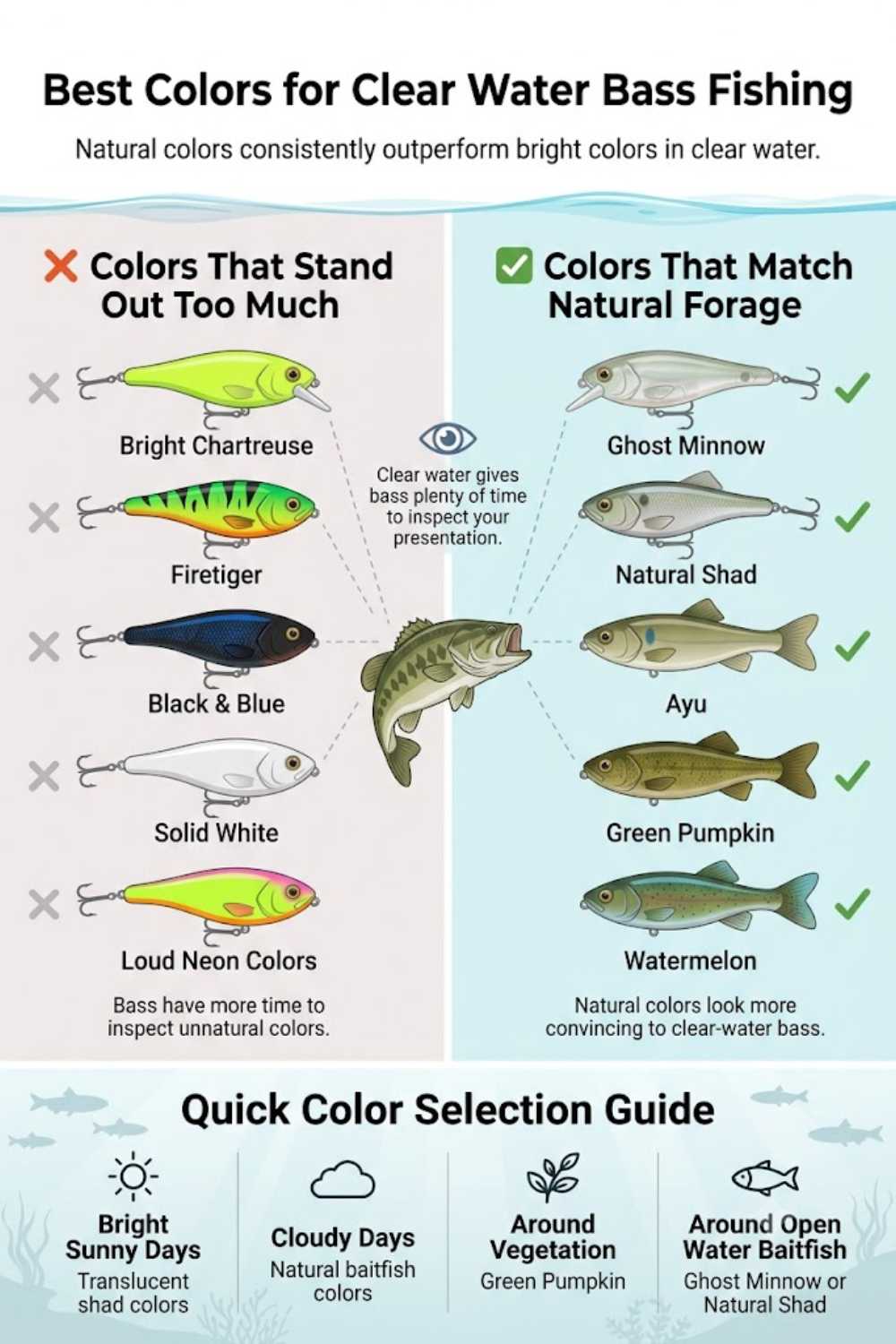
Clear-water color, profile, and presentation rules are the opposite of stained-water rules.
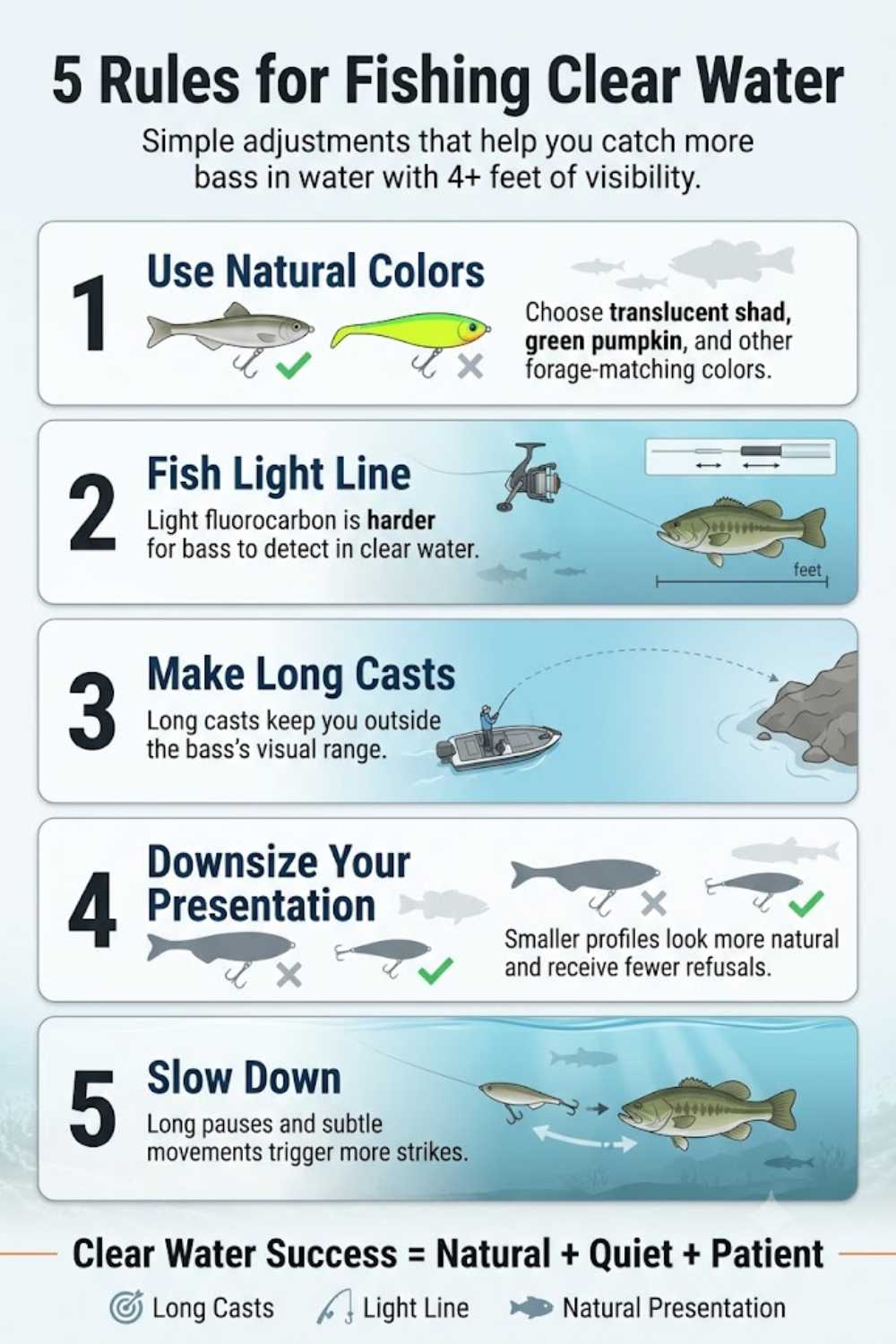
Color — Natural baitfish patterns dominate. Ghost minnow, sexy shad, ayu, threadfin shad, and translucent-blue colors for hard baits. Watermelon, green pumpkin, Morning Dawn, and Aaron's Magic for soft plastics. Avoid bright accents (chartreuse, white-and-chartreuse) and dark heavy colors (black-and-blue) — both produce in stained water but get refused in clear water.
Profile — Downsize. 3.3 inch swimbaits instead of 5 inch; 4.5 inch worms instead of 7 inch; 1.5 squarebills instead of 2.5; 1/4 oz spinnerbaits instead of 3/4 oz. The smaller profile reduces the visual mismatch during inspection.
Action — Subtle. Pause-heavy retrieves on jerkbaits (5–10 second pauses); slow horizontal falls on wacky-rigged Senkos; subtle shakes on drop shots and ned rigs. The aggressive cadences that work in stained water trigger refusal in clear water.
Line — Light. 6–8 lb fluorocarbon for finesse presentations, 8–10 lb for slightly larger baits. Heavier line (15+ lb) is visible to bass during inspection and significantly reduces bite frequency.
Cast distance — Long. A 60–80 ft cast on light line keeps the angler outside the bass's visual range and produces dramatically more bites than a 30 ft cast. The clear-water angler is essentially fishing at the limit of casting range.
Approach — Quiet. Trolling motor on low, no hull slap, no shadow over the productive water. Clear-water bass detect surface disturbance and shadow at long range and slide off cover before the bait arrives.
Clear water + cold front — The hardest combination in bass fishing. High pressure + bluebird sky + clear water = visual inspection at maximum, strike commitment at minimum. Drop shots, ned rigs, and tiny jerkbaits with long pauses are the only reliable producers. See cold-front lure guide and high-pressure bass fishing.
Clear water + wind — Reverse of the above. Wind stirs surface turbidity that shortens visual inspection time and dramatically increases strike commitment rate. A windblown clear-water bank during stable weather produces some of the most aggressive clear-water bites of the year. See best baits for windy conditions.
Clear water + summer heat — Bass push deeper. The thermocline pattern dominates — bass suspend at the productive depth layer (typically 12–20 ft on clear summer lakes) and respond to swimbaits, dropshots, and Carolina rigs. See thermocline bass fishing.
Clear water + spawn — Sight-fishing dominates. Clear-water bedded bass are the most visible and most challenging spawn target. See the 65°F water guide for the sight-fishing playbook.
Clear water + winter — Suspending jerkbaits are the dominant clear-water winter bait. Long pauses (10–30 seconds) and slow cadences trigger suspended winter bass. See winter bass fishing lures.
Clear water + night — Productive alternative to bright-sun midday. Single-blade Colorado spinnerbaits in black or dark colors, large worms, and topwater all produce at night in clear water. See night bass fishing summer.
Clear water rewards finesse, natural profiles, light line, long casts, and patience. Build a clear-water tackle box around the universal finesse baits (drop shot, ned rig, wacky Senko), suspending jerkbaits, and natural-color reaction baits. Focus on offshore structure and shade lines, fish dawn and dusk windows hardest, and use wind and surface chop to your advantage. The clear-water bite is lower frequency than stained-water but produces some of the biggest bass of the year because clear-water bass grow large and pressure-tolerant.
For the moderate-clarity sweet spot see best bass lures for stained water. For the low-visibility opposite see best bass lures for muddy water. For the high-pressure overlay see best bass lures for high pressure.
Industry-standard suspending jerkbait for cold-water bass.
Cold, clear water — long pauses near rock and points.
As an Amazon Associate I earn from qualifying purchases.
Temperature-by-temperature lure logic.
The prespawn temperature threshold.
Natural presentations and finesse profiles.
Vibration, dark silhouette, and visibility tactics.
Adjusting across the full clarity spectrum.
Topwater and reaction baits for the dawn window.
Plug in today's water temp, clarity, weather, and forage — the tool returns the highest-confidence presentations.
Build Today's Strategy →