Why High Pressure Changes Bass Behavior
Barometric pressure is the variable bass feel most acutely. The swim bladder regulates buoyancy, and rapid pressure changes force bass to actively manage gas volume — uncomfortable enough that feeding becomes a secondary concern. A falling barometer ahead of a front is a feeding trigger (covered in how falling barometric pressure changes feeding windows). A rising, then locked-high barometer behind a front is the opposite. Add sudden cold water and you have fish that are physiologically uncomfortable, behaviorally cautious, and metabolically slower all at once.
This is also the moment the cold front lure guide applies — the front itself is the trigger, the high pressure is the lingering after-effect. The framework in the weather pillar guide covers how the two combine across multi-day systems.
Feeding Window Compression
Pre-front, bass feed in waves across most of the daylight period. Post-front, the feeding window compresses to as little as a single 30–60 minute window per day, often in mid-afternoon when surface temperatures rebound a few degrees. Strikes during that window are often subtle — short hits, lure pickups, soft thumps. Anglers who slow down and read line tension catch fish during this window. Anglers who keep ripping reaction baits don't.
Stable weather patterns covered in bass positioning in stable weather are essentially the recovery state — once high pressure stabilizes for 48–72 hours and bass acclimate, a normal multi-day pattern returns.
Depth Adjustments
Bass don't usually relocate horizontally after a front — they slide down whatever structure they were already on. A few rules of thumb:
- Shallow grass fish drop from 1–3 feet into 4–6 feet, often tucking against the densest inside-edge clumps.
- Mid-depth dock fish drop from the float line down to the deepest dock posts and the underside of brush.
- Main-lake structure fish drop from the top of a hump or point to the next depth contour out — often 5–10 feet deeper than pre-front.
- Channel-edge fish drop onto the channel break itself and suspend right against it.
The same structural framework in the structure pillar guide applies — just shift everything one depth contour deeper and slow down the presentation.
Cover Selection
Post-front bass hide. The densest available cover wins:
- Thickest brush piles and laydowns (see bass fishing laydowns).
- Inside grass edges instead of outside edges.
- Deepest dock corners with shade and overhead structure.
- Vertical bluff walls where fish can adjust depth without moving horizontally.
- Hard cover with deep water immediately adjacent — channel-swing banks, the deep end of points, rock-to-channel transitions.
Pre-front, bass roam edges. Post-front, they tuck inside. Throw past the cover and bring the bait through the densest part — the active fish are usually behind the deepest piece of wood or the thickest grass clump.
Water Clarity Changes The Severity
A cold front almost always increases water clarity — the wind stops, surface stirring ends, and suspended particles settle. Clear water plus bright sun plus high pressure is the trifecta. Fish push deeper, get more cover-oriented, and inspect baits longer. Drop line size, downsize profiles, choose translucent and natural colors, and lengthen pauses. See best bass lures for clear water and water clarity and lure selection for the full clarity adjustments. The shade-line framework also tightens — bass hold harder to the shadow edge than they would on a cloudy day.
Clarity is also the best predictor of how badly the front will hurt:
- Clear water — worst case. Drop to 6–8 lb fluorocarbon, throw the smallest natural-color finesse baits you own, and stretch every pause.
- Stained water — significantly more forgiving. Bass don't take the same overhead-light penalty, and a finesse jig in green pumpkin or black/blue still gets bit on a normal cadence.
- Muddy water — high pressure barely registers in chocolate water. Vibration baits keep producing; see the muddy water guide.
Seasonal Overlays
- Spring: A front stops the pre-spawn migration cold and slides bass back to staging structure. The retreat pattern is covered in the pre-spawn guide.
- Summer: The default summer condition. Deep finesse and dock shade; see midday summer fishing.
- Fall: Slows but rarely stops the shad chase — bass still feed hard at dawn and dusk. See the fall bait guide.
- Winter: Bass are already in slow mode, so a front just extends an existing pause. Smallest baits, longest dead-sticks — winter lures.
The year-round arc lives in the seasonal bass patterns pillar.
Best Lures
The right post-front bait moves slowly enough to stay in a shrunken strike window, looks natural enough to pass clear-water inspection, and stays in the strike zone with minimal effort from the fish. Cross-reference with best bass lures after a cold front for the lure-by-lure deep dive.
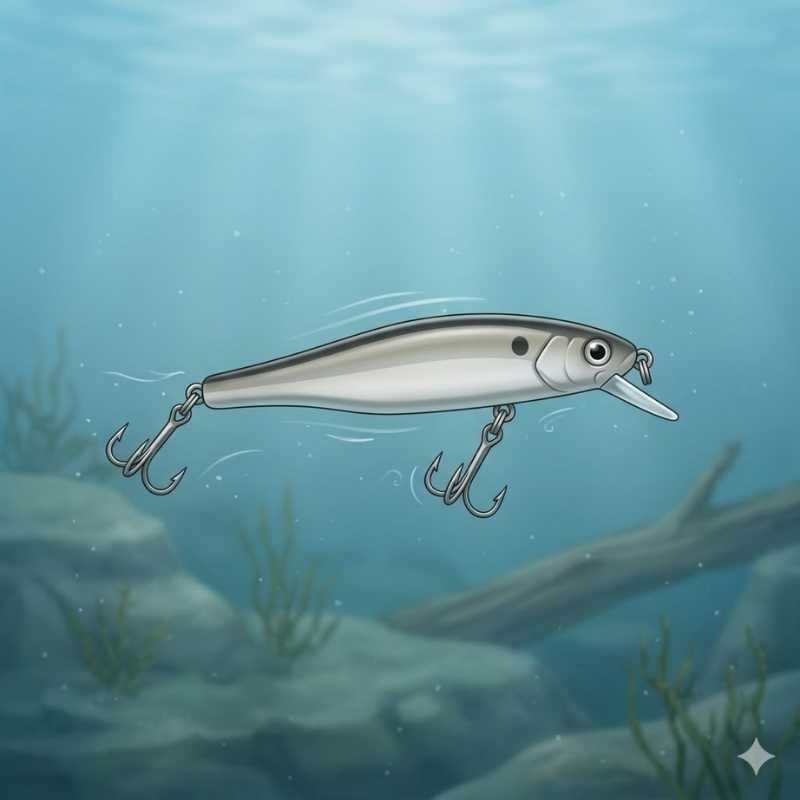
Megabass Vision 110
Industry-standard suspending jerkbait for cold-water bass.
Cold, clear water — long pauses near rock and points.
As an Amazon Associate I earn from qualifying purchases.
Alternative Options
- Rapala Shadow Rap →Alternative
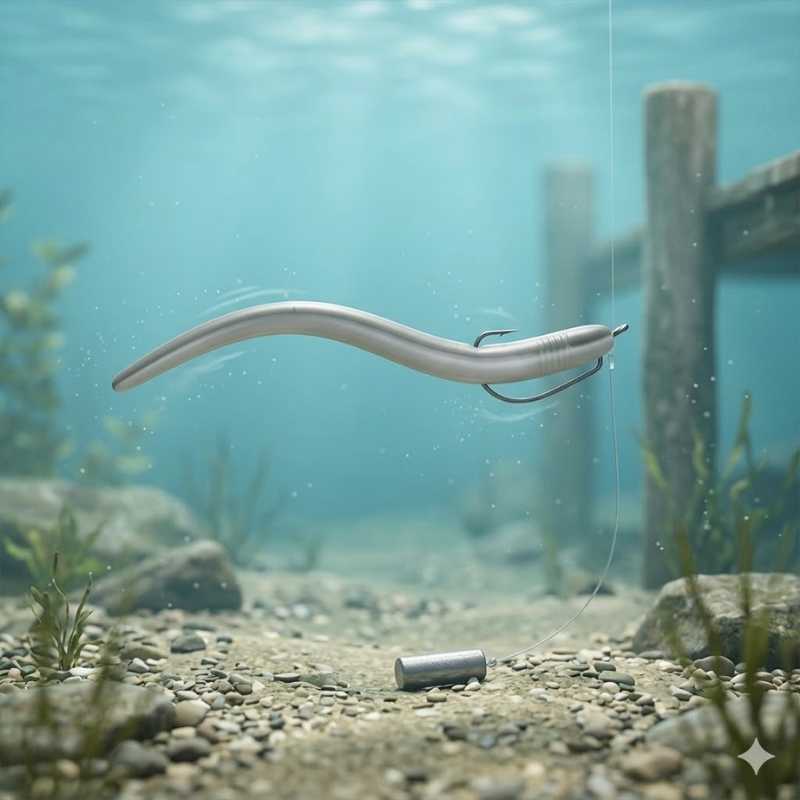
Roboworm Straight Tail
Industry-standard dropshot worm — subtle and proven.
Pressured or deep clear water — vertical shake on rock with a slim worm.
As an Amazon Associate I earn from qualifying purchases.
Alternative Options
- Berkley Bottom Hopper →Alternative
- Berkley MaxScent Flatworm →Budget
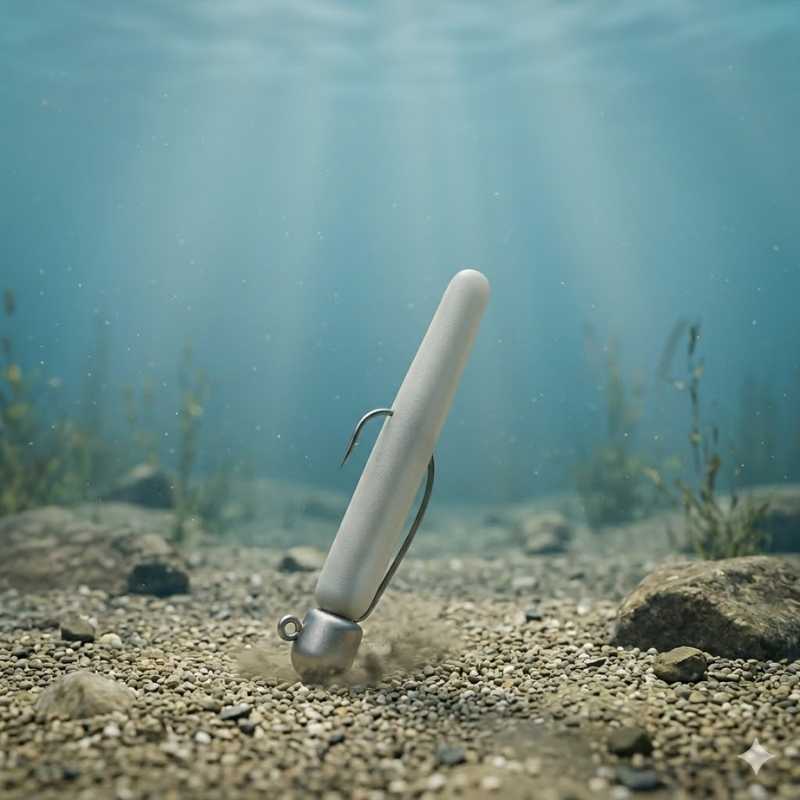
Z-Man Finesse TRD
The bait that defined the Ned rig — bites when nothing else does.
Tough bite, pressured fish — slow drag on hard bottom.
As an Amazon Associate I earn from qualifying purchases.
Alternative Options
- Yamamoto Ned Senko →Alternative
- Strike King Ned Ocho →Budget
Dirty Jigs Compact Pitchin' Jig
Premium skirt and head shape for pitching tight cover.
Pitch to docks, laydowns, and isolated cover for big fish.
As an Amazon Associate I earn from qualifying purchases.
Alternative Options
- Strike King Structure Jig →Alternative
- Booyah Boo Jig →Budget
If you're forced to fish moving baits, downsize: a small jerkbait fished with 8-second pauses, a 1/4-oz finesse spinnerbait slow-rolled across deeper cover, or a tiny squarebill ticked through brush at half normal speed.
The High-Pressure Decision Tree
- Fish showing suspended off cover on electronics: dropshot directly on them with minimal shake.
- Vertical cover holding shallow fish: pitch a ned rig or finesse jig to the base and dead-stick it 10 seconds.
- Cold-water or pre-spawn front: suspending jerkbait with 15-second pauses. Cross-reference the post-front rotation.
- Windward bank with stained water: the one place a reaction bait still works — see windy conditions.
This downsize-and-slow framework is the post-front expression of the broader lure selection guide.
A Real Post-Front Day, Hour By Hour
Barometer at 30.40 inHg and steady, cloudless sky, 3–5 mph wind, surface temp down 4° since the front. This is day two.
First two hours: main-lake point, dropshot with a 4-inch finesse worm in green pumpkin, fished on the outside edge about 4 feet deeper than the fish sat pre-front. Mid-morning: move into a dock-lined creek arm, skip a wacky-rigged stick bait under every dock and pitch a 1/4-oz finesse jig to brush beside the deepest posts — 4–6 casts per dock, dead-sticking the jig on the bottom. Midday: idle to the deepest vertical cover you have — bridge pilings, river-channel brush — and fish it vertically with a spoon or dropshot. Last hour: if any breeze has built, set up on the windward shoreline; the chop softens the bluebird effect enough that a slow-rolled spinnerbait or chatterbait pulls bites nothing else produced all day. By day three the barometer usually starts easing and the lake opens back up.
Retrieve Adjustments
- Double or triple your pause length. The bait should sit in the strike window long enough for a sluggish fish to commit.
- Fish vertically when possible. A dropshot directly over cover gives the fish maximum decision time without forcing them to move.
- Watch your line, not your rod tip. Post-front strikes are subtle. A line jump or a soft tick is often the only signal.
- Make multiple casts to the same cover. Pre-front, one cast was enough. Post-front, the same fish often needs 4–8 looks before committing.
- Slow the boat down. Trolling motor on low. Spend twice as long on each piece of cover.
Common Mistakes
- Throwing the same reaction baits that worked pre-front. They don't work post-front.
- Fishing too fast. The strike window is small; you have to be in it for a while.
- Fishing the outside edges. Bass have moved inside.
- Quitting at lunch. Mid-afternoon is often the best window of a post-front day.
- Heavy line. Clear water plus high pressure punishes 17 lb fluorocarbon. Drop to 8–10 lb on finesse baits.
Exceptions
A few situations break the rule. Shad kills after a hard cold snap can produce explosive feeding on warm windward banks — bass scavenge floating dead bait and can be caught fast on slow-rolled spinnerbaits or weightless soft jerkbaits in white. River systems with active current re-oxygenate constantly and bass remain more active than reservoir fish post-front. And southern reservoirs with mild fronts in winter often see the post-front bite improve, not collapse — because the cold water push isn't significant. Read the system, not the calendar. For the overall winter overlay see winter bass fishing lures.