What a current seam is
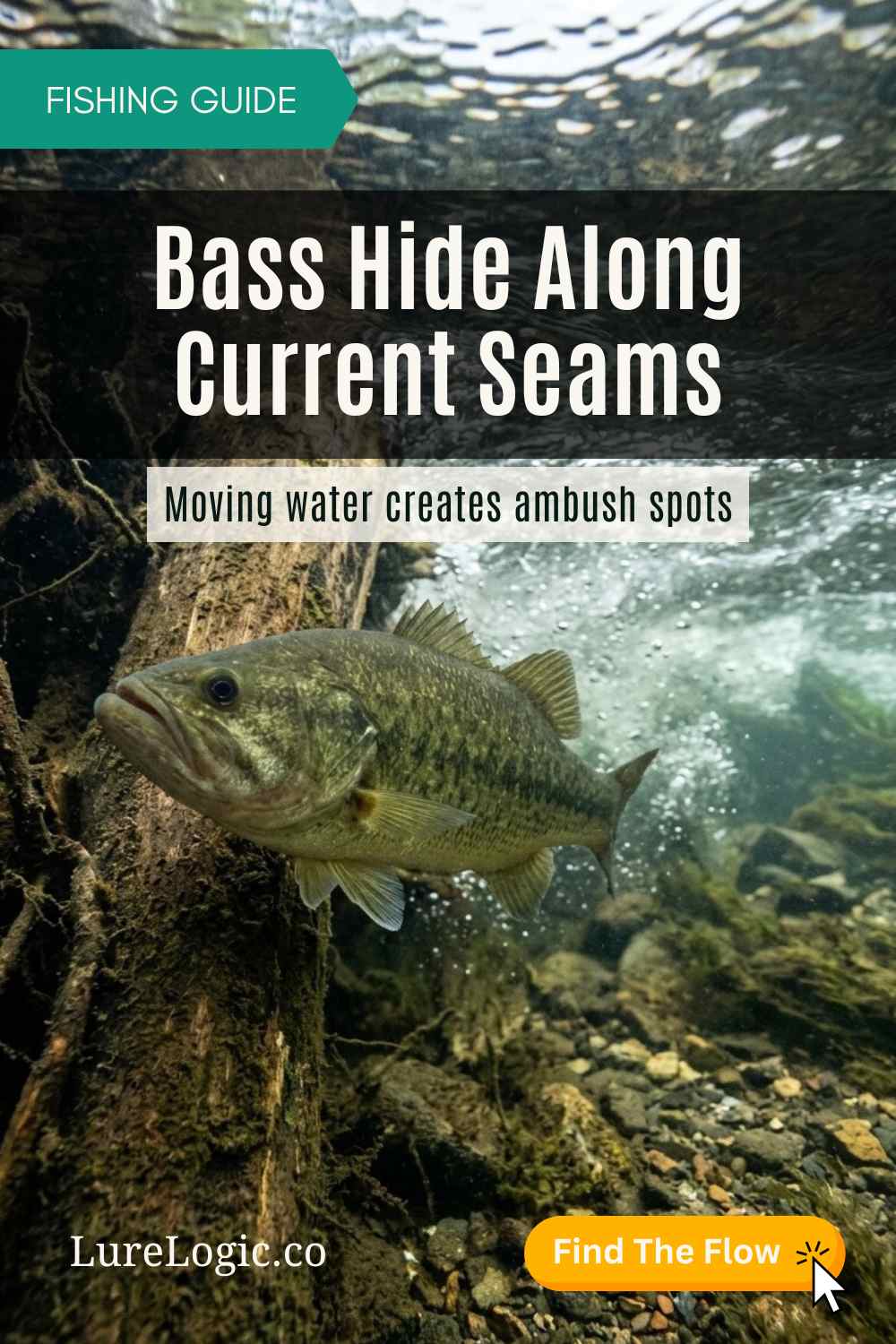
A current seam is the visible or invisible boundary where moving water meets slower or still water. On a river, you can see it — a line of slick water next to riffles, or a foam line where two flows meet. On a reservoir, the seam is usually invisible from the surface but obvious to fish. Anywhere current is forced around an obstacle — a bridge piling, the corner of a point, a laydown, a brushpile — a current break forms, with fast water on one side and slack water on the other.
Bass live on the slack-water side of that seam, facing into the current, and ambush anything that drifts past the break. It's the most energy-efficient feeding position in the entire lake.
Where current comes from on a reservoir
- Dam generation — water release pulls current through the entire main channel of most reservoirs. Generation schedules dictate when current is on or off.
- River inflow — the upper end of every reservoir has constant river current, often holding bass year-round.
- Wind — sustained wind creates surface and sub-surface current that mirrors flow current for bass-positioning purposes.
- Creek influx after rain — heavy rain pushes current down creek arms for hours or days, creating temporary feeding zones.
- Tidal influence on coastal lakes — even small tidal changes move water and reposition fish.
The highest-percentage current setups
- Bridge pilings — vertical obstacles that create predictable seams in any flow. The downstream side holds bass; the corners hold the biggest fish.
- River bends — outside bends scour deep and create steep banks where current sweeps past slack pockets.
- Points on the main channel — current accelerates around the tip and slows on the back side. Bass sit on the back side.
- Laydowns in current — even a small laydown creates a clean seam. Cast above, let the bait sweep past the trunk.
- Eddies behind islands — circular slack water adjacent to fast current; bass stage on the upstream edge of the eddy.
- Tailrace boils — directly below dams during generation, with bass holding on every rock and seam in oxygenated water.
- Channel swing bends — the outside of an underwater channel bend scours deep; fish hold in the eddy formed inside the swing.
- Riprap on causeways — long stretches of broken seams, with bass stacked on the bigger boulders that stick out into the flow.
- Creek mouths during generation — current pulls past the mouth and bait flushes out of the creek with it.
- Standing timber on channel edges — every trunk creates a clean seam at any flow rate.
How bass position relative to current
Bass face into the current. They use the structure to break the flow, conserve energy, and ambush whatever the current delivers. Specific positioning:
- Tucked tight behind a rock, piling, or laydown — within inches of the break, not feet.
- Suspended just under the seam line where fast and slow water meet.
- On the downstream side of a point, often parked on the first piece of cover behind the tip.
- Stacked in eddies, often in groups when current is strong.
- Off the seam entirely when current is weak — bass return to structural relating when there's no current to exploit.
Baits for current
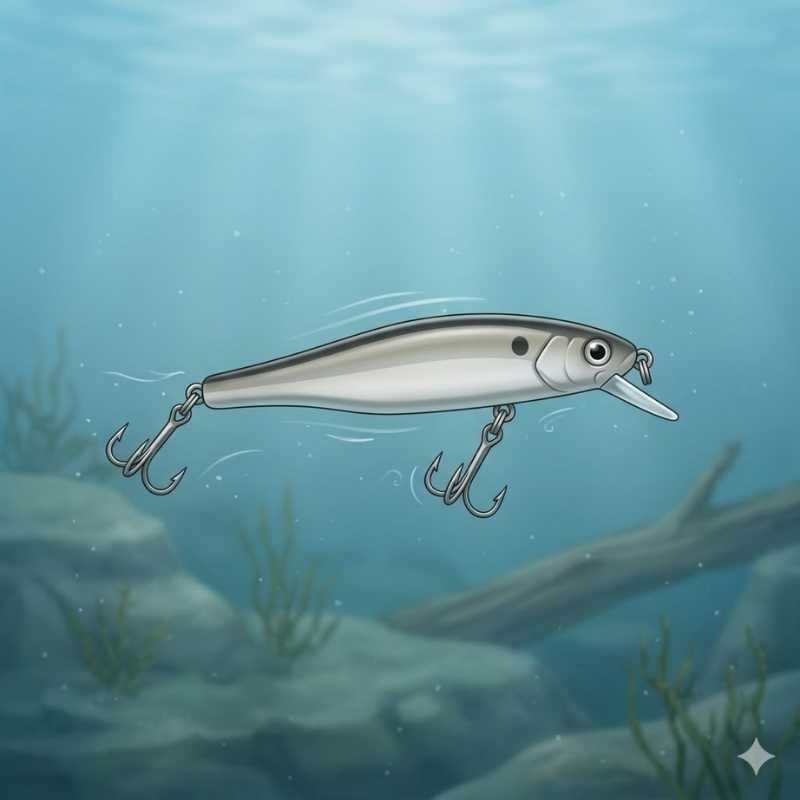
Strike King 6XD
Reaches deep with predictable wobble for offshore ledges.
Offshore ledges and humps — grind it into the bottom.
As an Amazon Associate I earn from qualifying purchases.
Alternative Options
- Rapala DT-16 →Alternative
- Berkley Dredger →Budget
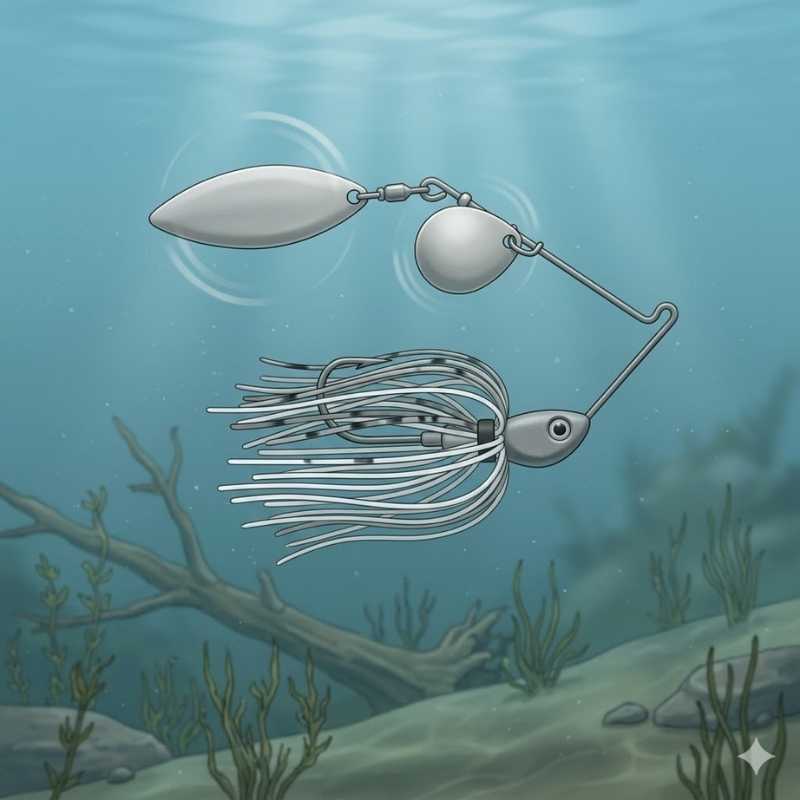
Dirty Jigs Guppy Football Jig
Premium football head built for rock and gravel.
Offshore rock and gravel — slow drag with long pauses.
As an Amazon Associate I earn from qualifying purchases.
Alternative Options
- Strike King Tour Grade Football →Alternative
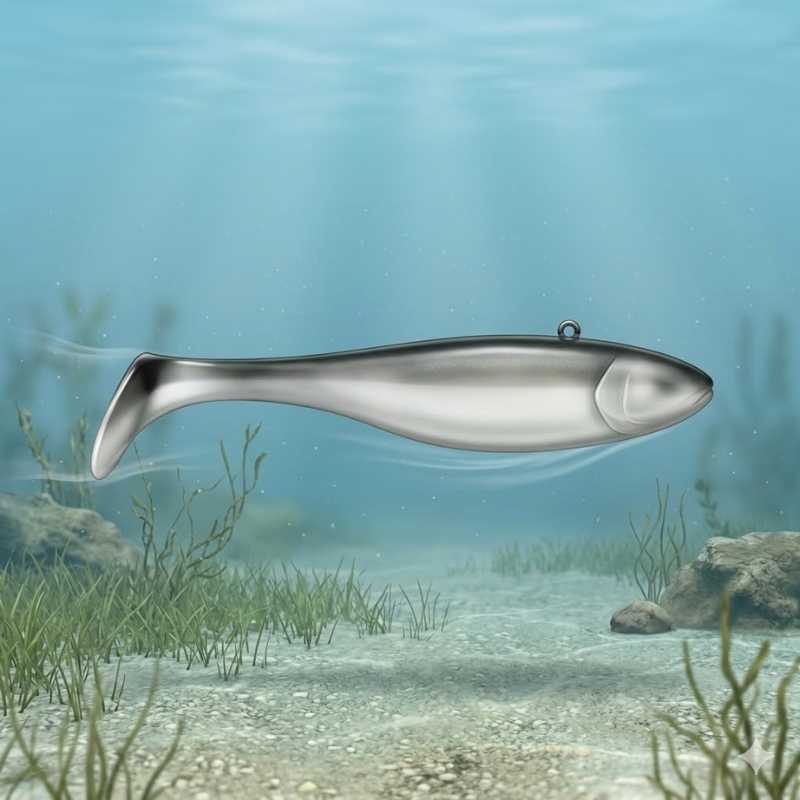
Keitech Swing Impact FAT
Best-in-class paddle-tail action for any swimbait rig.
Imitate shad — steady retrieve over points, flats, and drops.
As an Amazon Associate I earn from qualifying purchases.
Alternative Options
- Berkley PowerBait CullShad →Alternative
- Strike King Rage Swimmer →Budget
Add a jerkbait for suspending fish at depth and a Texas-rigged worm for vertical work behind pilings. The principle for any current bait is to let the current do the work — present the bait at the speed of the flow, not against it.
Retrieve angles in current
- Cast upstream of the seam or structure. Let the bait sweep down naturally past the break — that mimics how bait actually moves in current.
- Don't fight the current with retrieve speed. Match it. Bait moving against the flow looks wrong to a bass.
- Maintain bottom contact with jigs and cranks. Bass key on baits ticking the bottom in moving water.
- Pause on the seam. Whether you're swimming a jig or working a jerkbait, the moment your bait crosses from fast to slow water is when strikes happen. Hesitate there.
- Heavier weights in heavier current. A 1/2-ounce jig that worked in slack water needs to be 3/4 or 1 ounce when generation is on.
Timing the bite around generation
On most TVA and other dam-controlled lakes, generation schedules drive the daily bite. Bass feed hardest in the first hour current starts moving and again when it stops. Some setups only fish well during pulling water; others only fish well in slack water. Track the generation schedule for your local lake the way you track the moon phase — it'll change how you plan a day. For the dam-specific version of this — tailrace fishing, turbine schedules, and boat control below the dam — see hydroelectric current bass fishing.
The combination of sources is when the bite really fires. Wind blowing the same direction as the generation pull is a near-guaranteed feeding window. Wind opposing current is the worst case — the seam breaks down and bait scatters.
How current changes offshore positioning
Current changes how bass sit on offshore structure. With no current, fish suspend off the structure or scatter across the top of a hump. As soon as water starts pulling, they collapse onto the downstream edge — every bass on the hump stacks on one specific corner, the one tucked out of the main flow. The same logic applies to brushpiles on channel edges, rock piles on points, and standing timber on flats. The downstream side is where the fish go and where the casts should land.
For the rest of the offshore picture, see deep water bass lures.
Season by season
- Spring — current pulls fresh, warming water into the upper end and pushes bait into staging creek mouths. Pre-spawn fish stack on current-swept points and channel swings.
- Summer — current is the lifeline. Surface temps and low oxygen make non-current water nearly dead by mid-summer; if water is pulling, the bite is on the current all day.
- Fall — current concentrates migrating shad in creek arms and channel mouths, and bass crush moving baits as the bait sweeps past structure.
- Winter — cold-water bass slide onto current-swept rock and timber when water pulls, and slide back into deep slack water when it stops.
What kills the current bite
- Current shutoff — when generation stops mid-day, fish often go neutral for an hour before relocating off the seams.
- Wind opposing current — when wind pushes one way and current pulls the other, the seam gets disrupted and bait scatters.
- Cold floodwater — heavy spring rain can drop incoming water temperatures fast, shutting down the upper-end bite for several days.
- Muddy storm runoff — short-term mud can pull bass off seams entirely until clarity returns.
Common mistakes in current
- Casting downstream and reeling back against the current. Looks unnatural to the fish.
- Using bait that's too light to hold position in the flow.
- Fishing the fast side of the seam instead of the slack side.
- Skipping current spots in summer — they're often the only oxygen-rich water on the lake.
- Ignoring small current breaks. A 12-inch rock can create a seam that holds a 5-pound bass.
For the wind-driven version of this same logic, see how wind creates ambush zones. For the summer oxygen pattern that current solves, see low-oxygen summer bass strategies. For more on point-based ambush setups, see bass fishing points.