Best Overall / Editor's Pick97%
Roboworm Straight Tail
MM3
View Product →Discover the best finesse worms for bass fishing. Learn when to use each worm, how to rig them, seasonal applications, water clarity adjustments, and expert recommendations.
Affiliate Disclosure: As an Amazon Associate I earn from qualifying purchases. Recommendations reflect on-the-water testing and the LureLogic ranking engine — not paid placement.
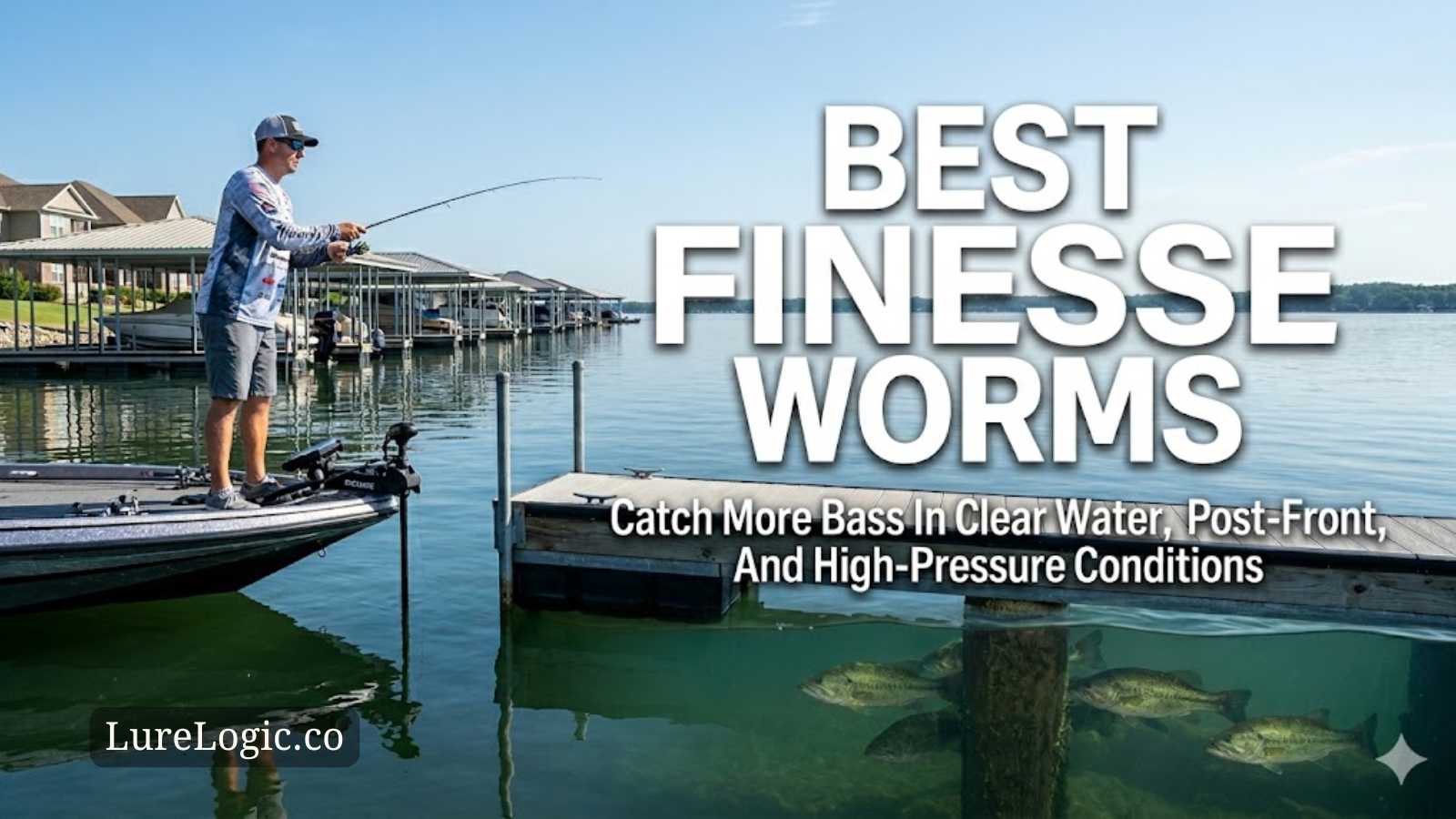
Finesse worms occupy a unique category within bass fishing because they are designed to trigger bites from fish that are unwilling to chase larger, more aggressive presentations. Unlike bulky creature baits or power-fishing plastics, finesse worms rely on subtle movement, natural profiles, and realistic presentations to convince bass to feed.
The best finesse worms are not necessarily the worms with the most action. In many situations, the opposite is true. Bass often become conditioned to seeing large numbers of crankbaits, spinnerbaits, chatterbaits, and oversized soft plastics. When fishing pressure increases, bass become selective. A smaller, more natural presentation frequently generates bites when traditional power-fishing techniques fail.
This becomes especially important when targeting fish in clear water. In these environments, bass often have extended time to inspect a lure before committing. A finesse worm that moves naturally without excessive vibration often appears more realistic than a larger presentation. Anglers fishing clear reservoirs frequently discover that downsizing is the key adjustment necessary to continue generating bites.
Water temperature also plays a major role. During cold-water periods, bass metabolism slows dramatically. Fish become less willing to expend energy chasing prey. Finesse worms allow anglers to keep a bait in the strike zone longer while maintaining a natural appearance.
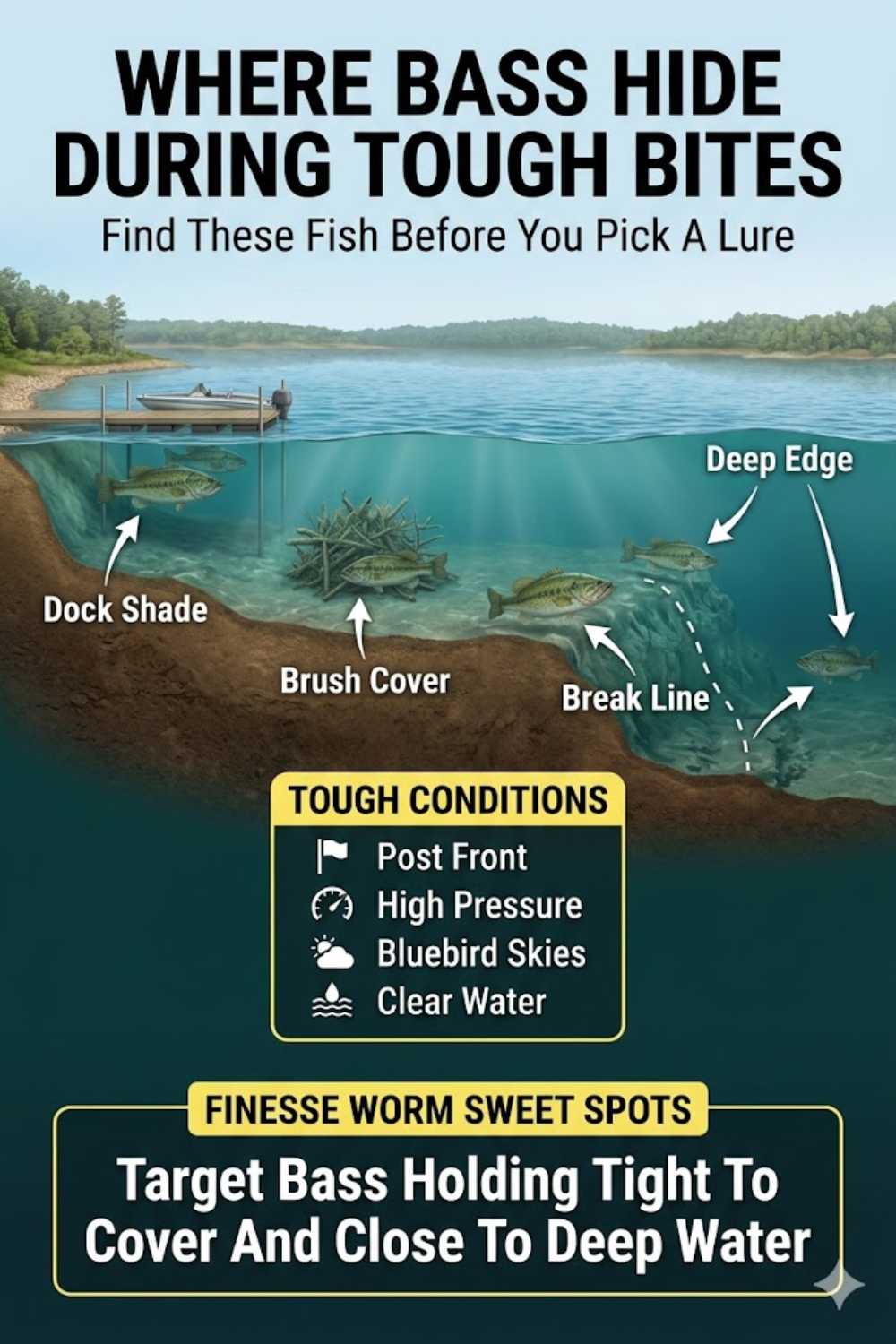
Bass behavior following weather changes further increases the effectiveness of finesse worms. During difficult post-frontal conditions, fish often become inactive and position tightly to cover or structure. This is why finesse presentations are frequently recommended during difficult weather transitions. Anglers looking to understand these situations should study patterns commonly associated with post-frontal bass fishing, where subtle presentations often outperform power techniques.
High fishing pressure creates another scenario where finesse worms excel. Lakes receiving significant tournament traffic or recreational fishing pressure often develop bass populations that become conditioned to popular lure styles. Under these conditions, finesse fishing frequently becomes the highest-percentage approach. This relationship between angling pressure and lure selection is one reason many anglers rely heavily on finesse presentations during periods of high-pressure bass fishing.
Ultimately, the best finesse worm is the one that matches local forage, water clarity, bass activity level, and presentation style while maintaining a natural appearance throughout the retrieve.
Many anglers incorrectly view finesse worms as emergency baits reserved only for difficult fishing conditions. While they certainly excel when the bite becomes tough, they are often the highest-percentage option even when bass are actively feeding.
The biggest advantage of finesse worms is versatility. They can be presented vertically, horizontally, suspended, dragged, hopped, dead-sticked, or slowly swum. Few lure categories offer such a broad range of presentations.
During spring, finesse worms become valuable around spawning flats and staging areas. Bass often move into shallow water but may not aggressively chase moving baits. A slowly presented finesse worm allows anglers to thoroughly cover key areas without forcing fish to commit to an aggressive reaction strike.
In summer, offshore structure fishing frequently revolves around finesse presentations. Deep points, ledges, brush piles, and humps receive constant fishing pressure. Bass living in these environments often become conditioned to larger presentations. A finesse worm can generate additional bites after fish stop responding to traditional offshore lures.
Fall creates another excellent finesse opportunity. While many anglers focus on moving baits during shad migrations, bass often become selective around schools of baitfish. A subtle worm presentation can separate itself from the surrounding forage and trigger additional bites.
Winter may be the season where finesse worms create the greatest advantage. Cold-water bass frequently suspend or position near structure while exhibiting minimal feeding activity. Slow presentations allow anglers to maintain precise depth control while maximizing time in the strike zone.
Finesse worms are also extremely effective whenever bass receive heavy fishing pressure. On popular lakes, fish may see hundreds of crankbaits, jigs, spinnerbaits, and swimbaits every week. Presenting something smaller and more natural often produces dramatically different results.
This is the foundation of modern finesse bass fishing. Rather than forcing fish to react, finesse fishing focuses on understanding bass positioning, mood, and environmental conditions before presenting a lure that appears easy to capture.
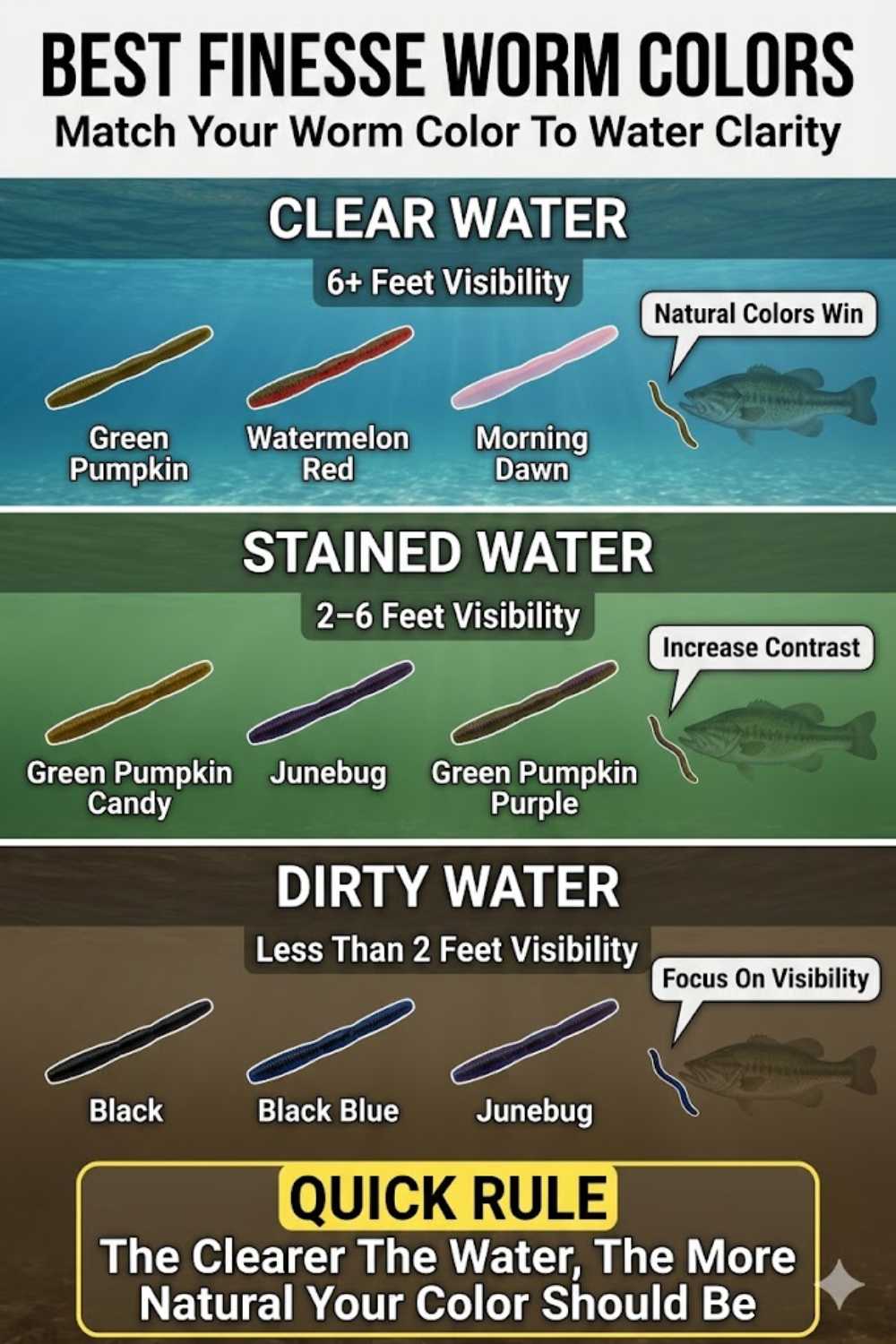
One of the most common mistakes anglers make is selecting finesse worm colors based on personal preference rather than environmental conditions.
Color selection becomes increasingly important as water clarity improves. In clear water, bass can inspect lures from greater distances and often scrutinize details more closely. Natural colors generally outperform brighter options because they more accurately imitate common forage species.
Green Pumpkin remains the most universally productive finesse worm color ever produced. It imitates bluegill, crawfish, juvenile sunfish, and numerous aquatic forage species. If an angler could only own one finesse worm color, Green Pumpkin would be the safest choice.
Watermelon becomes particularly effective in ultra-clear conditions. Its translucent appearance closely resembles natural prey and often excels when fish are heavily pressured.
Morning Dawn has become legendary among western reservoir anglers because it creates subtle visibility without appearing unnatural. It is especially effective during low-light conditions and on deep-water fisheries.
When water develops moderate stain, colors containing additional contrast become increasingly important. Green Pumpkin Purple, Green Pumpkin Candy, and Junebug frequently outperform more natural colors because bass rely on both sight and vibration when locating prey.
In dirty water, many anglers abandon finesse worms entirely. While power techniques often become dominant, finesse worms can still generate bites if color visibility is increased. Black, Black Blue, and Junebug create stronger silhouettes that bass can locate more easily.
Understanding water clarity is one of the most important factors in lure selection. The same finesse worm that excels in crystal-clear reservoirs may become virtually invisible in stained environments. Matching color visibility to conditions dramatically increases effectiveness.
Rigging often determines success more than the actual worm being used.
The drop-shot rig remains the gold standard for many finesse applications because it keeps the bait suspended above the bottom while allowing precise depth control. This presentation excels around offshore structure, suspended bass, and highly pressured fisheries.
The shaky head is perhaps the most versatile finesse worm presentation ever developed. By pairing a stand-up jig head with a floating or semi-floating worm, anglers create a presentation that mimics a feeding baitfish, small bluegill, or bottom-oriented forage species. The worm remains elevated off the bottom while subtle rod movements create lifelike action. This setup shines around rock, gravel points, shell beds, and offshore hard-bottom areas.
A weightless Texas-rigged finesse worm becomes especially effective during spring and early summer. Around docks, grass edges, shallow wood, and spawning areas, a slowly falling worm can trigger bass that ignore faster-moving presentations. The Zoom Trick Worm has become one of the most widely used weightless finesse worms because it can be skipped, twitched, and dead-sticked effectively.
The Neko rig has gained tremendous popularity because it combines finesse presentation with a slightly more aggressive action. By inserting a nail weight into one end of the worm, anglers create a bait that falls vertically while maintaining significant movement. This presentation excels around docks, brush piles, isolated cover, and pressured fish.
A wacky rig remains one of the simplest and most productive finesse worm presentations available. Hooked through the middle, the worm creates action on both ends during the fall. This presentation is especially effective around shallow cover, during the spawn, and when bass are suspended beneath docks.
The Carolina rig remains underutilized in modern finesse fishing. While many anglers associate it with larger worms, smaller finesse worms can be extremely effective when targeting offshore structure. The leader allows the bait to move naturally behind the weight while maintaining bottom contact.
The key mistake many anglers make is selecting one rig and forcing it into every situation. The best finesse anglers choose rigging based on bass positioning. Suspended fish often favor drop shots. Bottom-oriented fish frequently respond to shaky heads. Shallow cover may call for weightless presentations. Matching the rig to the situation dramatically improves success.
Bass behavior changes dramatically throughout the year, and the most productive finesse worm often changes with it.
Winter bass typically occupy deeper water and exhibit reduced feeding activity. Their metabolism slows, forcing them to conserve energy. During this period, smaller finesse worms with minimal action often outperform larger profiles. Roboworm-style worms become particularly effective because they can be presented slowly while maintaining a natural appearance.
As water temperatures climb into the pre-spawn period, bass begin moving toward staging areas. Secondary points, channel swings, and transition banks become high-percentage targets. Finesse worms excel because bass are feeding more frequently but have not yet committed fully to shallow-water patterns.
During the spawn, finesse worms become one of the most reliable soft plastics available. Weightless worms, wacky rigs, and Neko rigs allow anglers to keep a bait in the strike zone for extended periods. Bass often react to the presence of the bait rather than feeding aggressively.
Post-spawn may be the most overlooked finesse season. Many anglers immediately begin throwing moving baits, but recovering bass frequently remain around shallow cover, docks, and nearby structure. A subtle finesse worm presentation often generates more consistent bites than reaction baits.
Summer introduces a split pattern. Some bass remain shallow around shade and vegetation while others move offshore. Finesse worms can be effective in both environments. Offshore anglers often rely heavily on drop shots and shaky heads, while shallow-water fishermen use weightless worms around docks and grass.
Fall bass frequently feed on schools of baitfish. This is where baitfish-style finesse worms such as the Yamamoto D Shad can excel. Their profile more closely resembles shad than traditional worm shapes and often appeals to larger fish actively feeding on pelagic forage.
Understanding these seasonal movements allows anglers to select the right finesse presentation before ever making a cast.
Many anglers think of finesse worms as generic soft plastics, but the most successful fishermen intentionally match worm profiles to available forage.
In bluegill-dominated lakes, slightly bulkier finesse worms often outperform extremely thin profiles. Bluegill create a wider silhouette than baitfish, and bass accustomed to feeding on panfish frequently respond better to worms that resemble that shape.
In shad-driven reservoirs, slimmer worms become increasingly effective. Roboworms and D Shads closely resemble juvenile baitfish and often produce more bites during offshore feeding periods.
Crawfish-oriented fisheries create another interesting situation. While finesse worms do not directly imitate crawfish, shaky-head presentations often resemble bottom-feeding prey. Green Pumpkin and Green Pumpkin Candy colors frequently excel in these environments.
Small perch, gobies, and juvenile sunfish also influence lure selection. Bass are opportunistic predators, and finesse worms work because they imitate multiple forage categories simultaneously. Their subtle appearance allows bass to interpret them as whatever prey source is most common.
Forage matching becomes particularly important in clear water. In low-visibility environments, vibration and profile often dominate. However, when visibility increases, realism becomes increasingly important.
This is one reason why anglers targeting bass in clear water frequently experience dramatically different results based on worm profile and color selection. Small details become more important as fish gain additional time to inspect the bait.
Few factors influence bass behavior more than fishing pressure.
Modern bass receive extraordinary exposure to lures. Tournament lakes, urban reservoirs, and heavily trafficked public fisheries can see thousands of casts every week. Over time, bass become conditioned to common presentations.
This is where finesse worms separate themselves from power-fishing techniques.
Rather than relying on reaction strikes, finesse worms create opportunities through realism. Bass that refuse spinnerbaits, chatterbaits, crankbaits, or swimbaits often continue feeding on subtle presentations because they appear less threatening and easier to capture.
Pressure becomes even more significant following major weather changes. Fish that are already stressed by environmental conditions often become even less willing to chase aggressive lures. This combination of fishing pressure and weather instability frequently produces difficult bites.
Anglers targeting high-pressure bass fishing situations often discover that downsizing line, reducing lure size, and slowing presentation speed produces immediate results. The goal is not necessarily to make bass aggressive. The goal is to make the lure appear easy to eat.
Many tournament anglers reserve finesse worms specifically for situations where traditional approaches stop producing. However, some of the best finesse fishermen start with finesse presentations because they understand how conditioned modern bass have become.
The lesson is simple: the more pressure bass experience, the more valuable subtle presentations become.
Cold fronts create some of the toughest fishing conditions bass anglers face.
Rapid barometric pressure increases, falling water temperatures, bright skies, and changing wind conditions frequently cause bass to reposition and become less active. Fish often move tighter to cover, suspend near structure, or simply reduce feeding activity.
These situations are where finesse worms earn their reputation.
Following a front, bass frequently reject aggressive presentations. Fast-moving reaction baits may continue generating occasional bites, but overall catch rates often decline significantly. A finesse worm allows anglers to slow down and thoroughly work productive areas.
The most effective post-front strategy is usually reducing both lure size and presentation speed. Smaller worms, lighter line, and longer pauses often outperform larger offerings.
Drop-shot rigs become particularly effective because they allow the worm to remain in the strike zone while maintaining subtle movement. Rather than pulling the bait away from inactive fish, anglers can keep it directly in front of them.
Shaky heads are another excellent choice because they maintain bottom contact while creating limited action. The worm remains visible without appearing unnatural.
Anglers who regularly fish post-front bass fishing conditions often discover that patience becomes more important than lure selection. The right worm still needs to be presented slowly enough to trigger inactive fish.
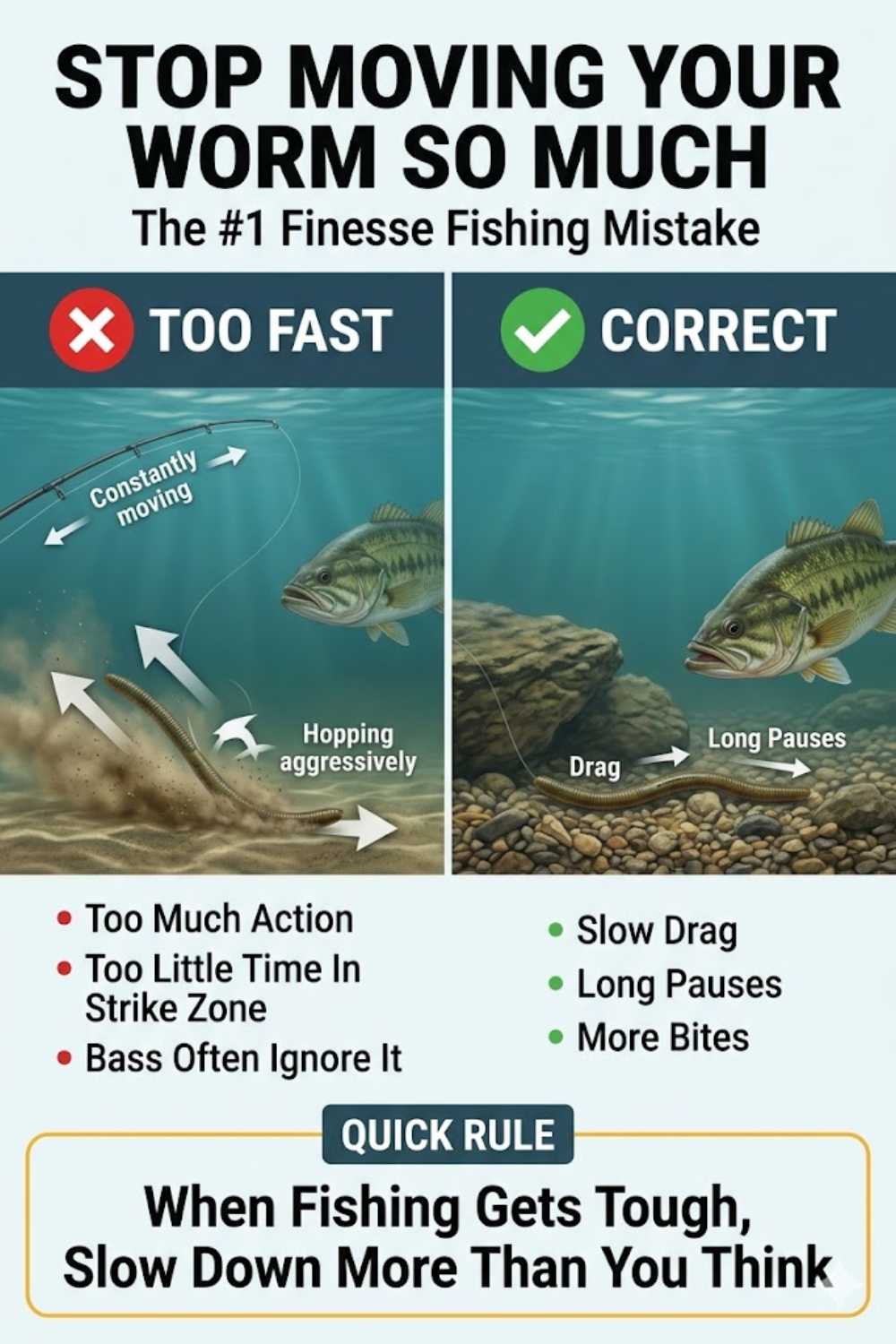
The biggest finesse fishing mistake is moving the bait too much.
Many anglers struggle because they attempt to fish finesse worms like reaction baits. Constant rod movement, excessive hopping, and rapid retrieves reduce the effectiveness of the presentation.
Another common mistake is using tackle that is too heavy. Finesse presentations are designed around natural movement. Oversized line and stiff rods can reduce action and make the bait appear unnatural.
Poor color selection also costs anglers bites. Many fishermen rely on confidence colors rather than adjusting to water clarity. A color that performs well in stained water may become ineffective in clear conditions.
Improper rig selection is another issue. A drop-shot presentation may excel around suspended fish but struggle around shallow cover. Conversely, a weightless worm may be ineffective for bass holding thirty feet deep.
Many anglers also fish too quickly. Finesse fishing rewards patience. The goal is not to cover water rapidly. The goal is to maximize time in productive areas.
Finally, anglers often abandon finesse worms too soon. Bass may require multiple casts, longer pauses, or subtle presentation changes before committing.
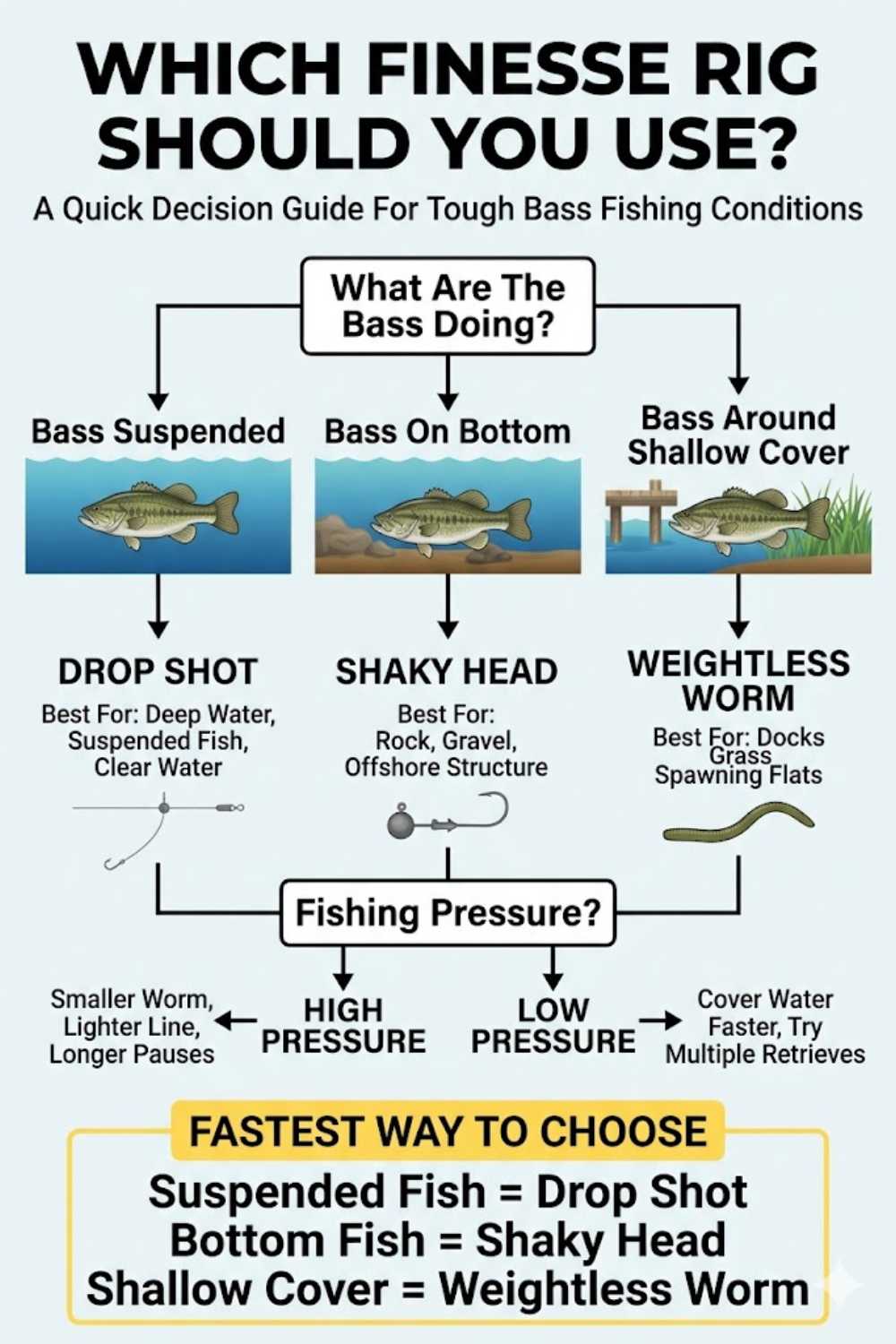
Choosing the best finesse worm starts with evaluating four primary variables: water clarity, forage, fishing pressure, and seasonal conditions.
For clear reservoirs with heavy fishing pressure, Roboworm remains difficult to beat. Its natural appearance and subtle movement excel when bass become selective.
For anglers seeking versatility across multiple fisheries, the Zoom Trick Worm provides the broadest range of applications. Few worms can effectively cover as many techniques.
If your primary finesse presentation is a shaky head, the Strike King KVD Finesse Worm and Berkley Bottom Hopper deserve serious consideration. Both excel in bottom-contact applications.
For shad-dominated reservoirs, especially during summer and fall, the Yamamoto D Shad often outperforms traditional worm profiles because it more closely resembles dominant forage.
Rather than searching for a single perfect worm, successful anglers build a small selection capable of covering multiple situations. This approach allows adjustments based on conditions while maintaining confidence in proven baits.
Industry-standard dropshot worm — subtle and proven.
Pressured or deep clear water — vertical shake on rock with a slim worm.
As an Amazon Associate I earn from qualifying purchases.
Temperature-by-temperature lure logic.
The prespawn temperature threshold.
Natural presentations and finesse profiles.
Vibration, dark silhouette, and visibility tactics.
Adjusting across the full clarity spectrum.
Topwater and reaction baits for the dawn window.
Plug in today's water temp, clarity, weather, and forage — the tool returns the highest-confidence presentations.
Build Today's Strategy →