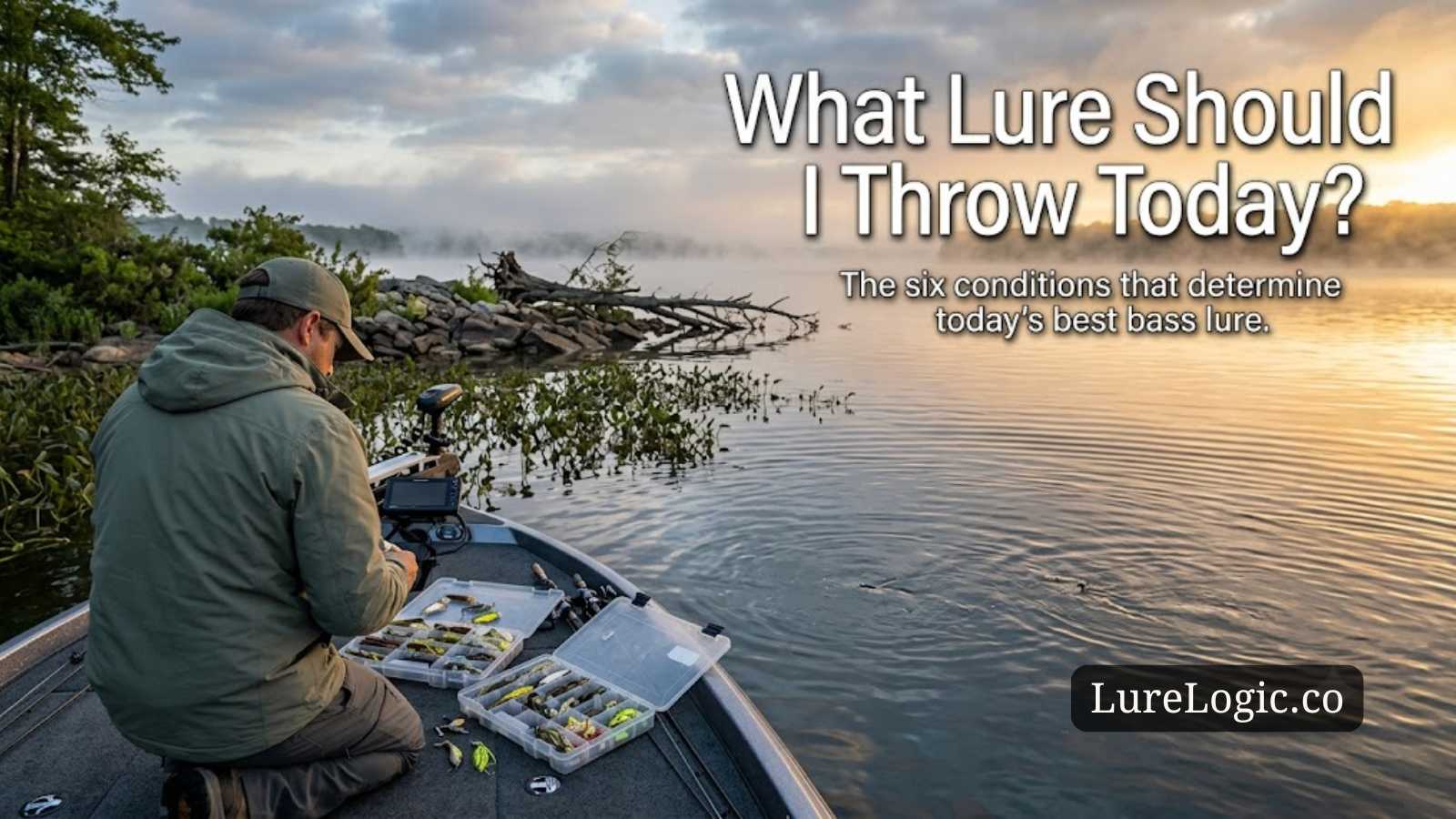
Why Today Is Different From Yesterday
The lure that produced last weekend might be the exact wrong choice this weekend. A ten-degree temperature swing, a cold front, a change in wind direction, or the arrival of the shad spawn can completely rewrite the correct answer. Anglers who fish "what worked last time" out-catch nobody. Anglers who read today's conditions and translate them into a category win more days than they lose.
This guide is that translation, top to bottom. If you'd rather have the whole framework unpacked in cornerstone form, read how to choose the right bass lure. If you'd rather skip the reading and run today's numbers through a tool, use today's fishing strategy. Either way, the same six variables decide the answer.
The Six Variables That Decide Today's Lure
Every good bass angler's brain runs the same checklist before the first cast. Learn to run it fast and you'll pick better baits automatically.
- Water temperature
- Water clarity
- Weather and barometric pressure
- Wind and light conditions
- Forage and seasonal pattern
- Depth of the fish and available structure
Each variable narrows the category. Six variables applied together narrow it to a very short list — often just one bait with a backup. That's the point.
Variable One: Water Temperature — The Metabolic Ceiling
Bass are cold-blooded. Their metabolism, aggression, willingness to chase, and preferred food size all rise and fall with water temperature. It's the first thing to check and the last thing to argue with.
Quick temperature-to-category map:
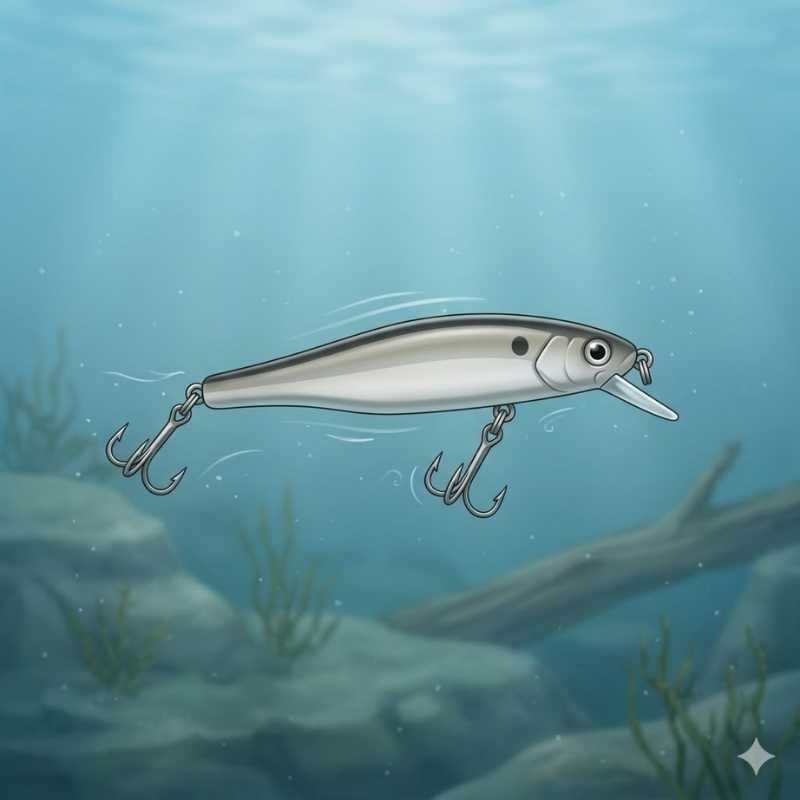
- Below 45°F: Suspending jerkbaits, hair jigs, blade baits, and small football jigs. Deliberate, motionless, deep. See winter bass fishing lures.
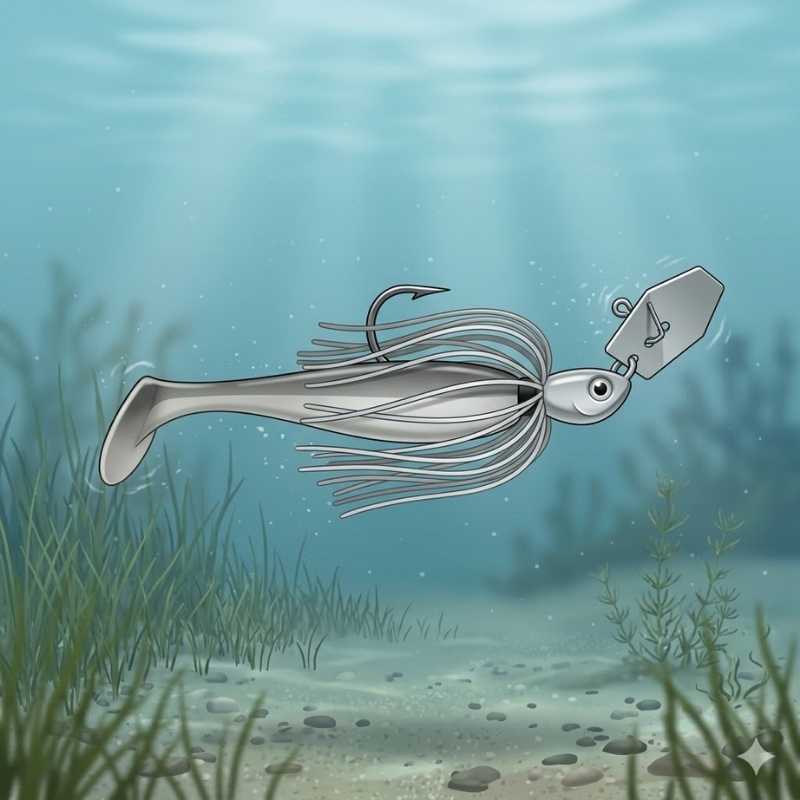
- 45–55°F: Jerkbaits still king, slow-rolled spinnerbaits, small chatterbaits, hair jigs. The prespawn threshold. Deep-dive: best bass lures for 55° water.
- 55–65°F: Squarebills, chatterbaits, lipless cranks, spinnerbaits. Reaction baits enter the mix.
- 65–75°F: The full toolbox — topwater at dawn, spinnerbaits and swim jigs mid-column, Texas rigs around cover, deep cranks on the ledges.
- 75–85°F: Shade, cover, and depth. Frogs, walking baits, deep cranks, and structure-oriented jigs.
- Above 85°F: Dawn and dusk topwater, night fishing, thermocline-depth soft plastics and cranks.
The full temperature framework — and why each range works the way it does — is in best bass lures by water temperature. If the water is on the move, the seasonal temperature guide tracks how bass respond to warming and cooling trends.
Variable Two: Water Clarity — Eyes or Lateral Line?
Clarity decides which of a bass's two hunting senses is doing the work. Fish don't magically know what your bait is made of — they either see it or they feel it. Present the wrong signal for the water and you might as well be casting an empty line.
- Clear (4+ feet visibility): Realism wins. Jerkbaits, drop shots, ned rigs, small swimbaits, natural soft plastics. Downsize line and leaders. Full playbook: best bass lures for clear water.
- Stained (1–3 feet): The best all-purpose water. Chatterbaits, spinnerbaits, squarebills, jigs, and soft plastics all produce. Silhouette matters more than exact color.
- Muddy (under 12 inches): Vibration, dark silhouette, and slower retrieves. Chatterbaits, Colorado-blade spinnerbaits, black/blue jigs, and rattling lipless cranks. Read the full muddy water lures guide.
The pillar on water clarity and lure selection handles the full spectrum and the color logic that comes with each band.
Variable Three: Weather and Barometric Pressure
Weather sets aggression. It's the single biggest driver of whether bass will chase down a moving bait or refuse everything except a slow finesse presentation dropped on their head. Look at what the pressure is doing over the last 24 hours before you decide.
- Falling pressure (pre-storm): The best window in bass fishing. Bass feed hard. Throw moving baits — chatterbaits, spinnerbaits, topwater, squarebills. See how falling pressure changes feeding and bass fishing before storms.
- Rising pressure (post-front): The bite dies. Fish tuck deep into cover, strike zones collapse to inches. Finesse — drop shots, ned rigs, small jigs. See best lures after a cold front.
- Stable pressure: Predictable. Fish what the season and cover say to fish. See bass positioning in stable weather.
- Overcast: Extends the feeding window on both ends. Moving baits stay in play mid-day. Overcast day bass fishing covers the pattern.
- Bluebird sky: The toughest condition. Shade lines, depth, and finesse. See bluebird sky bass fishing.
Variable Four: Wind and Light
Wind is bass fishing's secret weapon. A stiff wind on your face oxygenates the windward bank, disorients baitfish, and breaks up light penetration — a perfect ambush setup. Bass push shallow, get aggressive, and eat things they'd refuse on a slick day.
- Windy day: Reaction baits — chatterbaits, spinnerbaits, squarebills, lipless cranks. Focus the windward bank. Full guide: best baits for windy conditions.
- Calm and bright: Slow down, downsize, and think finesse. Move to shade or depth.
- Early morning: Topwater, walking baits, buzz baits, frogs. Read early morning bass lures.
- Sunset window: Same as early morning in reverse — bass push shallow, moving baits shine.
Wind and shad interact powerfully: how wind pushes shad into ambush zones explains the chain reaction that makes windward banks so productive on shad-based fisheries.
Variable Five: Forage and Seasonal Pattern
Once category and profile size are narrowed by the first four variables, forage picks the specific look. What are bass eating this week? Get the meal wrong and you'll fish next to feeding fish that won't touch your bait.
- Shad-based lakes: White, silver, pearl, chrome. Swimbaits, jerkbaits, spinnerbaits, and walking baits.
- Bluegill-driven fisheries: Green pumpkin, black/blue, and wider profiles. Jigs, Texas rigs, and creature baits. See bluegill spawn positioning.
- Crawfish forage: Brown, orange, red. Jigs and craw imitators worked slow on the bottom.
- Herring lakes: Long, narrow, silver. Flukes, walking baits, jerkbaits. See the herring spawn guide.
Seasonal pattern layers over forage — spring, prespawn, spawn, post-spawn, summer, fall, winter — each with a signature bait rotation. The seasonal bass patterns pillar is the year-round reference, and the complete guide to bass forage is the forage half of the same equation.
Variable Six: Depth and Available Structure
Even the correct category can miss if it's fished at the wrong depth. The right lure at the wrong depth is a wasted cast. Once you know where the fish are holding, match the running depth of the bait to the fish depth — not the water depth.
- 0–6 feet (shallow): Squarebills, spinnerbaits, chatterbaits, topwater frogs, Texas rigs. Ambush and cover play. Full guide: shallow water bass lures.
- 6–15 feet (mid-depth): Mid-diving cranks, chatterbaits, swim jigs, Carolina rigs. Points and ledges.
- 15–25+ feet (deep): Deep cranks, football jigs, drop shots, spoons, blade baits. Offshore structure fishing. Deep-dive: deep water bass lures.
Structure sharpens depth. Bass live on specific pieces of structure — points, ledges, humps, laydowns, docks, grass edges, and channel swings. Learn the top structures on your water and depth becomes obvious. The structure pillar maps every high-percentage feature.
Common Retrieve Styles and When to Use Them
Two anglers throwing the same lure catch different fish because retrieve is half the presentation. Match retrieve to activity level.
- Dead-slow: Bottom-crawled jigs, dragged Carolina rigs, long-paused jerkbaits. Cold water, post-front, and pressured fish.
- Steady: Wound spinnerbaits, chatterbaits, and swim jigs. Stable weather and general search.
- Fast: Burned squarebills, ripped lipless cranks, buzz baits. Fall shad blitz, wind-driven feeds, low light.
- Erratic: Twitch-jerk-pause jerkbaits, walked topwater, deflected crankbaits. Neutral fish that need a reason to commit.
Where Bass Position on Any Given Day
Lure selection isn't just about what to throw — it's about where. Today's lure lives in today's zone.
- Warm and stable: Cover, shade lines, and grass edges. See bass fishing shade lines.
- Windy: Windward banks and points. Read how wind affects bass positioning.
- Post-front: Deep, tight to cover, refusing to move.
- Falling water: Off the bank, tracking cover as it exits.
- Rising water: Pushed shallow into new flooded cover. Study rising water bass fishing.
Confidence Baits: The Reason the Same Anglers Keep Winning
Great bass anglers fish a narrow set of lures they trust and know cold. That's not laziness — it's system. Confidence catches more fish than variety. If you're building a starter system, these categories cover most days across most waters:
- Suspending jerkbait (cold and clear).
- Chatterbait (stained water and windy banks).
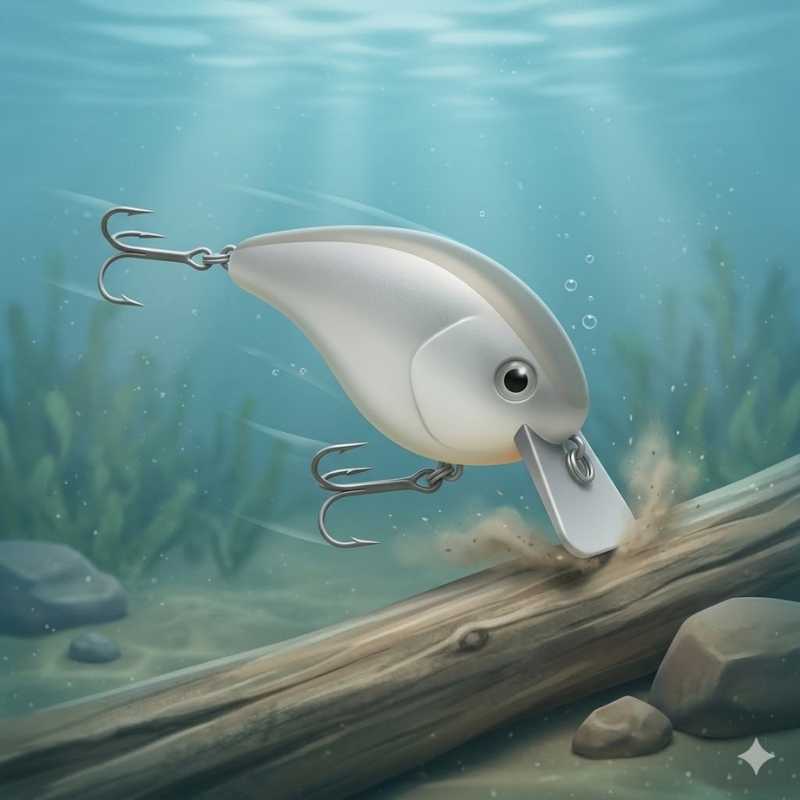
- Squarebill (shallow reaction water).
- Spinnerbait (muddy water and low light).
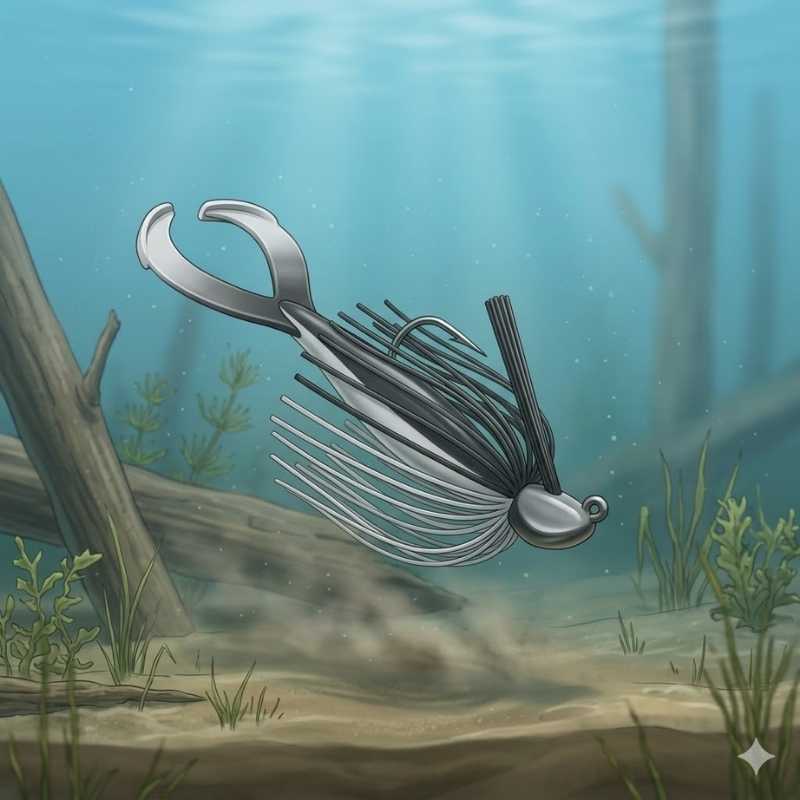
- Football jig (deep structure).
- Texas-rigged soft plastic (universal).
- Drop shot (pressured fish and open water).
- Walking bait or hollow-body frog (topwater window).
Every one has a dedicated buying guide on LureLogic — from best jerkbaits and best squarebill crankbaits to best jigs, best walking baits, best frogs, and best swimbaits. Pick the specific product for your water inside each category.
A Fast Real-World Walkthrough
Say it's mid-March. Water is 54°F. Clarity is stained — about 18 inches. Skies are overcast with a 12-mph south wind and pressure has been falling all morning ahead of an evening front. Local forage is shad.
The framework in real time:
- Temperature (54°F) → prespawn window. Jerkbaits, chatterbaits, squarebills, small spinnerbaits.
- Clarity (stained, 18") → silhouette matters. Cuts finesse jerkbaits down a notch. Chatterbait and spinnerbait climb.
- Weather (falling pressure, overcast) → active. Reaction baits shine.
- Wind (12 mph south) → windward banks. Chatterbait rip stays in play.
- Forage (shad) → white/chartreuse profile. Willow-leaf spinnerbait or white chatterbait.
- Depth (windward banks, staging fish) → 4–8 feet. Perfect chatterbait window.
Answer: white chatterbait, 3/8 oz, willow trailer, worked across staging banks on the windward side. Backup: a suspending jerkbait for the pauses. That decision took eight seconds once you know how the filters stack.
Common Mistakes People Make Deciding What to Throw Today
- Fishing yesterday's answer. Conditions change. So does the correct lure.
- Skipping temperature. The metabolic ceiling isn't optional. Always check it first.
- Ignoring pressure trends. A steady 30.10 is a different fishing day than 30.10 and falling. Look at the trend, not the snapshot.
- Force-fitting a favorite bait. Confidence is powerful, but confidence in the wrong category is just stubbornness with better marketing.
- Forgetting depth. Even the right category is a miss if it runs above or below the fish.
- Not adjusting when conditions shift mid-day. The right lure at 7 a.m. is often the wrong lure at 1 p.m. Re-run the checklist every hour or two.
The Bottom Line
The question "what lure should I throw today?" is really six smaller questions. Temperature. Clarity. Weather. Wind and light. Forage. Depth. Run each one fast, stack the answers, and the correct category is almost always obvious. Confidence and conditions do the rest.
Let Today's Fishing Strategy Answer It Instantly
The framework in this guide is exactly what LureLogic's recommendation engine runs on your behalf. When you're already pushing off the ramp and you don't want to think it through — or when conditions have shifted mid-day and you need a quick re-check — drop today's water temperature, clarity, weather, wind, and depth into today's fishing strategy. In under thirty seconds you get the highest-confidence lure, a starter color, retrieve style, and a backup pattern for when the primary slows down.
Read this guide to become a better decision-maker. Use the tool to make the decision faster. Both work best together.