Why jerkbaits work
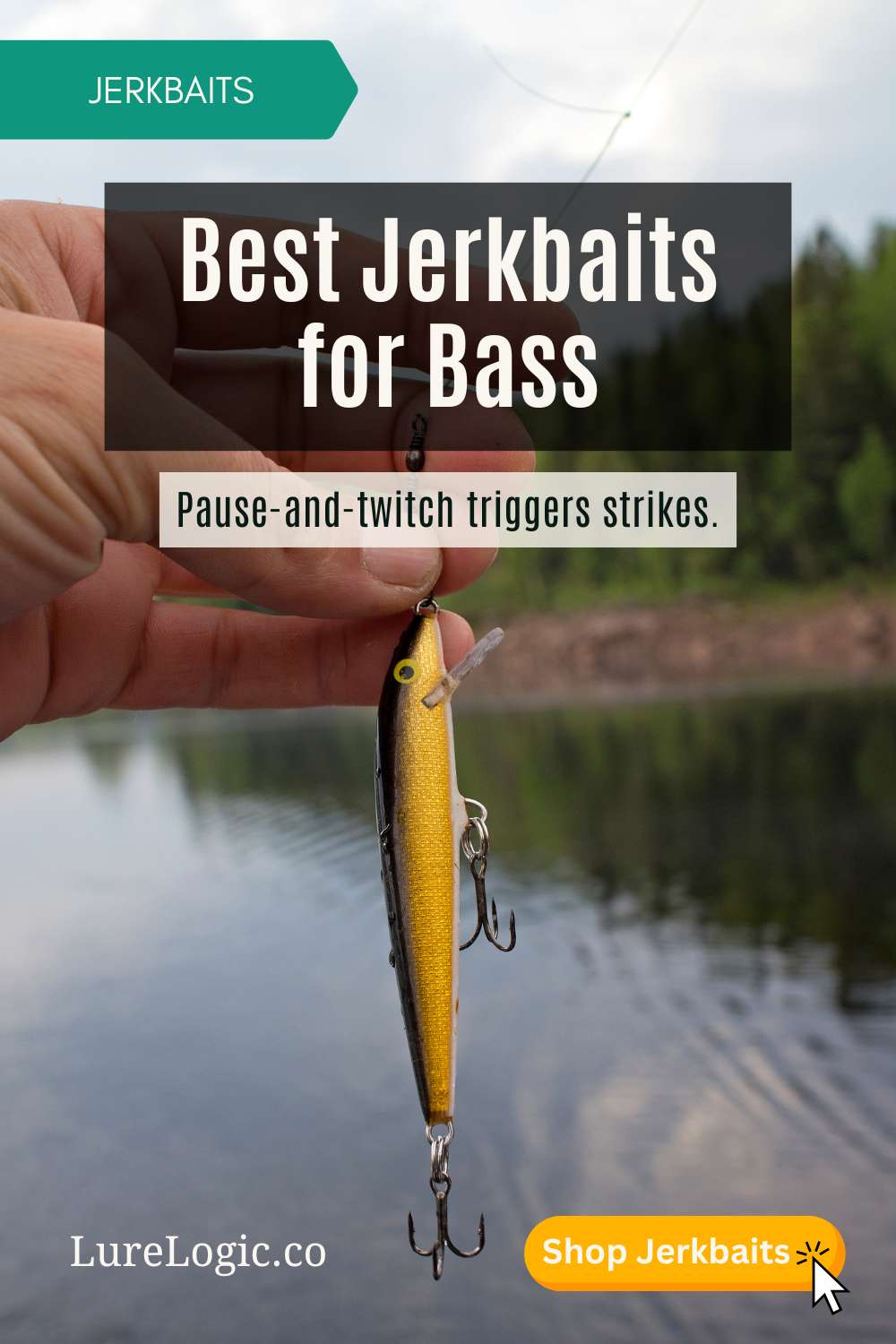
A suspending jerkbait sits horizontally in the water column without sinking or rising. Cold-water bass — which won't chase a moving bait far — have time to see the bait, decide, and commit. The combination of realistic profile, erratic kick on the twitch, and dead stop on the pause is what triggers neutral fish.
The proven jerkbaits
Megabass Vision 110
Industry-standard suspending jerkbait for cold-water bass.
Cold, clear water — long pauses near rock and points.
As an Amazon Associate I earn from qualifying purchases.
Alternative Options
- Rapala Shadow Rap →Alternative
Cadence by water temperature
- 38–45°F: twitch, twitch, pause 10–20 seconds. Yes, that long.
- 45–55°F: twitch, twitch, twitch, pause 5–10 seconds.
- 55–65°F: twitch-twitch-twitch with 2–3 second pauses. Speed it up as the water warms.
- Above 65°F: jerkbait window is closing — switch to crankbaits and swimbaits.
Where to throw a jerkbait
Main-lake points, secondary points, channel swings, bluff walls, and any transition where bass stage between deep wintering areas and shallower spring water. Bridge pilings and riprap banks hold residual heat and concentrate jerkbait fish.
What most anglers get wrong
- Pause too short. The bite almost always comes after you think the pause is too long.
- Wrong line. Fluorocarbon helps the bait suspend correctly; mono floats the bait up and kills the action.
- Boat too close. A long cast gets the bait to depth and keeps the rod angle low for a cleaner twitch.
- Color too bright. In clear water, downsize and go natural. Loud colors get inspected and refused.
For broader cold-water tactics, see the winter lures guide and the post-cold-front guide.