Why wind triggers bass
Wind pushes surface water across the lake. That water carries plankton, which baitfish eat, which bass eat. Within a few hours of a sustained wind, the entire food chain compresses onto the windward bank — and bass set up to ambush along the current breaks. The baitfish movement guide covers the chain step by step.
Wind also breaks up surface light penetration. The chop disguises bait, reduces shadows, and makes bass feel safer feeding aggressively. Strike windows widen, and reactionary bites replace careful inspections. This is why a slightly choppy day on a clear lake can fish 5x better than a glass-calm one. Pair this read with the water clarity lure selection guide — wind effectively reduces clarity by stirring sediment.
Bass positioning breakdown
- Windward bank, first 8 feet of water — most active feeding fish.
- Windward point tips — concentrated schooling fish using the current break.
- Calm pockets adjacent to windy water — big-fish ambush spots where bait gets pushed into a pocket and trapped.
- Wind-blown grass edges — bass push outside the grass to intercept fleeing bait.
- Leeward back of coves — neutral fish, but post-spawn females sometimes stack here to recover.
Reading the windward bank
- Points that catch wind concentrate bait at the tip and along the windward side. See bass fishing points.
- Channel swings where the bank turns into the wind create predictable ambush spots. See creek channel positioning.
- Riprap and rock on the windward side hold heat, attract crawfish, and break current.
- Grass edges facing the wind push bait outside the grass and bass push out to eat. Grass lines guide.
- Bluff walls taking direct wind become long ambush corridors with current along the wall.
The wind-driven lure rotation
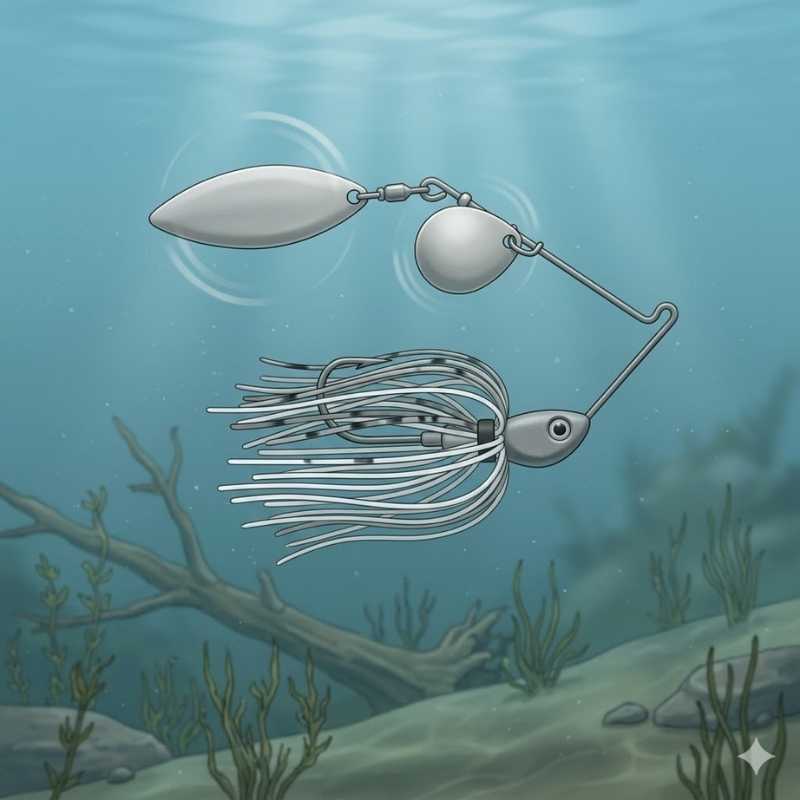
War Eagle Spinnerbait
Classic Colorado/willow combo for windy banks and stained water.
Windy banks and stained water — burn it parallel to cover.
As an Amazon Associate I earn from qualifying purchases.
Alternative Options
- Luck E Strike Legends Spinner Bait →Alternative
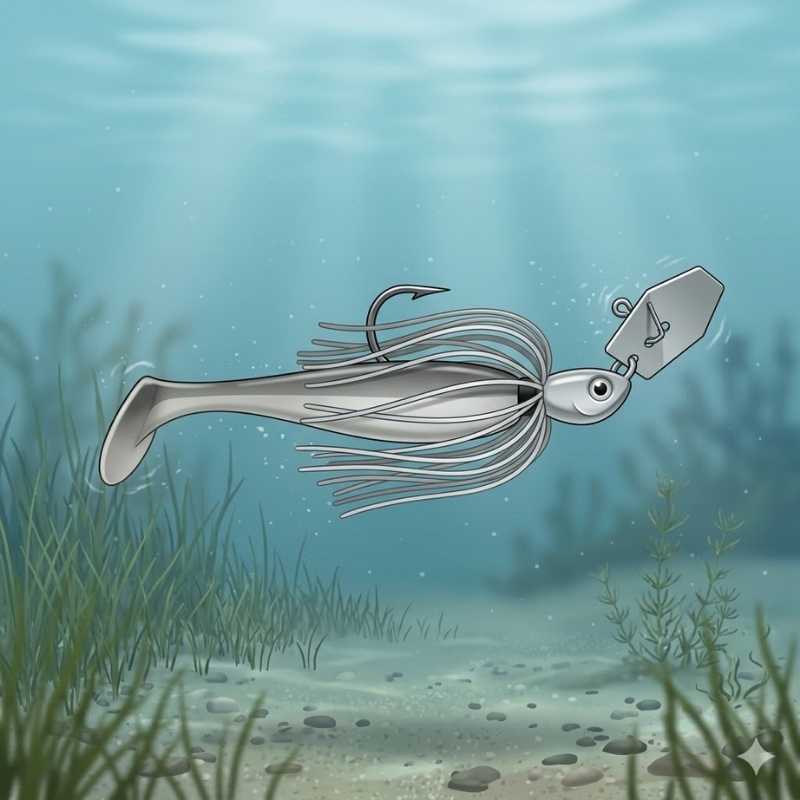
Z-Man JackHammer ChatterBait
The benchmark bladed jig — premium hardware and perfect vibration.
Stained water, wind, scattered grass — moderate-paced reaction bait.
As an Amazon Associate I earn from qualifying purchases.
Alternative Options
- Strike King Thunder Cricket →Alternative
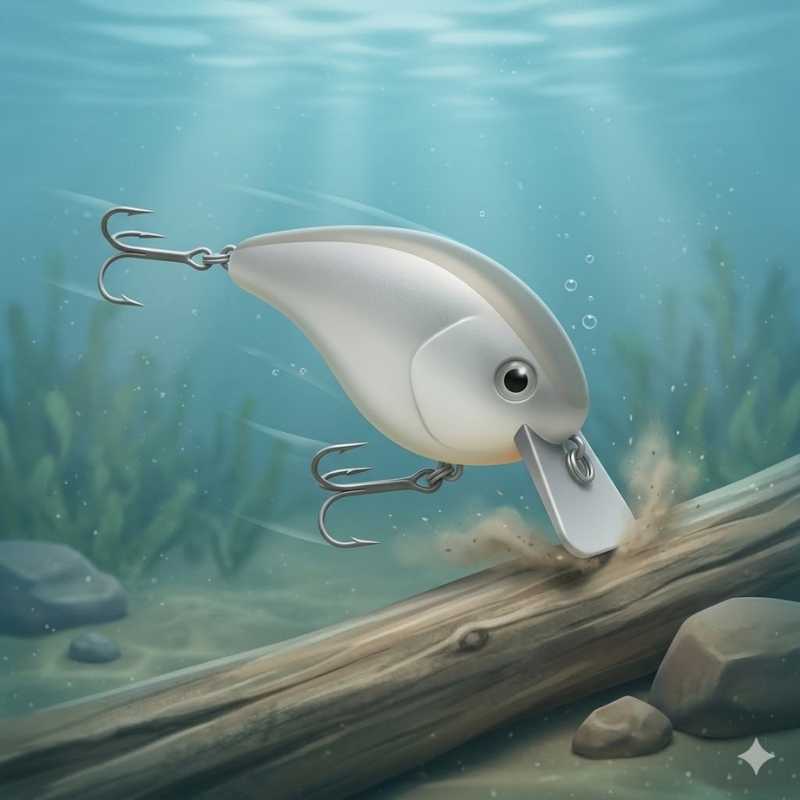
Strike King KVD 1.5
Deflects off cover like nothing else — the go-to shallow crank.
Shallow wood and rock — make it deflect off cover.
As an Amazon Associate I earn from qualifying purchases.
Alternative Options
- Lucky Craft LC 1.5 →Alternative
Seasonal considerations
- Spring — south winds warm shallow water and accelerate the pre-spawn move. North winds delay it. Plan the trip around forecast direction.
- Summer — wind is everything. A summer windward bank can fish like spring; the leeward side can be dead. Wind also breaks up the thermocline locally and re-opens shallow water — see thermocline bass fishing.
- Fall — wind pushes shad into creek mouths and concentrates schoolers. The fall wind-blown point bite is one of the most reliable patterns of the year. Fall bait guide.
- Winter — wind can be a negative if it drops surface temperature, but a south-wind warm-up day produces some of the best winter bites of the year. Winter bass lures.
Water clarity adjustments
Wind reduces effective clarity by stirring sediment and breaking surface light. A normally clear bank becomes stained within a few hours of hard wind — and bass shift behavior accordingly. Throw bigger profiles, more visible colors, and more vibration than you'd normally use on that water.
- Wind on clear water — upsize and add flash. A small natural bait that's been working all morning gets replaced by a 3/8 oz chartreuse-and-white spinnerbait.
- Wind on stained water — perfect storm. Almost any reaction bait produces.
- Wind on muddy water — already muddy, now plus chop. Slow down slightly so bass can locate the bait. A black-and-blue jig works as well as anything.
Lure selection logic
- Wind speed — under 10 mph: any bait. 10–18 mph: reaction baits dominate. 18+ mph: heavy spinnerbaits, lipless cranks, big chatterbaits.
- Color — bump one step brighter than calm conditions. Add chartreuse, white, or fluorescent contrast.
- Profile — bigger than calm. Wind disguises detail; size becomes a confidence trigger.
- Speed — faster than calm. Bass commit on reaction; don't give them time to inspect.
- Cast angle — into the wind. The retrieve mimics struggling bait.
Retrieve adjustments
- Speed up. Wind triggers reactive feeding. Burn the spinnerbait, fish the chatterbait fast.
- Throw bigger blades. Increased water displacement helps bass locate the bait in chop.
- Cast into the wind. The retrieve mimics bait struggling against current — bass commit harder.
- Use heavier baits. A 3/4 oz spinnerbait holds depth in 15 mph wind where a 3/8 oz rises to the surface.
Different wind directions
A north wind in fall often signals a cold front and a tougher bite. A south wind in summer warms water and triggers feeding. East winds get blamed for slow days, but on most lakes the issue is the pressure change behind the wind, not the wind direction itself. The practical rule: fish whichever bank the wind is blowing into today, regardless of compass direction. The fish go to the wind.
Calm-water exceptions
When dead calm follows a wind, bait disperses and bass slide off the bank to deeper structure. The first hour after the wind quits is usually slow — the lake takes time to redistribute. By the next morning, bass have repositioned and a new pattern emerges. On glass-calm days, finesse and shade-line fishing replace reaction baits. See the bluebird sky guide and the shade lines guide for the calm-water playbook.
Real-world application: chasing the wind
Forecast: SW wind building from 5 mph at dawn to 18 mph by noon. Plan: fish the calm SW bank early with topwater while the lake is still glass. As the wind builds, run to the NE side of the lake — the bank now receiving the wind. Spend the rest of the day on NE-facing points and grass edges with a chatterbait and spinnerbait. Move with the wind direction if it shifts. The fish will be wherever the wind is hitting, not wherever they were yesterday.
Common mistakes anglers make
- Hiding from wind by fishing the calm side of the lake.
- Fishing too slow in wind. Bass want to react; finesse rarely works in 15+ mph chop.
- Ignoring the current-break geometry of points and channel swings.
- Casting with the wind instead of into it — boat outpaces the bait.
- Anchoring on one bank when the wind direction has shifted during the day.
What experienced anglers notice
Most of the time, a windblown bank that catches direct wind for two hours will outproduce any calm water on the lake. The exception is post-frontal wind on bright bluebird days — the high pressure cancels out some of the wind advantage, and the bite stays tough until the front fully passes. For that pattern, see cold front lures. For the bait side of the equation, see best baits for windy conditions.