Where Bass Go When Summer Gets Hot
By late June most bass have already left the shallow spawning flats where anglers found them in April and May. The reason is simple: shallow water heats fastest, holds the least oxygen, and offers the least cover from overhead sun. Once surface temperatures climb into the mid-80s, the shoreline that produced 20 bites a day in spring will produce two — and most of those will be small.
Bass don't simply "go deep." They relocate to spots that solve three problems at once: feeding opportunity, thermal comfort, and ambush cover. A 30-foot deep hole with no bait, no current, and no structure won't hold fish either. What summer bass want is an intersection — a piece of cover or structure that puts them within a short move of feeding water while keeping them out of the worst heat and light.
That intersection lives in a predictable list of locations:
- Main lake points — they funnel baitfish, give bass a clear ambush line, and offer multiple depth options within one cast.
- Creek channel edges — the highway bass use to move between deep summer holding water and shallower feeding flats.
- Offshore humps — isolated structure that concentrates fish out of fishing pressure and into cooler water.
- Shade lines — the most underrated summer pattern, and the one that keeps shallow fish catchable through July and August.
- Deep cover — brush piles, standing timber, and bridge pilings adjacent to channel swings.
Among those, shade lines next to deep water are one of the most reliable summer patterns on any reservoir. They give bass overhead cover, immediate access to deeper water, and a perfect ambush edge — three needs solved by one piece of structure. That's why a single shaded dock on the right point can outproduce a half mile of open bank in midday sun, and why bright bluebird days often fish better than overcast ones once you know where to look.
The mental shift Pinterest readers usually need is this: summer bass are not hiding — they're positioning. They're sitting on the edge of a feeding zone, waiting for bait to commit a mistake. Your job is to identify the edges where that happens and put a bait on the correct side of the line.
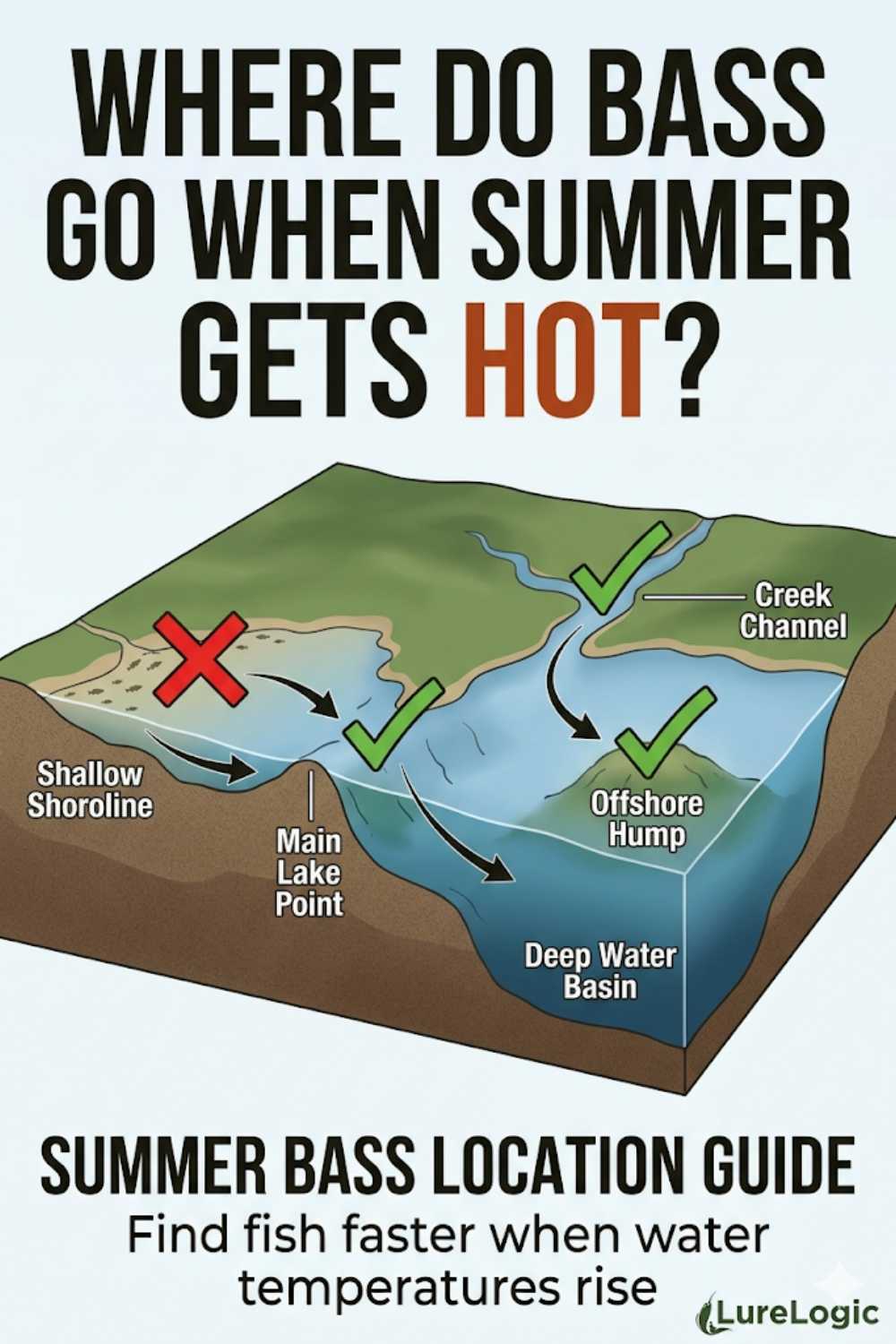
The Summer Bass Location Hierarchy
Not every summer spot is equal. The locations below are ordered roughly by how consistently they produce on a typical Southeastern reservoir from late June through August.
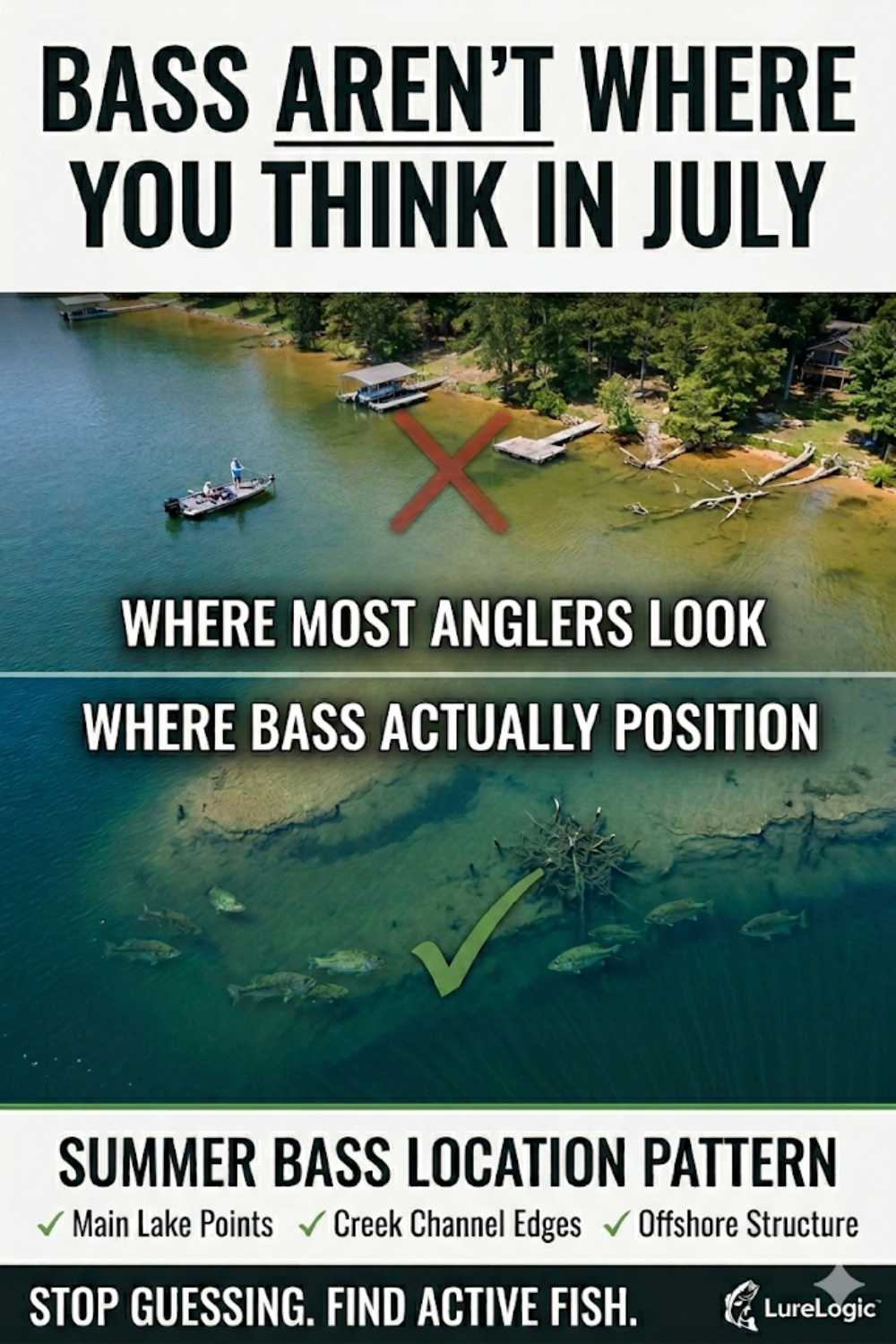
1. Shade adjacent to deep water
The top summer location is shade with immediate depth access — a dock on the end of a point, a bluff that drops into 25 feet, a laydown lying off a channel swing. Bass use it because they can feed in shaded shallow water and retreat two cranks of the trolling motor to 15+ feet of relief. Strongest from 10am through late afternoon under bright sun; even better when wind is breaking on the same shade line.
2. Main lake points
Main lake points sit at the highway intersections of a reservoir. Baitfish travel them, bass stage on them, and they offer 4 to 30 feet of depth on the same piece of structure. Strongest on the down-wind side when there's a steady breeze blowing bait into the point. A point with brush, rock, or a dock on it outproduces a clean point ten to one.
3. Creek channel swings
The bend in a submerged creek channel is the single best summer structure on most lakes. The current break, depth change, and bait highway converge on one spot. Channel positioning gets stronger as the thermocline sets up — bass stack along the channel edge at the depth where oxygen and temperature line up. Best fished early morning and late afternoon, with mid-day producing on the deepest swings.
4. Offshore humps
An isolated hump topping out 12 to 20 feet down — surrounded by deeper water — is a magnet because it concentrates everything: bait, current, structure, and fish that have escaped shoreline pressure. Strongest on calm, post-frontal days when shallow fish shut down. Even better when there's brush or rock on top.
5. Deep docks
Not every dock holds summer fish — but a dock in 8+ feet of water at the post, with brush underneath or a channel swing nearby, is a year-round residence. See summer dock fishing for the specific dock features that matter. Strongest midday when the shade line under the dock is at its widest.
6. Brush piles
Sunken brush in 10 to 20 feet of water — especially on the edge of a channel or hump — is the most reliable mid-summer offshore target. Brush concentrates bait, holds fish through pressure, and refills quickly after a school is caught off. Strongest after the first heat wave breaks the lake into stable summer patterns, and during stable weather windows. Wind direction often determines which side of the brush is active.
Why Shade Lines Become More Important In Summer
Shade lines exist year-round, but their importance to bass spikes in summer for four reasons that compound each other:
Sun angle. From June through August the sun climbs nearly overhead at midday. Light penetrates straight down through clear water, lighting up the entire shallow zone. The only true visual cover left is the hard line a piece of overhead structure throws across the water.
Increased light penetration. Clear summer water with high sun gives bass perfect underwater visibility. Bait sees them too — so any bass trying to feed in open water has lost its element of surprise. Sitting on the dark side of a shade line restores the visual asymmetry that lets ambush predators eat.
Heat stress. A bass holding in 4 feet of 90°F water burns oxygen faster, digests slower, and bites less. The same bass holding under a dock in 4 feet of shaded water that's two or three degrees cooler can feed all day. Shade isn't just a hiding spot — it's a metabolic refuge.
Ambush efficiency. Shade lines reduce the bass's hunting effort. Instead of chasing scattered bait through open water, the fish sits at a known edge and waits for prey to cross. Energy in, energy out — and in summer, that math matters more than at any other time of year.
Those four pressures push fish onto a specific set of summer shade targets:
- Docks — the most reliable summer shade in the country. Floating docks throw the hardest line; covered docks the deepest shade.
- Bridge shade — extends well off the bank, concentrates traveling fish, and holds current.
- Overhanging trees — willows, cypress, and laydowns drop shade onto water bass can't otherwise hold in.
- Bluff walls — west-facing bluffs throw long morning shade; east-facing bluffs hold the afternoon shadow that pulls fish up to feed.
All four targets work the same way at the level that matters to the fish: a sharp line between bright water and dark water, with deeper water close by. The next section explains why that line is the actual strike zone — not the cover itself.
Why shade lines hold fish
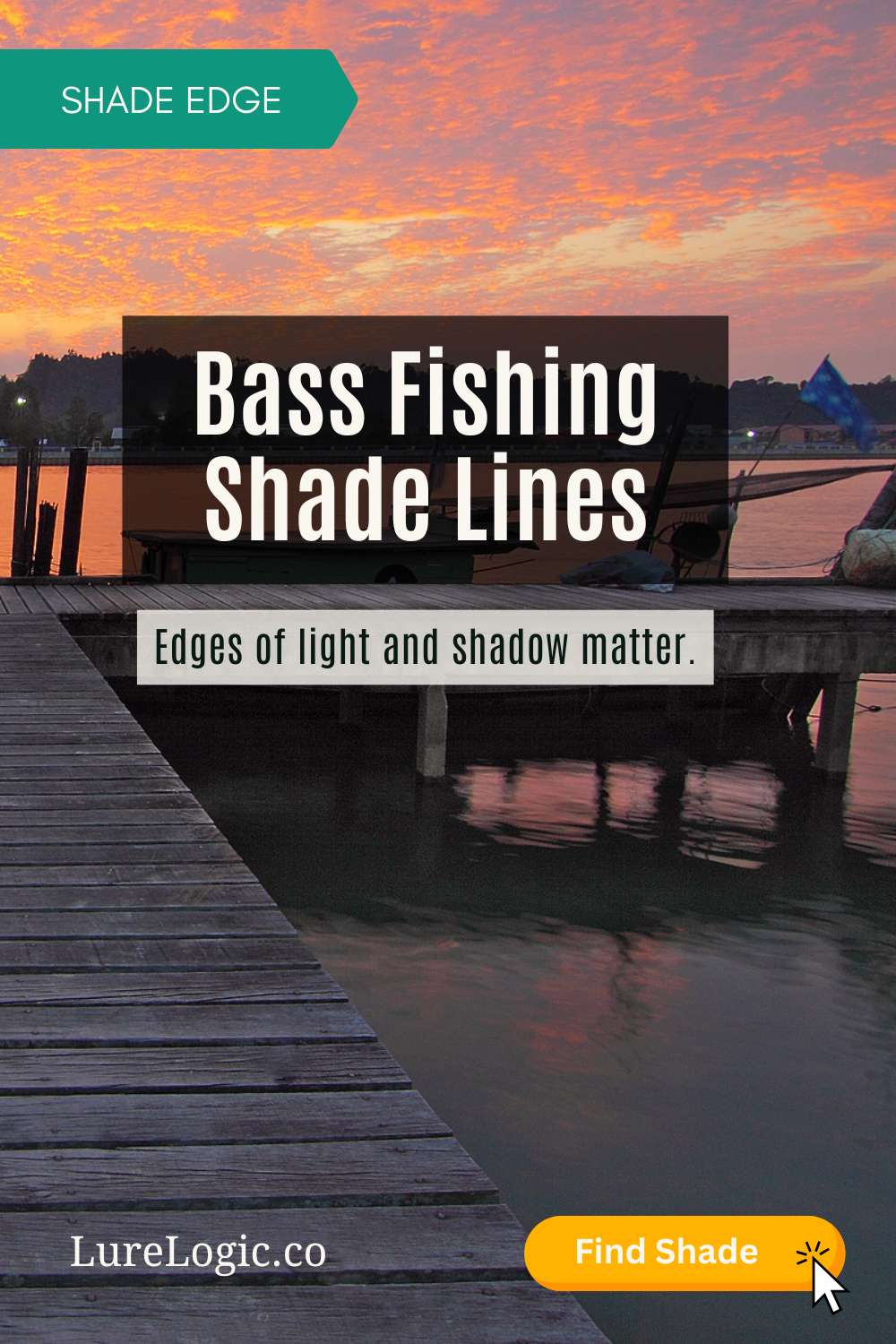
A shade line is a visual ambush edge. From inside the shade, bass can clearly see bait moving in the bright water on the other side. The bait, meanwhile, struggles to see into the dark — and never sees the bass coming.
Most anglers notice that the shade edge produces more strikes than the deep shade. That's because the fish is positioned to eat — not to hide.
Types of shade lines
- Dock shade — the sharpest, most defined shade lines on most lakes.
- Bridge shadow — extends well off the bank into open water; concentrates traveling fish.
- Bank shadow — bluff walls and overhanging trees throw shade onto the water.
- Cloud shadow — moving shade from clouds creates temporary ambush windows.
- Boat shadow — even your own boat throws a shade line; cast away from it.
The shade-line lure rotation
Yamamoto Senko
Dead-stick fall that bass simply can't refuse.
Heavy cover — pitch in, let it sink on slack line.
As an Amazon Associate I earn from qualifying purchases.
Alternative Options
- Zoom Trick Worm →Alternative
- Strike King Rage Craw →Budget
Dirty Jigs Compact Pitchin' Jig
Premium skirt and head shape for pitching tight cover.
Pitch to docks, laydowns, and isolated cover for big fish.
As an Amazon Associate I earn from qualifying purchases.
Alternative Options
- Strike King Structure Jig →Alternative
- Booyah Boo Jig →Budget
Roboworm Straight Tail
Industry-standard dropshot worm — subtle and proven.
Pressured or deep clear water — vertical shake on rock with a slim worm.
As an Amazon Associate I earn from qualifying purchases.
Alternative Options
- Berkley Bottom Hopper →Alternative
- Berkley MaxScent Flatworm →Budget
Casting the line
Land the bait in the bright water, then bring it across the shade line. The strike comes right at the transition or just inside the shade. A bait that lands deep inside the shade misses the ambush window entirely.
When fishing dock shade, cast parallel to the shadow line whenever possible. Long parallel casts keep the bait in the strike zone for the maximum amount of time.
Time of day adjustments
- Morning — shade lines are short and shift fast. Fish the west side of cover.
- Midday — shadow is directly under the cover. The shade line wraps the structure.
- Afternoon — fish the east side as the shadow extends in that direction.
- Late afternoon — long shadows reach into deeper water; some of the best fishing of the day.
What most anglers get wrong
- Casting at cover instead of at the shade line the cover creates.
- Ignoring shadow that extends 10–15 feet off the bank in afternoon light.
- Fishing the shaded side of the boat (and casting through their own shadow onto productive water).
What experienced anglers notice
The same shade line produces at the same time of day from one trip to the next. Build a milk run of high-percentage shade and fish it in the right order — east-shade spots first in the morning, west-shade spots last in the afternoon. For wind-driven shade-line patterns, see how wind affects positioning.