Why Bass Roam on Overcast Days
Bass position relative to light intensity. Bright sun pushes them tight to shade lines and the densest available cover — see bass fishing on sunny days for the contrast. Cloud cover removes that pressure. Fish spread out: patrolling flats, cruising long points, and roaming scattered cover instead of locking onto one specific stump or dock post. Their strike window widens because they no longer feel exposed in open water.
The effect is biggest on clear-water lakes, where bright sun normally drives fish deep or into thick cover. Under cloud cover, the same clear-water fish push shallow and behave like stained-water bass — easier to catch, on more aggressive presentations. The weather bass fishing guide covers the full light-and-pressure framework that this fits into.
Equally important: cloud cover suppresses the bass's visual inspection ability. On a sunny day in clear water, a bass might track a swimbait for 20 feet before refusing it. On an overcast day, the same fish commits at 6 feet without scrutinizing. That's why reaction baits — spinnerbaits, chatterbaits, lipless cranks, topwaters — produce so well: there's no inspection window to fail.
Bass Positioning Through an Overcast Day
The morning bite extends. On a sunny day, the topwater window closes by 7:30 a.m. and bass drop into shaded ambush points. On an overcast day, that same window can stretch to 11 a.m. or later, and fish stay positioned shallow and willing to chase.
Mid-day, fish that would be buried in shade are instead patrolling flats, points, and grass edges. They roam between cover features rather than living inside one. This is why staying mobile and covering water with reaction baits produces — you're intercepting roamers, not sitting on residents.
Evening windows extend in the opposite direction. The afternoon bite picks up earlier than under bright sun, often by 3 p.m. instead of an hour before sunset. Stack a cloudy morning and a cloudy afternoon and the productive window can run from dawn to dark with only a brief midday lull.
Cover still matters — bass don't abandon structure under clouds, they just relate to it loosely. Look for the edges of cover (the outside edge of a grass line, the down-current side of a laydown, the windblown end of a dock row) rather than the center of it. See bass fishing grass lines for how the outside-edge bite works.
The Overcast Lure Rotation
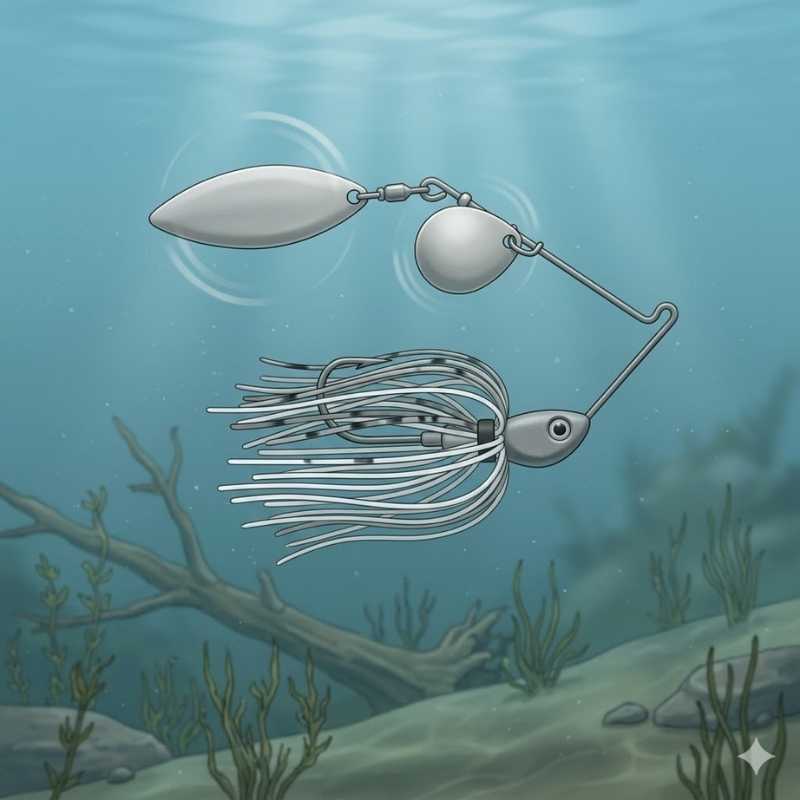
War Eagle Spinnerbait
Classic Colorado/willow combo for windy banks and stained water.
Windy banks and stained water — burn it parallel to cover.
As an Amazon Associate I earn from qualifying purchases.
Alternative Options
- Luck E Strike Legends Spinner Bait →Alternative
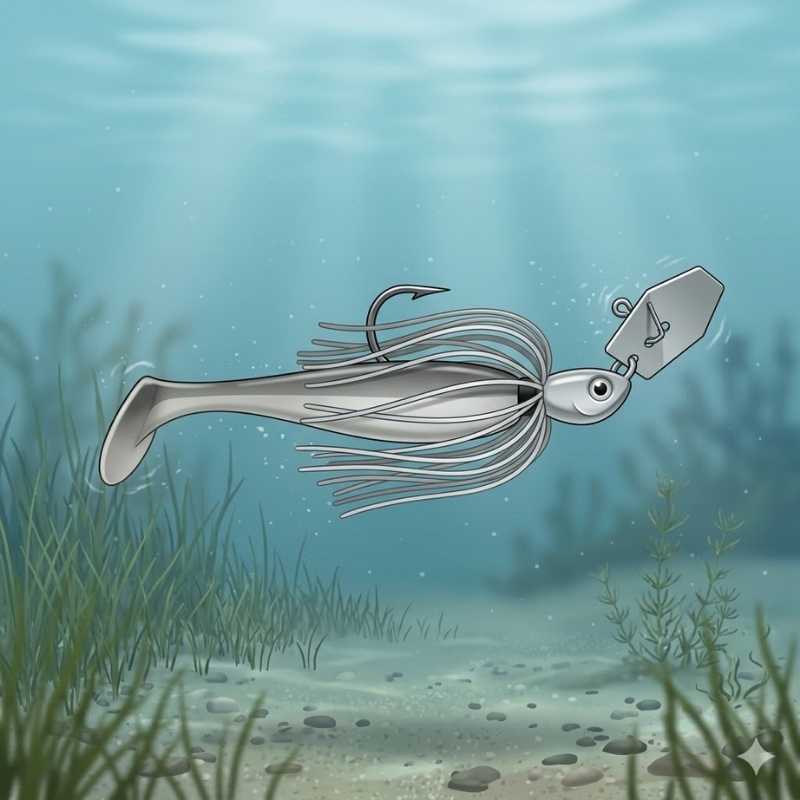
Z-Man JackHammer ChatterBait
The benchmark bladed jig — premium hardware and perfect vibration.
Stained water, wind, scattered grass — moderate-paced reaction bait.
As an Amazon Associate I earn from qualifying purchases.
Alternative Options
- Strike King Thunder Cricket →Alternative
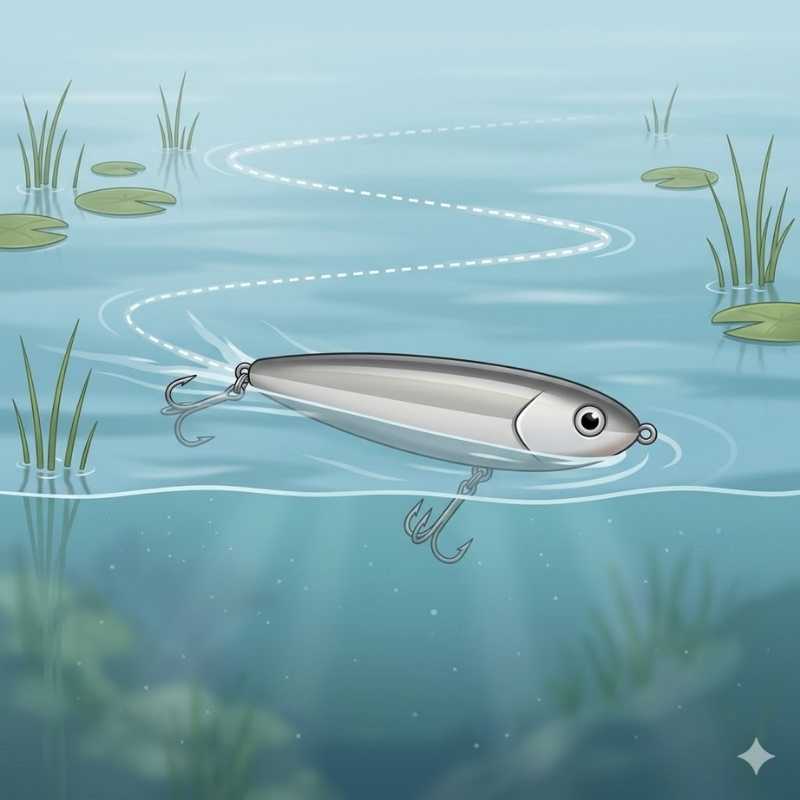
Heddon Super Spook
The benchmark walking topwater — long casts and big bites.
Low-light, calm surface — walk the dog over open water.
As an Amazon Associate I earn from qualifying purchases.
Alternative Options
- River2Sea Whopper Plopper →Alternative
- Berkley Choppo →Budget
Add a squarebill for shallow cover and a swim jig for grass — both produce under low light. The unifying theme: every productive overcast bait covers water, calls bass with vibration or surface disturbance, and triggers reaction strikes rather than asking the fish to evaluate. Finesse presentations work but are almost always outperformed by faster-moving baits on a true overcast day.
Where to Fish Under Cloud Cover
- Windblown banks — wind plus clouds is one of the best combinations in bass fishing. The chop, the bait concentration, and the low light stack on top of each other. See best baits for windy conditions and how wind affects bass positioning.
- Long points — bass cruise points hunting bait under cloud cover. Cover the entire point from deep tip to bank, not just one section. Bass fishing points covers the full positioning logic.
- Flats with scattered cover — fish roam these aggressively when sun isn't pinning them down. A spinnerbait or chatterbait fan-cast across a flat usually finds multiple fish in 30 minutes of casting.
- Grass edges — bait moves out from the grass line and bass push out to ambush, sometimes 10–15 feet off the visible edge. Cast past the edge and work the bait back through the open-water transition.
- Main-lake humps and offshore brush — overcast pulls some offshore fish up to feed in midwater. Worth a few passes if you have history on the spot.
Seasonal Considerations
- Pre-spawn: overcast is the great accelerator. A cloudy, windy 55° afternoon on a transition bank is one of the best big-fish windows of the year. White-chartreuse chatterbaits and red lipless cranks dominate.
- Spawn: overcast can shut down sight-fishing because you can't see the beds, but it stretches the cruising-fish window and helps you catch the bigger, harder-to-see post-bed females.
- Post-spawn: overcast extends the fry-guarder bite. Swim jigs and shad-pattern chatterbaits past laydowns and dock corners produce all day.
- Summer: the most welcome overcast of the year. Topwater stays in play long after the normal window. Schools may stay shallow rather than retreating to the thermocline. Burn through points and grass with chatterbaits and spinnerbaits.
- Fall: stacks beautifully with the shad migration. Find the bait in creek arms (see fall bass fishing bait guide) and the overcast keeps the bass on the bait all day rather than only at dawn and dusk.
- Winter: moderating effect. A 48° overcast afternoon often produces better than a 52° bluebird one because bass that would be deep under sun push up to feed in the warmer top few feet.
Water Clarity Adjustments
- Clear water: overcast is the great equalizer. Cloudy clear water fishes like stained water under sun — you can use slightly bolder colors, faster retrieves, and stronger profiles than the same clarity allows in bright light. Silver blades and white skirts shine. See clear-water bass lures for the baseline.
- Stained water: the easiest combination. Chartreuse-and-white, sexy shad, and shad-pattern reaction baits all produce. Cover water fast — bass are in feeding mode.
- Muddy water: still tough but better than the same water under sun. Bold contrast, heavy thump (single Colorado spinnerbaits, big chatterbaits with paddle-tail trailers), and slow-rolled presentations. See muddy-water bass lures.
Lure Selection Logic
Three principles drive the overcast lure rotation:
- Cover water. Bass are roaming and the day's productive window is wide — your job is to put a bait in front of as many fish as possible. Reaction baits cover 4–5x more water per hour than finesse.
- Call from distance. Low light reduces bass's visual range, which means baits need to make noise (vibration, surface commotion, or flash) to be located. This is why bladed baits dominate.
- Trigger, don't tempt. Bass committing to a chasing-mode bite don't need a perfect imitation — they need a target moving fast enough to trigger an ambush response. Burn the spinnerbait, walk the topwater faster, work the chatterbait with hunting deflections.
The decision tree: pick the reaction bait that matches the cover type. Grass = chatterbait or swim jig. Wood and stumps = squarebill. Open flats and points = spinnerbait or walking topwater. Schooling activity = walking topwater or lipless. Color follows the clarity guide above, biased slightly bolder than sunny-day picks.
Common Mistakes
- Fishing too slowly. The most common overcast error. Cloud cover means active fish that want to chase — a finesse worm dragged across a flat is the wrong category. If a moving bait isn't producing, change colors before slowing down.
- Putting the topwater away mid-morning out of habit. Sunny-day reflexes kill overcast bites. Keep the walking bait, popper, or buzzbait rigged and on deck until at least midday.
- Ignoring light rain. A steady rain on top of cloud cover almost always intensifies the bite. Anglers retreat at the first drops; bass eat harder under steady rain because the dimpled surface and reduced visibility stack on top of the existing cloud-cover advantage.
- Treating a post-front overcast like a stable one. A high-pressure front under clouds still produces a tough bite — barometer matters more than sky. If pressure is high and rising, fish slower and tighter to cover regardless of the cloud cover. See high-pressure bass fishing. The opposite — falling barometric pressure — and the window just before an incoming storm are where overcast really pays off.
- Camping on one spot. Productive overcast fishing rewards mobility. If a likely spot doesn't produce in 10–15 minutes, move. The roaming fish you want to catch will be at the next high-percentage feature.
Real-World Application
A May Tuesday on a Southeastern reservoir. Water 68°F, stained from spring rains, full overcast with a 10 mph south wind and the barometer steady at 29.95 inHg (no front activity). You have a long secondary creek arm with a grass-lined transition bank, a windblown point at the mouth, and a flat with scattered laydowns inside.
Decision tree:
- Sky says overcast, no front = aggressive reaction-bait day, cover water.
- Wind direction = start at the windblown point, work into the creek arm.
- Cover mix = chatterbait for the grass edge, spinnerbait for the point, squarebill for the laydowns inside.
- Color (stained water + overcast) = white-chartreuse chatterbait, silver-blade willow/Colorado spinnerbait, sexy-shad squarebill.
- Cadence = burn the spinnerbait on the point; slow-roll the chatterbait at the grass edge; deflect the squarebill off every laydown.
Result: 30 minutes on the wind-blown point burning a 3/8 oz white-chartreuse spinnerbait, then drop into the creek arm and work the chatterbait parallel to the outside grass edge for 45 minutes, finishing with the squarebill through the laydown flat. Stay mobile, expect bites in the first three casts at each new spot, and replicate the spot type — not the exact GPS waypoint — as you move down the lake. This is the overcast pattern that produces day after day, and it's structured around the fact that fish are willing to leave cover to chase. Use it.