Why Wind Concentrates Food
The food chain on a reservoir starts with plankton — microscopic plants and animals that drift with the surface current. Wind pushes the top few feet of water across the lake, dragging plankton with it. After a few hours of steady wind, plankton stacks against the windward bank in densities far above the lake average. Threadfin and gizzard shad follow that plankton in. Bass follow the shad in. By the time you arrive at a wind-blown bank that has been blowing for half a morning, the entire bottom of the food chain is concentrated in a strip of water 30 feet wide. For the upstream side of this chain — how rain and inflow add to the same effect — see bass fishing after heavy rain.
How Baitfish React to Wind
Shad are reactive feeders. They orient to the easiest meal and abandon open-water schooling behavior the moment plankton concentrates somewhere better. On a windy morning, shad pull from main-lake suspending positions and crowd the upper water column on the windward shore. Wave action also disrupts their schooling pattern — instead of tight bait balls, you'll see loose pods and individual fish strung along the bank, easier for bass to pick off. The vertical positioning shift matters too; for the daily depth pattern see baitfish depth changes and bass positioning.
Hard Banks vs Soft Banks
Wind alone doesn't make a bank productive — it has to combine with the right substrate. Two general rules:
- Hard banks (riprap, rock, gravel, clay points) — wind multiplies their productivity. The hard edge gives bass a defined ambush line and reflects current back into the strike zone. These are the first places to check.
- Soft banks (mud, silt, dead vegetation) — wind can ruin them. Wave action stirs sediment, blowing visibility out to near zero and pulling bass deeper. Soft banks fish better on calm days.
Vegetation banks fall in the middle — hydrilla and milfoil edges fish well in wind because the grass holds bottom in place, but emergent reeds and pad fields can mat over with floating debris in a heavy blow. For the underlying substrate logic, the transition banks guide covers how bottom composition concentrates bass independent of wind.
Best Wind Angles
Wind direction relative to the bank matters as much as wind speed. Three angles to recognize:
- Direct into the bank (90°) — the highest concentration scenario. Plankton, bait, and bass stack tight against the shoreline. Fish parallel.
- Quartering wind (45°) — sets up the best feeding-edge condition. Bait pushes along the bank rather than into it, creating a moving target that bass ambush from points and cover irregularities.
- Parallel to the bank — least productive of the windward angles. Wave action exists but bait isn't trapped against the shore. Skip these banks and look for a 45–90° angle nearby.
Main-lake points that catch wind from multiple directions are the highest-percentage structure in any wind event — they function as a permanent ambush funnel. See bass fishing points for the broader point framework.
Seasonal Differences
Wind doesn't fish the same way year-round.
- Spring — wind warms shallow water on sun-facing banks 4–6° faster than protected coves. A windy 60°F afternoon on a north bank often turns on a prespawn migration. The wind effect stacks with the temperature break.
- Summer — wind is a relief valve. It oxygenates shallow water that would otherwise be marginal in 85°F+ heat and creates a midday window on banks that would be dead. For the broader thermal context, see thermocline bass fishing.
- Fall — combines with the shad migration into creek arms. A wind blowing up-creek pushes the entire bait migration into the back third faster than it would normally arrive.
- Winter — usually hurts. Cold wind drops surface temps further, blows shallow fish off, and makes boat control miserable. The exception is a warming south wind on a sunny February afternoon that can trigger a brief prespawn feed.
The shad-spawn overlap is worth highlighting separately — see shad spawn bass fishing for how light wind extends the morning event.
Lure Selection Logic
Windy banks demand baits that cut the wind, push water, and trigger reaction strikes. Visibility is usually reduced, so silhouette and vibration matter more than realism. If you want the full tackle breakdown by wind speed, our guide to the best baits for windy conditions covers weights, blade sizes, and retrieves. The short list for a wind-blown bank:
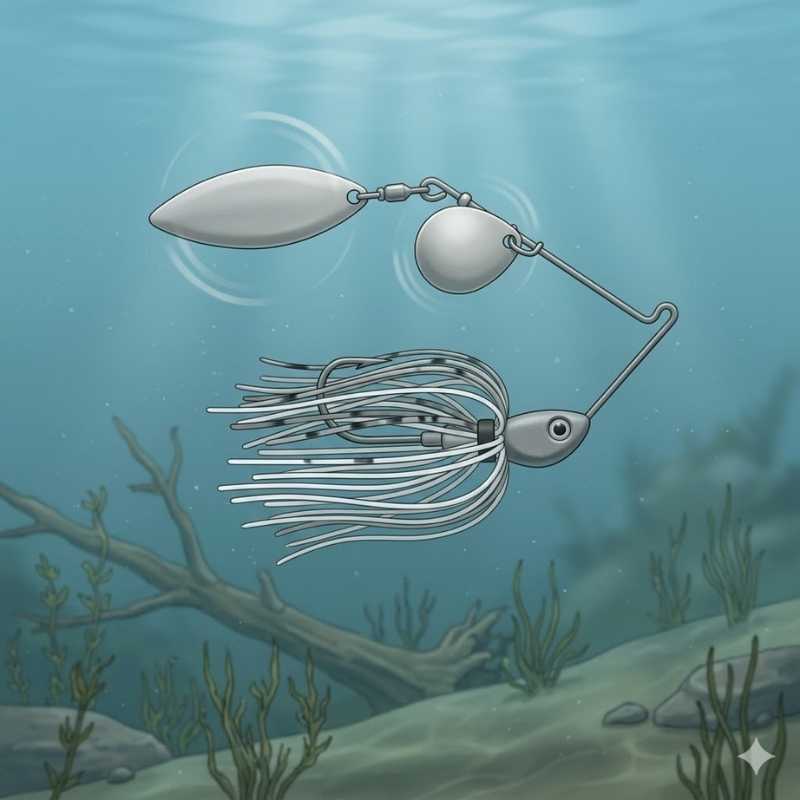
War Eagle Spinnerbait
Classic Colorado/willow combo for windy banks and stained water.
Windy banks and stained water — burn it parallel to cover.
As an Amazon Associate I earn from qualifying purchases.
Alternative Options
- Luck E Strike Legends Spinner Bait →Alternative
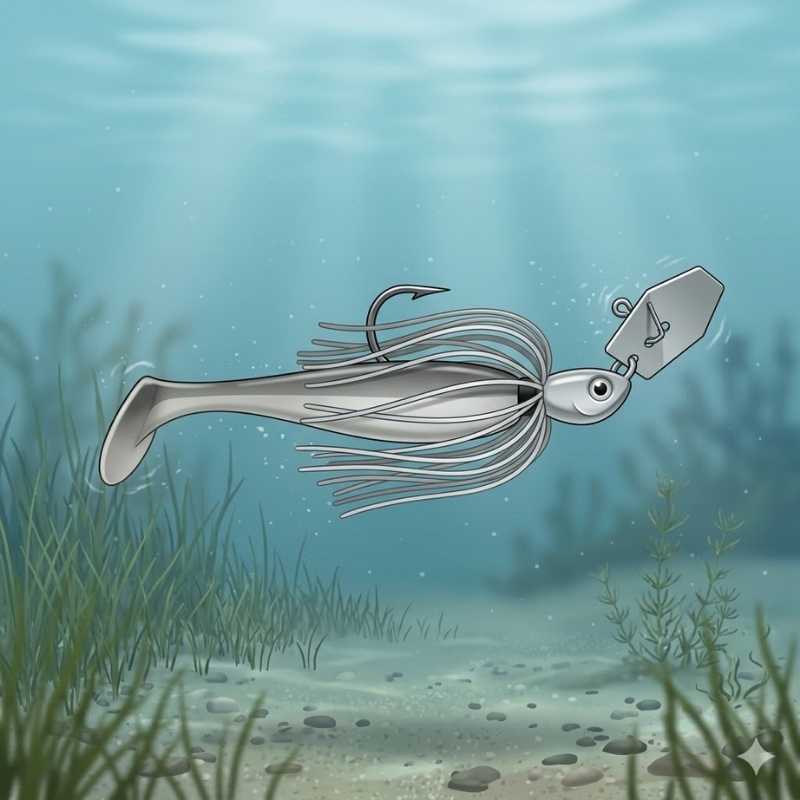
Z-Man JackHammer ChatterBait
The benchmark bladed jig — premium hardware and perfect vibration.
Stained water, wind, scattered grass — moderate-paced reaction bait.
As an Amazon Associate I earn from qualifying purchases.
Alternative Options
- Strike King Thunder Cricket →Alternative
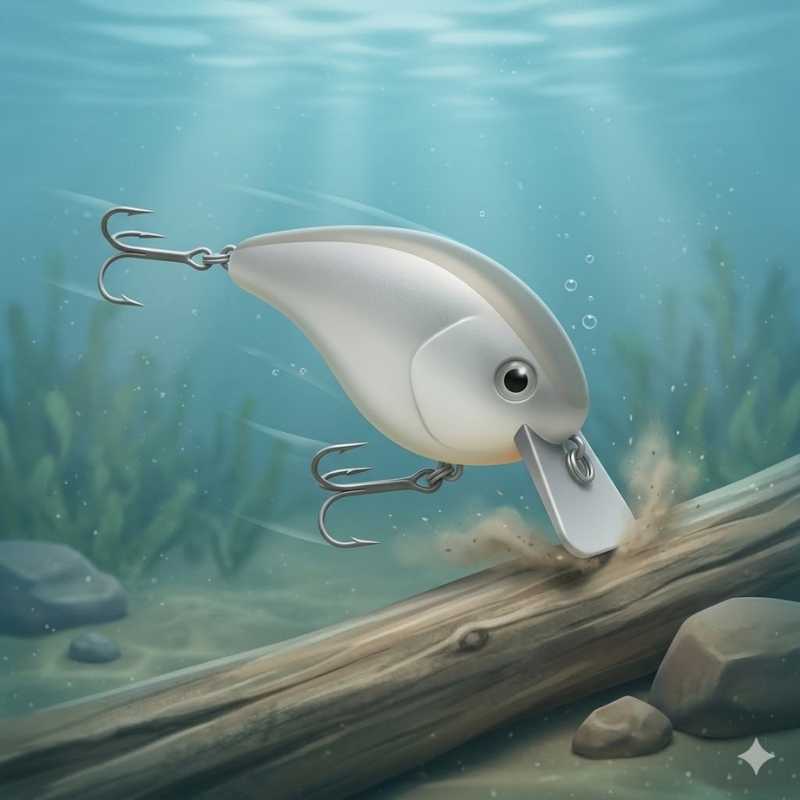
Strike King KVD 1.5
Deflects off cover like nothing else — the go-to shallow crank.
Shallow wood and rock — make it deflect off cover.
As an Amazon Associate I earn from qualifying purchases.
Alternative Options
- Lucky Craft LC 1.5 →Alternative
Strike King Red Eye Shad
Excellent flutter on the fall over grass and flats.
Grass flats and creek arms — yo-yo it through the tops.
As an Amazon Associate I earn from qualifying purchases.
Alternative Options
- Bill Lewis Rat-L-Trap →Alternative
Bait color: white, white-chartreuse, or shad in stained-water wind events; switch to chartreuse-blue or firetiger if visibility drops below a foot. Blade choice on the spinnerbait: double willow for clearer windward banks, Colorado-willow combo when wind muddies the water to under 2 feet of visibility. For the deeper color framework see best spinnerbait colors.
Common Mistakes
- Fishing the protected bank because it's easier to control the boat. The protected bank usually has the lowest concentration of active fish.
- Throwing finesse baits on a windy bank. Wind kills sensitivity and slows your hookset speed. Pick up a moving bait.
- Ignoring wind that just started. Give the bank 2–4 hours to load before writing it off as unproductive.
- Casting downwind only. Casting into the wind is harder but lets you fish your bait at the speed bass want — slower retrieves with the wind look unnatural.
- Fishing too deep. On a wind-blown bank, the active fish are usually in 1–6 feet, not 15.
- Sitting on the spot when the wind shifts. A 30° wind change can shut down one bank and turn on another within an hour.
When Wind Hurts Fishing
Wind isn't always a positive. Three conditions where it works against you:
- Cold-front wind — north wind behind a passing front drops temperature, drops pressure stability, and usually shuts down the bite for 12–36 hours regardless of which bank you fish. See cold front bass fishing lures for the recovery pattern.
- Sustained 25 mph+ winds — wave action reaches bottom on the windward bank, stirring sediment past usable visibility and physically pushing bass off shoreline cover.
- Direction changes with weather — a wind shifting through a front (south to north or south to west) usually means falling pressure, an unstable bite, and bait that won't commit to a bank.
When wind turns destructive, the move is into wind-protected creek arms, deeper structure offshore, or under heavy overhead cover where surface chaos doesn't reach.
Putting It Together
Pull up to the ramp, check the wind direction and how long it's been blowing, and run to the longest stretch of hard windward bank you have access to. Start at a main-lake point on that shore, throw a spinnerbait or chatterbait parallel to the bank at the depth bait is showing, and fan-cast outward. If the bank has been loading for 3+ hours, expect a bite within 10 casts. If nothing happens in 15 minutes, the bank either isn't holding bait or the wind angle isn't quite right — move to the next windward stretch rather than slowing down and fishing harder. Wind is one input among several; read it alongside pressure, cloud cover, and season in the weather and bass fishing guide, or enter today's wind, clarity, temperature, and season below and let LureLogic pick the starting bait for you.