How Bass Actually See a Spinnerbait
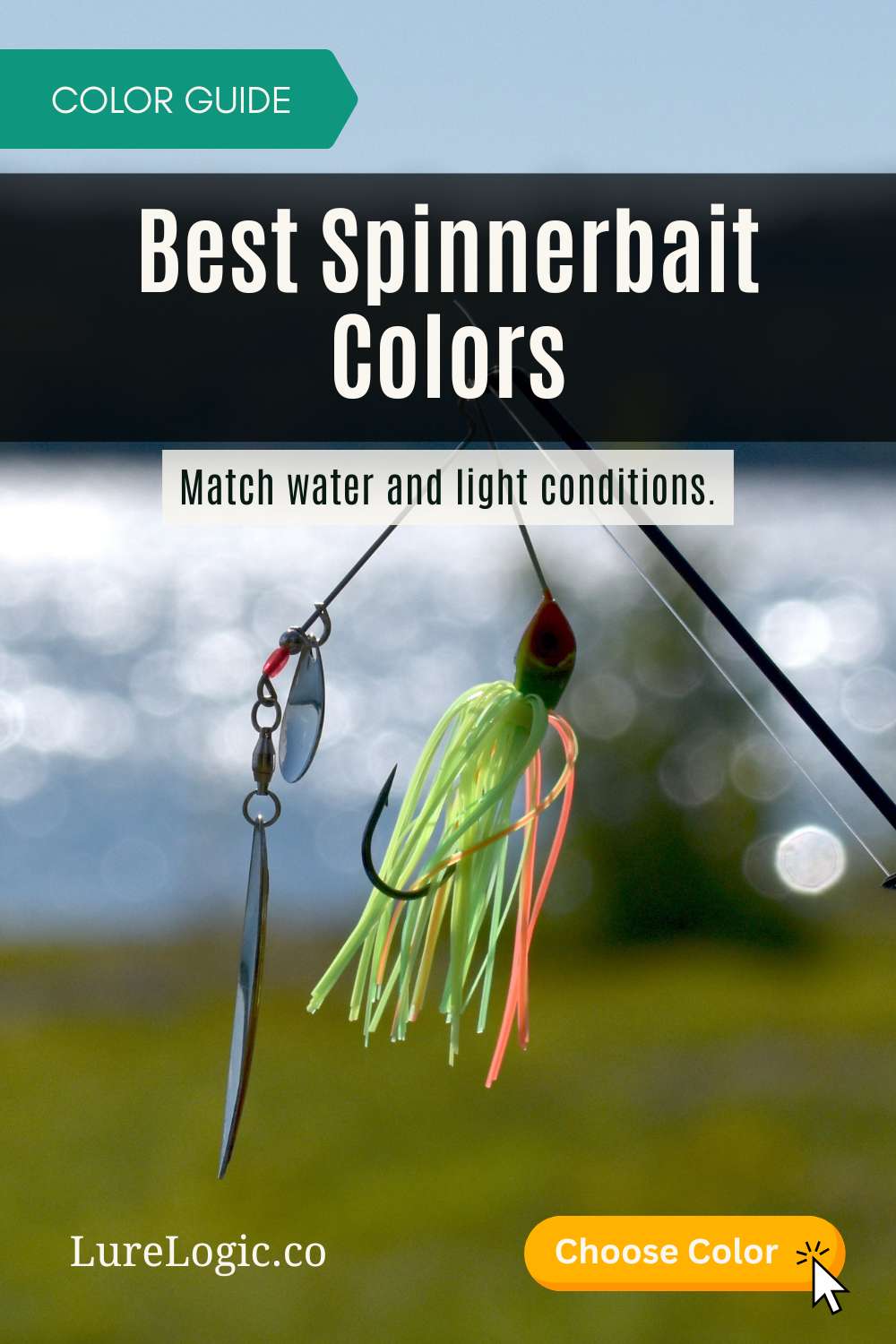
Spinnerbait color is misunderstood because anglers treat the bait as one thing. It's two. The skirt is the body the fish locks onto in the final foot before the strike. The blades are the long-range signal — flash and vibration that bring a fish from 15 feet away to within striking distance. Optimize the blade for the conditions that determine how far the bait can be detected (light, clarity, depth) and optimize the skirt for what the fish sees once it commits (forage, water color, surface chop).
This is also why the lure-selection framework separates "trigger" decisions from "commit" decisions. Most blown spinnerbait bites are commit-stage problems — the wrong skirt at close range — masquerading as trigger problems.
Color by Water Clarity
Clarity is the single biggest variable. The right skirt-and-blade combo by clarity is almost a decision tree.
Clear Water (4+ feet visibility)
Natural skirts only — white, pearl, translucent shad. Silver willow-leaf blades, usually a double willow combination for tight flash. Bass in clear water track the bait visually for 10–20 feet before committing; anything that looks unnatural gets refused at the boat. Skip chartreuse, skip painted blades, skip oversized profiles. A clear-water bass will swim away from a great-looking bait that flashes one degree too aggressively.
Stained Water (1–4 feet visibility)
The widest window. Shad, white-chartreuse, or shad-with-chartreuse-throat skirts. Indiana or tandem Colorado/willow blade combos add thump while keeping flash. This is the spinnerbait's home water — flash gets the attention, vibration confirms it's alive, and natural color seals the deal. Most reservoirs sit in this clarity range most of the year, which is why white-chartreuse with a Colorado/willow combo is the bait the average angler should default to.
Muddy Water (under 1 foot)
Bold contrast or solid black-and-blue skirts. Double gold Colorado blades, or a single big #6 Colorado. The fish needs to feel the bait long before it sees it. White alone disappears in mud — a fish locating by lateral line will swim through a single-color silhouette without locking on. Two contrasting colors give it an edge to track. For a full breakdown of muddy presentations, see muddy-water bass lures.
Color by Sky and Light
Light condition modifies clarity. The same lake at the same Secchi reading fishes differently at noon versus dawn versus under heavy cloud.
- Bright sun: gold or copper blades. Silver flash under direct sun creates harsh, scattered glints that spook clear-water bass. Gold warms the flash and matches the yellowish cast bright sun puts on the water column.
- Overcast: silver blades. Less ambient light means the same silver blade produces less flash — silver pops harder, gold disappears. White skirts also gain contrast against the darker water column.
- Dawn / dusk: silver blades and white skirts. Low-angle light off a silver blade creates the most fish-visible flash window of the day. See early morning bass lures for the full dawn rotation.
- Bluebird after a front: downsize blades and lean on white. Post-front fish need a smaller, more refined profile — bluebird sky bass fishing explains why.
Color by Forage
Spinnerbait color is also a forage-match decision. Match the dominant prey species on your fishery and adjust seasonally.
- Shad lake: white, pearl, sexy shad. White is functionally always correct.
- Bluegill lake: green pumpkin, bluegill, or chartreuse-shad with gold blades and a copper accent. Bluegill-pattern skirts shine on flats during the bluegill spawn.
- Craw lake: brown, red, black-and-blue with copper or painted craw blades. Most relevant in spring and fall, when crawfish are active in the water column.
- Herring fishery (Wylie, Murray, Hartwell, Norman): bright white and pearl with smaller silver willow blades. Wylie's herring schools respond best to bait that matches the slim, bright profile of a blueback.
Bass Positioning Around a Spinnerbait Pattern
Color choice depends on where bass are sitting and what they're doing there. Spinnerbait fish position three ways:
Ambush from cover. Stumps, laydowns, grass edges, and dock corners. The fish strikes as the bait passes within a foot or two of cover. Color matters less; commitment is on the flash-by. Bold skirts and bright blades work here regardless of clarity, because the strike window is short.
Roaming on flats and points. Wind-blown banks and shallow points. Fish are looking for a target. Color matters more — they have time to evaluate. This is where shad-pattern skirts and matched blade colors earn the bite. See bass fishing points for the positioning context.
Schooling on open water. Mostly fall and early summer, over points and humps. White is mandatory; everything else is secondary. The bait has to look like one of the shad they're already eating.
Through the day, fish shift from active feeding (dawn, dusk, wind events) to inactive holding (midday sun, post-front). Color sensitivity goes up when fish are inactive — the closer you can match the local forage in dead-water conditions, the more bites you'll earn.
Seasonal Color Adjustments
- Pre-spawn (water 48–58°): white-chartreuse with a Colorado/willow combo. Bigger thump, more flash. Bass are moving and aggressive — see pre-spawn bass fishing lures.
- Spawn: not the spinnerbait's season. Save it for postspawn.
- Postspawn: white, slow-rolled past the first dropoffs off spawning flats. Fry-guarders chase a slow-rolled willow-leaf — bluegill-pattern works when bluegill are bedding nearby.
- Summer: early morning and wind events only. White or shad pattern with smaller willow blades, burned fast. Daytime spinnerbait bites collapse once the thermocline sets up.
- Fall: the second prime window. White and pearl shad through the migration into creek arms — full breakdown in our fall bass fishing bait guide.
- Winter: slow-roll a heavy 3/4 oz white spinnerbait with a single big Colorado over deep brush. Functional but usually outclassed by jerkbaits and blade baits — see winter bass fishing lures.
Lure Selection Logic: Why These Colors Win
The "why" matters because it lets you adjust when a lake doesn't read like the textbook. Three principles drive every spinnerbait color decision:
- Match the dominant forage's silhouette. Bass at distance see shape and contrast, not detail. A white skirt over silver blades reads as "shad" from 15 feet. A chartreuse-and-white skirt reads as "high-contrast object worth investigating" — useful when fish are reactive but bad when they're scrutinizing.
- Match flash intensity to ambient light. A blade puts out a fixed amount of reflection; what changes is how much of it the fish notices. High ambient light buries low-contrast flash; low ambient light makes the same flash hyper-visible. Gold and silver swap roles based on which is more visible in the available light.
- Use color to compensate for visibility. The lower the visibility, the louder and more contrasting the color package needs to be. The higher the visibility, the more natural and restrained.
Retrieve matters too. The right color at the wrong speed fails — a white spinnerbait burned through cold water gets ignored; the same bait slow-rolled gets eaten. Color decisions and retrieve decisions are linked.
Common Mistakes
- Throwing chartreuse in clear water. The contrast is too high for fish that have time to inspect — they refuse at the boat. Switch to a translucent shad skirt and you'll often get bit on the next cast in the same spot.
- Silver blades on a sunny day in clear water. The flash is harsh and unnatural under direct sun. Gold or copper softens the signal and matches the warm color the water takes on at midday.
- Solid white skirt in muddy water. Bass struggle to lock onto a single-color silhouette in low-visibility water. Add a contrasting color (chartreuse, blue, or black) so the fish has an edge to track.
- Switching colors before changing retrieve speed. Most days, a bait that's getting refused needs a different speed, not a different color. Slow it down by half before reaching for a new color.
- Treating blades and skirts as one decision. Anglers buy white-chartreuse with gold blades because it sits in the box that way. Stock individual blades and skirts and tune the combination to the day's clarity and light.
Real-World Application
A March morning on a Catawba-chain lake. Water temperature 56°F, stained from spring rains (about 2 feet of visibility), high overcast with a 12 mph north wind on the back of a long creek arm. You're fishing a transition bank with chunk rock falling into a 45-degree pea-gravel taper, with scattered stumps in 4–6 feet.
The decision tree:
- Clarity says stained — shad or white-chartreuse skirt with a Colorado/willow combo.
- Sky says overcast — silver willow blade in the tandem, not gold.
- Wind says windward bank — the spinnerbait is the right category at all.
- Temperature says 56° — slow-rolled, not burned. Heavier 1/2 oz to get the blades thumping at slow speed.
- Forage on this fishery is shad and crawfish in March — the skirt color (shad with subtle chartreuse) covers both.
Result: white-chartreuse shad skirt, 4.5 Colorado / #4 willow combo, silver blades, 1/2 oz head, slow-rolled parallel to the bank with the trolling motor angled to keep you 25 feet off the rock. Pause briefly on every stump contact. This is the prespawn spinnerbait setup — and it's nearly impossible to refine without thinking through clarity, light, and temperature individually first. For the broader prespawn rotation, see our best bass lures for 55° water guide.