What Consecutive Extreme Heat Does To Bass
A single hot day barely registers. A week-long heat wave reorganizes the entire reservoir. Surface temperatures climb 3–5 degrees, the upper water column becomes increasingly hostile to baitfish, and the difference between the warm epilimnion and the cooler hypolimnion sharpens into a hard thermocline. Bass, being cold-blooded, can't sweat or pant — they relocate to water that physically supports their metabolism. The longer the heat wave, the deeper that relocation and the narrower the feeding windows become.
The bigger effect isn't temperature itself — it's the cascade. Hot water holds less oxygen. Algal blooms intensify. Calm hot nights eliminate wind mixing. Each day compounds the prior, until the only productive water on the lake is a narrow band above the thermocline and a handful of shaded ambush spots. For the broader framework see our bass fishing by water temperature guide.
Oxygen vs Temperature
Bass tolerate water into the high 80s if oxygen is adequate. They cannot tolerate even 75-degree water if oxygen drops below 3 ppm. During a heat wave, oxygen becomes the limiting factor — not heat. Most anglers blame "the heat" for the slow bite and never address the actual mechanism: dissolved oxygen has collapsed in the zones they're fishing.
The biology matters because it dictates location. Bass move to whichever water has the best DO inside their thermal tolerance — usually a 4–8 foot band just above the thermocline on the main lake. Read the full breakdown in our low oxygen bass fishing guide and the related summer oxygen crash playbook.
Offshore Relocation
By day three or four of a heat wave, the bulk of the population has moved out of the backs of creeks and onto main-lake structure. Priority targets:
- Main-lake points with deep water access and any current flow. See bass fishing points.
- Offshore humps and ridges that crown into the oxygenated layer.
- Channel swings and creek-mouth ledges where structure meets the main basin.
- Bridge pilings near the dam — current from any generation, shade, and depth in one package.
- Standing timber in 18–28 feet of water on reservoirs that have it.
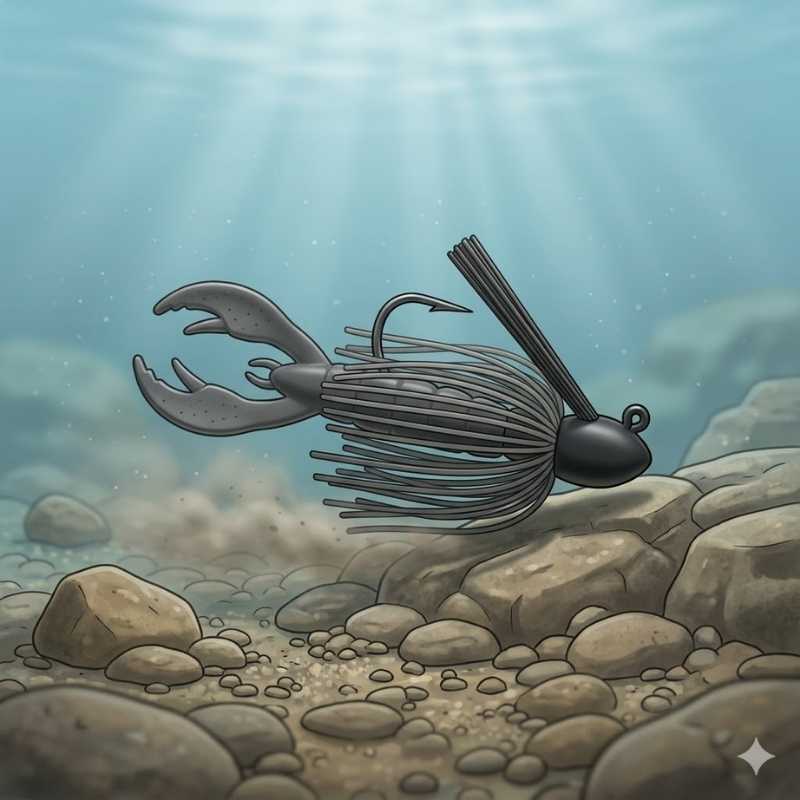
Dirty Jigs Guppy Football Jig
Premium football head built for rock and gravel.
Offshore rock and gravel — slow drag with long pauses.
As an Amazon Associate I earn from qualifying purchases.
Alternative Options
- Strike King Tour Grade Football →Alternative
Shade Patterns
The fish that don't go offshore stay shallow only where shade and depth meet. Heat-wave shade isn't a partial morning shadow — it has to be dense, vertical, and persistent: deep boat docks with 6+ feet of water under them, overhanging cypress trees on a steep bank, marina pockets, bridge shadows, and floating mats. Skip-shooting a jig under dock walkways or pitching a Texas rig to dock posts in 8–12 feet remains the highest-percentage shallow play through August. For positioning logic see bass fishing shade lines and summer bass fishing on docks.
Thermocline Effects
The thermocline is the single most important feature on a summer reservoir. During a heat wave it sharpens and rises slightly as the upper layer heats. The narrow band of water 2–6 feet above the thermocline becomes the productive depth — it's where dissolved oxygen is still adequate, where baitfish concentrate, and where bass set up to ambush. Find that depth on electronics and fish it everywhere you go. Full breakdown in our thermocline bass fishing guide.
Lure Selection
Two lure boxes win heat-wave bass fishing — a deep-water box and a shade-flipping box.
- Football jigs with a craw trailer dragged across offshore structure.
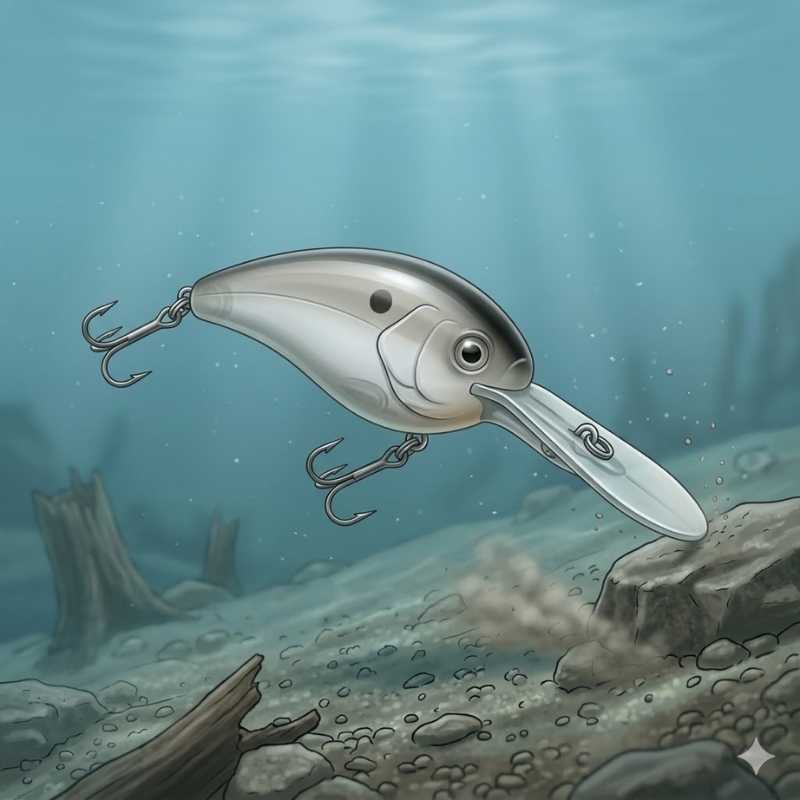
- Deep diving crankbaits in the 15–20 foot range, ticking the tops of brush and humps.
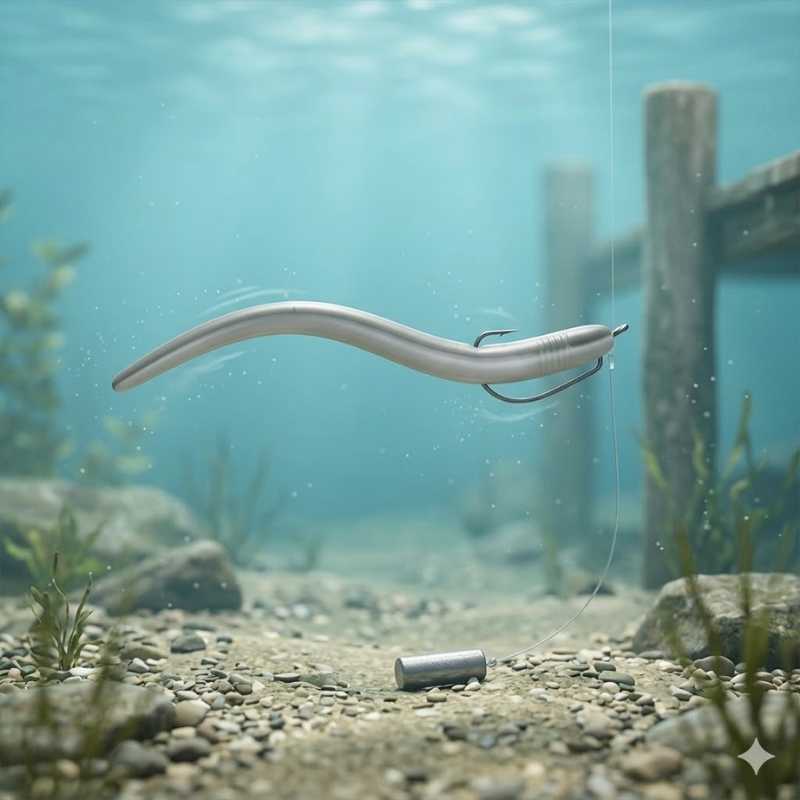
- Big worms (10-inch) on a Carolina rig for slow, methodical offshore coverage.
- Dropshots over suspended schools on humps and channel breaks.
- Flutter spoons ripped vertically through schooled bass on offshore structure.
- Heavy jigs and Texas rigs for the dock and laydown shade bite.
Strike King 6XD
Reaches deep with predictable wobble for offshore ledges.
Offshore ledges and humps — grind it into the bottom.
As an Amazon Associate I earn from qualifying purchases.
Alternative Options
- Rapala DT-16 →Alternative
- Berkley Dredger →Budget
Roboworm Straight Tail
Industry-standard dropshot worm — subtle and proven.
Pressured or deep clear water — vertical shake on rock with a slim worm.
As an Amazon Associate I earn from qualifying purchases.
Alternative Options
- Berkley Bottom Hopper →Alternative
- Berkley MaxScent Flatworm →Budget
Megabass Vision 110
Industry-standard suspending jerkbait for cold-water bass.
Cold, clear water — long pauses near rock and points.
As an Amazon Associate I earn from qualifying purchases.
Alternative Options
- Rapala Shadow Rap →Alternative
Electronics Clues
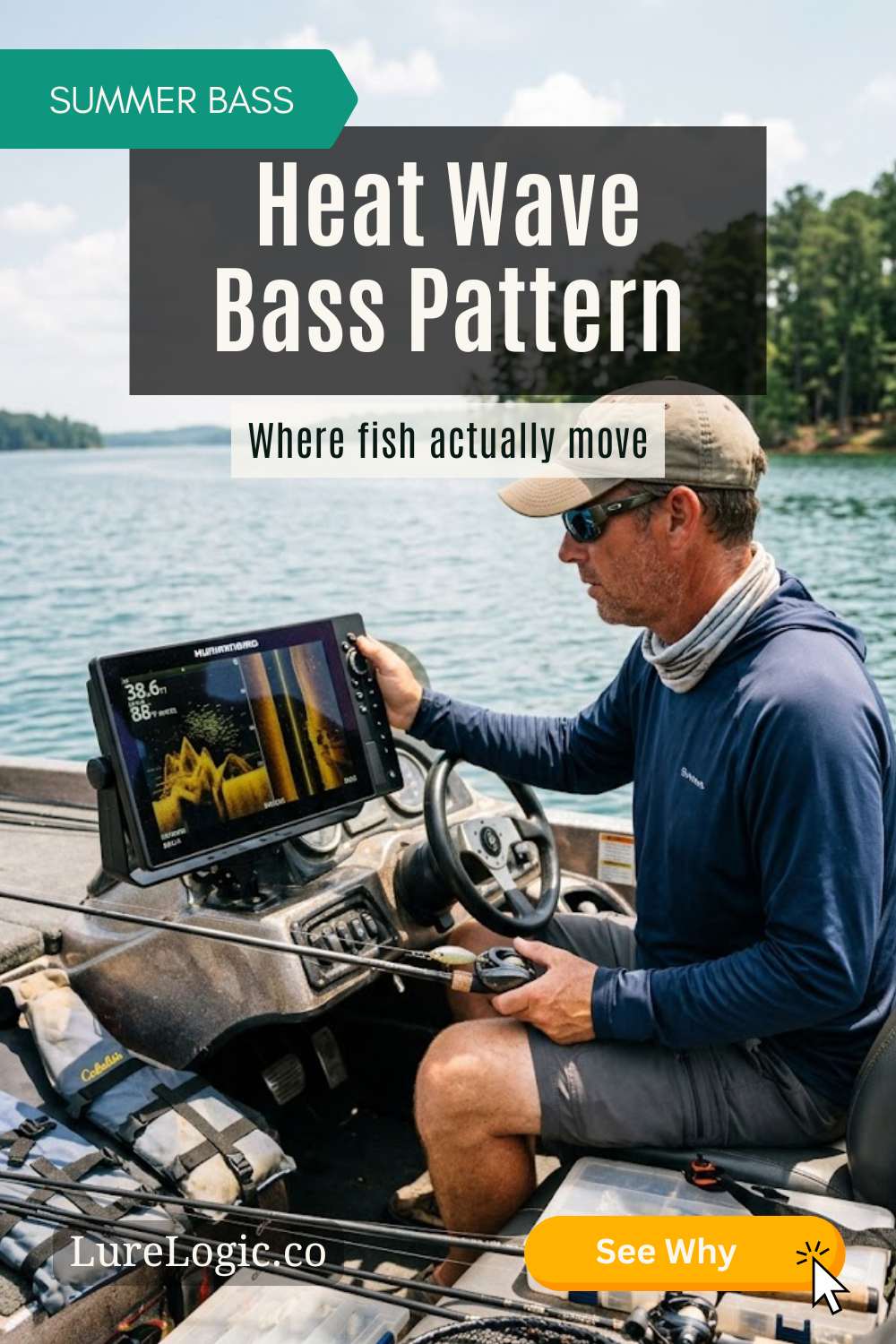
Sonar tells the entire story in a heat wave. Idle main-lake structure and watch for: a sharp horizontal band of suspended bait (that's your depth for the rest of the day), arches just below or hanging in the side of the bait ball (active bass), and a clear thermocline return showing as a fuzzy horizontal line. The depth of the bait layer dictates the lure depth — fish that number across every spot you visit.
Common Mistakes
- Going deeper to escape heat. Below the thermocline is anoxic — no bass live there.
- Fishing the same coves that worked in June. Stagnant back-thirds of creeks are the worst water on the lake during a heat wave.
- Ignoring midday. Offshore structure produces at noon when shallow water is dead.
- Fast retrieves on heat-stressed fish. Slow down everything — bass are conserving energy.
- Skipping wind. Even 8 mph wind oxygenates a windward bank into a feeding zone. See wind and bass positioning.
- Long fights and bad release. Above 88°F surface temp, post-release mortality climbs. Land fish fast, keep them wet, get them back quickly.
Exceptions
Two scenarios break the heat-wave pattern in your favor. First, current — any generation at the dam, river inflow, or strong wind creates moving, oxygenated water that triggers feeding regardless of air temperature. Second, the first cool front breaking the heat wave brings a 24–48 hour feeding surge as bass make up lost intake. Watch the forecast and be ready. The deep-night option is also viable — see our night bass fishing in summer guide for a complete alternative to the midday grind. For the seasonal context see midday summer bass fishing.