Why Bass Feed at Night
Bass are crepuscular predators by default — most active at dawn and dusk — but extreme summer heat extends that window deep into the night. The mechanism is metabolic. Above about 82°F, a bass's metabolic rate is so elevated that it must feed frequently to stay in energy balance, but oxygen levels in the shallow zone where forage lives have dropped to the point where feeding is physically taxing. After dark the surface cools by 3–6°F, oxygen rebuilds near the surface, and the feeding equation flips back in the bass's favor.
Forage also shifts. Shad and bluegill move shallow at night to feed on plankton and insect activity, pulling bass with them. The same point that holds suspended bass over 30 feet at 2 PM has those bass cruising the 4-foot lip at 11 PM. For the broader summer framework see our midday summer bass fishing and summer topwater bass fishing guides.
Summer Heat and Metabolism
Bass thrive in the 65–80°F window. Above that they're stressed; above 85°F they shut down active hunting during daylight. The temperature differential between day and night is what makes night fishing work — even a 4°F overnight drop is enough to push surface temps back into the active feeding range. The same drop also restores dissolved oxygen in shallow water by reducing photosynthetic demand from algae. The combined effect: shallow water at 11 PM in July fishes like shallow water at 7 AM in May.
This is why night fishing is so much more productive in the deep South than in the northern range. A Texas reservoir hitting 90°F surface in July sees a massive day-night swing in fish behavior; a Minnesota lake at 76°F never gets hot enough to shut down daytime fishing.
Moon Phase Effects
Moon phase changes the character of the bite more than the quantity:
- Full moon: ambient light lets bass see prey at distance. The most consistent, easy-to-fish night because you can see what you're doing. Spinnerbaits and topwater walking baits dominate.
- Three-quarter moon: nearly as good as full, with slightly less light. Reaction baits still produce.
- Half moon: transition phase; black-and-blue jigs and dark worms start outperforming bladed baits.
- New moon: total darkness. Big-fish night. Use the loudest, biggest-profile baits — Colorado spinnerbaits with #7 blades, black buzzbaits, 10-inch worms. Bass that won't move during a full moon will commit to a big silhouette in pitch darkness.
Major and minor moon transit times (the periods when the moon is overhead or underfoot) often coincide with the strongest feeding windows. Plan your trip to put the best 90-minute window in the middle of your session.
Structure Selection
Night bass cruise predictable structure. The list:
- Main-lake points with deep-water access — bass move up the point's edge after dark. See bass fishing points.
- Rocky banks and riprap — rocks hold residual daytime heat that attracts crawfish and small forage; bass cruise the rocky edge all night.
- Lighted boat docks — the single best night structure on any lake. Lights concentrate plankton, which concentrate baitfish, which concentrate bass. See summer bass fishing on docks.
- Bridges with overhead lights — same principle as lighted docks, scaled up.
- Shallow grass edges and laydowns — bass push into shallow cover after dark that they wouldn't touch during the day. See bass fishing grass lines and bass fishing laydowns.
- Secondary points inside major creek arms — bass migrate up these on warm summer nights to feed on bluegill and shad.
War Eagle Spinnerbait
Classic Colorado/willow combo for windy banks and stained water.
Windy banks and stained water — burn it parallel to cover.
As an Amazon Associate I earn from qualifying purchases.
Alternative Options
- Luck E Strike Legends Spinner Bait →Alternative
Lure Selection
Night lures all share three traits: dark color, strong vibration, and noticeable profile. Color choice is counterintuitive — black silhouettes against the night sky better than white does, and bass looking up see prey as shadows. The short list:
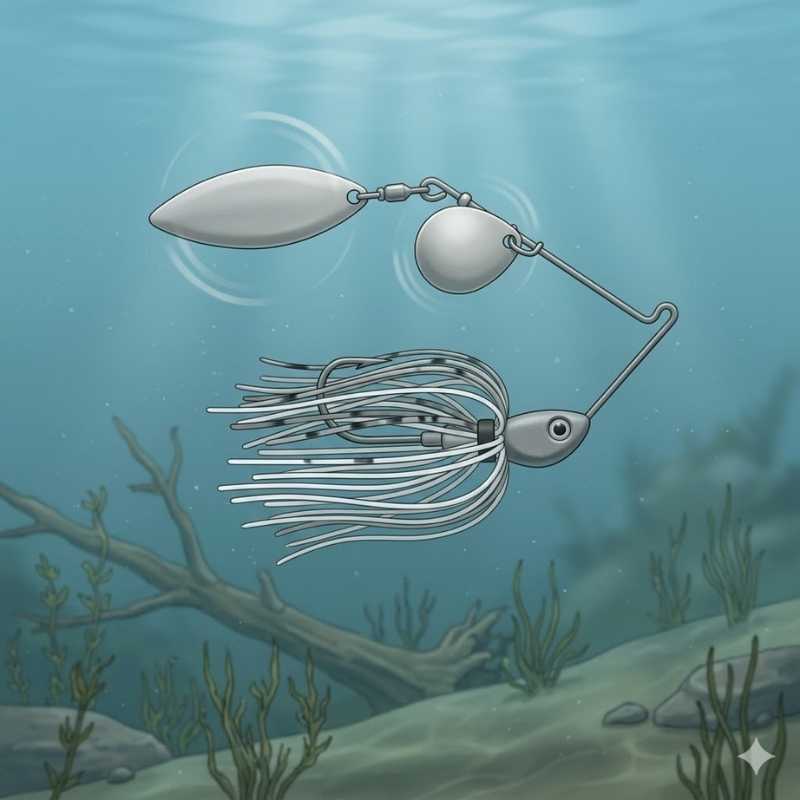
- Single Colorado-blade spinnerbait in black or black/blue, ¾ oz with a #6 or #7 blade. The maximum-vibration night option. Slow-roll along bottom or wake just under the surface.
- Black buzzbait — the prowling-surface choice. The metallic click of the blade and the wake displacement do the work; color barely matters as long as the silhouette is dark.
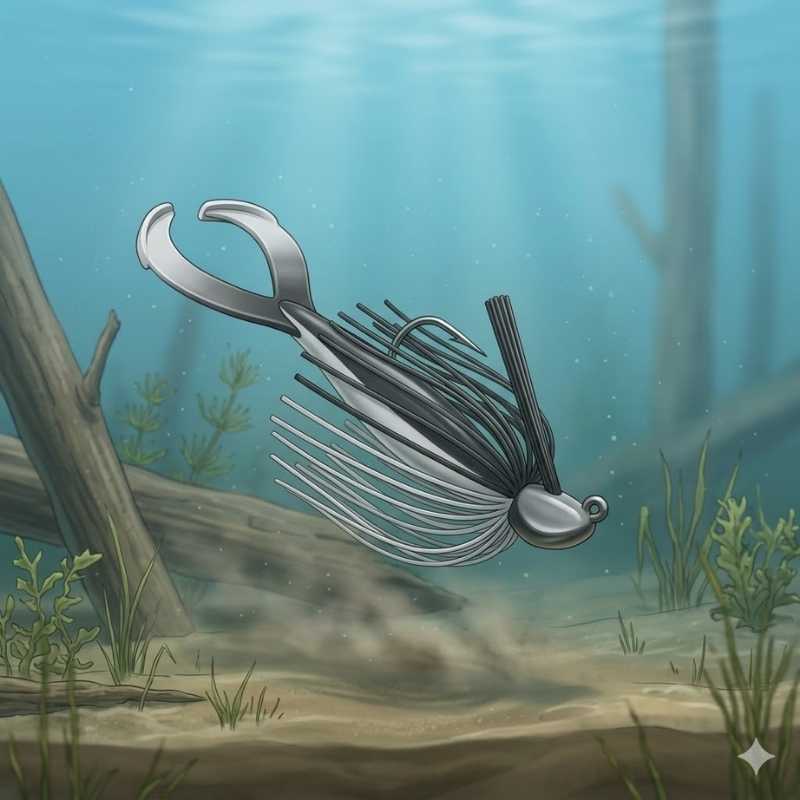
- Black-and-blue jig with full-bodied trailer — for slow-presentation around docks, laydowns, and isolated cover. Heavier head (½ oz) for solid bottom contact bass can track by sound.
- 10-inch power worm (black/blue, junebug, plum) on a Texas rig with a heavy bullet weight — pull-and-drop along main-lake structure for big fish.
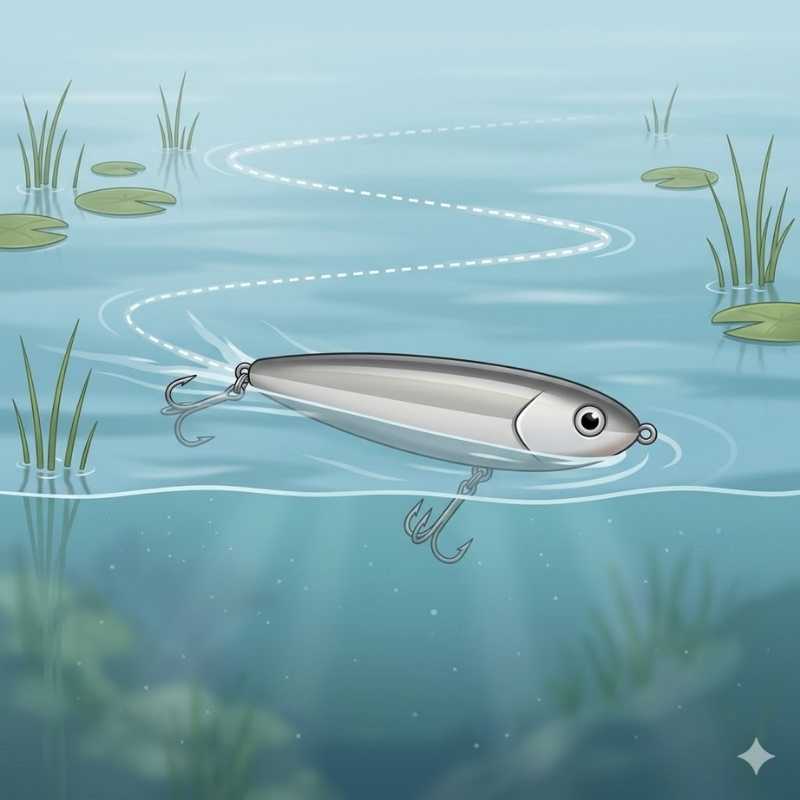
- Wake bait or large topwater on full moon nights when bass push bait to the surface around docks and points.
Dirty Jigs Compact Pitchin' Jig
Premium skirt and head shape for pitching tight cover.
Pitch to docks, laydowns, and isolated cover for big fish.
As an Amazon Associate I earn from qualifying purchases.
Alternative Options
- Strike King Structure Jig →Alternative
- Booyah Boo Jig →Budget
Yamamoto Senko
Dead-stick fall that bass simply can't refuse.
Heavy cover — pitch in, let it sink on slack line.
As an Amazon Associate I earn from qualifying purchases.
Alternative Options
- Zoom Trick Worm →Alternative
- Strike King Rage Craw →Budget
Retrieve Adjustments
Daytime retrieve speeds are too fast for night fishing. Bass triangulate prey by vibration and silhouette, both of which require time to lock onto. Cut your normal retrieve speed roughly in half. A spinnerbait that you'd burn at noon should crawl along the bottom at midnight. A buzzbait should sputter — barely fast enough to keep the blade engaged — not race across the surface.
Cast accuracy also changes. You can't see your target, so you fish methodical fan-casting patterns across known structure rather than picking individual targets. Repeat productive casts; a bass that swiped and missed will often come back on the next presentation through the same lane.
Safety Considerations
Night fishing rewards preparation:
- Working navigation lights — required by law and essential for boat traffic visibility.
- Headlamp with red mode — preserves night vision so you can still see structure and the water surface.
- Know the lake before dark. Run your planned route in daylight first. Hidden stumps, shoals, and channel markers become invisible at night.
- Fish with a partner when possible — both for safety and for the second set of hands when something goes wrong at 1 AM.
- Avoid heavily trafficked areas earlier in the night when wakeboard boats and pleasure craft may still be running.
- Life jacket on at all times. Falling out at night in a remote cove is a serious emergency.
- Tell someone your plan — launch ramp, route, and expected return time.
Common Mistakes
- Fishing too fast. Night bass need time to locate the lure by vibration.
- Wrong color. White and chartreuse work in daylight; black and dark colors work at night because of silhouette.
- Skipping lighted docks. They concentrate everything — bait, bass, predictability.
- Quitting too early. The 11 PM–1 AM window is often the peak feeding period; don't be on the way home then.
- Bringing daytime confidence baits and expecting them to work. Drop shots and finesse worms are mostly wasted at night.
Related Guides
For the summer pattern context see summer topwater bass fishing, low oxygen bass fishing, and the seasonal bass patterns guide.