What Causes Oxygen Crashes
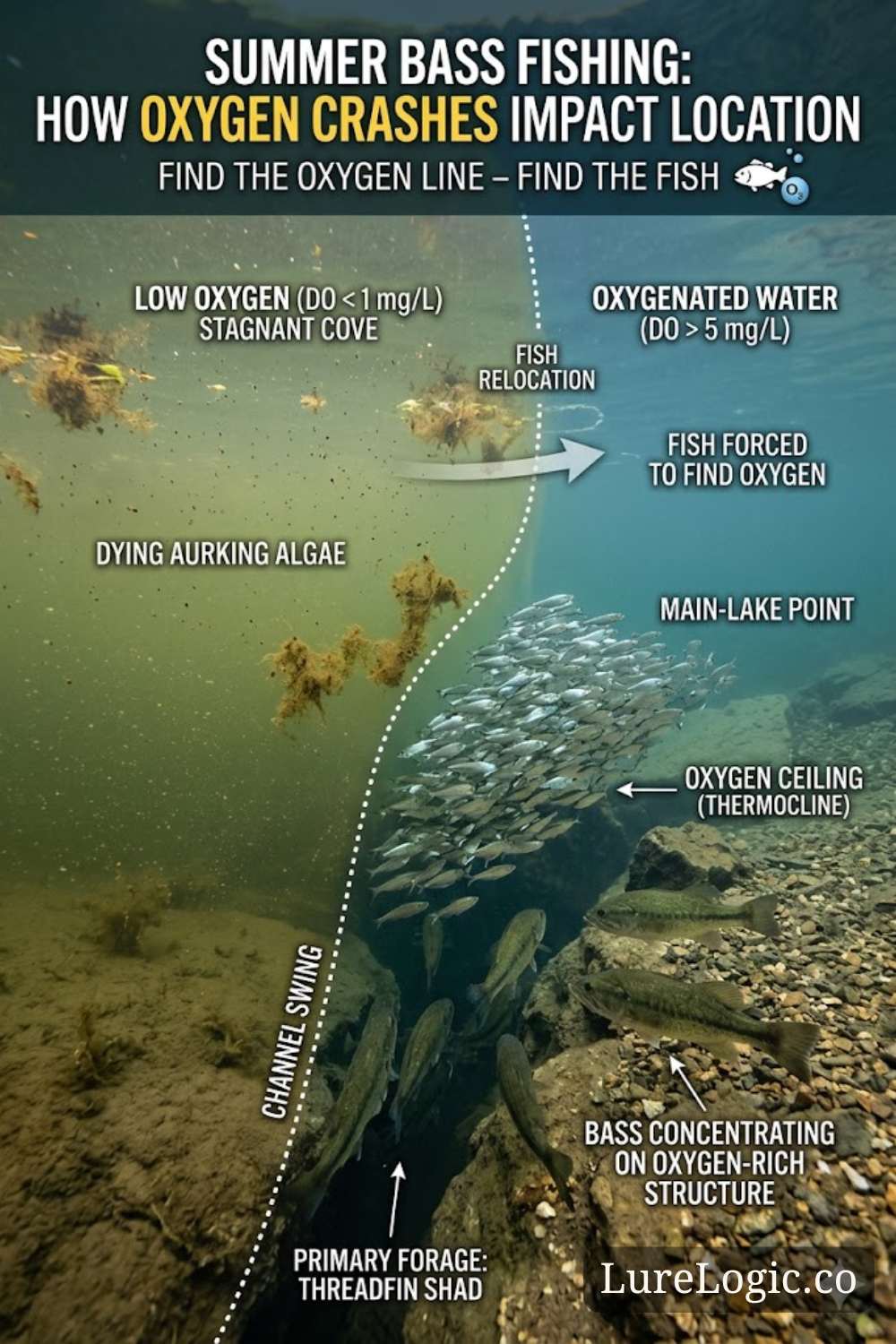
Dissolved oxygen is produced by algae and aquatic plants through photosynthesis and consumed by everything that breathes underwater. In hot, stable summer weather, three things converge to crash DO: dense algal blooms grow during long sunny stretches, then die off rapidly when nights stay warm, and the decomposition consumes oxygen faster than the lake can replenish it. Add stagnant air, no wind mixing, and a strong thermocline that seals oxygenated surface water away from the depths, and the entire shallow-to-mid depth band can drop below the 4 ppm threshold bass need to thrive.
Other crash triggers include heavy rain washing organic matter into coves where it decomposes, fertilizer runoff from agricultural land driving algae blooms, and lake turnover starting prematurely. The broader low-oxygen framework lives in our low oxygen bass fishing guide and the seasonal context in low-oxygen summer bass strategies.
Why Bass Relocate
Bass tolerate DO down to about 3 ppm before feeding shuts off and survival becomes the priority. Below 2 ppm they actively flee. The reason isn't comfort — it's metabolism. Low oxygen impairs the bass's ability to digest food and process lactic acid from short bursts of activity. A bass in 2 ppm water can chase a chatterbait once, but the recovery cost is so high it won't chase a second one. The fish responds by relocating to water it can actually function in.
Forage drives the relocation timing. Threadfin shad are even more oxygen-sensitive than bass and move first, often suspending right above the oxygen ceiling in dense clouds. Bass follow within hours. By the time you notice the shallow bite has died, the entire bait-and-bass complex has already shifted to deeper main-lake structure with better DO.
Creek Arms vs Main Lake
The general rule: main lake wins during an oxygen crash. Wind, current from any generation, and the larger water volume all keep DO higher in the main lake than in stagnant back coves. Specific areas to prioritize:
- Main-lake points exposed to prevailing wind, especially with deep water access. See bass fishing points.
- Bridge pilings and channel swings near the dam, where any release current keeps water moving.
- Creek mouths where cooler tributary water meets the main lake — the inflow brings fresh oxygen.
- Offshore humps that crown into the oxygenated mid-column layer. See offshore humps and underwater high spots.
- Spring-fed pockets in deeper coves — local cool seeps that hold DO when surrounding water collapses.
Skip the back-third of long stagnant creek arms. They look fishy and held bass in May, but by August oxygen-crash conditions they're sterile.
Megabass Vision 110
Industry-standard suspending jerkbait for cold-water bass.
Cold, clear water — long pauses near rock and points.
As an Amazon Associate I earn from qualifying purchases.
Alternative Options
- Rapala Shadow Rap →Alternative
Best Lures
Stressed bass want a meal that doesn't require a chase. Match the oxygen ceiling depth (typically 12–22 feet during a crash) with presentations that hover, fall, or crawl at that exact layer:
- Suspending jerkbaits on long pauses (5–10 seconds) at the bait layer.
- Underspins with 3.5-inch swimbaits counted down to the DO ceiling and slow-rolled level.
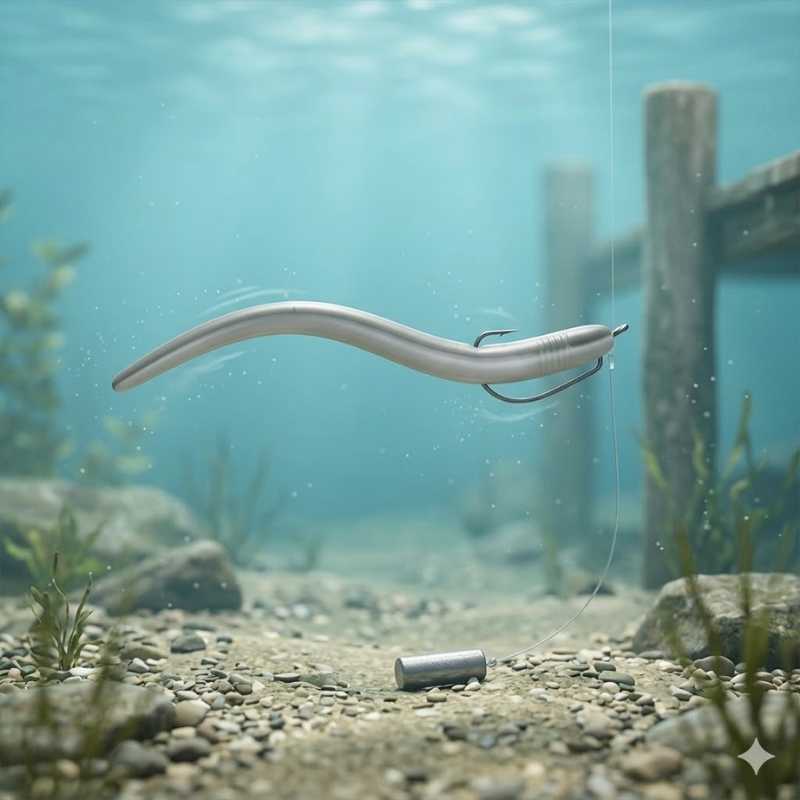
- Dropshots with a 4-inch finesse worm, vertical over electronics on suspended fish.
- Small flutter spoons jigged 6–10 feet above the school — the dying-baitfish profile bass can't ignore.
- Damiki rigs and minnow-style soft baits on a light jighead, mid-water column.
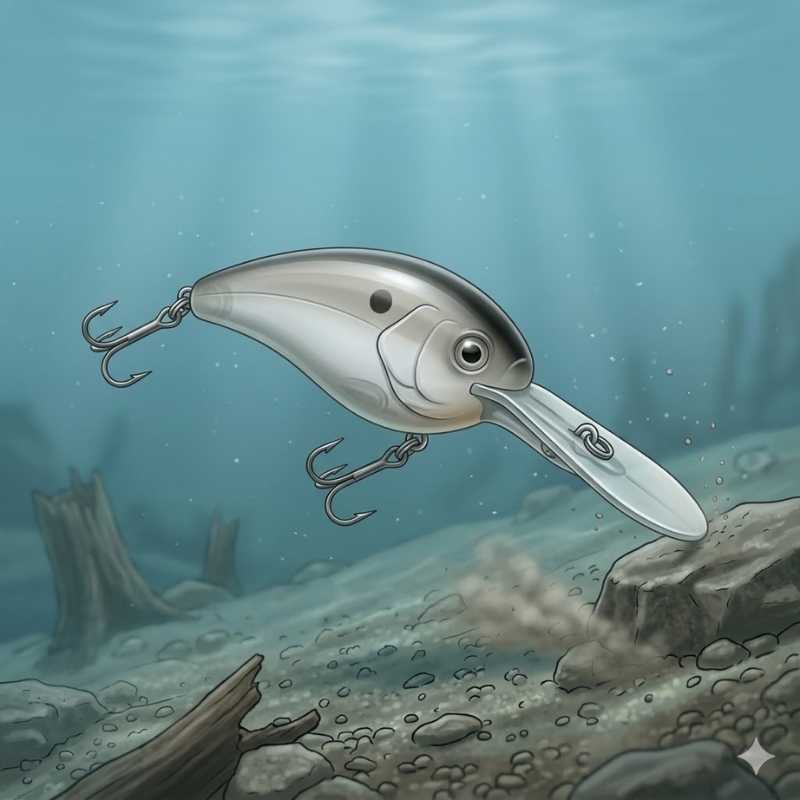
What doesn't work: fast moving baits, deep crankbaits driven into low-DO basin water, and topwater outside the brief dawn/dusk recovery window.
Roboworm Straight Tail
Industry-standard dropshot worm — subtle and proven.
Pressured or deep clear water — vertical shake on rock with a slim worm.
As an Amazon Associate I earn from qualifying purchases.
Alternative Options
- Berkley Bottom Hopper →Alternative
- Berkley MaxScent Flatworm →Budget
Keitech Swing Impact FAT
Best-in-class paddle-tail action for any swimbait rig.
Imitate shad — steady retrieve over points, flats, and drops.
As an Amazon Associate I earn from qualifying purchases.
Alternative Options
- Berkley PowerBait CullShad →Alternative
- Strike King Rage Swimmer →Budget
Electronics Clues
Modern sonar reads oxygen indirectly through bait behavior. Three patterns confirm an oxygen crash:
- A sharp horizontal band of suspended bait at a precise depth (often 15–20 feet) across multiple coves and points. That band is the DO ceiling.
- Empty deep basin returns below 25 feet that previously held bait and bass. The depth has gone anoxic.
- Bass marks tight to the bait layer rather than below or chasing through it — fish are conserving energy.
Run the lake with sonar before fishing. Twenty minutes of idling main-lake structure tells you the oxygen ceiling depth and where bait concentrates. Fish that depth everywhere you go for the rest of the day.
Timing Windows
Within a 24-hour cycle, the best bite occurs at first light through 9 AM and again in the last hour before dark. Overnight cooling and reduced consumption let DO recover slightly, opening a feeding window. Midday is usually dead — even in the oxygenated zone, bass are sluggish and selective.
The bigger pattern is weather-driven. A wind event of 10+ mph for several hours mixes oxygen back into the water column and triggers a 24–48 hour feeding surge. Watch the forecast for the first system after a long calm stretch — that's the day to be on the water. See how wind affects bass positioning for the wind-and-oxygen connection.
Common Mistakes
- Fishing the same coves that worked in spring. Those coves are now the worst water on the lake.
- Going deeper to escape the heat. Below the thermocline is anoxic — there are no bass there.
- Ignoring the bait layer depth. If you're fishing 30 feet and bait is at 17, you're below all the fish.
- Fast retrieves. Stressed bass need a target hanging in place, not blowing by.
- Skipping the wind. Windy banks during a crash are gold; calm protected pockets are dead.
- Confusing an oxygen crash with a cold front. The lure adjustments overlap, but the location adjustment is the opposite — see cold front bass fishing lures to keep the patterns distinct.
Related Guides
Summer oxygen crashes intersect with thermoclines, low-oxygen positioning, and the broader weather playbook. For more see the weather and bass fishing guide and complete guide to bass behavior.