What Makes a Hump Productive
Not every offshore high spot holds bass. The productive ones share four traits: a hard substrate (rock, gravel, shell, or compacted clay rather than soft mud), at least 10 feet of vertical relief from the surrounding bottom, a top that sits within the seasonal oxygen layer, and proximity to a baitfish corridor — usually a creek channel, river channel, or main-lake migration route. Miss any of these and the structure looks great on the map but produces nothing.
Hard substrate matters most. A mud hump in 25 feet of water won't hold fish because crawfish, mussels, and baitfish don't relate to soft bottom. A rock or shell hump at the same depth becomes a magnet because forage stages on it and bass use the hard edges as ambush points. For the broader structure framework see our bass fishing structure guide.
Seasonal Use of Humps
Spring: shallow humps (5–10 ft) close to spawning flats become major prespawn staging structure. Bass stack on the hump tops and break edges before moving into the pockets to spawn. Jerkbaits, lipless cranks, and chatterbaits dominate.
Summer: the prime season. Mid-depth humps (12–22 ft) with tops in or just above the thermocline hold the heaviest concentrations of the year. Postspawn females recover here, then commit to feeding on offshore baitfish. For the thermal context see thermocline bass fishing.
Fall: humps in the lower thirds of major creek arms hold bass as shad start migrating. The pattern weakens as fall progresses and bass push further into the creeks.
Winter: deep humps (25–40 ft) with vertical relief near a channel break hold wintering schools. Slow presentations — spoons, blade baits, deep jigs.
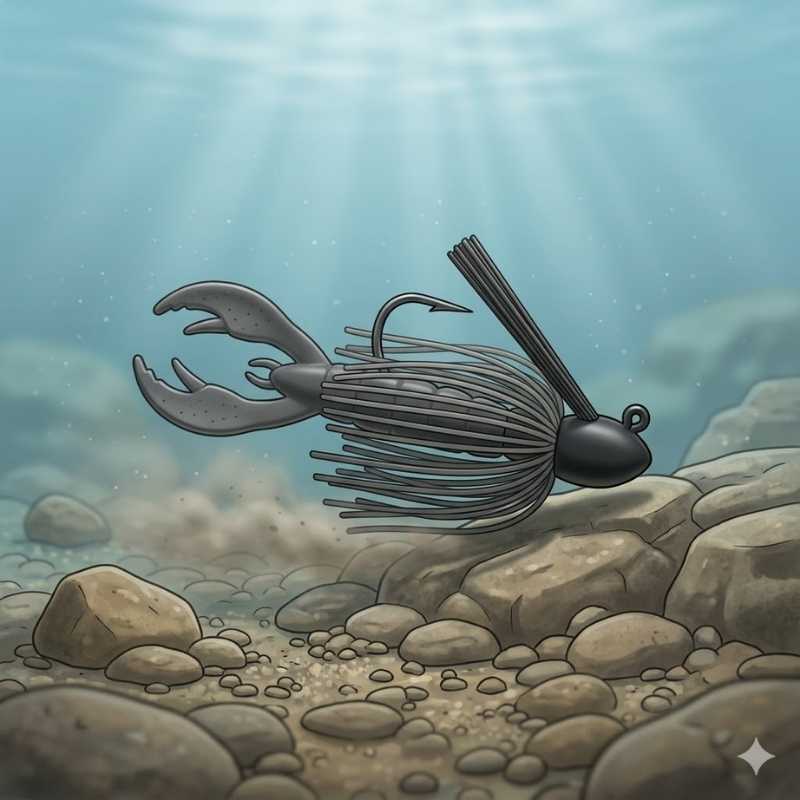
Dirty Jigs Guppy Football Jig
Premium football head built for rock and gravel.
Offshore rock and gravel — slow drag with long pauses.
As an Amazon Associate I earn from qualifying purchases.
Alternative Options
- Strike King Tour Grade Football →Alternative
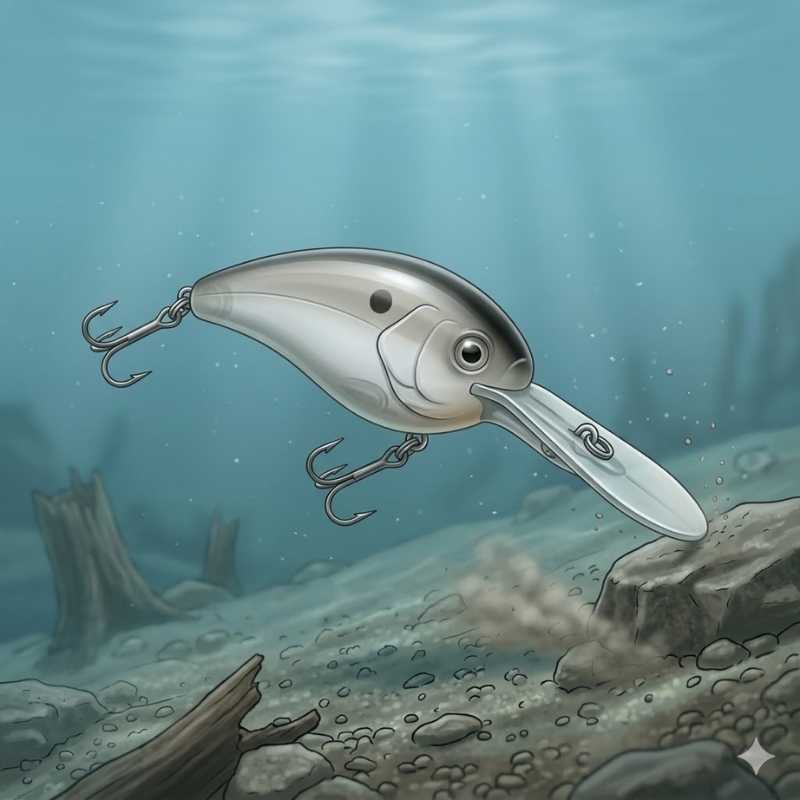
Strike King 6XD
Reaches deep with predictable wobble for offshore ledges.
Offshore ledges and humps — grind it into the bottom.
As an Amazon Associate I earn from qualifying purchases.
Alternative Options
- Rapala DT-16 →Alternative
- Berkley Dredger →Budget
Baitfish Positioning
Humps without bait are empty rocks. The productive ones have shad, herring, or alewives stacked on or above the structure. Baitfish use humps because they create current breaks, hold plankton, and offer vertical escape routes when predators push up. Bass position underneath and on the down-current side of the bait school, intercepting fish that drift off the edge. For the broader baitfish dynamic see how bass follow baitfish movement and baitfish depth changes and bass positioning.
Bait posture tells you what bass are doing. A tight bait ball pinned to the hump means active feeding — schoolers will erupt overhead or a school will be parked underneath. Loosely scattered bait higher in the water column means inactive bass; downsize to a drop shot or wait for the bait to ball up.
Wind Effects
Wind dictates which side of the hump produces. The windward side gets pushed bait, more oxygen, and faster current; the lee side gets calmer water and slower bait. For most of the season, the windward edge is the high-percentage zone. In post-frontal high-pressure conditions, the lee side and the deeper edges produce best. For the broader wind framework see how wind affects bass positioning and wind-blown banks and bass positioning.
Practical rule: position the boat on the down-wind side of the hump and cast up-wind across the structure. You'll get a natural drift over the productive edges and the wind helps you stay quiet on top of fish.
Electronics Interpretation
Reading a hump on sonar separates anglers who catch fish off it from anglers who don't. The four things to look for:
- Hard bottom return: a thick, bright red or yellow line on the bottom. Soft bottom returns a thinner, faded line. Hard humps hold fish; soft humps usually don't.
- Bait clouds: dense balls or smeared columns above and around the hump's top. The denser, the better.
- Arches or hooks near bottom: individual bass holding tight to the structure. Multiple arches close together is a school.
- Suspended fish above bait: bass roaming through the bait at mid-depth. Throw a swimbait or jerkbait at these.
Idle the entire hump in a grid pattern before you fish it. Mark every concentration of bait and every arch you see. Then approach quietly and start with the heaviest concentration. Camping a hump without reading it first wastes the best fish on it.
Best Lures
Lure selection follows bass posture. Three core categories cover the spectrum:
- Football jig (3/4 oz): for bass pinned to the bottom on the hump's top or break edges. Drag and hop on hard substrate. Green pumpkin or brown craw.
- Deep-diving crankbait or magnum swimbait: for schooling bass relating to bait above the structure. Bump the hump's top, then sweep through the bait cloud.
- Drop shot or jigging spoon: for vertical fish — bass and bait stacked on a small piece of structure. Spot-lock and work the column.
- Jerkbait: for suspended fish in 8–14 feet over a deeper hump, especially fall and spring.
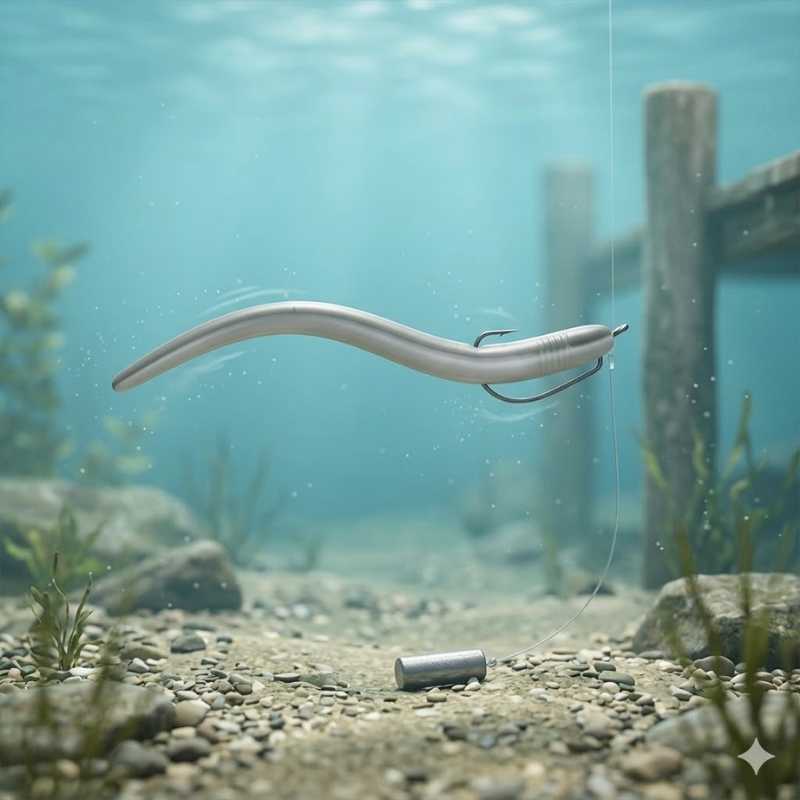
Roboworm Straight Tail
Industry-standard dropshot worm — subtle and proven.
Pressured or deep clear water — vertical shake on rock with a slim worm.
As an Amazon Associate I earn from qualifying purchases.
Alternative Options
- Berkley Bottom Hopper →Alternative
- Berkley MaxScent Flatworm →Budget
Common Mistakes
- Fishing without reading first. A hump can be 200 yards long; bass are concentrated on 30 feet of it. Idle, mark, then fish.
- Camping after the bait leaves. If electronics go empty, the bait moved. Run to another hump rather than waiting.
- Wrong-depth lure. A deep-diving crank that doesn't reach the hump's top is useless. Match running depth to the structure's top within 2 feet.
- Anchoring on top. Boat noise on small offshore structure scatters schooling fish. Position off the edge and cast to the structure.
- Ignoring nearby channel swings. Humps adjacent to a creek or river channel out-produce isolated humps. Cross-reference your map; see creek channel bass positioning.
Related Guides
Humps don't exist in isolation — they're part of an offshore system that includes points, channel swings, and roadbeds. For the next layer of structure see bass fishing points, and for the lures that match deep-structure presentation see best bass lures for deep water. For the master framework that explains why bass use these structures see the complete guide to bass behavior.