What a thermocline is
Summer sun heats the surface of a lake faster than wind and current can mix that warmth downward. By late June on most southern reservoirs, the water column stratifies into three layers: a warm, well-oxygenated epilimnion on top; a thin, cold transition called the thermocline; and a colder, oxygen-starved hypolimnion below. The thermocline itself is usually only 2 to 5 feet thick, but the temperature can drop 10 degrees or more across that band.
Bass live in the top layer. They feed at the thermocline. They almost never go below it once oxygen levels drop, which they do every summer.
Why bass position on the thermocline
Three things stack on the thermocline in summer:
- Oxygen ceiling — below the thermocline, dissolved oxygen drops fast. Bass need 4 to 5 ppm minimum to feed; the hypolimnion often runs under 2 ppm by August.
- Temperature comfort — water just above the thermocline is the coolest oxygenated water in the lake. Bass metabolism stays high without overheating.
- Bait concentration — shad, alewives, and blueback herring all stack on the thermocline for the same reasons. Bass have no reason to be anywhere else when this much food is parked in one band.
How to find the thermocline on sonar
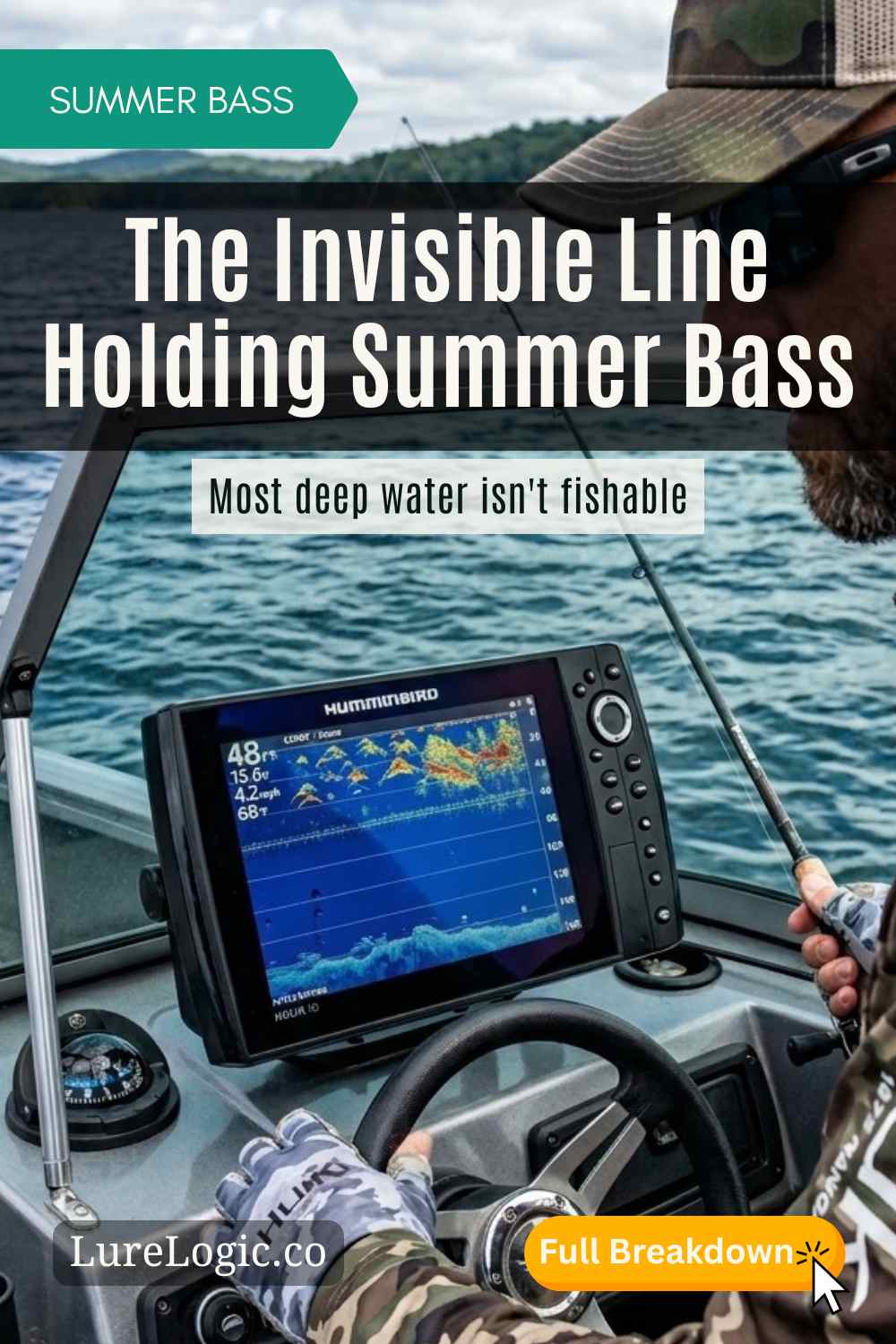
Crank your sonar sensitivity higher than you normally would and idle over deep, open water away from structure. The thermocline shows as a horizontal haze — like a thin shelf of static — at a consistent depth across the whole basin. It's not always crisp. On some lakes you'll see it clearly at 18 feet; on others it shows as a fuzz between 14 and 19. Either way, mark that depth. Every offshore spot worth fishing for the rest of the day relates to that number.
Where bass actually sit relative to it
- On top of the thermocline — schooling fish over deep humps and main-lake points, suspended over the thermal break itself.
- On structure that intersects it — brushpiles, standing timber, and rock piles that come up through the thermocline are gold. Bass stage at the depth where the structure meets the thermal layer.
- Just above it on the windy side — wind pushes bait shallow on one bank, and bass position on the upwind side of the structure to intercept it.
- Never below it — if your bait is 25 feet down on a 22-foot thermocline, you're fishing dead water.
Baits for thermocline-depth fish
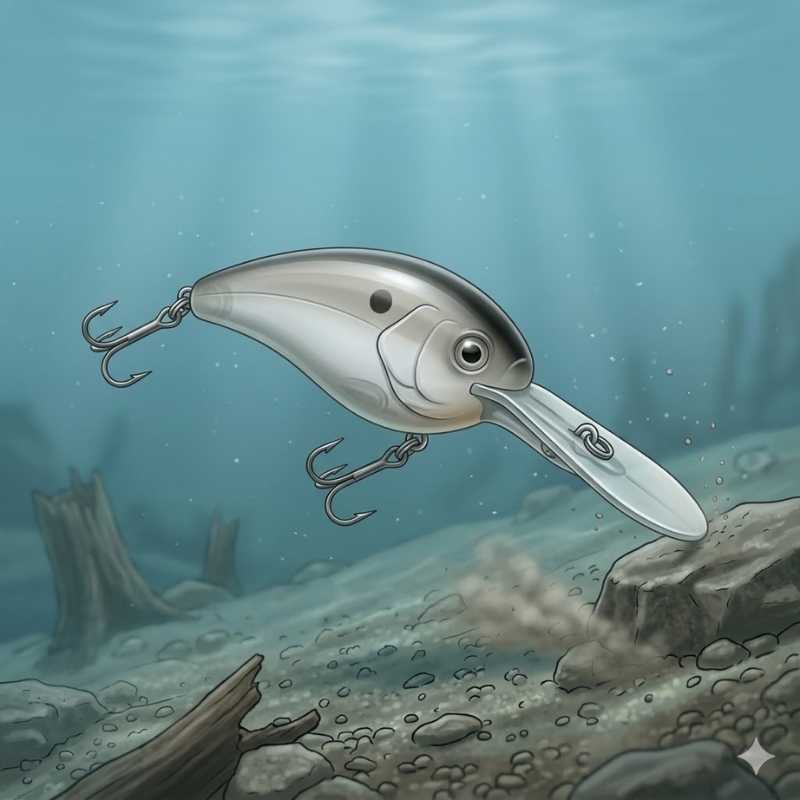
Strike King 6XD
Reaches deep with predictable wobble for offshore ledges.
Offshore ledges and humps — grind it into the bottom.
As an Amazon Associate I earn from qualifying purchases.
Alternative Options
- Rapala DT-16 →Alternative
- Berkley Dredger →Budget
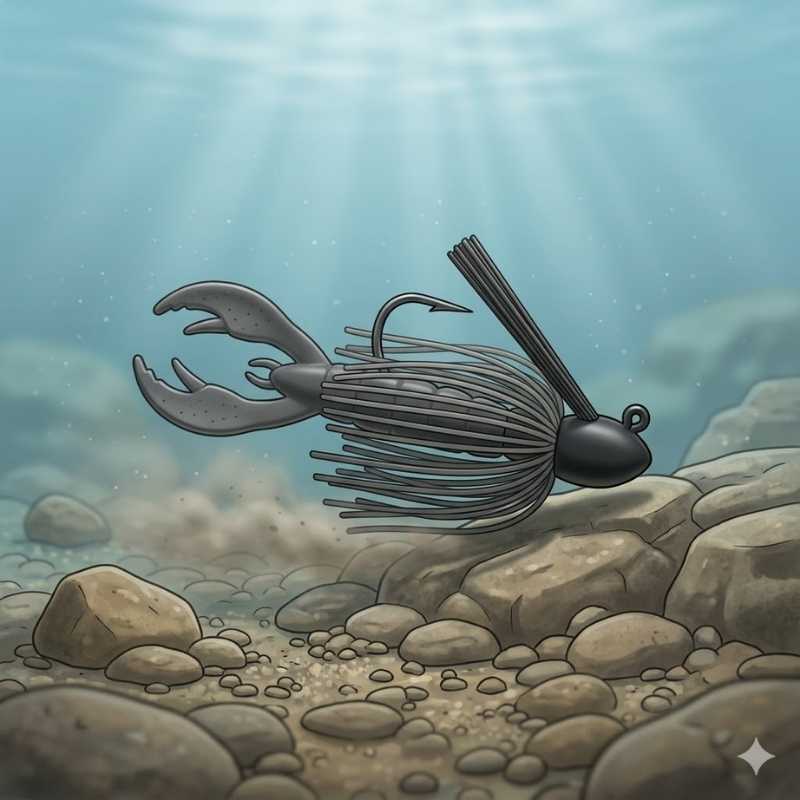
Dirty Jigs Guppy Football Jig
Premium football head built for rock and gravel.
Offshore rock and gravel — slow drag with long pauses.
As an Amazon Associate I earn from qualifying purchases.
Alternative Options
- Strike King Tour Grade Football →Alternative
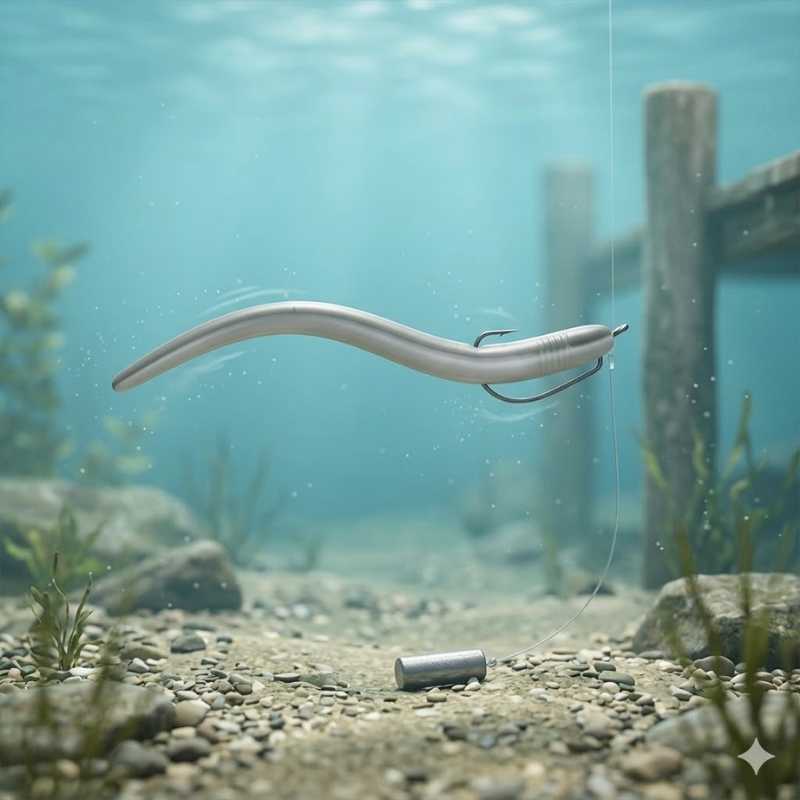
Roboworm Straight Tail
Industry-standard dropshot worm — subtle and proven.
Pressured or deep clear water — vertical shake on rock with a slim worm.
As an Amazon Associate I earn from qualifying purchases.
Alternative Options
- Berkley Bottom Hopper →Alternative
- Berkley MaxScent Flatworm →Budget
Add a flutter spoon or a tail-spinner for vertical work over schooled fish, and a big swimbait if blueback herring are in the lake. The cleanest pattern of all is a deep crank that just ticks the top of the thermocline — bass crush it on the deflection.
Retrieve adjustments
- Deep crank — slow-and-deflect over hard bottom; don't burn it. Bass commit to baits that bump and pause.
- Football jig — drag, don't hop. Stop on every rock and contour change.
- Drop-shot — long pauses. Twelve seconds of nothing, two seconds of subtle shake, repeat.
- Spoon — rip up two feet, give controlled slack on the fall. Strikes almost always come on the drop.
How the thermocline moves through summer
The thermocline deepens slowly through July and August as warm water mixes downward. A 16-foot thermocline in early June might be 22 feet by late August. Once nights start cooling in September, the layer weakens and the lake begins to turn over. That instability — covered in detail in lake turnover — temporarily ruins the offshore bite and pushes fish into transition behavior.
What anglers get wrong about the thermocline
- Fishing too deep. The single biggest mistake. If your bait is below the thermocline, you're fishing nothing.
- Assuming the thermocline is the same depth on every lake. Highland reservoirs run deeper thermoclines than shallow lowland lakes.
- Ignoring it on shallow water days. Even when you're fishing docks, bass holding off the end are sitting on the thermocline depth.
- Not adjusting through the summer. The depth that worked in early July is wrong by mid-August.
For the shallow alternative when offshore stops producing, see summer midday bass fishing. For what happens when the whole system collapses in fall, see lake turnover. For windy summer days that disrupt thermocline positioning, see best baits for windy conditions.