What suspending actually is
Suspending means a bass is holding in the water column with no reference to bottom or cover — neither a brushpile, a dock piling, nor a hard-bottom hump. The fish is finning in open water, usually at a specific depth that corresponds to a thermal layer, an oxygen band, or the depth of the bait it's tracking. Suspended bass aren't lazy or sick. They're efficient. They've found the lake's most comfortable, most productive depth and parked there.
Why transitions trigger suspending
During stable summer or winter, bass anchor to predictable structure because the lake itself is predictable — surface temps don't move much day to day, the thermocline holds, and bait follows known migration routes. Transitions destabilize all of that. Cold nights drop the top three feet five degrees. Wind mixes layers and pushes bait. The thermocline weakens, then re-forms at a different depth. Bottom structure stops being the reliable answer.
When the lake is in flux, bait suspends. Shad in particular pull off the bottom and ride wherever the most comfortable water sits — usually 8 to 25 feet depending on the lake. Bass, opportunistic feeders that always position relative to forage, follow. The result is fish hovering in open water above structure that used to hold them.
The two main suspending windows
- Late fall through early winter — the most consistent suspending window of the year. Bait pulls off flats and stages in deeper creek channels. Bass suspend over the channel waiting for shad to drift through. Surface temps in the high 40s to low 60s are prime.
- Post-spawn transition — recovering females suspend off spawning flats before committing to summer haunts. Bluegill fry are pulling away from beds, and bass shadow them in the water column instead of staying tight to cover.
- Pre-front instability — short transition windows triggered by weather can produce 24 to 48 hours of suspended behavior even in mid-summer.
How to find suspended fish
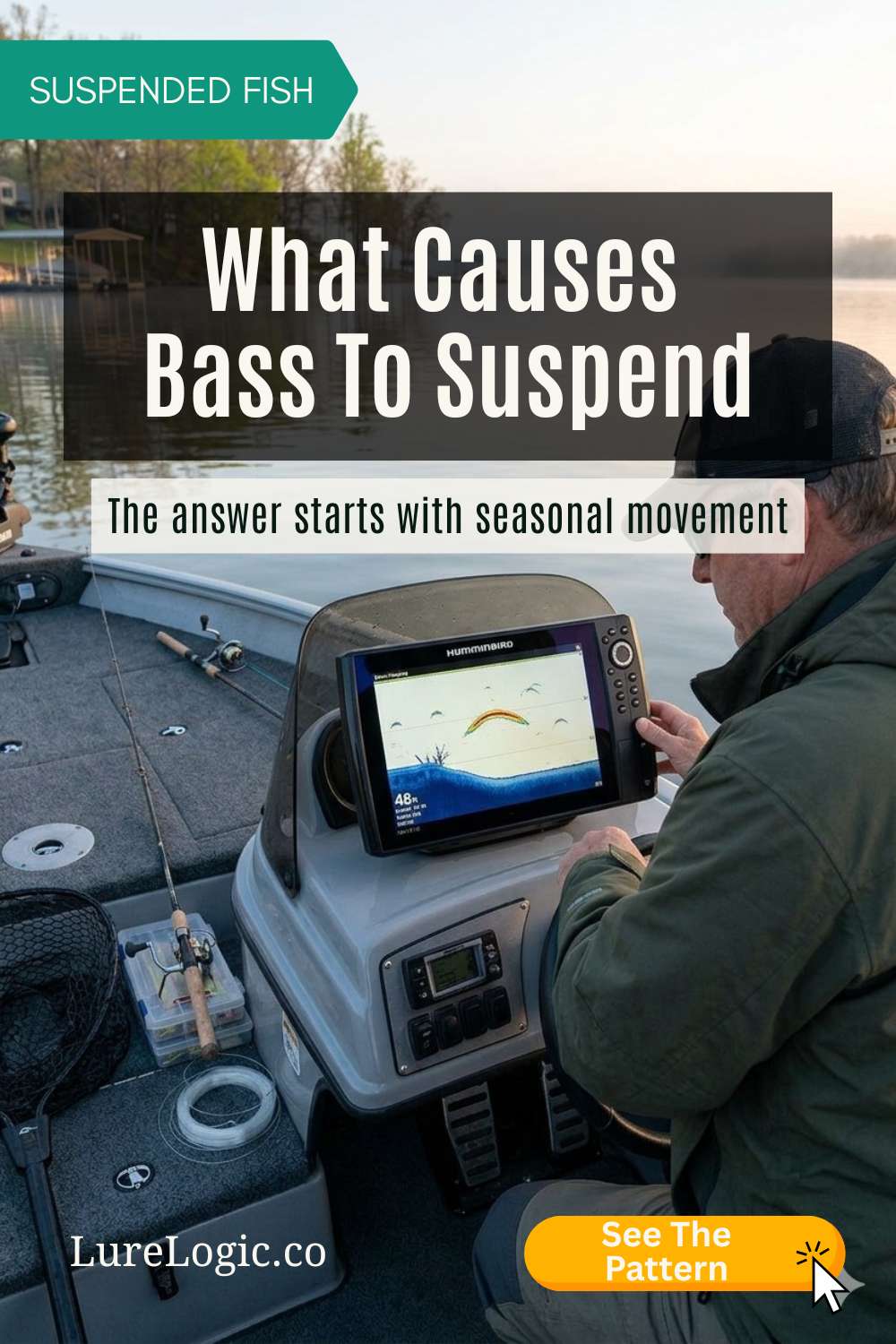
Forward-facing sonar made suspended fish famous, but you don't need it. A standard 2D graph reads suspended bass and bait clouds clearly — look for arches sitting at 15 feet over 25 feet of water, with a haze of bait above or below them. Side imaging picks them off cleanly across long flats and the edges of creek channels.
Productive water during transitions:
- Creek-channel bends in 18–30 feet, where shad migrate between the river and the flats.
- Standing timber in the same depth range — bass suspend at branch level, not at the trunk.
- Long tapering points with bait stacked off the end.
- Bridge pilings in the dead of fall — vertical structure plus current plus bait.
- Open-water humps with a bait cloud parked on the downwind side.
Bait selection for suspended bass
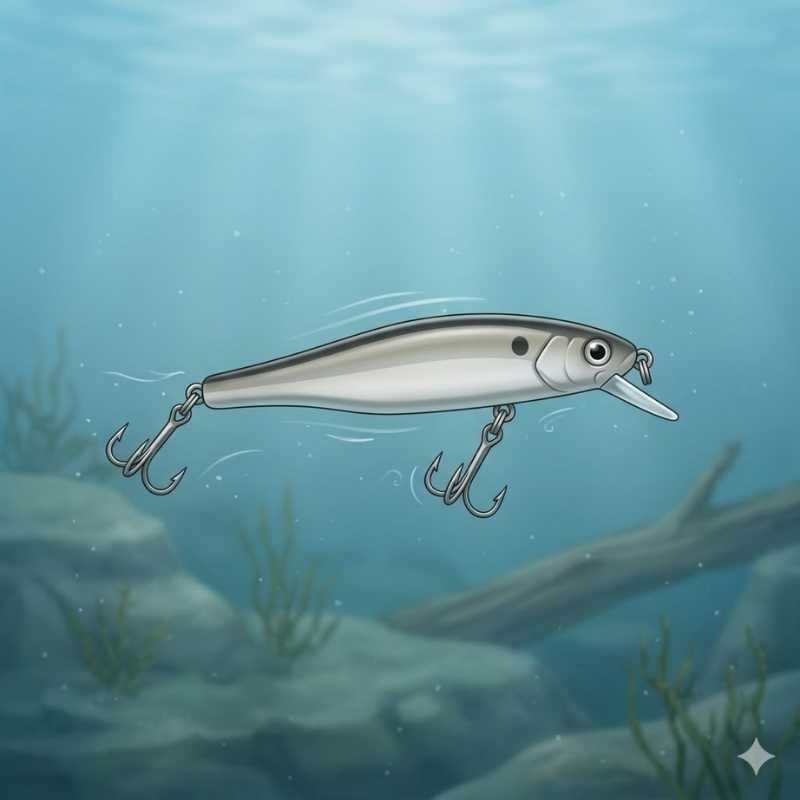
Megabass Vision 110
Industry-standard suspending jerkbait for cold-water bass.
Cold, clear water — long pauses near rock and points.
As an Amazon Associate I earn from qualifying purchases.
Alternative Options
- Rapala Shadow Rap →Alternative
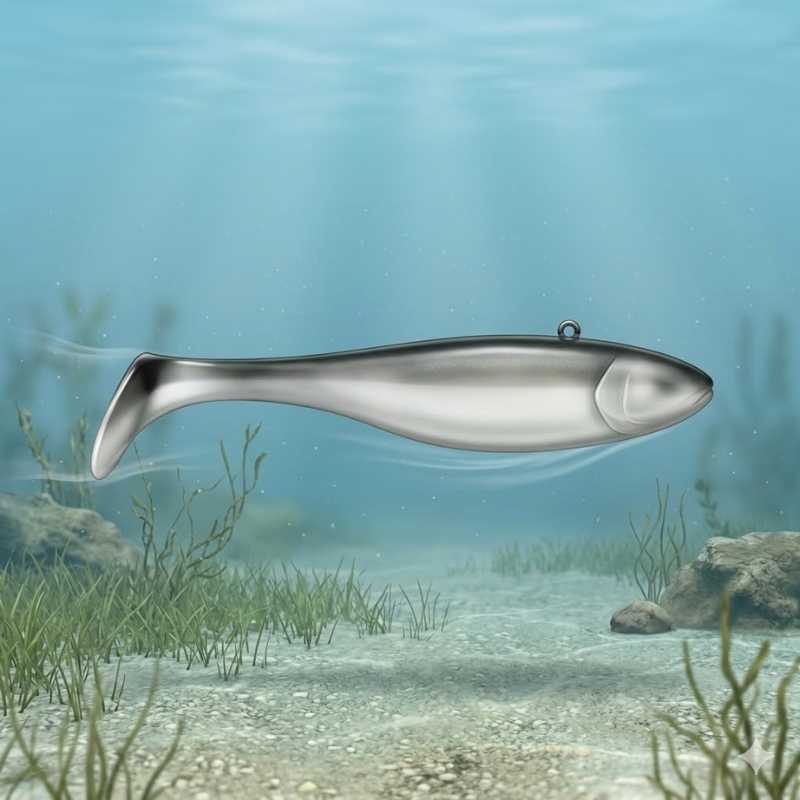
Keitech Swing Impact FAT
Best-in-class paddle-tail action for any swimbait rig.
Imitate shad — steady retrieve over points, flats, and drops.
As an Amazon Associate I earn from qualifying purchases.
Alternative Options
- Berkley PowerBait CullShad →Alternative
- Strike King Rage Swimmer →Budget
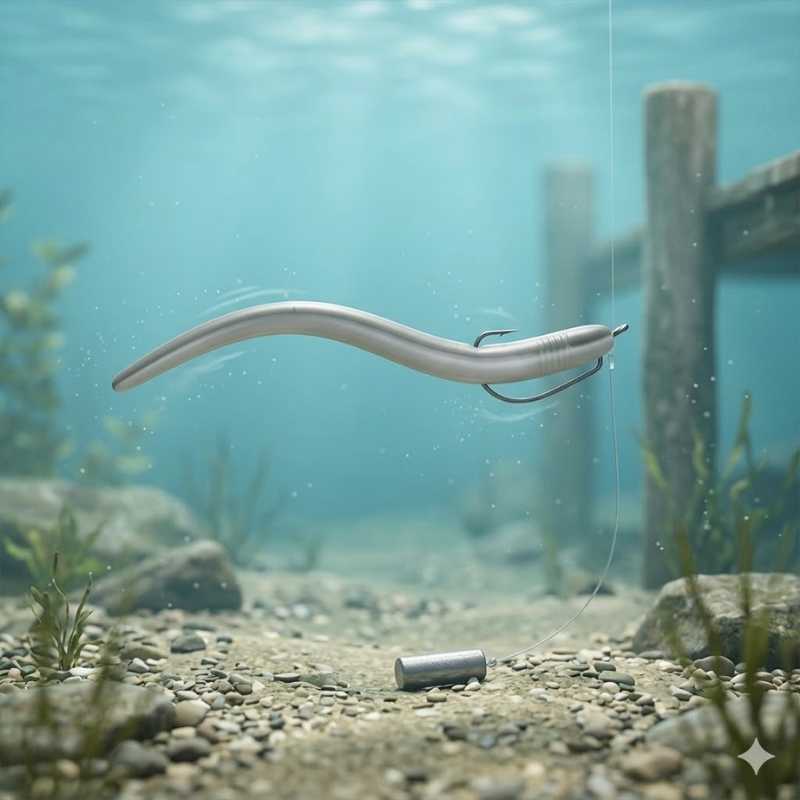
Roboworm Straight Tail
Industry-standard dropshot worm — subtle and proven.
Pressured or deep clear water — vertical shake on rock with a slim worm.
As an Amazon Associate I earn from qualifying purchases.
Alternative Options
- Berkley Bottom Hopper →Alternative
- Berkley MaxScent Flatworm →Budget
Add a small underspin or a tail-spinner for slowly-falling presentations, and a hair jig if the bite is finicky in cold transition water. A 1/2-ounce flutter spoon also produces well above standing timber. The pattern is depth-first: match the bait, fish it at fish-eye level, and let the fish come up an inch or two for it — never make them come down.
Reading bait to find the depth
The single most overlooked tactic in suspended-fish fishing is reading the bait cloud before the bass. If the shad ball is centered at 14 feet, the bass are at 14 to 17 feet — always at or just under the bait. Set your jerkbait to dive to that band. Count your swimbait down. Position your drop-shot weight to suspend the bait dead-center on the cloud. Working over the top of the bait catches almost nothing. Working at or just under it catches.
Retrieve adjustments by water temp
- 60°F and up — aggressive cadence. Snap-snap-pause jerkbait, steady-medium swimbait.
- 50–60°F — slow it down. Three to six second pauses on the jerkbait. Slow-roll the swimbait so it barely turns the tail.
- Under 50°F — deadstick the jerkbait 10 to 20 seconds between twitches. Most strikes come on the pause.
- Post-front — shrink the bait and drop down to a hair jig or 3-inch swimbait on a small jighead.
Common mistakes on suspended fish
- Fishing too deep. Most anglers go below the bait. Bass strike up, not down.
- Moving the bait too much. Suspended bass have already decided to eat; they need a target, not a chase.
- Ignoring the wind direction. Bait clouds drift downwind. Yesterday's spot is wrong today.
- Forcing a bank pattern. During transitions, the bank often holds the worst fish in the lake.
- Skipping the pause. The pause is the strike — on a jerkbait, a swimbait, and a spoon.
For the summer version of this same pattern, see how thermoclines reposition summer bass. For the fall side of it, see fall bass fishing bait guide and how bass follow baitfish. For where these fish come from and go, see creek channel bass positioning, transition banks, and the seasonal bass patterns guide.