Why pre-spawn produces the year's biggest fish
Pre-spawn females are at their heaviest weight of the year. They've finished winter, their metabolism is climbing with water temperature, and they're loading body mass to fuel egg production. That biological pressure drives them to feed aggressively for 4–6 weeks straight — and it concentrates them on predictable waypoints between deep winter structure and shallow spawning flats. Understanding that biology is the foundation of every decision in this guide, and it connects directly back to the bass behavior pillar on feeding windows and metabolism.
The pre-spawn timeline
Pre-spawn starts when water hits the mid-40s. Bass begin sliding from winter structure toward spawning flats. From 50°F to 55°F they hold deep — points, channel swings, the first major drop outside a spawning pocket. From 55°F to 65°F they push shallower onto hard-bottom flats, isolated cover, and stumps near future bedding areas. The full year-round arc lives in the seasonal bass patterns pillar.
Bass positioning breakdown
Pre-spawn positioning is more predictable than any other window because bass are moving along defined corridors. Read the lake in three layers:
- Wintering area: Usually the deepest, steepest structure in the area — main-lake points, channel ends, deep brush. Bass leave this in waves.
- Staging waypoint: The first major depth break between winter and spawning water. Secondary points, channel swings, and the outer edge of the spawning pocket. Detailed in the transition banks breakdown.
- Pre-bedding cover: Isolated stumps, laydowns, and dock posts on hard-bottom flats inside the spawning pocket. Bass use this as their final pause before locking on a bed.
The deeper into the pre-spawn window, the further along that corridor the fish have moved. Read the air and water temperature trend and you can predict which layer holds the most active fish on any given day. The points and transition banks guides extend this with cover-specific detail.
The four pre-spawn lures
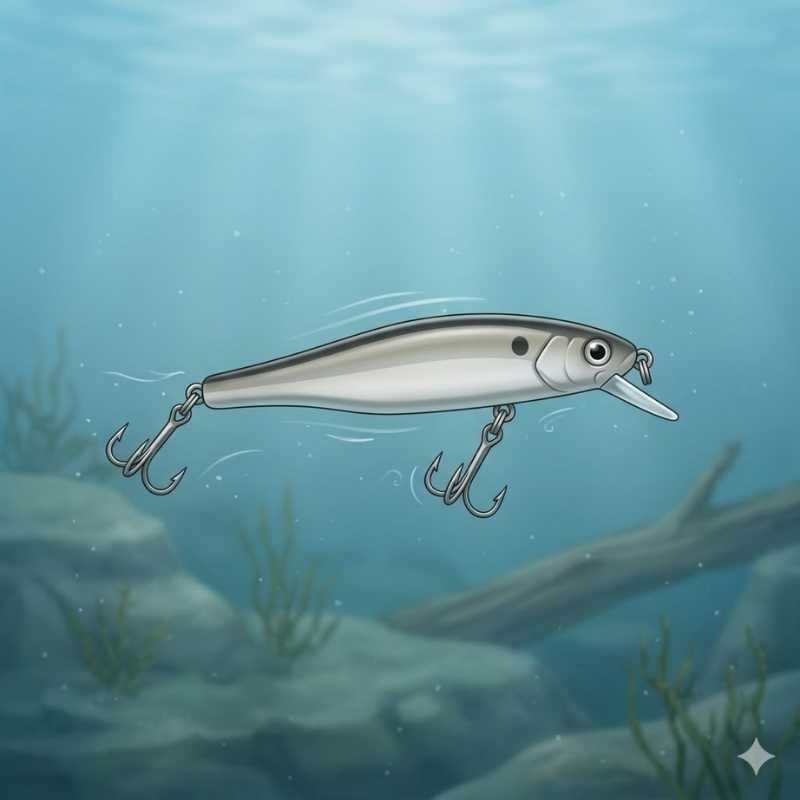
Megabass Vision 110
Industry-standard suspending jerkbait for cold-water bass.
Cold, clear water — long pauses near rock and points.
As an Amazon Associate I earn from qualifying purchases.
Alternative Options
- Rapala Shadow Rap →Alternative
Dominant in 45–55°F water. Cover the deep side of staging points and let pauses do the work. The best jerkbaits guide covers cadence and pause length.
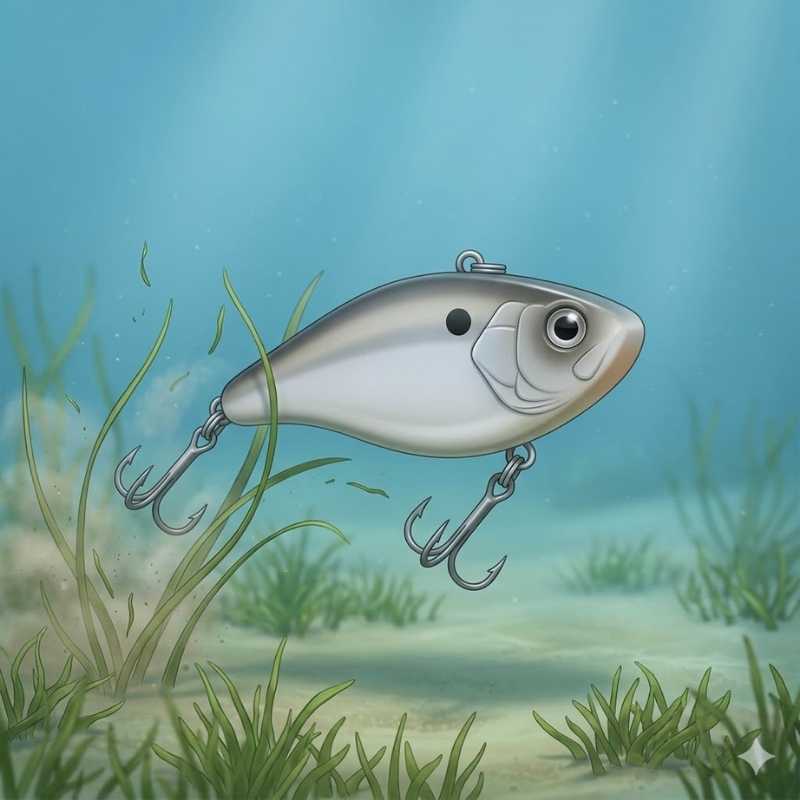
Strike King Red Eye Shad
Excellent flutter on the fall over grass and flats.
Grass flats and creek arms — yo-yo it through the tops.
As an Amazon Associate I earn from qualifying purchases.
Alternative Options
- Bill Lewis Rat-L-Trap →Alternative
The original pre-spawn grass bait. Yo-yo it through hydrilla or milfoil and rip it free. Bass crush it on the next pull.
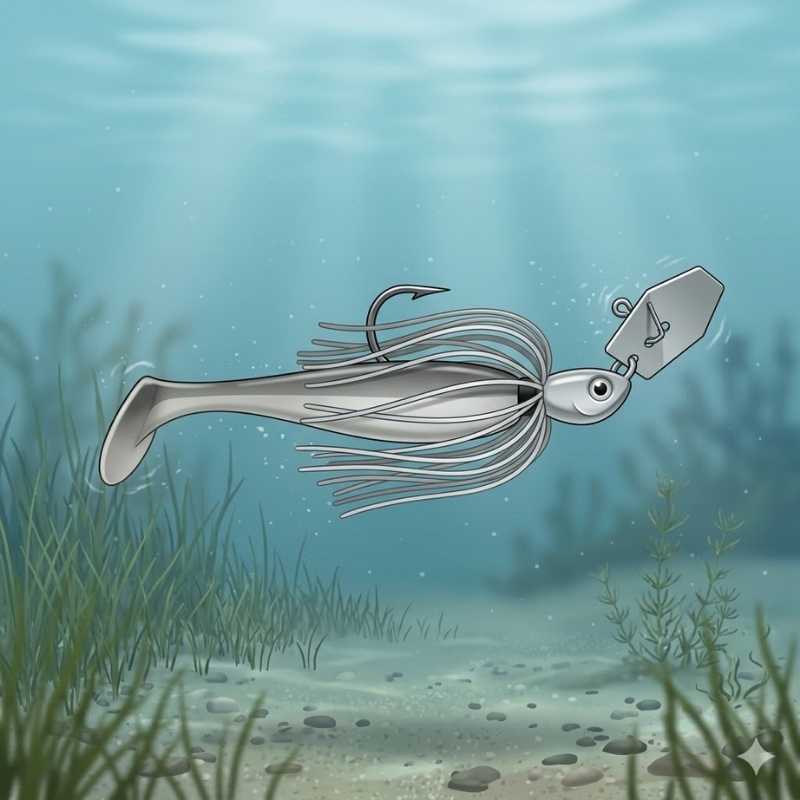
Z-Man JackHammer ChatterBait
The benchmark bladed jig — premium hardware and perfect vibration.
Stained water, wind, scattered grass — moderate-paced reaction bait.
As an Amazon Associate I earn from qualifying purchases.
Alternative Options
- Strike King Thunder Cricket →Alternative
Becomes more productive as water climbs past 50°F. Steady retrieve through any cover near a spawning pocket. Pair with the right trailer from the trailer guide.
Strike King KVD 1.5
Deflects off cover like nothing else — the go-to shallow crank.
Shallow wood and rock — make it deflect off cover.
As an Amazon Associate I earn from qualifying purchases.
Alternative Options
- Lucky Craft LC 1.5 →Alternative
Once bass push to the bank, a squarebill bouncing off stumps and rocks triggers reaction strikes from cruising females.
Lure selection logic
Use a simple two-axis decision: water temperature on one axis, sky/wind on the other.
- 45–50°F, calm and sunny: Suspending jerkbait, long pauses, on deepest staging structure.
- 45–50°F, wind and clouds: Lipless crank or slow-rolled chatterbait on the same structure.
- 50–55°F, calm and sunny: Jerkbait or slow chatterbait on the inside transition.
- 50–55°F, wind and clouds: Chatterbait and lipless cranked hard along windward banks.
- 55–65°F, any conditions: Squarebill, chatterbait, jig pitched to bedding-adjacent cover.
This same conditions-first logic drives the broader lure selection guide.
How to read the migration
- Cold mornings, warming afternoons: fish the afternoon when shallows warm
- Wind on a bank with hard bottom: highest-percentage water of the day
- Sunny days after a warm trend: bass slide shallowest — focus on bank cover
- Cold-front days: back off to the staging structure with a slower bait — the post-front lure rotation covers this
Water clarity adjustments
- Clear water (3+ ft visibility): Natural shad on jerkbaits, ghost minnow on lipless, green pumpkin on jigs. Lean on suspending jerkbaits for staging fish.
- Stained water (1–3 ft): Red and orange craw colors come into play on lipless and squarebills. Chatterbaits with chartreuse-white or black/blue.
- Muddy water (under 1 ft): Vibration baits only. Read the muddy-water guide for the full breakdown.
Seasonal considerations
Pre-spawn doesn't behave the same everywhere or every year. A warm winter compresses the window — bass push shallow weeks ahead of schedule and the entire pattern peaks faster. A cold spring stretches it out and creates 3–4 weeks of jerkbait-dominated fishing. Always cross-reference the calendar with surface temperature; the best lures by water temp chart is the right reference for those years when the calendar lies.
Color and size
Pre-spawn bass are feeding on shad and crawfish. Match shad patterns on jerkbaits and lipless cranks; reds and oranges on lipless and squarebills imitate emerging crawfish. Sizes can be larger than you think — pre-spawn females are looking for big meals. The crawfish color cycle explains why pre-spawn red dominates.
Real-world application
It's the third week of February. Air temps have run 60°+ for four straight days after a brutal cold snap. The lake surface has climbed from 47° to 54°. You launch on a south-facing pocket with chunk-rock transitions to mud flats — a classic spawning bay.
First stop: the secondary point at the pocket mouth, where the channel swings within 25 feet of the bank. Start with a suspending jerkbait worked along the deep edge, twitch-twitch-pause with 6–8 second pauses. After working the outside of the point, move inside the pocket and run a 3/8-oz chatterbait with a green pumpkin paddle-tail along the chunk-rock to mud transition. Expect the biggest bites where rock turns to gravel turns to dirt — pre-spawn females hold on that exact substrate seam. The afternoon sun will warm the back of the pocket two degrees more than the mouth, so finish the day pitching a 1/2-oz jig with a craw trailer to isolated stumps on the warmest flat. That afternoon transition routinely produces the day's biggest fish.
The mistake most anglers make
Most anglers fish too shallow too early in the pre-spawn cycle. The biggest females stage on the first major drop outside the spawning pocket — often 8 to 15 feet — and they don't slide to the bank until the surface temp consistently holds 55°+. Burning the bank with a squarebill on a 48° morning catches dinks; a jerkbait worked over the deepest staging point catches the 6-pounders. The second mistake is fishing through the warmest part of the day instead of into it; pre-spawn bass typically eat best from late morning through mid-afternoon, when the shallows have warmed the most.
The third common error is ignoring the weather cycle. Pre-spawn fish push shallow on warming trends and slide back on cold fronts. Cross-reference the weather pillar guide before every trip to know where in that cycle you're fishing.
Use LureLogic to dial in your day. Plug in temp, season, and forage to get a real-time call on the highest-confidence pre-spawn presentation.