What a transition bank actually is
A transition bank is any stretch of shoreline where the bottom composition changes. Chunk rock turning into pea gravel. Gravel giving way to clay. A hard bottom flat that drops into soft mud. The transition itself — the seam where one substrate ends and another begins — is the structural feature bass key on. It's a hard edge on an otherwise gradual bank, and bass relate to hard edges the way they relate to laydowns and brushpiles.
On most lakes, bottom-composition transitions happen in predictable places: where a small point rolls into a creek arm, where a bluff face meets a clay bank, where an old roadbed crosses a slope. Once you learn to identify them, they become repeatable spots that fish year after year.
Why bass concentrate on transitions during seasonal change
Three things stack on transition banks during the transition windows of spring, fall, and post-spawn:
- Depth access — transition banks usually offer the steepest slope between deep wintering or summering water and shallow seasonal zones. A bass can be at 25 feet at the boat and 4 feet at the bank in a single short move.
- Bait corridor — shad, herring, and bluegill all migrate along the same hard-bottom edges. The transition bank is a highway, and bass set up on the highway, not the destination.
- Hard edge for ambush — the substrate change itself creates a visual and acoustic break that bass exploit, similar to how they use a grass line.
- Crawfish stacking — in spring and fall, crawfish concentrate at the transition between rock and softer bottom where they molt and forage.
When transition banks fish best
- Pre-spawn (water temp 48–58°F) — bass stage on transition banks before pushing onto spawning flats. The bigger the seasonal jump, the longer they hold here.
- Post-spawn (water temp 65–72°F) — recovering females use the same transitions on the way back out to summer haunts.
- Fall (water temp 70°F dropping into the 50s) — bass and bait both migrate along transition banks into the creeks.
- Pre-frontal windows — even in summer, falling pressure can pull fish onto transition banks for 24-hour feeding windows.
The common transitions
- Gravel to clay — the classic prespawn and post-spawn transition.
- Rock to sand — a summer and fall hard-bottom edge.
- Pea gravel to chunk rock — both sides are hard; the change itself concentrates crawfish.
- Hard bottom to grass — the edge where vegetation starts.
- Channel edge to flat — where the deep bottom meets the shelf; the offshore version of a transition bank.
How to find them
Idle the bank in 6 to 12 feet of water with side imaging and standard 2D sonar. Watch the bottom signal:
- Hard bottom returns show as a thick, bright, crisp line on 2D and shaded brighter on side imaging.
- Soft bottom shows as a thin, fuzzy, less defined return.
- The transition seam is the spot where the contrast changes. Drop a waypoint there.
- Visual confirmation — look at the shoreline. Rock above water usually continues as rock below; clay above usually continues as clay. A red-clay bank that turns into gray rock signals an underwater transition that often runs out into the lake several feet down.
- Use historic spots — long-time anglers on your lake know where the major transitions are. They don't move.
How bass position on a transition
Bass don't usually sit directly on top of the transition seam. They position relative to it:
- Pre-spawn — on the deeper side of the transition, suspended just off bottom or holding on the first piece of cover beyond the seam.
- Post-spawn — on the shallow side first, then progressively deeper as recovery completes.
- Fall — moving along the seam, not parked on it. Bait is being chased; bass are pursuing.
- Wind — always on the upwind side of the transition during a sustained blow.
Baits for transition banks
The cleanest presentation is one that maintains bottom contact across the substrate change — bass strike on the transition itself more often than on either side. Start with the bottom-contact rotation and add moving baits when wind or stained water calls for them.
Bottom-contact baits (feel the seam)
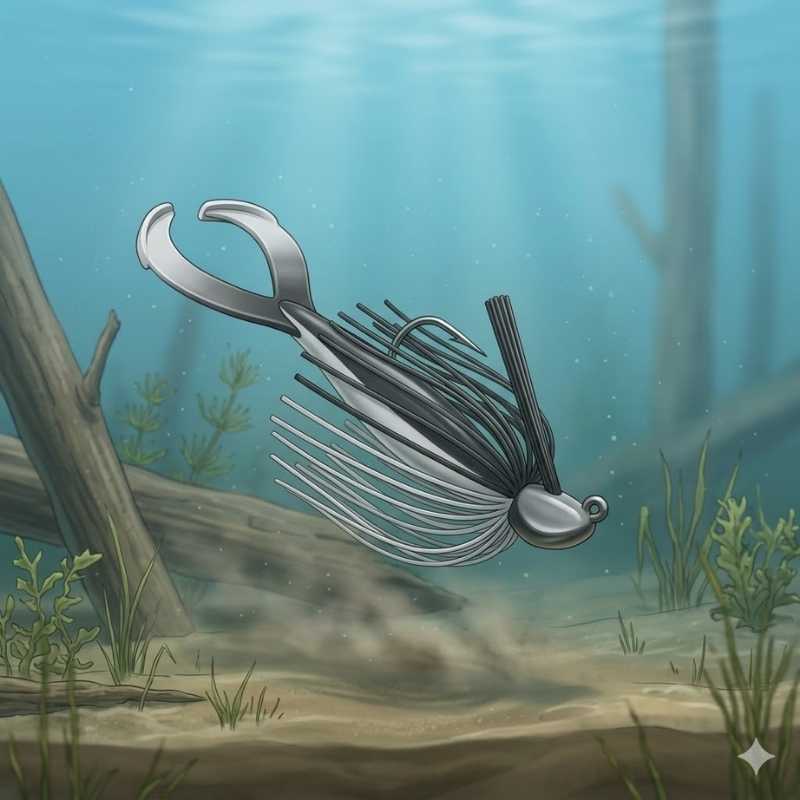
Dirty Jigs Guppy Football Jig
Premium football head built for rock and gravel.
Offshore rock and gravel — slow drag with long pauses.
As an Amazon Associate I earn from qualifying purchases.
Alternative Options
- Strike King Tour Grade Football →Alternative
Strike King 6XD
Reaches deep with predictable wobble for offshore ledges.
Offshore ledges and humps — grind it into the bottom.
As an Amazon Associate I earn from qualifying purchases.
Alternative Options
- Rapala DT-16 →Alternative
- Berkley Dredger →Budget
Yamamoto Senko
Dead-stick fall that bass simply can't refuse.
Heavy cover — pitch in, let it sink on slack line.
As an Amazon Associate I earn from qualifying purchases.
Alternative Options
- Zoom Trick Worm →Alternative
- Strike King Rage Craw →Budget
Seasonal and moving baits (cover the seam)
Dirty Jigs Compact Pitchin' Jig
Premium skirt and head shape for pitching tight cover.
Pitch to docks, laydowns, and isolated cover for big fish.
As an Amazon Associate I earn from qualifying purchases.
Alternative Options
- Strike King Structure Jig →Alternative
- Booyah Boo Jig →Budget
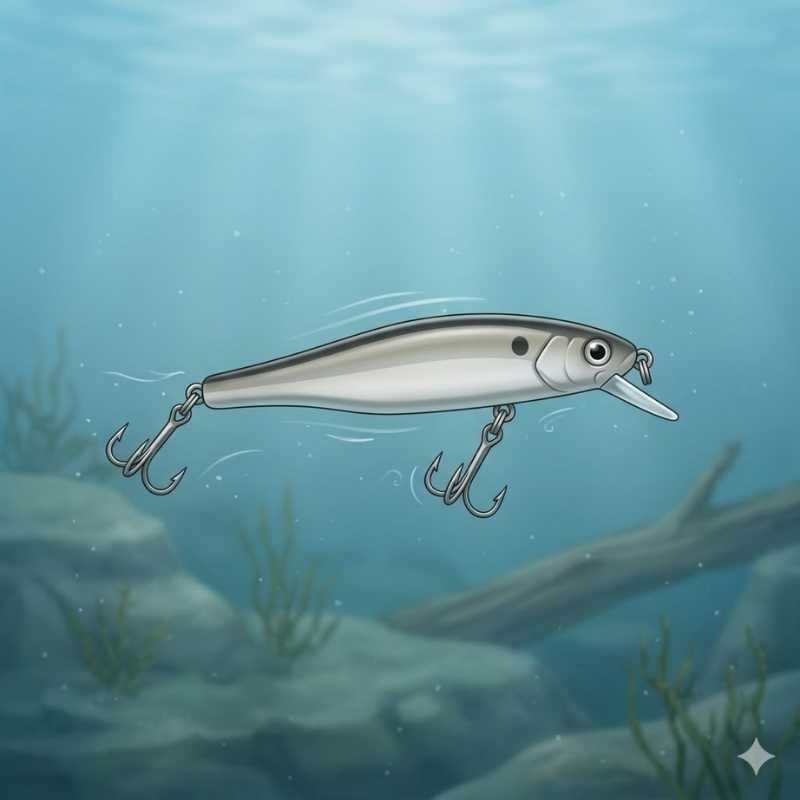
Megabass Vision 110
Industry-standard suspending jerkbait for cold-water bass.
Cold, clear water — long pauses near rock and points.
As an Amazon Associate I earn from qualifying purchases.
Alternative Options
- Rapala Shadow Rap →Alternative
Strike King KVD 1.5
Deflects off cover like nothing else — the go-to shallow crank.
Shallow wood and rock — make it deflect off cover.
As an Amazon Associate I earn from qualifying purchases.
Alternative Options
- Lucky Craft LC 1.5 →Alternative
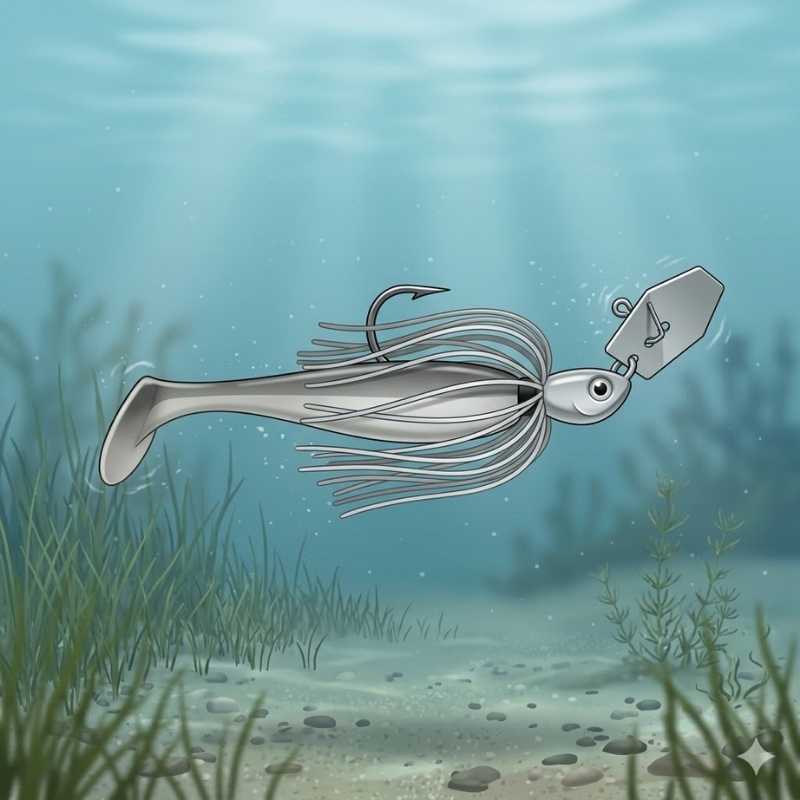
Add a spinnerbait for windy transitions and a chatterbait for stained water. Deeper offshore transitions in summer and winter call for the deep-water lure rotation; shallow transitions right after a front call for the post-front lures.
Retrieve approach
- Cast parallel to the bank so your bait crosses the transition seam at the same depth for as long as possible. Perpendicular casts cross it in two seconds.
- Drag, don't hop. A football jig dragged across the change telegraphs the transition through the rod tip — you'll feel gravel turn to clay before you see it.
- Slow down on the seam. Whether you're dragging a jig or working a jerkbait, add a pause exactly at the substrate change. Most strikes happen there.
- Match crankbait depth to the transition depth. A bait that doesn't tick the change misses the productive zone.
- Bump cover when you find it. Anything physical on the seam — a single rock, a stick, an isolated brush — usually holds the biggest fish.
- Don't run-and-gun — transitions reward methodical coverage. Fishing the same stretch twice from different angles catches more.
Transition banks through the year
Transition banks produce year-round, but the productive depth shifts with the season:
- Spring — shoreline transitions in 4–12 feet, driven by prespawn crawfish and the staging migration.
- Summer — deeper transitions on offshore structure carry the load: channel-edge-to-flat seams, hard-to-soft changes on humps and ledges.
- Fall — shoreline transitions again, this time driven by bait migration into the creeks.
- Winter — transitions in 15–25 feet of water hold concentrated, tightly grouped fish.
Mark every productive transition. Most of them produce year after year; the exception is after a major lake-level change — drawdown or flood — which can expose or cover different bottom and shift where the productive seams sit.
Common mistakes
- Fishing only the destinations — the spawning flat or the offshore brush — and ignoring the transition entirely.
- Looking for cover instead of structure. Transitions have no visible features, so they look "empty" — emptiness is the point. The fish are on the seam, not scattered.
- Working baits perpendicular to the bank, crossing the seam in two seconds. Parallel casts keep the bait in the strike zone longer.
- Fishing past the change without pausing or feeling for the bottom shift.
- Not idling slow enough to actually see the substrate change on sonar.
- Skipping transitions in summer. Falling pressure makes them productive even in August.
- Treating every bank the same. The transitions are 10 percent of the bank but hold 60 percent of the fish during transition windows.
For how transitions fit alongside points, channels, and cover, see the structure bass fishing guide and bass fishing points. For the seasonal patterns that feed into this water, see pre-spawn bass fishing lures, the post-spawn bass fishing guide, and the fall bass fishing bait guide. For how transitions connect to the migration route itself, see creek channel bass positioning, seasonal transition bass fishing, and the seasonal bass patterns guide.