Editor's Pick97%
Strike King Red Eye Shad
Green Pumpkin
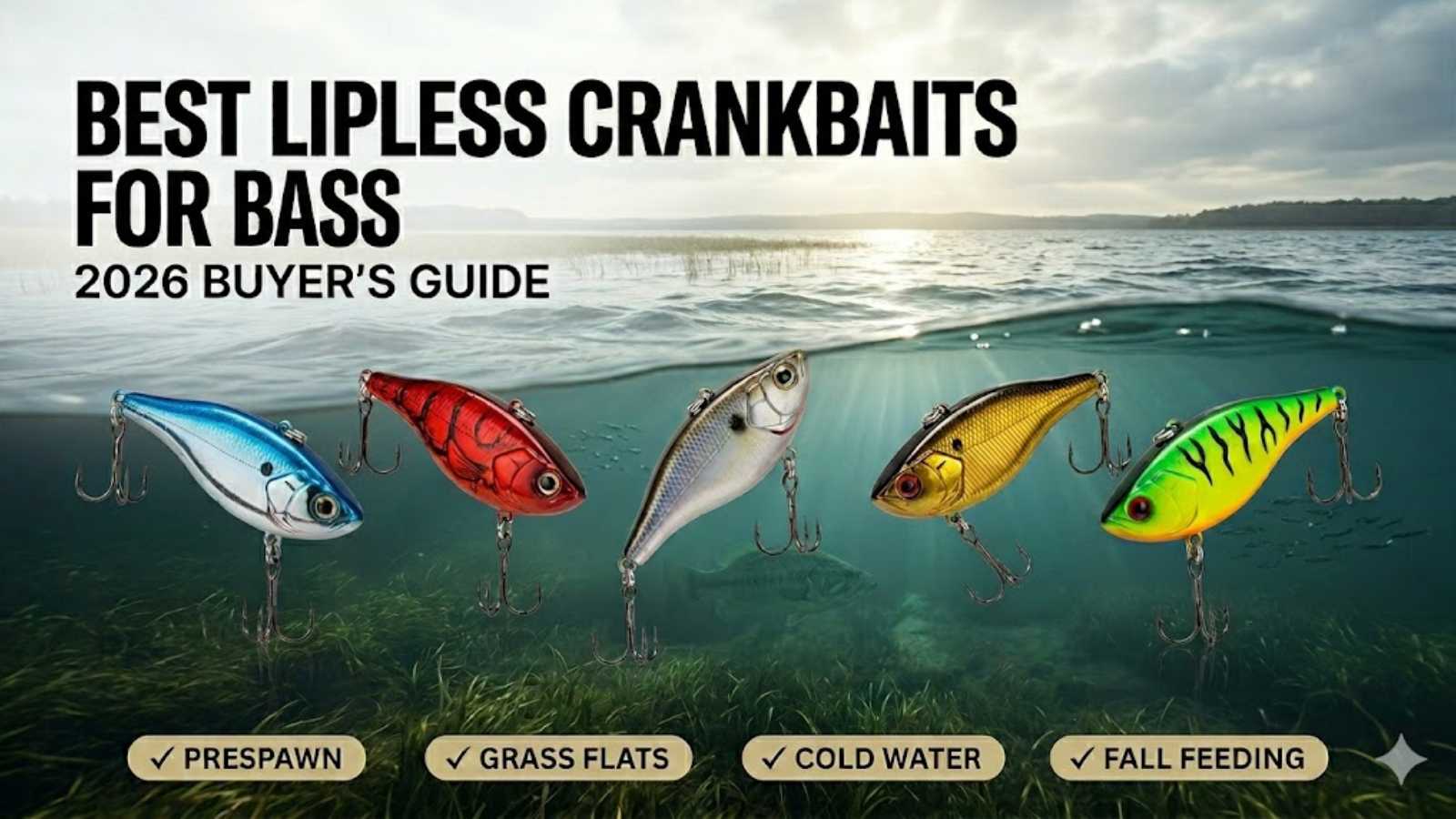
View Product →Discover the best lipless crankbaits for grass, flats, prespawn, and cold-water bass fishing with proven yo-yo and ripping techniques.
Affiliate Disclosure: As an Amazon Associate I earn from qualifying purchases. Recommendations reflect on-the-water testing and the LureLogic ranking engine — not paid placement.
Best Overall: Strike King Red Eye Shad. The Classic: Bill Lewis Rat-L-Trap. Best Tight Wobble: Jackall TN70. Best Value: Berkley Warpig. Best Cold Water: Rapala Rippin' Rap.
If you carry three colors of one lipless model into a tournament, make them: Sexy Shad in 1/2 oz for clear-to-stained water and the fall shad migration, Red Craw in 1/2 oz for prespawn rock and riprap, and Chrome Black Back in 1/2 oz for muddy water and overcast days. Those three colors handle the vast majority of seasonal scenarios.
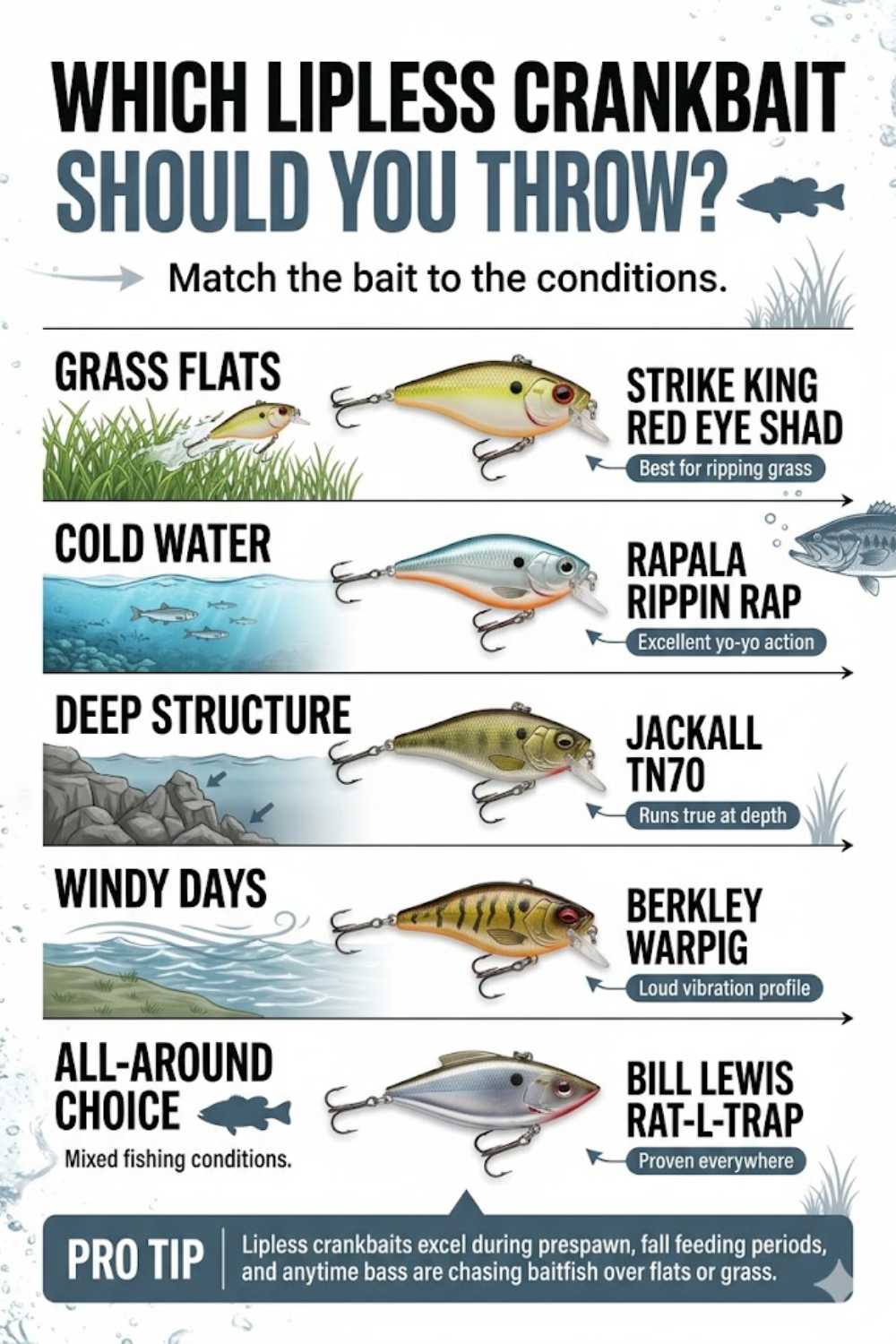
Strike King Red Eye Shad — The benchmark modern lipless. Its single biggest advantage is the controlled flutter on the fall: the bait drops with a tight rocking motion rather than a tail-down dive, which keeps it in the strike zone longer on the yo-yo retrieve and triggers fish that follow without committing. The premium hook system reduces lost fish on the head-shake. Excels in 1–8 ft of water over grass flats, on points, and in creek arms during the fall shad migration. Color picks: Sexy Shad for clear and stained water, Red Craw for prespawn rock, Chrome Black Back for muddy water.
Bill Lewis Rat-L-Trap — The original lipless and still one of the loudest, longest-casting options in the category. The aggressive rattle calls fish from a long distance, making it the right choice in muddy water and across large flats where you need to cover ground. The classic 1/2 oz size is the universal starting point. The Rat-L-Trap retains a price point that lets you fish it aggressively into the kind of shallow grass and wood cover where break-offs are part of the deal. Color picks: Chrome Black Back, Red Craw, Lectric Shad.
Jackall TN70 — A finesse lipless with a tight, high-frequency vibration. Where the Rat-L-Trap calls fish from a distance, the TN70 commits pressured and clear-water bass that have refused louder presentations. The tighter wobble also slips through sparse grass cleaner. This is the bait for highly pressured lakes, late-summer pressured fish, and clear-water reservoirs where bass have seen every lipless in the box. Pair with light fluorocarbon (10 lb) on a moderate-action rod.
Berkley Warpig — Outstanding performance at a budget-friendly price. The Warpig casts well, runs true out of the package, and offers strong fluttering fall characteristics that compete with significantly more expensive baits. A great choice for anglers stocking a full lipless box without breaking the budget and an honest tournament-capable bait once you upgrade the hooks if needed.
Rapala Rippin' Rap — Tight vibration that cuts through grass and cold water. The narrower body and tight wobble make it the specialist for sub-55°F water and post-front conditions when bass reject wider, more aggressive actions. Fish it slowly on a yo-yo retrieve over winter grass, on bluff banks, and in cold creek arms. Color picks: Bluegill Flash, Helsinki Shad, Red Crawdad.
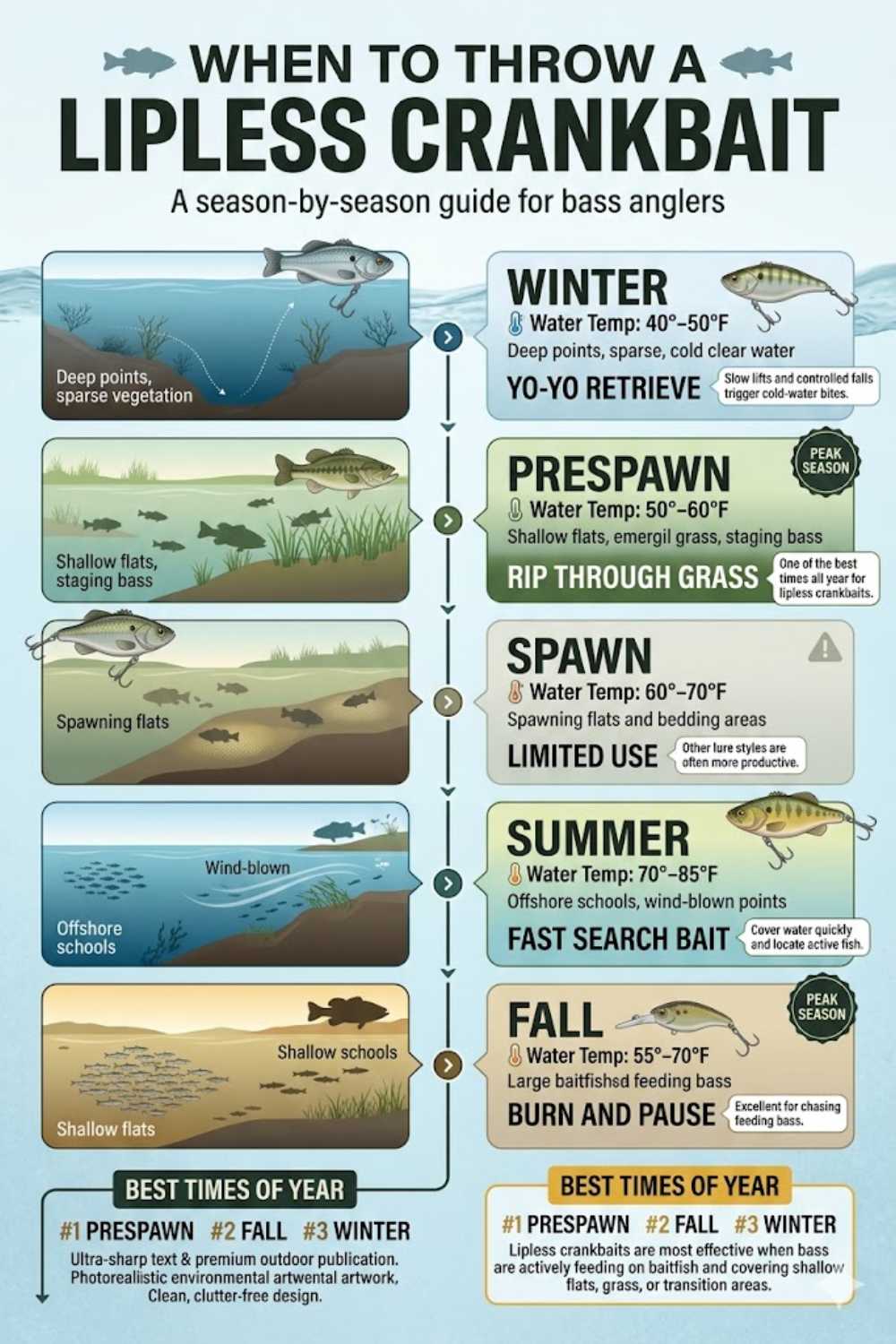
Winter (water below 50°F) — Lipless crankbaits are arguably the most underused winter bait. A 1/2 oz Rapala Rippin' Rap or Red Eye Shad fished slowly on a yo-yo retrieve over deep grass flats, channel-swing banks, and the first major drop adjacent to spawning bays produces some of the biggest fish of the year. Most strikes come on the fall. Match retrieve speed to the 55°F-water cadence — barely fast enough to keep the bait vibrating.
Prespawn (water 50–60°F) — The textbook lipless window. Bass stage on the first hard drops adjacent to spawning bays, transition banks, and rocky points. A 1/2 oz Red Eye Shad or Rat-L-Trap in Red Craw, Chrome Black Back, or Sexy Shad fished steady or yo-yo'd over hard bottom is the single highest-percentage prespawn lipless presentation. Cross-reference the prespawn playbook for staging-bank specifics on your fishery.
Spawn (water 60–68°F) — Lipless crankbaits remain effective for covering water around spawning pockets, secondary points, and shallow grass flats holding bedding fish. Not the primary bedding lure but excellent for locating aggressive males moving between locations.
Postspawn (water 65–72°F) — Recovering bass push back onto secondary points and shallow flats; a 1/2 oz Red Eye Shad in Sexy Shad burned across postspawn flats produces fish that have ignored slower presentations. The shad spawn often overlaps this window — a chrome or white lipless waked just under the surface at dawn is deadly.
Summer (water 72–88°F) — Reduced lipless usage but still relevant for schooling bass and early-morning offshore work. The classic summer windows are dawn schooling activity on points and humps.
Fall (water 72–55°F as it drops) — Second prime lipless window. Bass follow shad into creek arms and onto secondary points. A 1/2 oz Sexy Shad lipless fished steady at moderate speed in creek arms is one of the most reliable fall presentations. Color: White, Sexy Shad, Chrome Black Back. Match this against the broader cold-front bait playbook once fall fronts start dropping water temperature in stages.
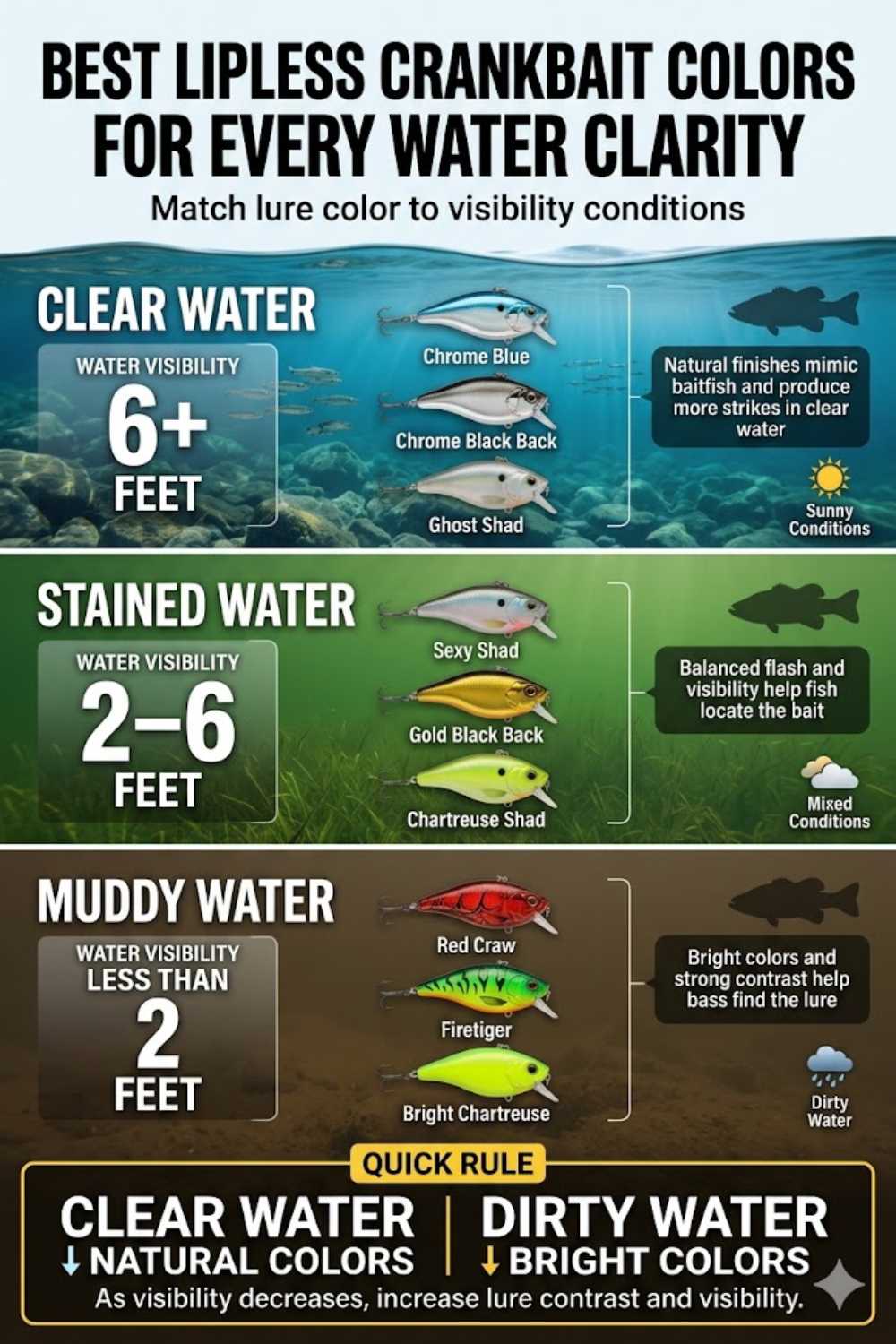
Lipless color choice is dictated by water clarity, season, and dominant forage. Five color families handle the vast majority of scenarios.
Sexy Shad / Natural Shad — The clear-to-stained water default. A blue-back, silver-sided, white-belly pattern that mimics threadfin and gizzard shad perfectly. Use in 2+ ft of visibility, on sunny days, and any time bass are keyed on shad. The fall shad migration is the peak window for this color family.
Chrome Black Back — The high-contrast stained-water and muddy-water specialist. The chrome sides reflect any available overhead light while the dark back gives bass a silhouette to lock onto. Cloudy days, post-front conditions, and dirty water from runoff are the prime windows.
Red Craw — The prespawn specialist. Crawfish emerging from winter dormancy turn bright red as they molt, and bass key on this very specific visual cue. Rip a red lipless over hard bottom or through emerging grass on a warming prespawn day and you will catch fish.
Bluegill Flash — Underused but devastating on bluegill-driven southern reservoirs and natural lakes from late spring through summer. Run on shallow flats and around bream-bed perimeters.
Lectric / Firetiger — The muddy-water power color. When visibility drops under 12 inches, bass cannot see exact colors — they see silhouettes and contrast. A high-contrast firetiger or lectric pattern stands out against muddy water in a way that natural shad cannot.
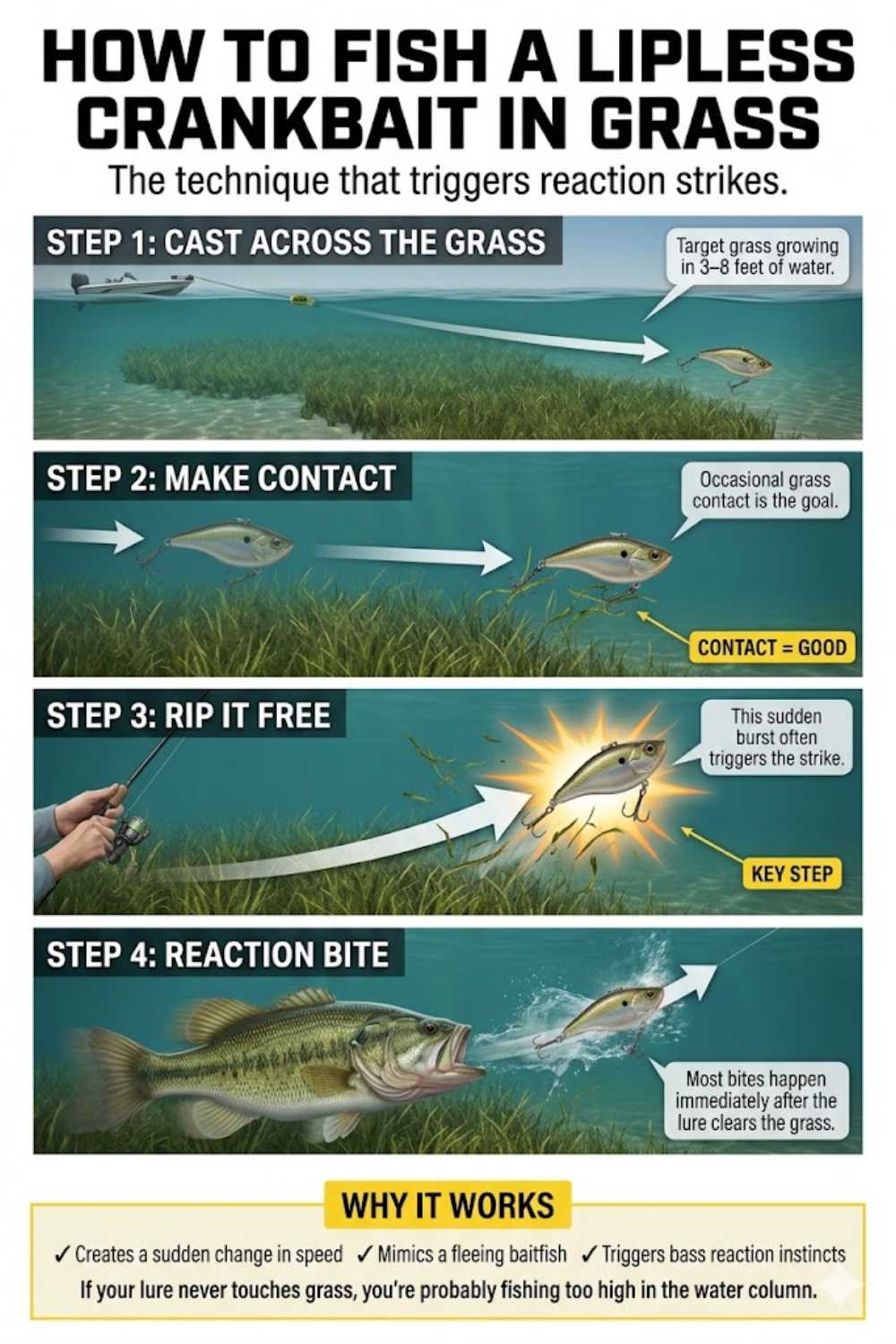
Lipless crankbaits earned their reputation as the ultimate grass bait because they rip cleanly through hydrilla, milfoil, and emerging spring grass in a way that almost no other moving bait can match. The technique is straightforward but takes practice to execute consistently.
Cast past the grass edge or up onto the flat and begin a moderate retrieve. The instant you feel the bait load up with vegetation, snap the rod tip up sharply to rip the bait free. Two things happen on the rip: the bait tears loose violently, and immediately afterward it falls on a brief slack-line flutter. The vast majority of grass strikes happen on that flutter, not on the steady retrieve.
Watch your line carefully — most strikes feel like the bait simply got heavier or the line jumps sideways. Set the hook on any change in feel after a rip. Use heavy braid (40–50 lb) when fishing grass mats so you can horse a fish out of vegetation; switch to fluorocarbon (12–17 lb) when fishing open flats and sparse grass where line stretch helps keep treble hooks pinned.
Match grass type to lipless choice. Submerged hydrilla and milfoil tops in 3–6 ft of water are textbook Red Eye Shad water. Sparse spring grass over hard bottom is Rat-L-Trap water — the louder rattle calls fish in. Tight-vegetation scenarios where bass reject wider actions are TN70 and Rippin' Rap territory. The broader grass-line strategy guide covers how to identify high-percentage grass before you ever start ripping.
The yo-yo retrieve is the most underused lipless technique in bass fishing. Most anglers reel a lipless steady and miss the majority of available fish, especially in cold water and on suspended bass.
The execution: cast and let the bait fall to the desired depth on a controlled slack. Snap the rod tip up sharply 18–24 inches to make the bait dart vertically, then immediately lower the rod tip and let the bait flutter back down on slack line. Reel up the slack and repeat. Most strikes happen on the fall and feel like the bait simply got heavier, the line jumps sideways, or the slack tightens unexpectedly. Set the hook on any irregularity.
When to use it: water below 60°F when bass want a vertical, slow presentation; suspended bass on electronics over 12–25 ft of water; postspawn fish recovering on secondary points; offshore schooling fish in summer. The yo-yo also produces in muddy water because the repeated rattle-and-fall sequence gives bass multiple opportunities to find the bait on lateral line.
Rod selection matters. A 7-foot medium-heavy with a fast tip lets you make the sharp rod-snap that creates a clean dart without ripping the bait too far. Use 15–17 lb fluorocarbon for the right combination of bait control, hook penetration, and line stretch to absorb head-shakes on the way to the boat.
Five mistakes account for the majority of slow lipless days. Avoid them and the bait will produce in every condition discussed above.
Reeling too fast — Especially in cold water and on the yo-yo retrieve. A lipless does not need to swim fast to draw strikes; it needs to swim at the speed bass will commit to. Below 55°F, slow down dramatically.
Ignoring the fall — Most lipless strikes happen on the fall, whether on the yo-yo retrieve or after a rip through grass. Anglers who never give the bait slack miss most of their bites.
Wrong color for clarity — A natural Sexy Shad in muddy water disappears. A chartreuse firetiger in gin-clear water looks like a Christmas ornament. Match color to clarity first, forage second.
Undersized hooks — Stock hooks on budget lipless baits are often a notch too small or too dull. Upgrade to premium trebles (Owner ST-36, VMC) and check sharpness every dozen casts. A sharp upgraded hook on a Rat-L-Trap converts more strikes than any color change.
Abandoning lipless after spring — The fall shad migration is arguably the second-best lipless window of the year, and winter slow-rolled lipless fishing produces some of the biggest bass of the season. A lipless crankbait belongs in the rotation 10 months out of the year.
Excellent flutter on the fall over grass and flats.
Grass flats and creek arms — yo-yo it through the tops.
As an Amazon Associate I earn from qualifying purchases.
Temperature-by-temperature lure logic.
The prespawn temperature threshold.
Natural presentations and finesse profiles.
Vibration, dark silhouette, and visibility tactics.
Adjusting across the full clarity spectrum.
Topwater and reaction baits for the dawn window.
Plug in today's water temp, clarity, weather, and forage — the tool returns the highest-confidence presentations.
Build Today's Strategy →