Why bass eat topwater in the heat
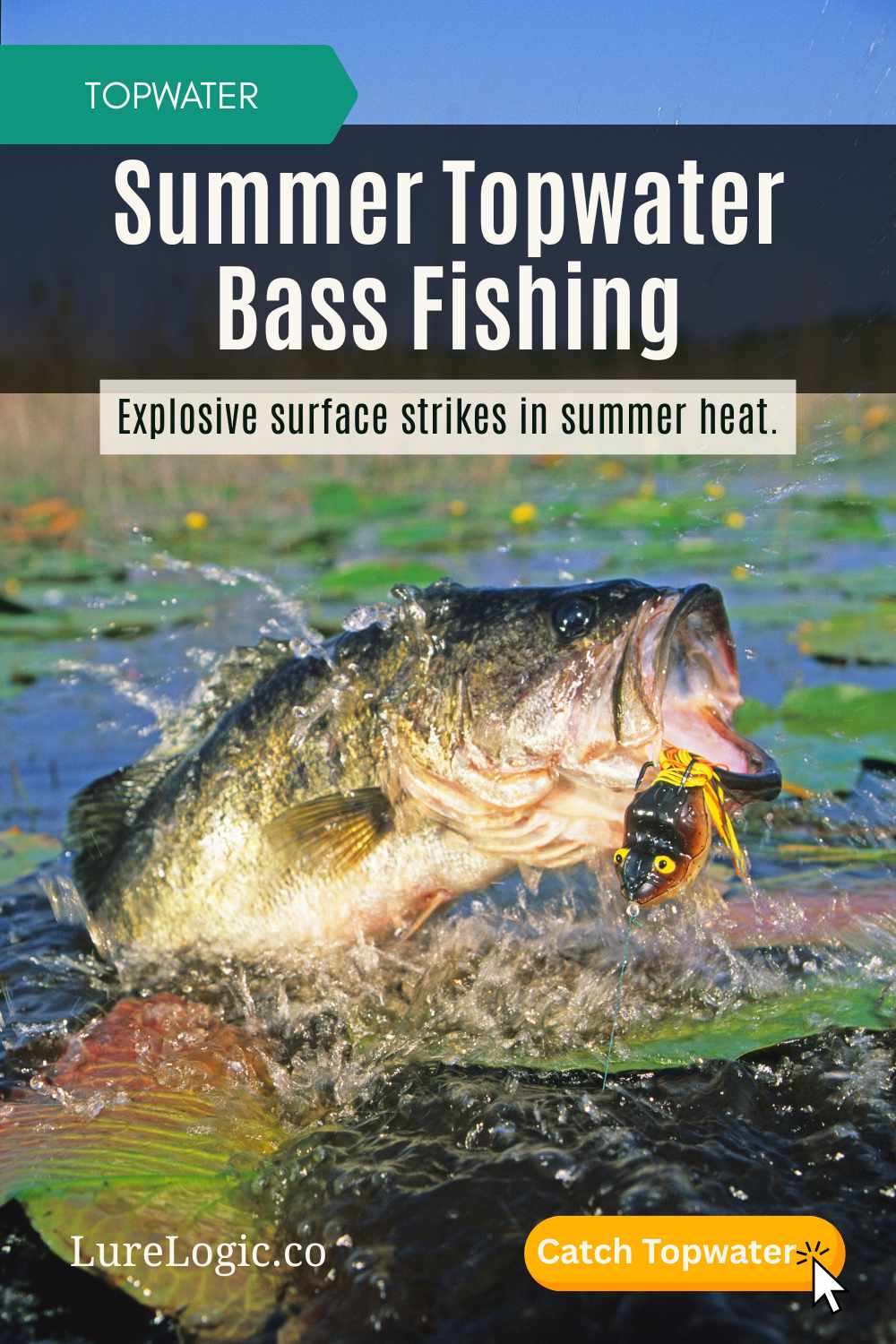
Bass are built to attack prey silhouetted against the sky. Their eyes are positioned to look up, their strike angle is upward, and their forage — shad, bream, frogs, fry — spends a huge chunk of summer at or near the surface during low-light windows. That's the biology behind every topwater bite, and it connects directly back to the bass behavior pillar on feeding mechanics. The full summer arc lives in the seasonal bass patterns pillar.
The summer topwater windows
Three windows produce most of the summer topwater action: dawn, dusk, and any low-light period in between (cloudy days, rain, or wind-chopped water). When the sun is high and the wind dies, topwater dies with it — and that's when you shift to the midday summer playbook.
Bass positioning breakdown
Summer topwater fish aren't randomly scattered. They set up in four predictable zones depending on the time of day:
- First light, shallow flats: Bass push up onto 1–4 foot bream flats and weed edges to feed on bluegill and shad fry. Walking baits and frogs.
- Mid-morning, dock shade: As sun climbs, fish slide into dock shade and laydown shadows. Poppers and walking baits along the shade edge. See the summer dock pattern.
- Midday, deep schooling structure: Main-lake points, humps, and bridge pilings where shad ball up. Walking baits when you see breaking fish; jigging spoons when you don't.
- Last light, return shallow: The morning pattern in reverse. Fish push back shallow to feed before dark.
The points and shade lines guides cover the cover-specific details.
The three topwater categories
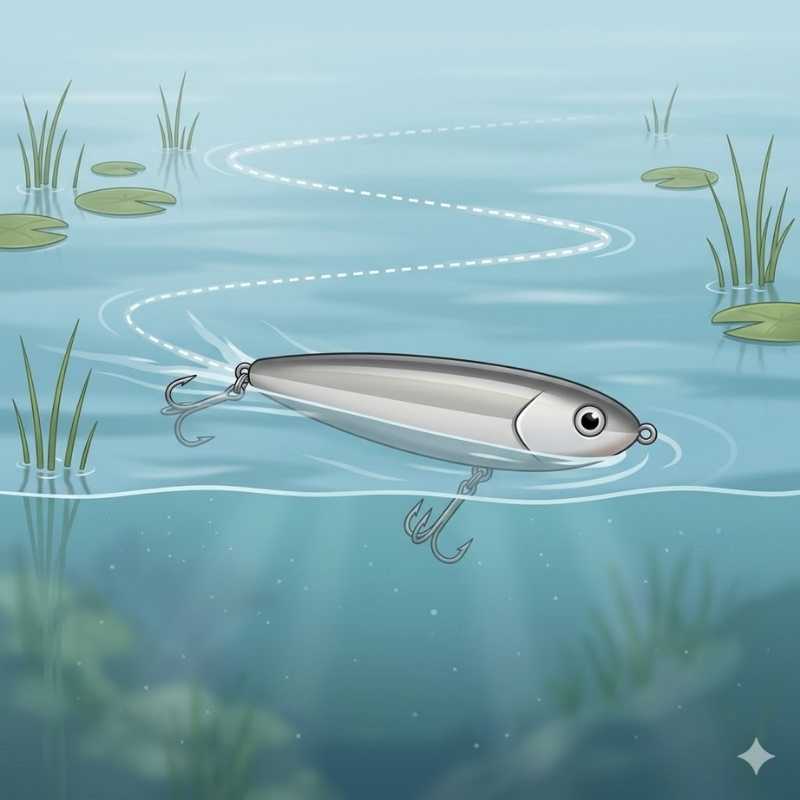
Heddon Spook, Megabass Dog-X, and similar are the go-to over open water, points, and around schooling fish. Walk-the-dog cadence with intentional pauses. When fish school on baitfish, this is the first bait you tie on.
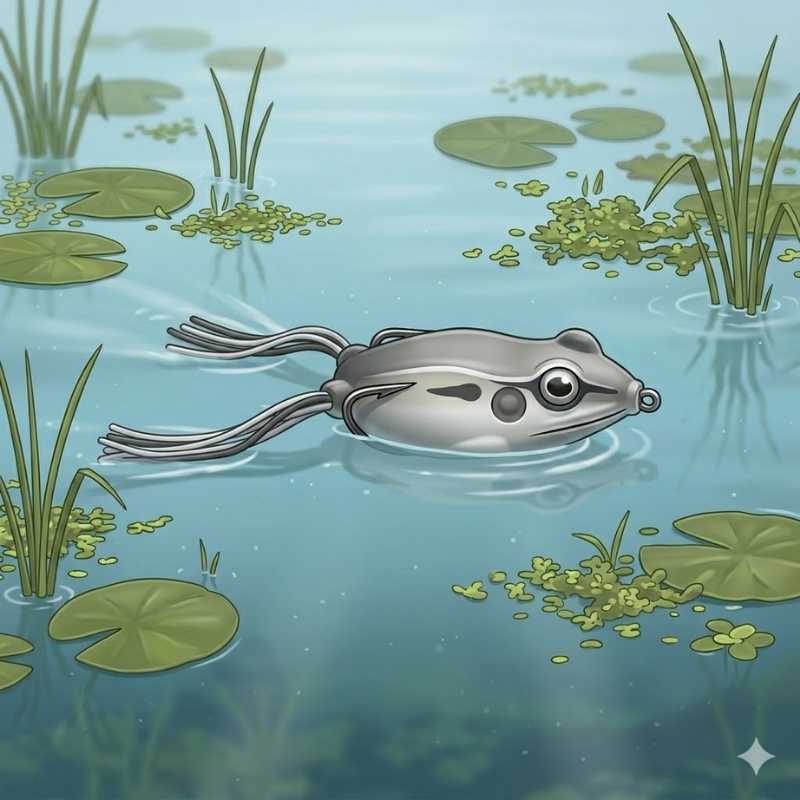
Lily pads, matted vegetation, and slop hide the biggest summer bass. A weedless frog goes places nothing else can. Walk it slowly across mats and pause in any open pocket.
The middle-ground bait. Around docks, laydowns, isolated grass clumps, and shoreline cover, a popper outproduces both walking baits and frogs. Pop, pause, pop-pop, pause — vary it until you find what triggers strikes.
Lure selection logic
Decision tree built around cover and light:
- Open flats or schooling fish: walking bait
- Mats, pads, slop: frog
- Scattered cover: popper or a smaller walking bait
- Wind-blown banks at first light: buzzbait works too — covers water fast
- Bluegill beds at midday: walking frog with sharp pops
This match-the-cover framework is the same one used in the lure selection guide. For specific bait picks in each of these categories, see the best topwater lures for bass buying guide and the dedicated topwater frogs guide.
Color selection
Topwater colors matter less than you think — bass see the silhouette against the sky. Dark colors (black, blue) at first light and overcast; lighter colors (white, bone, chrome) when the sun is up. Keep one bluegill or frog pattern in the rotation for vegetation.
Water clarity adjustments
- Clear water: Subtle walking baits, longer casts, longer pauses. Fluorocarbon leader helps. Cross-reference the clear water lures guide.
- Stained water: Louder poppers and frogs with more rattle. Sharper cadence to draw fish from further away.
- Muddy water: Topwater is rarely first choice. When it works, it's a loud popper or buzzbait against shallow cover. See the muddy water lures guide.
Seasonal considerations
"Summer topwater" isn't one season — it spans 4 months on most lakes with different patterns in each:
- Early summer (post-spawn through June): Bluegill bedding waves dominate. Frogs and walking baits over hard-bottom flats and shallow pads. Combine with the post-spawn guide.
- Midsummer (July–August): Schooling fish on deep structure. Walking baits over points and humps, especially at first and last light.
- Late summer (late August–September): Shad migration begins into creek arms. Topwater follows the bait pods into the backs of creeks. This sets up the fall transition.
Tackle notes
Use a slightly slower rod for walking baits so the lure works freely. For frogs, use heavy braid and a stout rod to swing fish out of cover. Always pause before setting the hook on a topwater blow-up — bass often miss on the first strike and come back. The weather pillar guide covers how wind and pressure adjust the topwater window.
Real-world application
It's mid-July, water temp 86°, light wind from the south, partly cloudy. You launch 30 minutes before sunrise.
First 90 minutes: walk a bone Spook across a flat point that drops from 3 to 12 feet at the mouth of a major creek arm. Shad fry are scattered across the surface. Make long casts, walk-the-dog with a 1-second pause every 4 twitches. Mid-morning (8–10 AM): as sun climbs, shift to the dock line along the windward bank. Skip a Pop-R into every dock shadow and pop-pop-pause. Expect bites within the first 6 inches of shade. Midday (10 AM–4 PM): switch entirely off topwater unless you see schooling activity. Run main-lake humps with electronics, look for shad balls suspended over the high spot. When you find breaking fish, fire a walking bait into the middle of the school. Last light (one hour before sunset): back to the morning flat. Same Spook, longer pauses now because the water has cooled 2 degrees. Some of the day's biggest fish come in the last 15 minutes of light.
The mistake most anglers make
Most anglers walk a topwater too fast and set the hook too early. A consistent walk-the-dog cadence with a half-second pause every few twitches outproduces a frantic retrieve, and bass routinely miss on the first strike — wait until you feel weight before swinging. The other mistake is putting topwater away after 9 AM in summer. Overcast skies, wind chop, and shaded pockets keep the topwater window open well into midday, especially on the deep side of dock shade where bass sit waiting on bluegill and shad to drift through.
The third mistake: not throwing a topwater on a windy bluff bank during the day. Wind chop alone restores enough of a low-light effect to keep the topwater bite alive at noon. See the windy conditions guide for the broader windward bank logic.
Plug your sky, wind, and water temp into LureLogic — the engine flags low-light shallow conditions as a topwater pattern and surfaces the right baits.