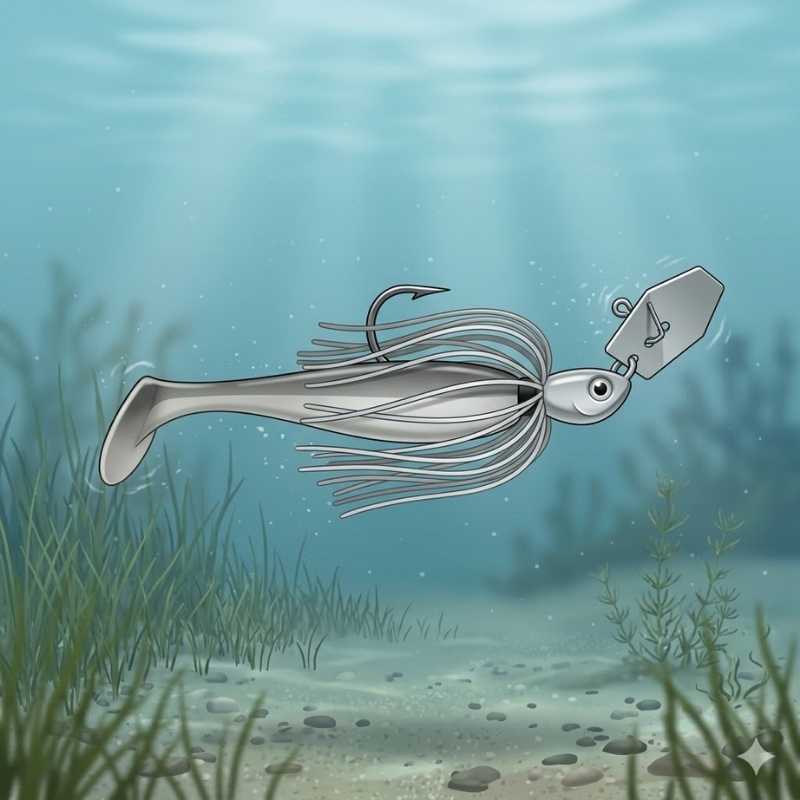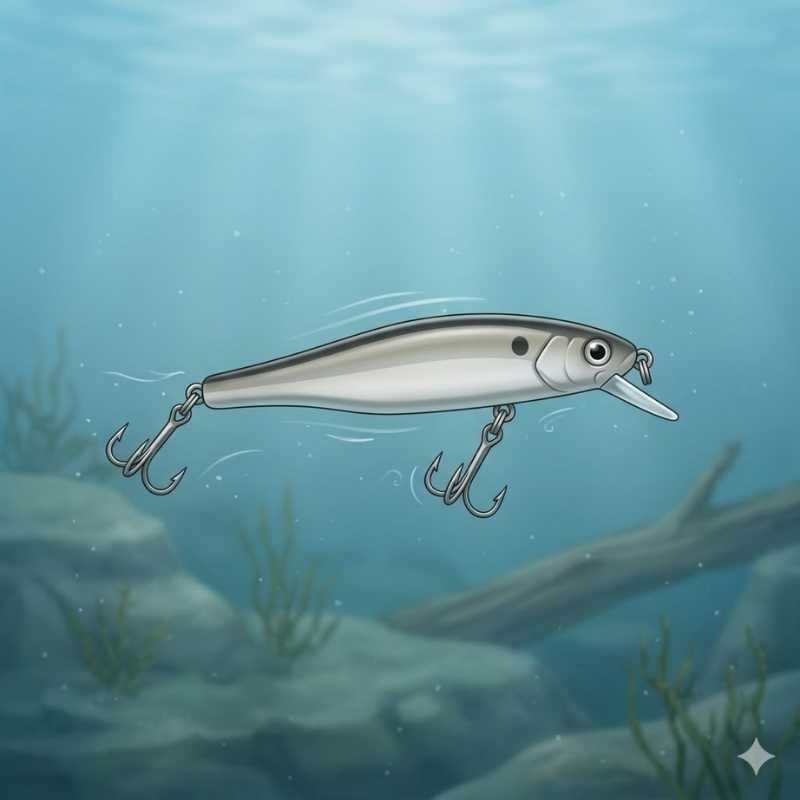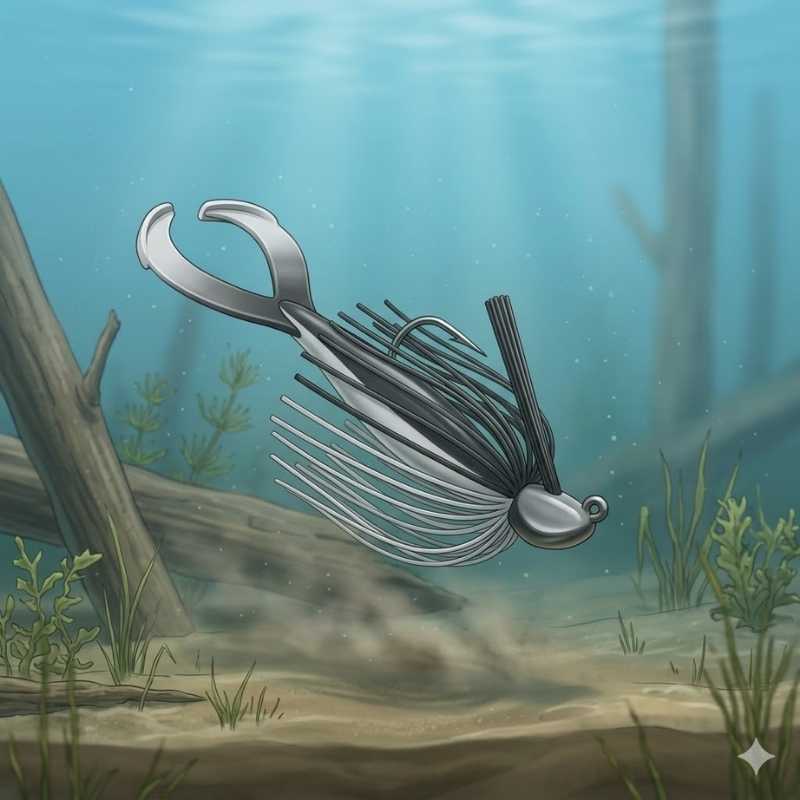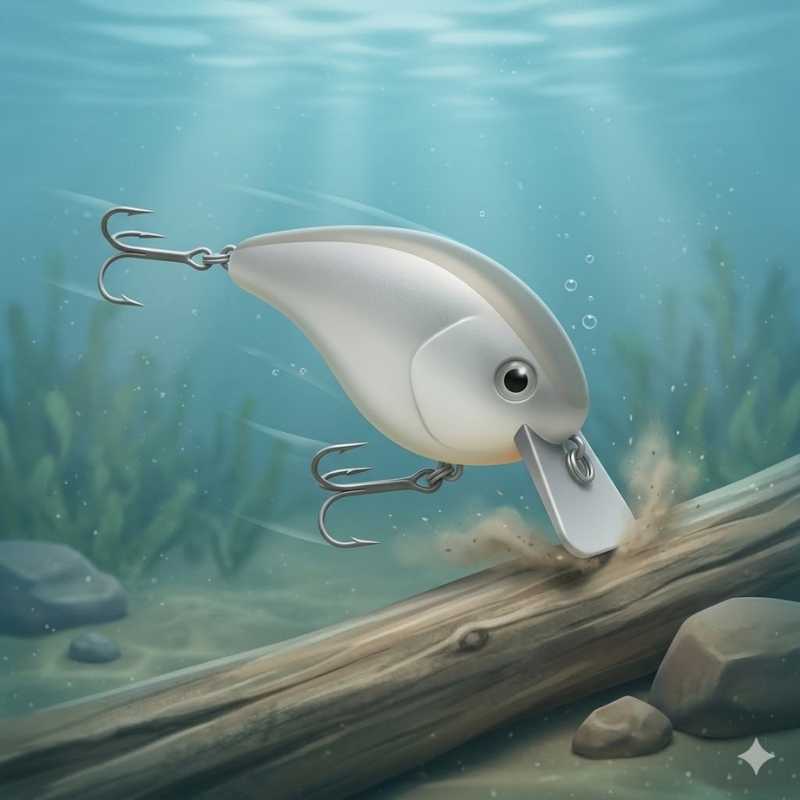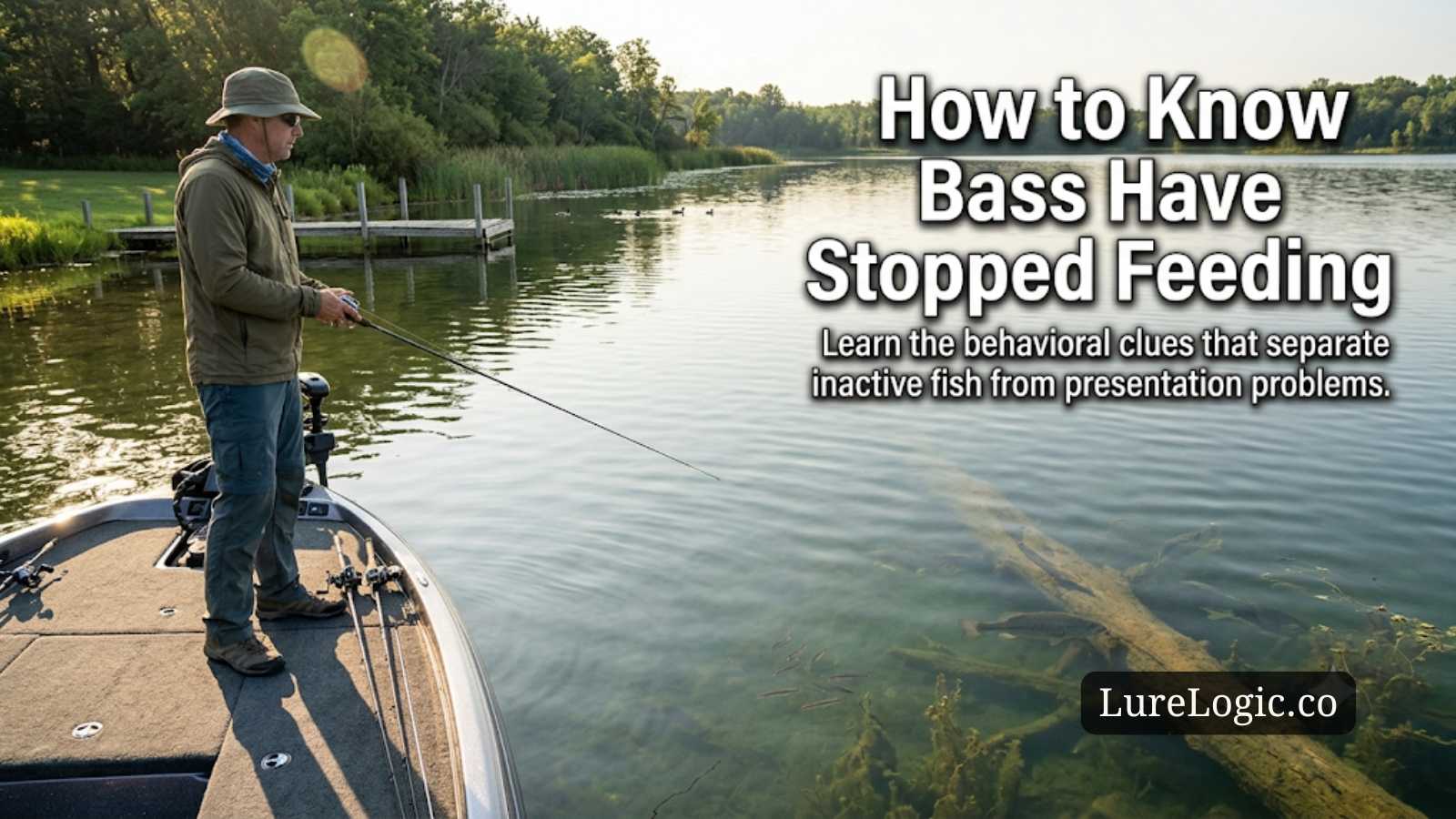
Inactive Bass vs. Presentation Problem: The Question That Runs Every Trip
Bass fishing has one problem that is easy to describe and hard to solve: when you're not catching, you don't know why. The bite could be off because bass have genuinely stopped feeding — a cold front dropped through, the sun climbed, oxygen is thin. Or the bite could be on and you just haven't shown the fish the right thing yet. Those two situations look identical from the deck. Water is water. A rod that hasn't loaded is a rod that hasn't loaded. But the correct response to each is nearly opposite.
Anglers who mistake an active-but-picky day for a shutdown throw finesse baits at fish that would smash a chatterbait. Anglers who mistake a shutdown for a lure problem burn an hour swapping baits when the real answer was to pitch a jig into the shade and let it sit. Both mistakes cost fish. Both are caused by the same failure — not knowing how to read whether the fish are eating.
The goal of this guide is to give you a repeatable read on that question. Not a guess. Not a feeling. A short checklist of observations you can run in under five minutes that will tell you, with high confidence, whether today is a slow bite or a shut bite — and what to do about each. If you'd rather skip the framework and just get a recommendation for your conditions, our Today's Fishing Strategy tool will do it for you. But the framework is worth learning, because it applies every trip you'll ever take.
What "Stopped Feeding" Actually Means
Bass don't stop eating the way we stop eating. They don't push back from the plate, decide they're full, and skip lunch. They're cold-blooded ambush predators whose metabolism, willingness to move, and strike-zone size all fluctuate with conditions. When we say bass have "stopped feeding," what's really happening is one or more of the following:
- The strike zone has shrunk. A bass that would move six feet to hit a moving bait will now only eat something within a foot of its face. The fish is still willing — the geometry has changed.
- The willingness to chase has dropped. Reaction strikes disappear. Bass will still eat a slow presentation, but they won't commit to something moving fast or erratically.
- The feeding window has narrowed. Instead of eating for three hours around dawn and again around dusk, the fish eat for twenty minutes at each end and hold tight the rest of the day.
- The fish have relocated. Cold water, low oxygen, pressure changes, or bright sun will reposition bass into cover, shade, or depth where you weren't casting. This looks like a shutdown but is really a location shift.
Only rarely — during severe cold fronts, an oxygen crash, or a post-spawn recovery period — do bass truly refuse to eat. Even then, they'll eat something. The right question isn't "are they feeding?" It's "how small, how slow, and how close does a bait have to be to get eaten right now?"
The Five-Minute Read: A Repeatable Check on Every Trip
When the bite feels off, run this check before you touch the tackle box. It takes five minutes and answers the core question of whether you're on inactive fish or a presentation problem.
1. What is the water surface telling you?
Stand still for thirty seconds and just watch. On an active day, you'll see something — a shad flicker, a bluegill nose, a ring from a feeding fish, a dimple somewhere. On a shut day, the surface goes glassy and dead. Total absence of surface activity across a long look is one of the strongest signals a real shutdown is happening.
2. What are the birds doing?
Herons standing on stumps not fishing, egrets flown off entirely, gulls on the water instead of hunting — the birds know before you do. Working birds are one of the highest-confidence indicators bait is active and predators are pushing them. Idle birds are the opposite signal, and they scale up: three idle herons on different banks is stronger evidence than one.
3. What is your electronics screen showing?
This is the single most important instrument for distinguishing "not feeding" from "not here." If you're marking bass-shaped arches on cover and structure and getting no reaction, you have inactive fish. That's a presentation problem, and the fix is slower and smaller. If your screens are clean over water that should be holding fish, they've moved — usually deeper or into cover — and the fix is a location change, not a lure change. See the framework in thermocline positioning and deep-water bass lures.
4. What are you feeling on the retrieve?
Follows, bumps, short strikes, tail slaps, weight that's there and gone — these are all signs the fish are active enough to move. If you're getting any of them, it isn't a shutdown. It's a size, color, cadence, or depth issue on an otherwise active bite. A single follow means the location and category are close. Six casts with total silence — no bump, no follow, no tick — means either bass aren't there or aren't willing.
5. What did the conditions do in the last three hours?
Sudden shifts are the biggest single cause of feeding shutdowns. A cold front, a wind that laid down, sun breaking through cloud cover, water clearing after a wind event — every one of those rewrites the feeding conditions. If a shift happened and the bite died at the same time, you have a conditions-driven shutdown. That's a real one, and it has a real fix.
Run those five checks and you'll have a confident read within a few minutes. Two or more silent answers means you're on inactive fish. Mixed answers — quiet surface but marks on the screen and an occasional follow — means the bite is on and small, and you're fishing wrong. Total absence of everything means you might need to move the boat entirely.
The Twelve Signs of a Real Shutdown
Beyond the five-minute check, these are the specific patterns that, when they cluster together, tell you the fish have genuinely narrowed the window. Any one of them can be coincidence. Three or more in the same window of time is a shutdown.
- Barometric pressure is high and stable. Post-front bluebird sky. See high pressure and bass fishing.
- Water temperature dropped 4+ degrees overnight. Sudden cooling shocks the metabolism.
- Water is clearing dramatically after a wind event. Bass slide deeper as visibility opens.
- Bait balls are stationary and low in the column. Nothing is pushing them. See baitfish depth changes.
- Bluegill and bream have stopped bedding activity. Panfish behavior mirrors bass behavior.
- Herons and egrets aren't fishing. Wildlife knows.
- No boils, no dimples, no surface disturbance for thirty minutes. A dead surface across a long look.
- Wind laid down mid-morning. The oxygenation and disorientation the wind was providing just disappeared. See wind and bass positioning.
- Sun climbed past the shade edge on your best banks. Fish moved off exposed cover.
- No follows or short strikes in an hour of moving-bait casting. The reaction bite is closed.
- Anglers around you are also quiet. This one is trickier because pressure can affect it, but a lake-wide silence at 10 a.m. after a busy dawn is a real signal.
- Water temperature is above 85°F or below 45°F. The metabolic edges of the bass calendar. See the water temperature guide and summer oxygen crash.
The Six Signs It's a Presentation Problem, Not a Shutdown
Just as important — these are the tells that the fish are on, and the failure to catch is on you, not on the bass. Any of these means don't blame the fish.
- You're getting follows, bumps, or short strikes. Active fish. Adjust size, color, cadence, or trailer. Full framework in when to change bass lures.
- Bait is visibly active on the surface. If forage is moving, predators are moving.
- Birds are working, even loosely. Herons stalking, kingfishers diving, gulls swooping — any of it is enough.
- You're marking bass on cover or structure. Fish that are there and willing to hold on cover are almost always eatable if the presentation is right.
- Someone within sight caught a fish in the last hour. The bite is on somewhere on some presentation. Yours isn't it — yet.
- Conditions are stable and favorable. Falling pressure, cloud cover, moderate wind, water in the productive temperature range. If today's numbers look good, the bite is on. Read falling pressure and bass feeding.
The Four Types of Shutdown — And What Each One Actually Means
Not all shutdowns are the same. Recognizing which one you're on determines the fix. Four common types cover almost every scenario you'll face on inland bass water.
Cold-Front Shutdown
The classic. A front rolls through, pressure spikes, the sky goes bluebird, and the fish drive tight to cover. Their strike zone shrinks to inches. You'll see it after a hard drop in temperature or a big pressure swing. The fix is a slow finesse presentation dropped directly on the deepest, thickest cover you can find — jig, drop shot, ned rig, or a jerkbait with long pauses. Details in best bass lures after a cold front.
Midday Sun Shutdown
The bite that was on at 7 a.m. dies at 10 a.m. The sun crossed the treeline, shadows shortened, and every active fish on exposed water slid to shade, cover, or depth. This is a light-driven repositioning, not a pressure event. Fish deep, shady, and slow. Docks, laydowns, grass edges, and thermocline breaks are the answers. See midday summer bass fishing.
Post-Spawn Funk
For roughly two weeks after the spawn, bass — particularly the largest fish — recover in a semi-lethargic state. They're not gone, they're not spawning, and they're not eating hard. The best fix is smaller, bluegill-profile baits fished slowly around post-spawn cover: laydowns, shaded points, and shallow brush. Framework in the post-spawn guide.
Summer Oxygen Crash
In deep summer, hot water, still air, and algae die-off can drop dissolved oxygen below what bass will tolerate in the main water column. Fish stack in oxygen-rich zones: main-lake points with current, wind-blown banks, creek mouths with cooler inflows, and depths just above the thermocline. Read low-oxygen bass fishing and the summer oxygen crash guide.
Real-World Scenario: The 11 A.M. Silence
You launch at 6:30 on a summer morning. Overcast, mild south wind, water at 78°F. First hour is good — three keepers on a chatterbait rolling wind-blown banks. By 9 a.m. the clouds burn off. By 10 the wind lays flat. By 11 you haven't had a bite in an hour.
Instinct says change lures. The framework says stop and read. Look at the surface — no bait flicking. Look at the herons — sitting on stumps. Check the graph over your best point — arches at 14 feet where they were cruising at 6 an hour ago. Everything says the bite is off on this water at this speed.
That's not a lure change — that's a category and depth change. Slide off the wind-blown bank, idle to the shady side of the nearest big dock or the first main-lake point with cover at 12–18 feet, and switch to a slow finesse presentation (jig, drop shot, or shaky head) fished right in the strike zone the graph showed. You've just responded to a shutdown with the right response — slower, smaller, deeper, in cover — instead of throwing the same category on the same bank for another hour.
Common Misdiagnoses
Every experienced angler has made these calls wrong. Recognizing them ahead of time is half the value of the framework.
- Blaming the lure when the depth is wrong. Bass at 14 feet won't eat a bait at 6. Check the graph before you change baits.
- Blaming a shutdown for what is really pressure. Six other boats worked the same stretch before you. Move to fresh water before you decide the fish quit.
- Calling a slow bite a shutdown. A bite every forty-five minutes is still a bite. Slow down your rotation and stay put — it isn't dead, it's just spaced out.
- Calling a shutdown a pattern problem. If everyone on the lake is struggling, the fish are off. It's not that you found the wrong pattern; there is no fast pattern to find today.
- Assuming yesterday's bite is still on. A great pattern one day and a cold front overnight means today is a different lake. Re-read the conditions every morning.
What to Do When You Confirm the Bite Is Off
Once you've read the signs and concluded the shutdown is real, the response is not to leave — it's to change modes. Search fishing is over; feeding-known-fish begins.
- Cut speed in half. Whatever retrieve you were running, run it half as fast, with longer pauses. Slow is not a lure — it's a philosophy.
- Downsize. Move from a 5-inch to a 4-inch worm, from a 3/8-oz jig to a 5/16, from a full-size chatterbait to a compact one.
- Go to the highest-percentage cover you know. Not the best cover — the highest-percentage cover. The one specific dock, laydown, or point that produces every year in these conditions.
- Cast fewer times to more precise spots. Ten casts to the shade line of one dock beats fifty casts down the whole bank when fish are inactive.
- Watch the clock for the next transition. A shutdown almost always breaks — cloud cover returns, wind picks up, sun angle changes, or the last hour of light arrives. Be ready to shift back to reaction baits the moment conditions turn.
For the mechanical follow-through — what specifically to switch to and how to work it once you've confirmed the shutdown — see the companion guide, how to adjust when the bite dies. That article picks up exactly where this one leaves off.
Reading the Return: How You'll Know the Bite Is Back On
Shutdowns end. Often quietly. The signals to watch for:
- A single shad flickers on the surface where nothing has flickered for two hours.
- A heron picks up and repositions along a bank.
- Wind ripples a stretch of glass water.
- A cloud crosses the sun and holds for more than a few minutes.
- You get a follow or a bump for the first time in an hour.
When two or three of those show up in the same fifteen-minute window, the bite is turning back on. Move back into search mode — pick up a moving bait, cover water, and be aggressive. The window is often short.
Turning Framework Into Application: Today's Fishing Strategy
The framework in this guide is what experienced anglers run in their heads on every trip. The signs of a shutdown, the type of shutdown, the correct response — reading all of that in real time is the difference between an angler who blames the fish and an angler who adjusts. Learn the framework and you'll never again burn an hour blaming a lure for what was really a cold front.
The framework teaches you how to think. Applying it to today's specific conditions is what Today's Fishing Strategy does in under 30 seconds. Enter your water temp, clarity, weather, and recent pressure change, and the tool returns a specific presentation matched to whether the bite is likely on, slow, or shut — the same read this guide teaches, applied to your lake today. Learn the framework here; apply it there.