Why This Decision Is Harder Than It Looks
Every angler has felt it: you've been throwing the same bait for an hour without a bite, and the little voice in the back of your head says switch. Sometimes that voice is right. Sometimes it's the reason you didn't catch a fish for the rest of the day. Changing lures is emotionally cheap and mechanically easy — which is precisely why so many anglers do it too early, too often, and for the wrong reasons.
The core problem is that the absence of a bite is ambiguous. It could mean the lure is wrong. It could mean the depth is wrong. It could mean you're standing on the fish. It could mean bass are inactive because a front just rolled through. Each of those explanations demands a different response, and only one of them is "change lures." Getting the diagnosis right is the whole game.
The good news is that bass leave signals. Follows, short strikes, boils, tail slaps, refusals at the boat, birds working new water, changes in wind direction — every one of those is a piece of information about whether your lure is close but wrong, completely wrong, or fine and the problem is somewhere else entirely. Reading those signals is the framework this guide teaches.
Two Rules Before You Change Anything
Before you crack open the tackle box and grab something new, run these two rules through your head:
- Rule 1 — Have I fished the bait honestly? Fifteen to twenty focused casts in likely water, with the retrieve dialed in, on a bait you actually trust. Six casts to a random bank is not a test — it's a warm-up. If you can't say you've made a real attempt, you don't have data to change on.
- Rule 2 — Am I in the right water? A perfect lure fished away from bass will catch nothing. Before you swap a bait, ask whether the location, depth, structure, and cover match what today's conditions demand. If they don't, change water first — not lures. Location errors masquerade as lure errors more often than any other failure mode.
Only after both rules pass should you look at the lure itself. If you skip Rule 2, you'll cycle through five lures in the wrong spot and blame every one of them for what was really a bad location call.
The Six Signals That Say "Change Now"
Here are the six evidence-based reasons to change lures, in rough order from strongest to weakest signal.
Signal 1: You're Getting Follows or Short Strikes
Follows and short strikes are the highest-quality signal in bass fishing. They mean the location is right, the fish are active enough to move, and the bait is close but missing on one variable. This is not a moment to change categories — it's a moment to change one dimension of the current lure.
- Follows without commitment. Almost always a speed or cadence issue. Slow the retrieve, add a pause, or switch to a stop-and-go. A follow that turns off at the boat wants a shorter cast next time, or a killed retrieve halfway back.
- Short strikes and hits without hookups. Usually a size, profile, or trailer issue. Downsize the bait, shorten the trailer, or switch from a paddle tail to a straight tail. Same category, one variable moved.
- Color rejection. If bass follow but fade on the same color repeatedly, try a natural shift — shad-white to gizzard-gold, watermelon to green pumpkin, chartreuse to bluegill. Match the local forage rather than switching to something exotic.
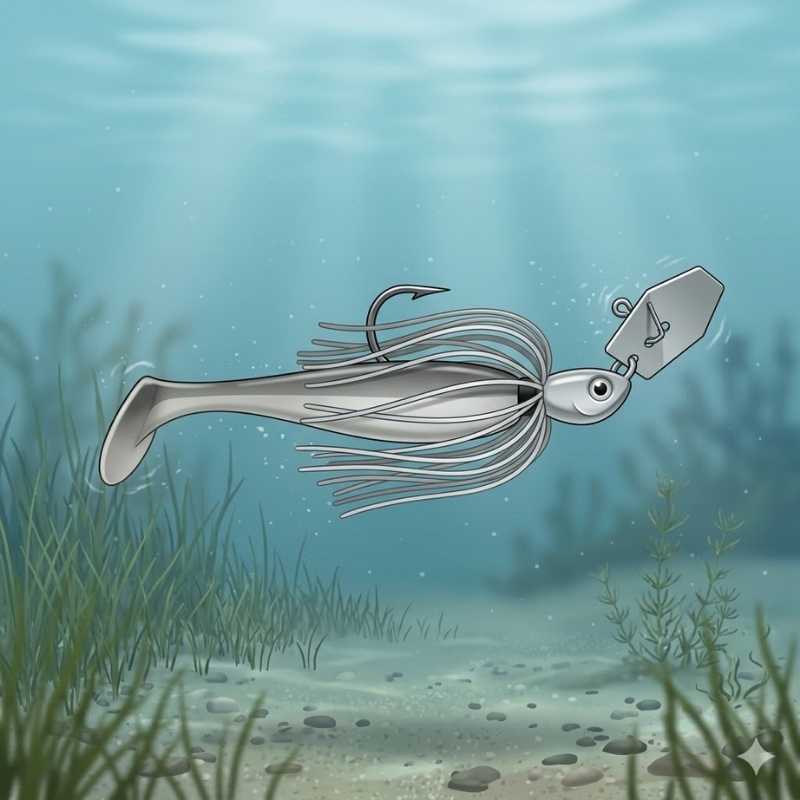
The mistake here is category-hopping. A follow on a chatterbait doesn't mean throw a jerkbait — it means throw a chatterbait an angler down the bank would recognize with a different trailer or a slower retrieve.
Signal 2: The Conditions Just Changed
Weather, wind, and light change faster than fishing pressure. When conditions shift on the water, the correct lure often changes with them even if nothing about the previous bait was wrong. This is one of the few moments to jump categories on purpose.
- Wind picks up. The windward bank just became the highest-percentage water on the lake. Move there and switch to a moving bait — spinnerbait, chatterbait, squarebill — that capitalizes on disoriented bait. The framework is in how wind affects bass positioning.
- Clouds roll in. The feeding window just opened wider. Reaction baits and topwater stay in play longer than they would under sun. See bass fishing on overcast days.
- A cold front passes. The window just closed. Downshift to finesse — drop shot, ned rig, small jig, jerkbait with long pauses. Full breakdown in best bass lures after a cold front.
- Pressure starts falling ahead of a storm. The best feeding window in bass fishing just opened. Search with reaction baits until the front hits. Read falling barometric pressure and bass feeding.
When conditions change, the previous lure isn't "wrong" — it's just no longer the best answer to the new question. Recognizing that shift and swapping on purpose is one of the most valuable habits an angler can build.
Signal 3: You've Read the Water Wrong
Sometimes the lure change is downstream of a location or depth realization. You spot forage flickering on a secondary point you weren't targeting. Your electronics show bait balls suspended at 16 feet when you've been cranking six. A boil erupts fifty yards off the bank while you're throwing a shallow squarebill. In every case, the water told you something the previous lure couldn't act on. Change the location first, then the lure to match.
Signal 4: Clarity Has Shifted Since You Started
Wind, boat traffic, current, and runoff can change clarity within a single trip. A creek that was three feet of stain in the morning can look like chocolate milk after two hours of west wind, and vice versa. When clarity shifts, the sense bass are hunting with shifts too. See water clarity and lure selection. Muddying water demands more vibration and darker silhouette; clearing water demands quieter, more natural presentations.
Signal 5: The Bite Window Closed
Sun climbs, wind lays down, and the fish that were feeding shallow at dawn just slid to shade, cover, or depth. The lure that worked at 7 a.m. is genuinely wrong at 11 a.m. This is a time-of-day change, not a bait failure — and the correct response is usually a downshift in speed, a shift deeper, or a move into shade. Study early morning bass fishing lures and midday summer bass fishing.
Signal 6: You Have New Information About Forage
You just saw a school of bluegill flare under a dock, or a shad flicker on the surface, or a crawfish scoot across a rock. Whatever bass are actually eating today just introduced itself. Match the meal. The forage pillar — the complete guide to bass forage — links directly to bait, color, and profile choices.
The Six Signals That Say "Don't Change Yet"
Equally important — the moments when the urge to switch is almost always wrong. Change patience is a competitive advantage. If any of these are true, put the same lure back on and fish it correctly.
- You've made fewer than fifteen focused casts. You haven't tested the bait. Keep going.
- You just lost a fish. The pattern is working. Re-cast to the same area.
- You saw somebody else catch one on a different lure. They caught one bass. That's an anecdote, not a pattern.
- You're bored. Boredom is not data. Fish confidence, not novelty.
- The weather hasn't changed. If conditions are stable and you had a bite pattern working an hour ago, the pattern is probably still there.
- You haven't moved boats. Same water, no bites, no signals — the problem is likely location, not lure. Move first.
The "If This, Then This" Change Framework
When a real signal appears, one-variable moves outperform category jumps. Here's the framework, laid out as conditional rules that an experienced angler runs almost automatically.
- If you're getting follows but no commitment → slow the retrieve, add a pause, or downsize the profile. Same category.
- If you're getting short strikes → downsize the bait or trailer. Consider a lighter hook. Same category.
- If a cold front just passed → drop to finesse (drop shot, ned, small jig). Category jump.
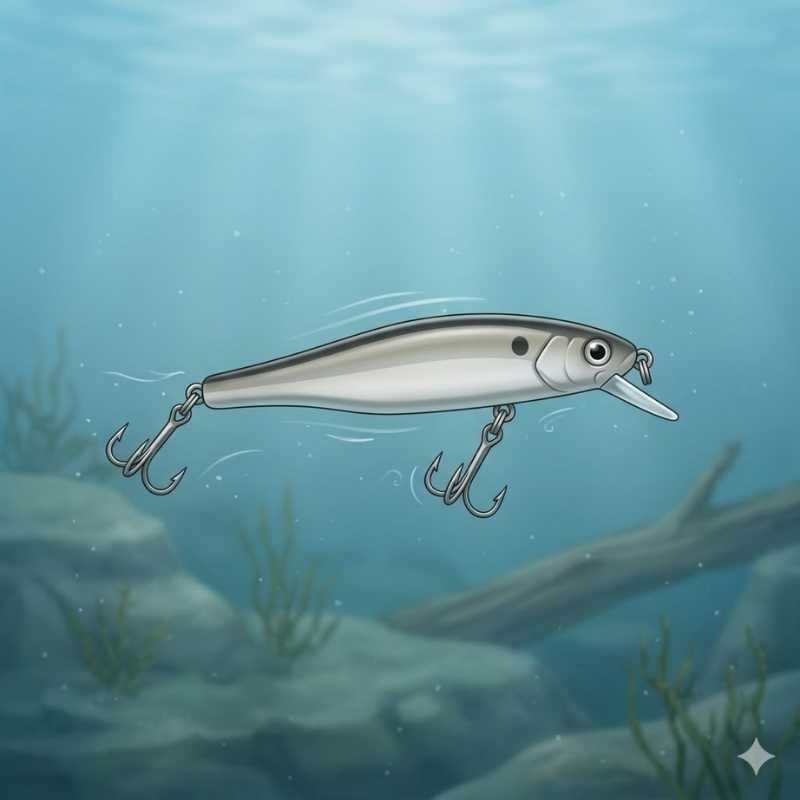
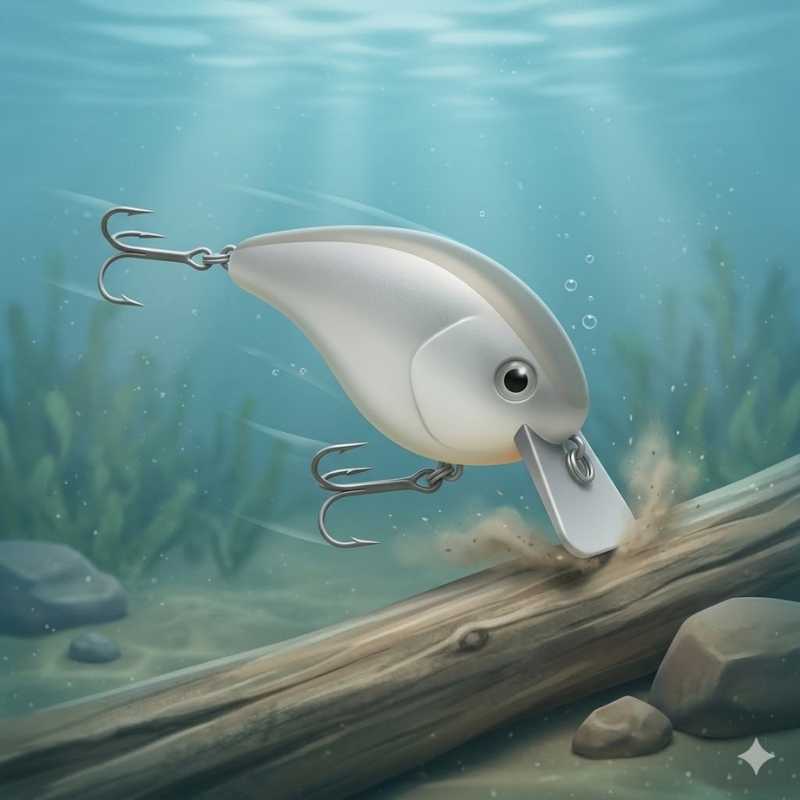
- If wind just came up → move to the windward bank and pick up a moving bait — chatterbait, spinnerbait, squarebill. Category jump.
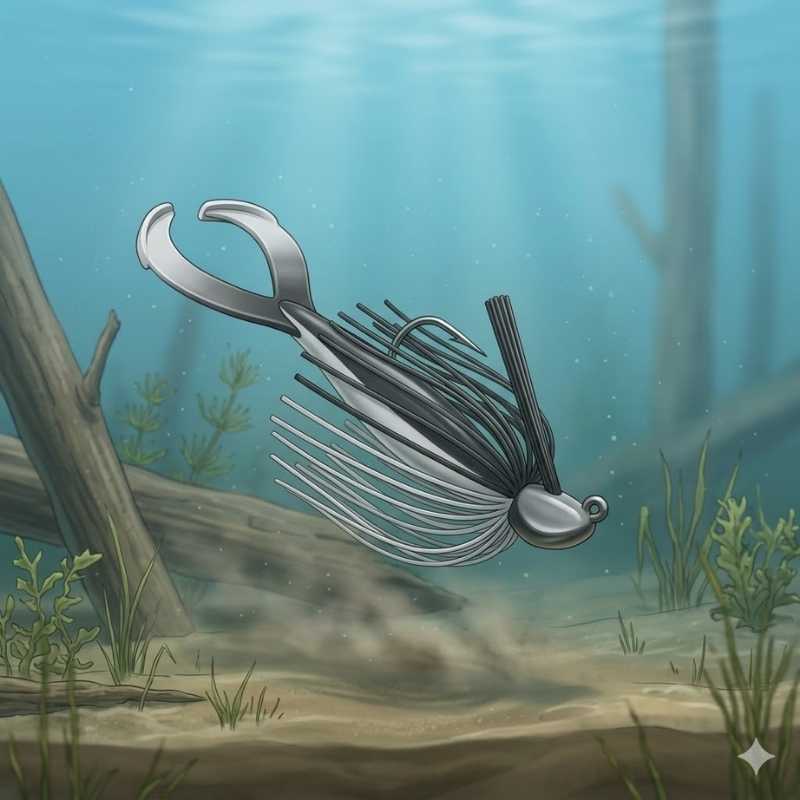
- If water suddenly muddied → go darker and louder. Black/blue jig, dark chatterbait, Colorado spinnerbait. Category jump.
- If water suddenly cleared → downsize, go natural, and add distance. Drop shot, small swimbait, jerkbait. Category jump.
- If sun climbs and the bite dies → move to shade or depth. Change retrieve speed and depth before category.
- If forage sightings change → match the meal. Profile and color first, category if forage size changes dramatically (bluegill to shad is a category move).
Scenario Walkthrough: A Typical Fall Morning
Here's how the framework runs in real time. You launch at 7 a.m. on a 62°F fall morning with light overcast and a south wind at 8 mph. Shad are pushing into a creek arm. You start with a lipless crankbait on the windward bank of the creek mouth — reasonable call.
Fifteen casts in you get a follow at the boat but no commitment. The follow tells you the location is right and the category is close. You slow the retrieve, add a stop-and-drop cadence, and pick up two keeper largemouth in the next ten minutes. That's not a lure change — that's a one-variable adjustment inside the same category, and it's the fastest way to fix a follow-heavy bite.
By 10 a.m. the wind lays down, clouds burn off, and the bite dies. The conditions changed. You slide off the windward bank into the shaded side of a nearby dock and switch to a Texas-rigged worm — a category jump justified by the new light and pressure situation, not by frustration. Two more fish come out of the shade.
That's the framework in action. Every change was tied to an observation. Every observation named a specific variable to adjust. Nothing was random.
Common Mistakes That Waste Fishing Days
- Tackle-box hopping. Cycling through six lures in an hour without giving any one of them a real test. Result: no data, no confidence, and no fish.
- Changing on comparison, not observation. Watching a buddy catch one and immediately mirroring their lure. One fish is not a pattern — hold your framework unless the evidence stacks.
- Downsizing at the first sign of trouble. Small baits catch small fish. Downsize when you have finesse-specific evidence (post-front, clear water, pressured fish), not as a panic move.
- Switching before moving. Location fixes more problems than any lure change. When in doubt, trolling motor first.
- Abandoning a confidence bait. The bait you'd stake your afternoon on is the one you should be slowest to put down. Confidence lets you fish the bait correctly, which is often the actual difference.
Building a Small, Deliberate Rotation
Great anglers don't out-tackle the pond. They out-decide it. That's why the best change frameworks live inside a deliberately small rotation: two or three baits per condition category that they can pick between with confidence. The rotation might look like:
- Cold and clear: jerkbait, drop shot, small hair jig.
- Prespawn and stained: chatterbait, squarebill, jig.
- Summer and warm: topwater, senko, deep crankbait.
- Fall shad migration: lipless, spinnerbait, walking topwater.
The specific baits matter less than the pattern: know two or three per condition, fish them with intent, and change between them for evidence-based reasons. See best bass lures by water temperature and how to choose the right bass lure for the underlying selection framework.
Using Today's Fishing Strategy to Set the Baseline
Every lure change is measured against a baseline — the lure you started with. If the baseline is wrong, every change is a shot in the dark. The fastest way to lock in a correct baseline is to enter today's conditions into Today's Fishing Strategy before the first cast. Once the recommendation engine has surfaced a high-confidence starting point, you know what you're testing, what the fallbacks are, and what signals should trigger a switch. The change framework in this guide teaches how to think through the problem. Today's Fishing Strategy applies the framework instantly and gives you a confident first cast.