Why This Sequence Matters More Than the Baits in It
Most anglers, when the bite slows, do the same thing: they change lures. Then they change lures again. Then they change lures a third time. Twenty minutes later the tackle tray looks like a war zone, they still haven't had a bite, and — critically — they have no idea which lure was closest to working. That's not adjustment. That's flailing. And it costs fish every trip.
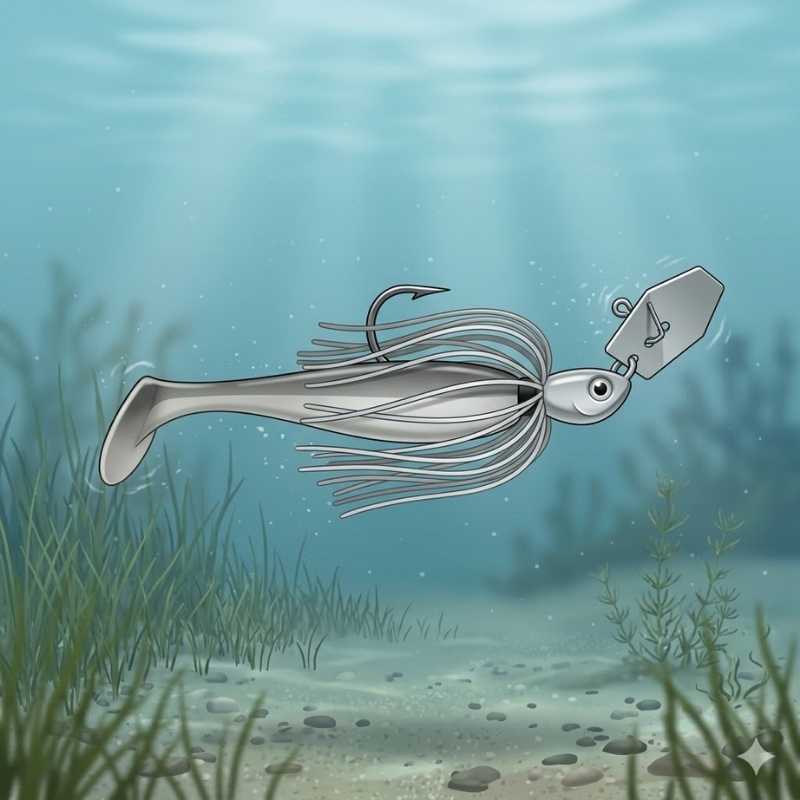
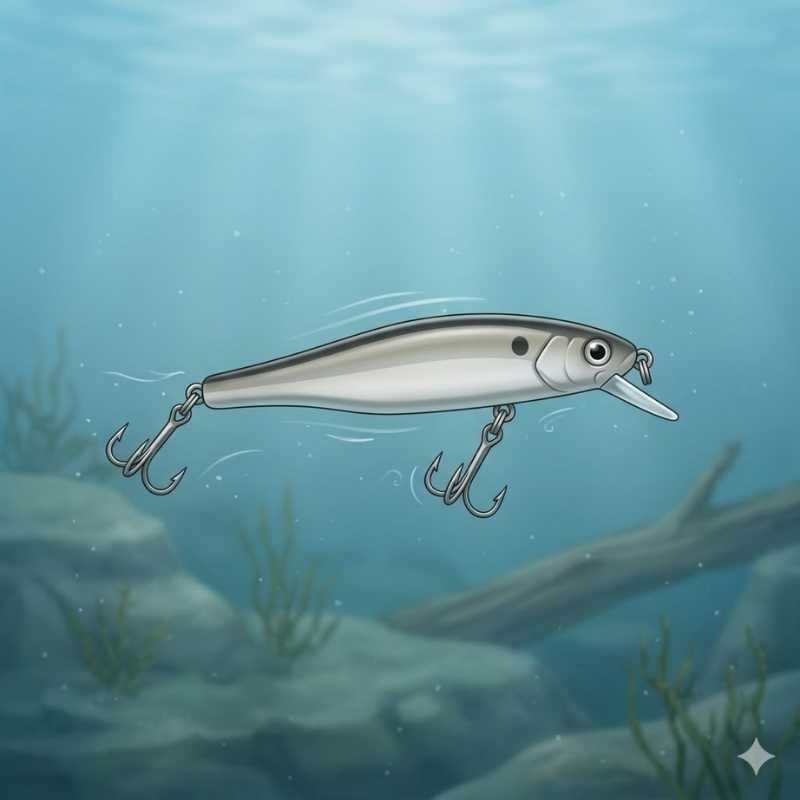
The reason it fails is that a dying bite is almost never a category problem. It's a speed problem, or a depth problem, or a size problem, or a color problem, or a location problem — problems that a category jump obscures rather than solves. When you skip from a chatterbait to a jerkbait to a topwater to a jig, you've changed three variables at once. If one of them starts working, you can't tell which. If none work, you have no diagnosis. You've moved sideways, not forward.
This guide replaces flailing with a ladder. Six adjustments in a specific order, each one a single variable change, each one designed to test a specific hypothesis about why the bite slowed. Run the ladder in order and by the time you reach the bottom you either have a fish, or you know why the area is done. Either outcome is progress. This guide is the mechanical follow-through to how to know bass have stopped feeding, which teaches you the read that comes first. If you'd rather skip the diagnosis and get a specific presentation for your conditions right now, our Today's Fishing Strategy tool applies the same framework in under 30 seconds.
The Rule Before the Ladder: Diagnose Before You Adjust
Before you touch anything on the rod, ask two questions:
- Are the fish still here? Check the graph, watch the surface, watch the birds. If you have evidence bass are still in the area — arches on cover, panfish holding, a distant boil — the adjustment ladder is the right move. If everything says the fish left, the answer is a location change, not a lure change. See the read framework in how to know bass have stopped feeding.
- Did the conditions just shift? If wind laid down, sun broke through, pressure jumped, or clarity changed dramatically in the last hour, the current lure is likely genuinely wrong for the new conditions. In that case you're not adjusting — you're re-selecting. Read when to change bass lures for the category-jump framework.
If both answers say "fish still here, conditions still holding," you're in adjustment territory. Run the ladder.
The Six-Step Adjustment Ladder
Each step is one variable. Test each for five to ten focused minutes before moving to the next. Any bite, follow, or bump at any step restarts your clock — refine that step further before continuing down.
Step 1: Slow the Retrieve
Speed is the highest-yield adjustment in bass fishing and the one anglers skip most often. When a bite slows, the willingness to chase drops before the willingness to eat drops. Fish that were chasing a chatterbait five feet at dawn will only eat one that stalls in the strike zone at 10 a.m.
- Cut retrieve speed in half.
- Add a pause every three to five feet.
- On soft plastics, extend soaks by 5–10 seconds per shake.
- On moving baits, kill the retrieve halfway back and let the bait drop.
This is a five-minute test. If a follow, bump, or hookup appears, you've found it — refine and stay on the bait. If nothing changes, move to step 2.
Step 2: Change the Depth
The second most common cause of a dying bite is a depth shift. Bass moved down (light climbing, oxygen thinning, pressure rising) or, less often, up (cloud rolling in, feeding window opening). Fish the column you're graphing — not the column you assume.
- If graphing bass 6+ feet deeper than your current bait, switch to something that fishes their column — heavier jig, deeper crank, drop shot, or Carolina rig. See deep-water bass lures.
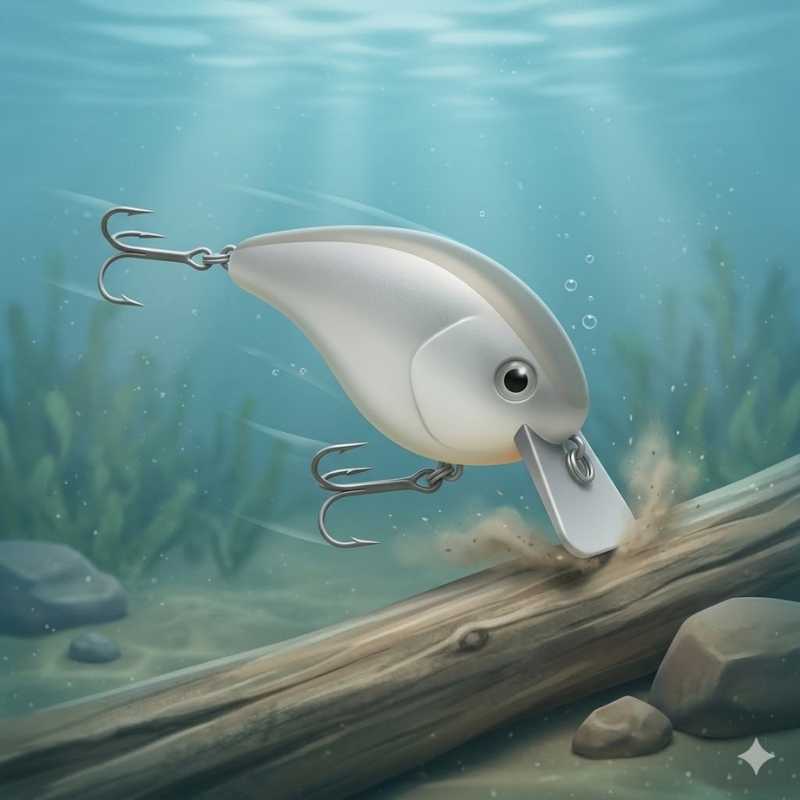
- If you've been fishing deep and see surface activity or shallow arches, come up — squarebill, spinnerbait, topwater, or shallow soft plastic.
- On soft plastics, changing weight is a depth adjustment. Move from 1/8 to 5/16 oz to fish faster and deeper, or the opposite to slow the fall.
Depth is the adjustment that saves midday summer trips more than any other. Framework in midday summer bass fishing and thermocline bass positioning.
Step 3: Downsize
Once speed and depth are dialed and you're still short of hookups, the next hypothesis is that the profile is wrong. Bass that are pressured, post-front, or eating small forage will refuse a bulky bait and eat a smaller version of the same category.
- Trim a 5-inch worm to 4 inches.
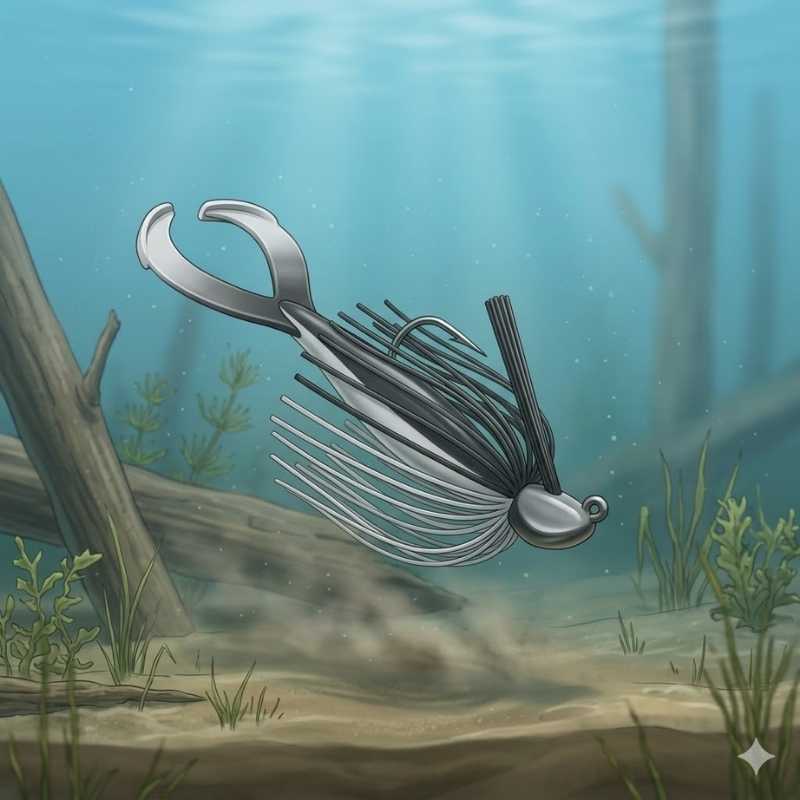
- Move from a 3/8-oz jig to a 5/16 or 1/4.
- Swap a full-size chatterbait for a compact version.
- Shorten a paddle-tail trailer or switch to a straight-tail.
Downsizing is especially productive when you're getting short strikes — fish are committed, but the profile is too big to inhale confidently. Half-eaten trailers, tail-nipped worms, and tick-and-drop bites all point here.
Step 4: Change Color
Color matters, but not the way tackle-shop wisdom suggests. It matters when clarity or forage has shifted, not because bass are "in a green pumpkin mood." Change color in response to a specific observed condition:
- Water cleared in the last hour → go more natural (watermelon, shad-white, ghost, translucent shad).
- Water muddied → go darker and higher contrast (black/blue, junebug, dark chartreuse).
- You spotted a specific forage flare (bluegill, threadfin shad, gizzard shad, crawfish) → match that profile in color. See the bass forage guide.
- Bright sun climbed → go natural and translucent.
- Sky went cloudy → go bolder — chartreuse, white, or louder patterns.
For skirt and blade specifics, see best spinnerbait colors and water clarity and lure selection.
Step 5: Change Category (One Category, Not Five)
If you've cycled speed, depth, size, and color and still have no signals, the category is probably wrong for the current conditions. This is where most anglers start; it should be where you're four adjustments in.
- Moving bait producing nothing → switch to a slow bottom presentation. Chatterbait or spinnerbait to a jig, shaky head, or Texas-rigged worm.
- Bottom presentation producing nothing on active-conditions water → switch to a moving bait. Jig to chatterbait, worm to squarebill.
- Both producing nothing on high-percentage water → drop to true finesse. Drop shot, ned rig, or small jerkbait with long pauses. Cold-front breakdown in best bass lures after a cold front.
Critical: change ONE category and fish it long enough to know. If that fails, go back to your confidence bait for step 6 — do not run a third category. You're not searching for a magic lure. You're testing whether this area is done.
Step 6: Reposition the Boat
Adjustment ends here. If speed, depth, size, color, and category have all failed on your best cast lane in this area, the fish are not here or not eating anything you can throw. Move — but move small first.
- Small move (100–200 yards). Shady side of the next dock. Deeper end of the point you were fishing. Wind-blown side of the same pocket. This solves 70% of "the bite died" problems.
- Medium move (to the next structure type). Off a shallow flat onto a main-lake point. Out of a creek arm to a channel bend. This solves most of the rest.
- Large move (to a different lake section). Reserve for confirmed shutdowns or bad conditions. Read wind and bass positioning before you burn gas — the answer is usually a wind-driven relocation, not a distant one.
The Rule of Confidence Baits
Every step of the ladder should be run on baits you trust. Adjustment fails when anglers grab an unfamiliar lure from the bottom of a tray because it "seems like a change." You cannot troubleshoot with a bait you don't know how to fish — you'll blame the bait for problems that are actually retrieve or presentation errors on your part.
Practical rule: run the whole ladder using two or three confidence categories (yours will vary — for many anglers, a chatterbait, a jig, and a soft plastic cover most conditions). Save the unfamiliar backup baits for after the trip, when you can experiment with nothing on the line.
Scenario Walkthrough: Salvaging a Dying Midday Bite
You launched at 6:30, caught two on a squarebill by 8 a.m. off wind-blown rip-rap, and by 10:30 the wind is gone, the sun is high, and you haven't had a bump in 45 minutes. Instinct says leave. Ladder says run.
Step 1 — Slow it down. You slow the squarebill retrieve to half speed and start pausing on contact with rock. Five minutes, no bites, no follows. Move on.
Step 2 — Depth change. The graph shows arches at 12 feet on the drop-off just off the rip-rap. Your squarebill runs 6. You switch to a football jig fished slowly down the break. Third cast, a bump. Fifth cast, a keeper. The problem was never the lure category — it was that the fish repositioned deeper and your bait was above them.
Ladder complete on step 2. You didn't leave the area — you refined it. That's how a salvaged trip looks in real time. If step 2 had failed, you'd have downsized (a 3/8-oz jig with a smaller trailer), then changed color (from black/blue to green pumpkin as sun climbed), then dropped to a drop shot before finally moving 200 yards to the next main-lake point.
Common Mistakes That Kill the Ladder
The ladder only works if you run it honestly. These are the mistakes that make it fail.
- Skipping steps. Jumping from step 1 to step 5 because you're impatient. Two variables changed at once tells you nothing.
- Rushing each step. Three casts is not a test. Five focused minutes minimum, more on cover you know holds fish.
- Running the ladder in the wrong water. If you've already confirmed the fish left, no adjustment on this stretch of bank will produce. Move first.
- Cycling backwards. After step 3, going back to your original speed and full-size bait to "give it another shot." You already tested that. It failed. Move down the ladder.
- Not noticing a follow or bump. Any signal restarts the clock and tells you which step was the right hypothesis. Miss the signal and you'll leave fish behind.
- Confusing pressure with a shutdown. Six boats fished this stretch before you. The bite didn't die — you just found used water. Move to fresh water before you rerun the ladder.
The Adjustment Ladder in One Card
Keep this in your head, or tape it to your console:
- 1. Speed. Half as fast, twice the pause.
- 2. Depth. Fish where the graph shows arches, not where you started.
- 3. Size. Downsize profile and/or trailer.
- 4. Color. Change in response to clarity, light, or a specific forage sighting.
- 5. Category. One category jump, matched to conditions.
- 6. Reposition. 100–200 yards, then further only if necessary.
Six steps, 20–40 minutes, one variable at a time. That's what adjustment actually looks like.
What This Ladder Actually Trains
The most valuable outcome of running the ladder consistently isn't more fish on any single trip — it's the pattern recognition it builds over time. After a season of honest adjustments, you'll start noticing that step 1 (speed) fixes midday summer bites more often than anything else. That step 2 (depth) rescues clear-water postfront afternoons. That step 4 (color) matters most in the first hour after a wind shift on stained water. You develop a personal library of which adjustment matches which condition — and eventually you make the right adjustment first, not fifth.
That library is what separates casual anglers from consistent ones. It isn't memorization of lures or brand loyalty. It's the accumulated experience of running the ladder honestly, keeping track of which step fixed the bite each time, and building intuition from real data.
The Framework and the Application: Today's Fishing Strategy
The adjustment ladder is what experienced anglers run in their heads on every trip when the bite slows. Speed, depth, size, color, category, location — one variable at a time, in that order. Learn the sequence and you'll stop leaving productive water for spots that aren't better. You'll stop blaming lures for problems that are really about speed. You'll finish areas properly and know when to actually walk away.
The framework teaches you how to adjust. Applying it to your conditions right now is what Today's Fishing Strategy does in under 30 seconds. Plug in water temp, clarity, weather, and the direction the bite has been trending, and the tool returns a starting presentation matched to today's conditions — and the specific finesse fallback if the bite dies on you. Learn the framework here; apply it there.