Understanding Generation Current
A hydroelectric dam generates power by pulling reservoir water through turbines, releasing it downstream. The pull creates current throughout the reservoir — strongest near the dam, weaker the farther upstream you go, and concentrated in the original river channel that the reservoir was built over. Generation schedules track electrical demand: weekday mornings and afternoons see the heaviest pulls, weekends and overnight hours are usually slack.
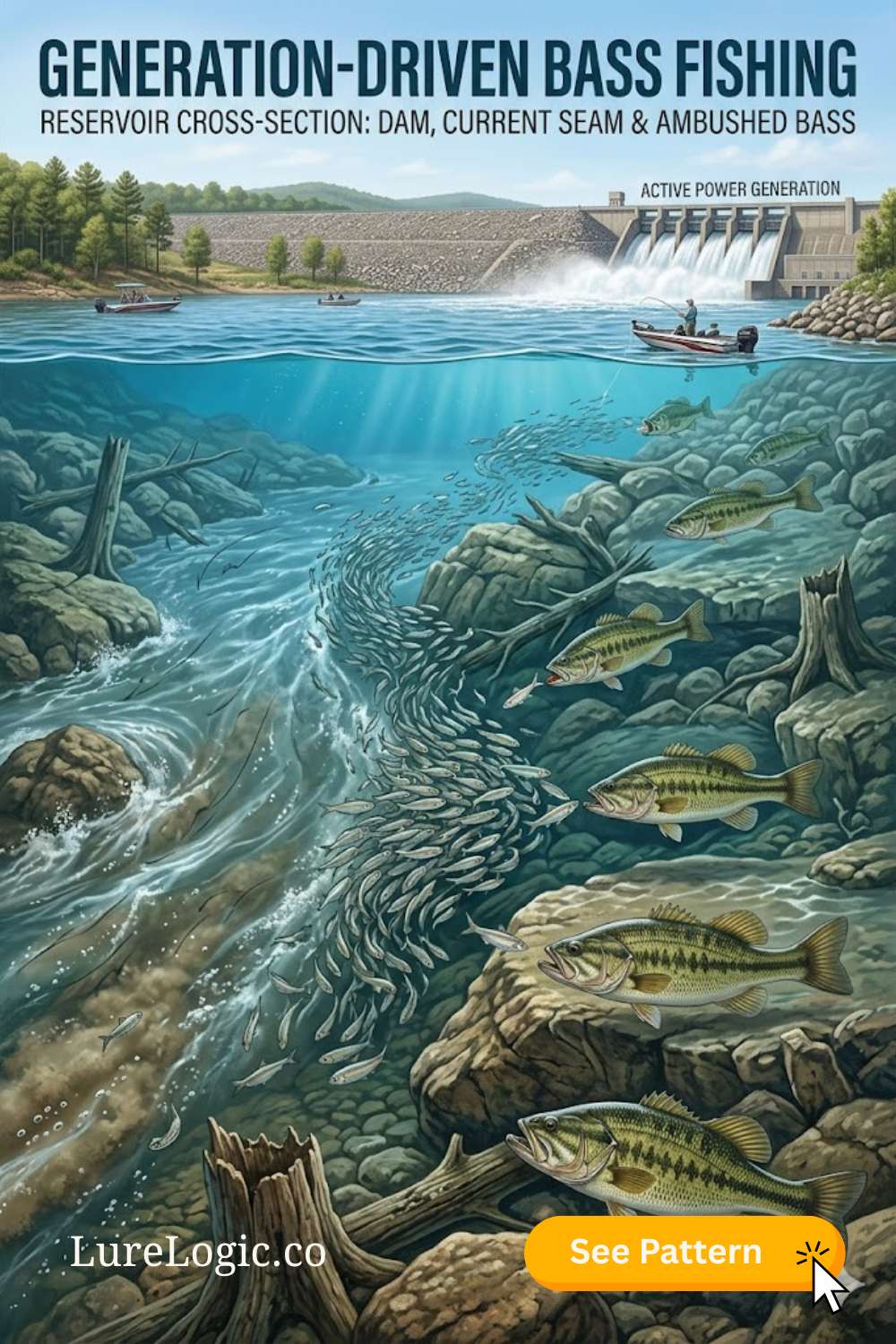
Current oxygenates water, repositions baitfish, and triggers a measurable feeding response in bass. The mechanism is reaction — moving water dislodges plankton, which concentrates baitfish into seams, which puts bass on ambush stations downcurrent of structure. The broader framework lives in our guide to how bass use current seams and moving water.
Current Seams
A current seam is the boundary between moving and slack water — where a point, hump, or channel bend deflects flow and creates a calm pocket directly downcurrent. Bass position in the seam itself: tail in the slack water for energy conservation, head facing the current to ambush bait swept past them. Every structure in current generates a seam, and seams stack baitfish like a conveyor belt.
- Point seams: the downcurrent shoulder of a main-lake point. The single most reliable current-bass spot.
- Bridge piling seams: obvious, easy to find, almost always hold fish during generation.
- Channel bend seams: where the river channel swings; current accelerates around the outside and slackens on the inside bend.
- Eddy lines below points: where current returns upstream on the downcurrent side — bait collects in the eddy and bass cruise the edge.
Positioning by Structure
Different structures behave differently under generation current:
- Main-lake points become high-percentage during any current; fish move from the bank to the downcurrent corner.
- Bridges are reliable all day during generation; bass stack on the downcurrent side of pilings and feed on bait pulled through.
- Docks in current become better — bass move to the downcurrent corner and use the dock as a current break.
- Creek mouths activate when generation pulls water out of the creek arm; bait flushes out and bass ambush at the mouth. See creek channel bass positioning.
- Offshore humps and ledges turn on during heavy generation — fish slide up from the deep channel to feed on the high side. See offshore humps for bass.
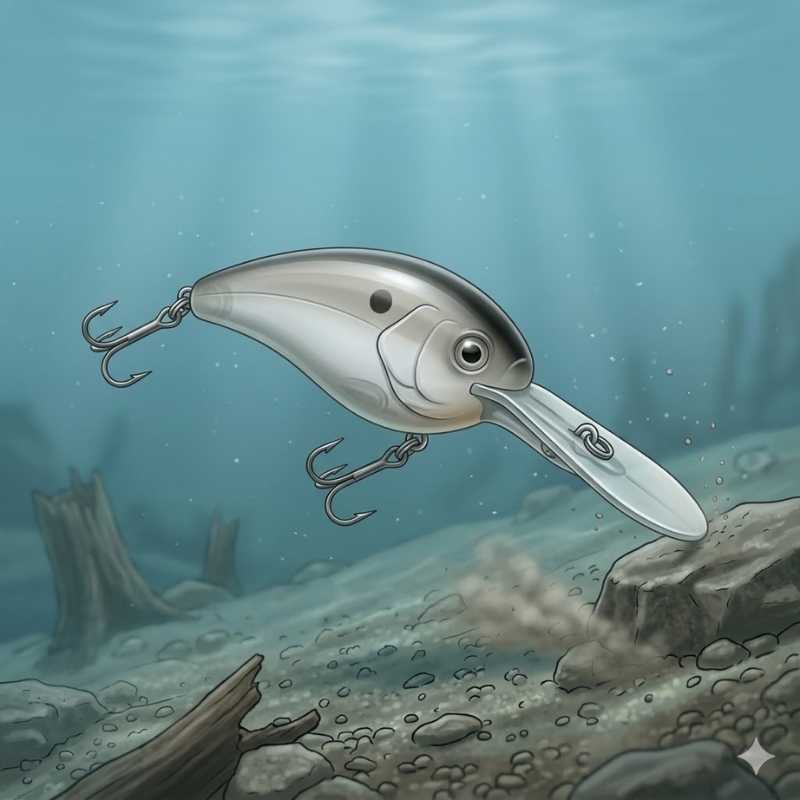
Strike King KVD 1.5
Deflects off cover like nothing else — the go-to shallow crank.
Shallow wood and rock — make it deflect off cover.
As an Amazon Associate I earn from qualifying purchases.
Alternative Options
- Lucky Craft LC 1.5 →Alternative
Forage Movement
Current changes baitfish behavior. Shad and herring drift with the flow rather than fighting it, which concentrates them in seams, eddies, and on the downcurrent side of structure. Threadfin shad in particular orient nose-into-current in tight balls, which makes them easy targets for ambushing bass. On reservoirs with blueback herring, generation triggers herring to school in the upper water column and triggers bass to push them against the surface — a topwater opportunity that disappears the moment current stops.
Crawfish get displaced by current too, especially on rocky main-lake points, and bass that key on crawfish (largemouth and especially smallmouth) feed heavily during the first hour of generation when crawfish are tumbling.
Lure Selection
Current calls for reaction baits with built-in vibration that can be presented with the flow:
- Squarebill crankbaits: cast upcurrent and crank with the flow, deflecting off structure in the seam.
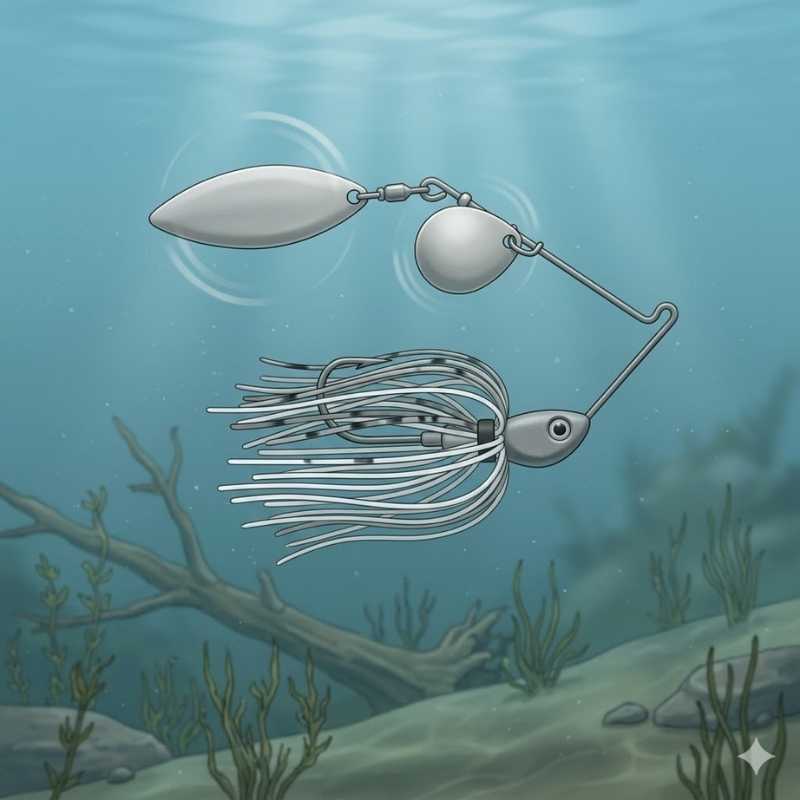
- Spinnerbaits and chatterbaits: the original current-bass tool; slow-roll along the downcurrent side of points and bridge pilings.
- Swim jigs: shad-imitating profiles for finesse current presentations on pressured lakes.
- Topwater walking baits: when current pushes bait to the surface, especially over points and humps.
- Football jigs: for deep current targets like channel ledges where bass hold tight to the bottom and need a meal swept right past them.
War Eagle Spinnerbait
Classic Colorado/willow combo for windy banks and stained water.
Windy banks and stained water — burn it parallel to cover.
As an Amazon Associate I earn from qualifying purchases.
Alternative Options
- Luck E Strike Legends Spinner Bait →Alternative
Dirty Jigs Guppy Football Jig
Premium football head built for rock and gravel.
Offshore rock and gravel — slow drag with long pauses.
As an Amazon Associate I earn from qualifying purchases.
Alternative Options
- Strike King Tour Grade Football →Alternative
Boat Positioning
The biggest mistake anglers make with current is treating it like slack water and casting in random directions. Correct boat position turns marginal spots into producers:
- Anchor or spot-lock upcurrent of the target. Casts go downcurrent or across the seam.
- Let the lure swing. Cast across, retrieve at minimum speed, and let current carry the bait through the strike zone naturally.
- Don't fight the current with the trolling motor. Constantly correcting position spooks fish and burns batteries. Use the current to set drift lines instead.
- Approach quietly. Bass in current are tuned to vibration and disturbance. Idle in, kill the big motor early.
Common Mistakes
- Fishing slack water during heavy generation. Back coves are dead when the main lake is firing — go to the current.
- Wrong retrieve direction. A spinnerbait cranked into the current looks unnatural. Cast with the flow whenever possible.
- Ignoring the schedule. A 6 AM trip on a non-generation day is a slow morning. Check the utility's schedule first.
- Casting at the structure instead of the seam. The strike zone is the slack pocket downcurrent of the structure, not the structure itself.
- Quitting when current stops. The lake fishes differently but it doesn't die. Slow down and finesse the same spots.
- Skipping main-lake points. Points are the highest-percentage current spots on any reservoir.
Related Guides
For more on moving-water bass behavior see current seams in moving water and the complete structure guide.