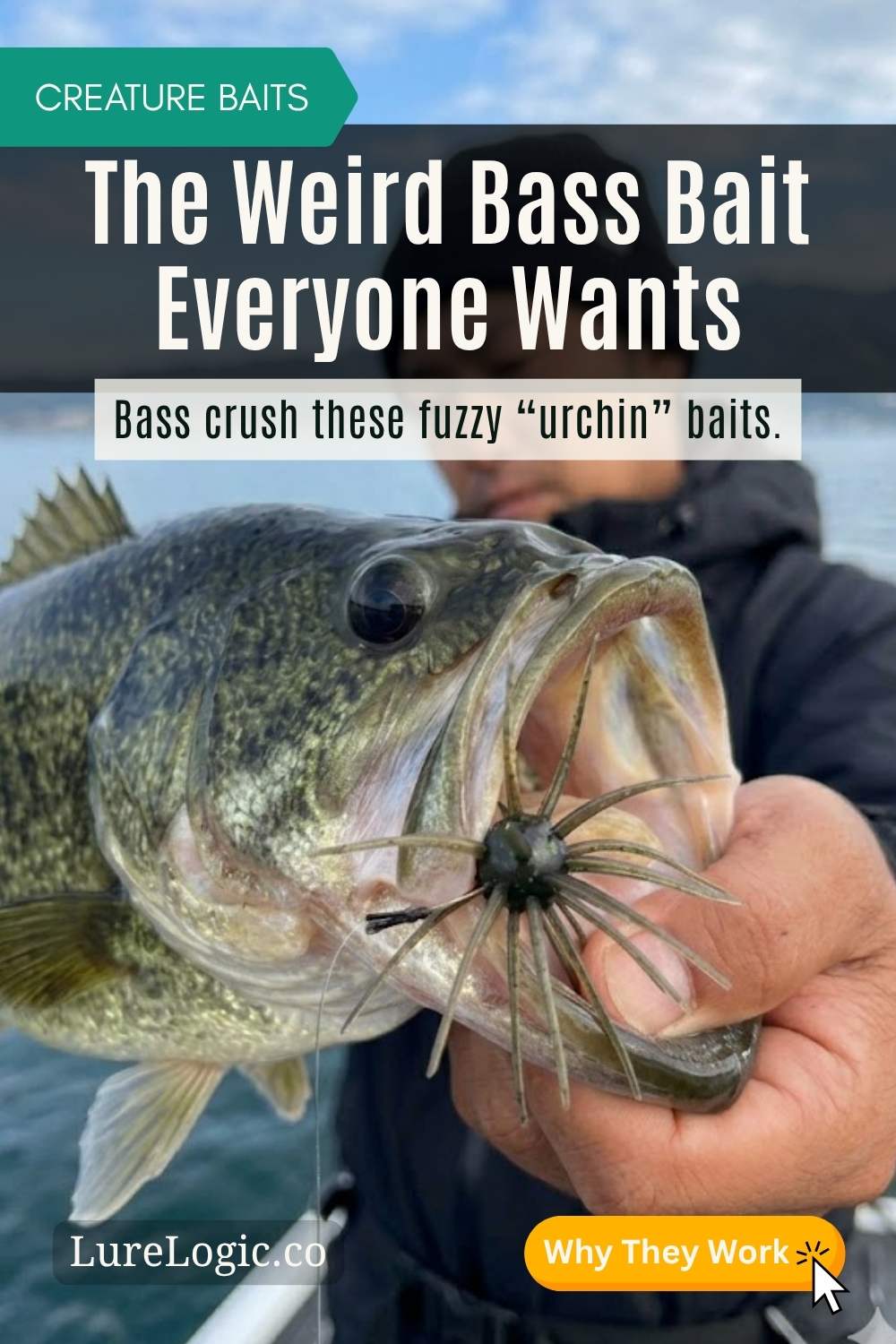
This strange "sea urchin" style bait is exploding in bass fishing right now — here's why it works.
See the full breakdown below ↓What Are Sea Urchin Bass Baits?
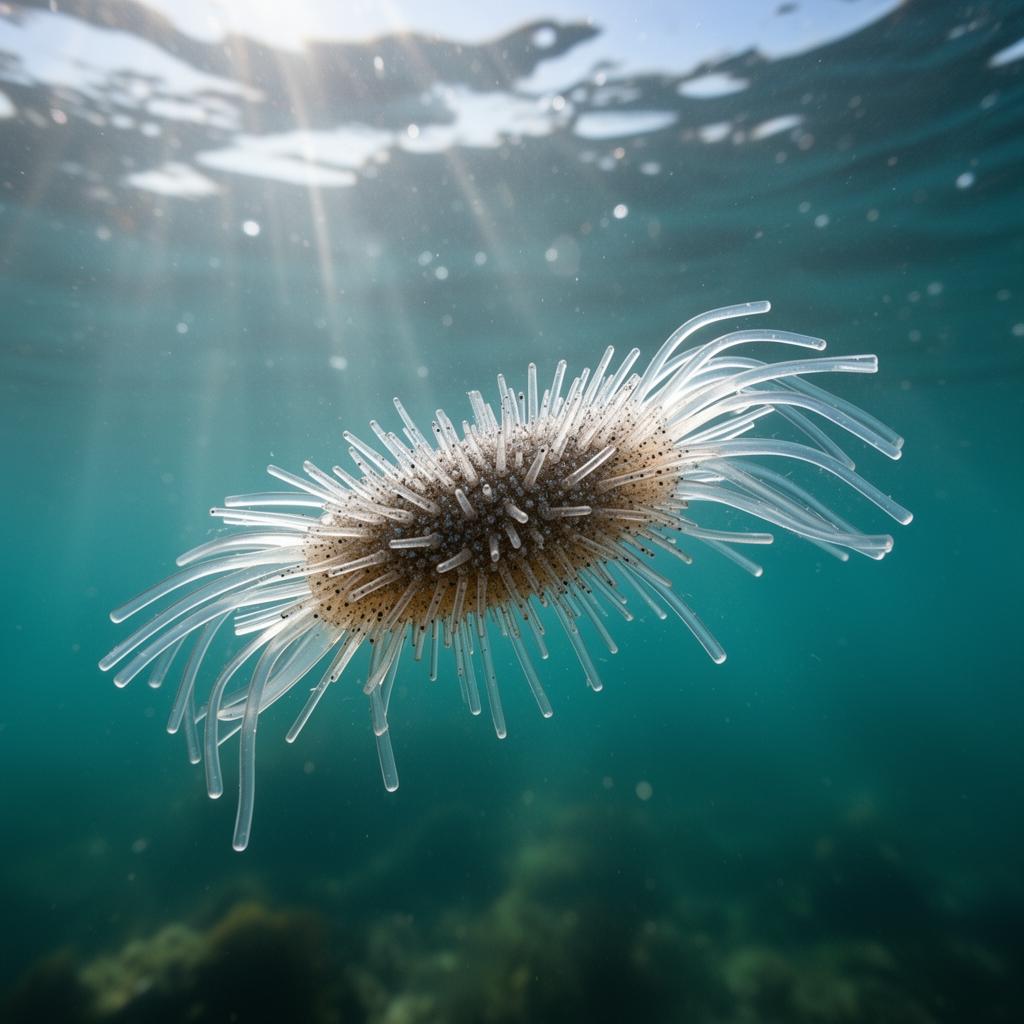
A sea urchin bass bait — most commonly called a Coike or Coike-style bait — is a small soft plastic built around a round or oval body with dozens of fine silicone or rubber strands radiating outward in every direction. From a distance, it looks like a puffball, a tiny sea anemone, or the spiny shell of a real sea urchin. Up close, it looks like nothing else in your tackle box.
The body is usually compact — 17mm to roughly an inch — and the strands are soft enough to breathe with the current, the rod tip, or even the bait's own glide on a slow retrieve. That subtle breathing motion is the whole point.
Common Features
- Round or egg-shaped soft plastic body
- Dozens of thin silicone/rubber strands fanning out 360°
- Puffball, urchin, or anemone profile
- Subtle, almost passive movement on the pause
- Designed for light jigheads, drop shots, and finesse rigs
What Does It Actually Imitate?
Honest answer: nothing perfectly. And that's likely part of why it works. The strands have been compared to a tight ball of bluegill fry, a crawfish hunkered down in defensive posture, a clump of aquatic insects, or a tiny baitfish cloud. Underwater, the bait reads as "something alive" without triggering the "I've seen this exact bait 400 times" response a pressured bass throws at a Senko, a shaky head, or a paddle tail.
Why Bass Actually Bite These Weird Fuzzy Baits
To understand the urchin-bait phenomenon, you have to understand how bass actually decide to eat. Bass are highly visual predators. They aren't matching baits to a perfect mental picture of a bluegill or a shad — they're keying on movement, silhouette, and the subtle cues that tell them something living is in front of them.
A Coike-style bait creates a "living object" silhouette underwater. The strands trigger micro-vibrations a bass picks up on its lateral line. The bait pauses, hovers, and breathes — and that hesitation is often the exact moment a neutral fish decides to commit.
What Makes This Profile Trigger Bites
- Bass are visual predators that key on movement, not perfection
- The strands create a "living object" silhouette underwater
- Micro-vibrations from the strands fire the lateral line at close range
- The hovering pause is a built-in hesitation trigger
- The profile doesn't pattern-match anything bass have learned to refuse
It Works Best When Fish Are…
- Following baits to the boat but not committing
- Conditioned from seeing standard finesse baits (Senko, shaky, Ned, minnow)
- Suspended in clear water with a wide-open view of the bait
- Sitting on cover and refusing reaction presentations
- → Fish follows your minnow halfway up
- → Stops
- → Turns away at the boat
👉 This is the exact bite Coike-style baits are designed to solve.
Why Coike-Style Baits Are So Effective on Pressured Bass
The Coike trend exploded for one reason: it produces fish on water where nothing else does. Specifically, on the kind of water that defines modern bass fishing — clear, heavily-pressured, forward-facing sonar fisheries where every fish has had a worm dragged past it and a minnow swum over its head 50 times this month.
The Pressured-Bass Problem
- Tournament traffic on every major lake every weekend
- Forward-facing sonar making bass behavior visible — and fishable — like never before
- Bass spending more time suspended, harder to commit, easier to "follow but not eat"
- Traditional finesse baits (drop shot minnow, Ned rig) becoming part of the noise
When fish are this educated, the bait that gets the bite usually isn't bigger, faster, or flashier — it's different. The Coike checks that box. It looks alive, it doesn't match any bait fish have refused this week, and it sits in the strike zone long enough for a neutral bass to make a decision.
Bites You'll Get on a Coike That You Won't Get Anywhere Else
- Followers — fish that track baits to the boat but won't commit
- Suspended fish you can see on forward-facing sonar
- Inactive, neutral fish during the middle of a tough day
- Bass holding tight to deep brush, dock posts, or isolated cover
- Post-front, bluebird-sky bass that have shut down on reaction baits
Best Conditions for Fishing Sea Urchin Baits
These baits are finesse tools. They work best in the conditions where finesse always wins — but their unique profile lets you fish them in spots a standard finesse worm would already have been rejected.
Water Clarity
Clear to moderately stained. The strand action is visual — bass need to see the bait. In muddy water, go with a chatterbait or spinnerbait instead.
Water Temperature
Effective from roughly 50°F all the way into the 80s, but most productive in the 55–75°F window when bass suspend heavily and behave the most pressured.
Wind Conditions
Calm to light wind is ideal. Heavy chop kills the subtle action and makes hover-style presentations nearly impossible to feel. When the wind blows, switch to reaction baits.
Seasonal Timing
- Prespawn: staging fish on points and channel swings
- Postspawn: recovering bass suspending around docks and brush
- Summer: deep brush piles, offshore structure, dock shade
- Fall: suspended fish behind bait schools
Depth Ranges
Most productive 5–25 feet, though anglers are catching fish with these baits down to 40+ feet on forward-facing sonar fisheries.
Structure Types That Stand Out
- Brush piles (one of the most common forward-facing sonar targets)
- Dock posts and dock shade lines
- Main lake and secondary points
- Suspended fish over deep water
- Offshore humps and ledges
- Calm, sunny, high-pressure days
Best Ways to Rig Coike and Urchin Baits
The rig matters as much as the bait. Most Coike presentations are built around keeping the bait suspended at eye level with minimal motion. Pick the rig based on depth and how the fish are positioned.
Hover Strolling
The signature Coike technique. Rig the bait on a hover-style jighead (1/16–3/32 oz) and slowly retrieve it while feeding it on forward-facing sonar to fish you can see. The bait glides horizontally at the depth of the suspended fish, strands breathing the whole time. Almost no rod movement — the bait does the work.
Mid Strolling
Same idea but slightly heavier head (1/8–3/16 oz) for slightly deeper fish or breezier conditions. Retrieve is steady and slow, with occasional pauses.
Drop Shot
Tie the bait 12–24 inches above a 1/4 oz weight. Deadly when fish are pinned to bottom on a deep brush pile or rock pile. Shake the rod tip just enough to make the strands quiver.
Jighead Rigging
A standard ball-head or hover-head jighead in 1/16–3/16 oz covers nearly every situation. Match head weight to depth — light for shallow and suspended, heavier for deep or windy.
Nail-Weighted Presentation
Insert a small nail weight into the body for a horizontal sink with no jighead silhouette. Fish it weightless-style around shallow cover or dock posts when fish are spooky.
Recommended Setup
- Rod: 7'1"–7'3" medium-light spinning
- Reel: 2500-size spinning reel
- Mainline: 10 lb braid
- Leader: 6–10 lb fluorocarbon, 8–10 ft long
- Jighead: 1/16–3/16 oz hover-style or finesse ball head
Light fluorocarbon matters. It lets the bait sink and glide naturally, stays invisible in clear water, and gives you direct contact with bites that are often felt as a "weight" rather than a thump. Heavier line kills the bait's subtle action — one of the most common mistakes anglers make on their first Coike outing.
Best Sea Urchin Bass Baits to Buy
Four baits dominate the conversation. Pick the one that matches your situation — forward-facing sonar, bottom contact, budget entry, or ultra-pressured water.
Hideup Coike 17mm
If you fish forward-facing sonar → Coike 17mm
The Japanese original that started the entire urchin-bait craze. Anglers buy it for one reason — it gets bites from suspended, pressured fish that refuse everything else.
- ✓Best for hover strolling to suspended bass on FFS
- ✓Shines in clear water, calm conditions, post-front days
- ✓Premium silicone strands — the most lifelike pulse on the market
As an Amazon Associate I earn from qualifying purchases.
Hideup Coike Shrimp
If you want crawfish-style bites on structure → Coike Shrimp
A bottom-focused Coike variation built for crawfish-style bites around structure and rock.
- ✓Best for bottom-contact finesse fishing
- ✓Great on rocky points, gravel, and brush piles
- ✓Easy "crawl and pause" bait for pressured fish
As an Amazon Associate I earn from qualifying purchases.
Hag's Prickly Pear
If you want a budget entry → Prickly Pear
The most popular U.S.-made Coike alternative. Roughly half the price of the Japanese original and easy to find in any tackle shop.
- ✓Best for anglers trying the urchin technique for the first time
- ✓Works in the same conditions as a Coike — clear, pressured water
- ✓Beginner-friendly and durable across multiple fish
As an Amazon Associate I earn from qualifying purchases.
Yamamoto Uni
If fish are ultra-pressured → Yamamoto Uni
The softest, most subtle urchin profile on the market. Built for fisheries where bass have already seen every other Coike-style bait.
- ✓Best for ultra-pressured highland reservoirs and gin-clear water
- ✓Excels on sunny, high-pressure, post-front days
- ✓Softer plastic rewards a slow, patient retrieve
As an Amazon Associate I earn from qualifying purchases.
Are Sea Urchin Baits Just a Fad?
Honest take from someone who's seen every "next big thing" come through bass fishing: yes, partly. And also no.
Some of the current success is pure novelty. Bass eventually adapt to any bait that gets thrown at them enough times. We've watched this exact cycle play out before:
- The Senko boom — 20+ years later, still works, but no longer magic
- The Ned rig explosion — same story, became part of the standard finesse menu
- The hover strolling minnow craze — dominant on FFS for two seasons, fish are wising up fast
The Coike will likely follow the same arc. In three years, bass on the most-pressured lakes will have seen enough of them that you'll need the next weird thing to fool them. But that doesn't help you in 2026. Right now, these baits are undeniably producing fish on water where traditional techniques are failing. That window is open. Use it.
Final Verdict on Coike and Urchin Style Baits
The sea urchin / Coike-style bait is a real, useful, productive addition to a serious bass angler's box. It is not a replacement for spinnerbaits, jigs, or crankbaits — those baits still win tournaments. It is a finesse problem-solver for the specific situations where traditional finesse already gets refused.
Throw a Coike When:
- You can see fish on forward-facing sonar but they won't commit
- You're fishing pressured tournament water
- It's clear, calm, and post-front
- You've already tried the standard finesse stuff and gotten followers, not bites
Skip It When:
- The water is muddy or heavily stained
- Wind is over 10–12 mph
- Fish are actively chasing — throw a reaction bait instead
- You're fishing thick cover where weedless presentations matter more
For deeper context on the conditions where these baits shine, read our guides on clear-water bass fishing, high-pressure bass fishing, and post-cold-front lure selection. For the broader cold-water finesse toolkit, see our jerkbait guide and deep-water lure selections.