Understanding the Lake Wylie prespawn
Lake Wylie's prespawn isn't a single event — it's a series of waves. Smaller bass move up first when water hits the mid-40s. The larger females follow as the lake stabilizes in the low-50s. By the time water consistently reads 55°F, the biggest fish are staging on the last hard cover before the spawning flats.
The mistake most anglers make is staying too deep too long. Once you find 50°F water in the back two-thirds of a major creek arm, the bass are already on the move. Get shallower than you think.
The second mistake is treating Wylie as one lake. Temperature, color, and the stage of the migration can all be different in the river arm, the mid-lake creeks, and the lower lake on the same morning. The anglers who consistently produce during prespawn pick a section first, then a creek, then a stretch of bank — in that order.
Prespawn timing by section of the lake
Upper Catawba River arm
Stained year-round and shallow, the river arm warms earliest and is usually the first place to show a real prespawn wave. The trade-off is that it also dirties first and hardest with rain. In a dry late February it can be the best water on the lake; after a Catawba rain event it is often the first place to leave.
Mid-lake creek arms (Crowders, Big Allison, McDowell)
The heart of the Wylie prespawn. Long creek arms, secondary points, riprap at the bridges and causeways, and floating docks with brush give staging fish everything they need between the channel and the spawning pockets. North-facing arms with the afternoon sun on their back banks warm first; the same arm can be a week ahead of a shaded one across the lake.
Lower lake and Tega Cay
Cleaner water and deeper main-lake structure mean the lower lake lags the rest of the lake by a week or more. When the mid-lake creeks are already loaded with staging fish, lower-lake bass are often still on main-lake points and bridge pilings around Buster Boyd. The upside is that when the lower lake does turn on, the clearer water suits a jerkbait, and the fish there are less affected by a river-arm mud line.
Where prespawn bass stage on Lake Wylie
- Secondary points in the major creek arms — especially points with stumps or rock that step down to the channel. These are the primary waypoints between the winter channel and the spawning pockets.
- Riprap banks near bridges and causeways. Rock holds heat and concentrates bait, and riprap is usually the first bank to load up in each creek.
- Channel swings with hard bottom and the first significant brush or laydown. Where the creek channel touches the bank on the way into a pocket, staging fish pull up on the swing.
- Floating docks sitting over deeper water just outside spawning pockets — bass use the shade and the brush underneath as a staging waypoint before they commit shallow.
- The first flat inside a pocket mouth once water tops 55°F — by then the biggest females are on the last hard cover before the beds.
Think of the movement as a route rather than a set of spots: channel → secondary point → riprap or channel swing → dock line → pocket. On a given day, one segment of that route is loaded. Fish the route from deep to shallow to find it. For the general structural logic behind this, see the pre-spawn lure guide.
Water clarity, Catawba rain, and the mud line
Wylie is a river-influenced reservoir, and clarity is the variable that most often decides where the prespawn is fishable. Normal conditions run stained in the river arm and mid-lake creeks with a couple of feet of visibility down-lake. A significant rain on the Catawba changes that quickly: the upper arm goes muddy first, then a mud line works down through the mid-lake creek arms over a day or two.
- Stained, stable, 50°F-plus — ideal. Vibration and contrast baits, fish the staging route aggressively.
- Fresh muddy inflow, cold — the worst prespawn water on the lake. Cold, dirty runoff drops the temperature and shuts the wave down in that arm. Move down-lake ahead of the mud line rather than grinding it.
- Muddy but warm (a warm spring rain) — fishable. Bass pull tight to the bank and to cover. Go to black-and-blue, red, or chartreuse-white with a rattle and slow down. The muddy-water lure guide covers the full adjustment.
- Clearing after a rain — often the best day of the week. The first day the color returns to stained in a creek arm, the staging fish that pulled off feed hard.
Forage in the Lake Wylie prespawn
Prespawn on Wylie is a shad-and-crawfish bite, not a herring bite. The blueback herring pattern that drives the lower lake in summer matters much less in late February and March, when bass are up in the creeks feeding around rock, stumps, and docks. That's why shad-pattern chatterbaits and lipless baits carry the mid-lake, and why red and craw-pattern squarebills earn their place on riprap as rock warms and crawfish become active.
The herring consideration comes later and further down the lake. As the lower lake clears and warms toward April, a suspending jerkbait and translucent shad or pearl colors on main-lake points and bridge pilings start to outproduce the stained-water rotation. If you see bait flickering on the surface off a lower-lake point in late March, that's the cue.
The Lake Wylie prespawn rotation
Z-Man JackHammer ChatterBait
The benchmark bladed jig — premium hardware and perfect vibration.
Stained water, wind, scattered grass — moderate-paced reaction bait.
As an Amazon Associate I earn from qualifying purchases.
Alternative Options
- Strike King Thunder Cricket →Alternative
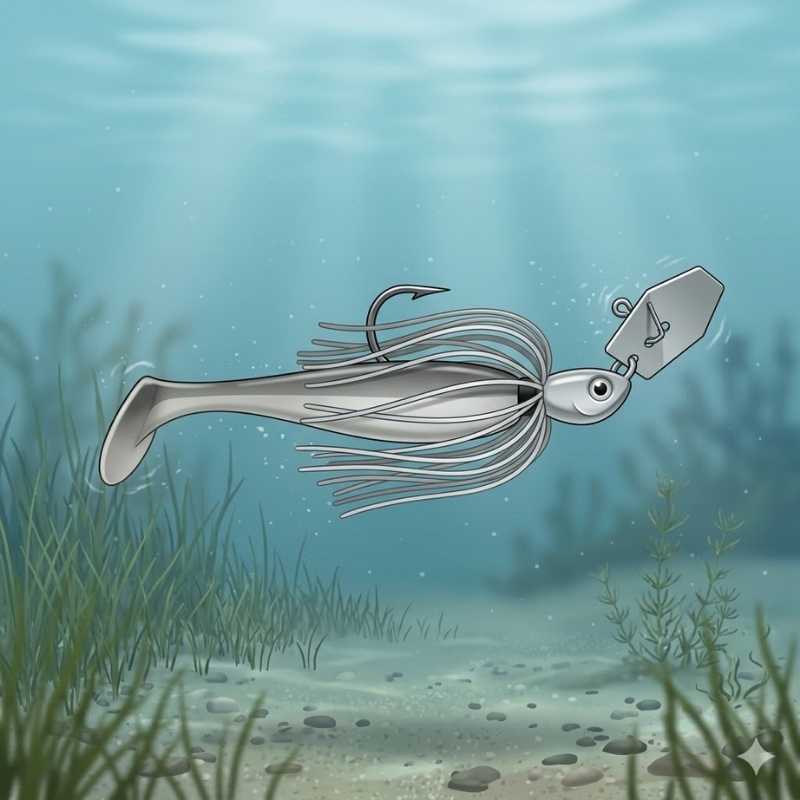
The chatterbait is the workhorse of the Wylie prespawn. A 3/8-oz bladed jig in sexy shad or chartreuse-white with a paddle-tail trailer covers water and gets bit in stain. Slow-roll it on cooler days; speed it up after a warming trend. In the mid-lake creeks, run it down the riprap and along the shaded side of floating docks; in the river arm, add chartreuse and slow down.
Strike King Red Eye Shad
Excellent flutter on the fall over grass and flats.
Grass flats and creek arms — yo-yo it through the tops.
As an Amazon Associate I earn from qualifying purchases.
Alternative Options
- Bill Lewis Rat-L-Trap →Alternative
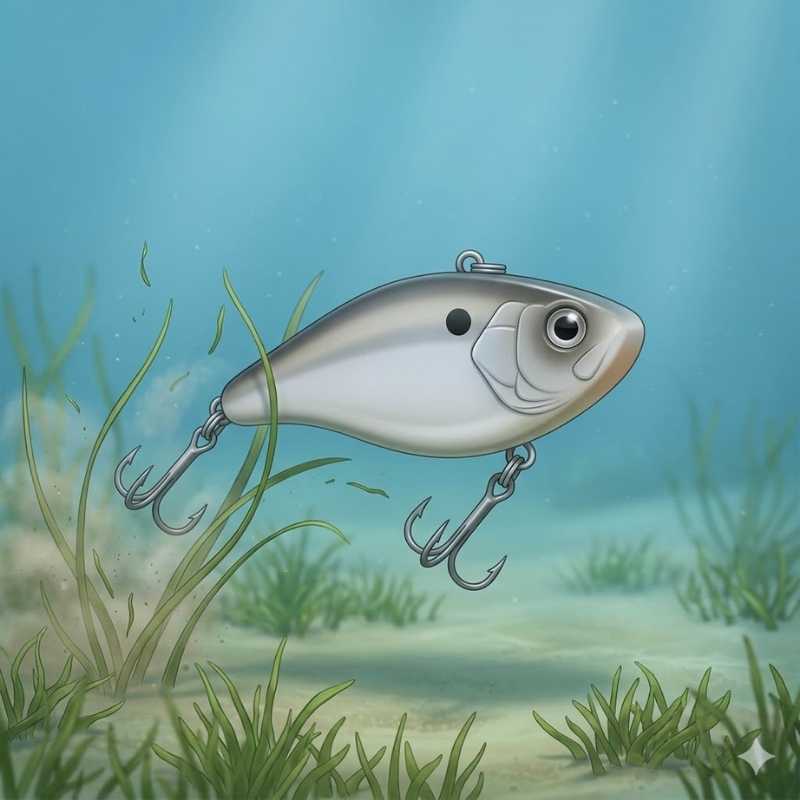
A 1/2-oz lipless crankbait in red or chrome is deadly across grass flats and secondary points. Yo-yo it and let the bait flutter on slack line — most of the bites come on the fall. It's also the best bait for covering a long secondary point quickly to find which part of the staging route is loaded.
Strike King KVD 1.5
Deflects off cover like nothing else — the go-to shallow crank.
Shallow wood and rock — make it deflect off cover.
As an Amazon Associate I earn from qualifying purchases.
Alternative Options
- Lucky Craft LC 1.5 →Alternative
A red or craw-pattern 1.5-size squarebill thrown into riprap and stump-lined banks triggers reaction strikes from staging fish. Deflect it off cover — that's where the bite happens. Bridge and causeway riprap in the mid-lake creek arms is the primary target.
Megabass Vision 110
Industry-standard suspending jerkbait for cold-water bass.
Cold, clear water — long pauses near rock and points.
As an Amazon Associate I earn from qualifying purchases.
Alternative Options
- Rapala Shadow Rap →Alternative
The lower-lake and post-front option. In the cleaner water around the bridges and Tega Cay, or on any section of the lake the morning after a March cold front, a suspending jerkbait with long pauses catches the staging fish that won't chase a chatterbait. Natural shad and pearl colors down-lake; a little chartreuse if the water is stained.
Reading the weather and temperature
Lake Wylie prespawn fishing tracks weather windows tightly. Two consecutive sunny afternoons after a cold snap will pull more bass shallow than one warmer day in isolation. After a major front, fish slide back to the deeper end of the staging area and require a slower presentation — see the post-cold-front guide.
Wind matters as much as sun. A south or southwest breeze warms the back of north-facing creek arms first — those are the highest-percentage areas during the early prespawn waves. That same wind pushing onto a secondary point or riprap bank stacks bait against it and turns a good staging area into a great one.
Take your temperature reading where the fish are, not at the ramp. The back third of a mid-lake creek can be several degrees warmer than the channel it feeds on a sunny afternoon, and the lower lake can be several degrees behind both. The 55° water guide covers what changes once a section crosses that threshold.
Presentation adjustments by condition
- Warming trend, stained water: speed up. Steady-retrieve the chatterbait, burn-and-kill the lipless, and cover the whole staging route.
- Post-front, bluebird sky: slow down and go tighter to cover. Slow-roll the chatterbait so the blade barely thumps, or switch to the jerkbait with ten-second pauses on the deeper end of the point.
- Muddy inflow: go to the bank. Squarebill and black-and-blue chatterbait tight to riprap and laydowns, short casts, slow cadence.
- Lower lake, clearer water: lighten up. Jerkbait, natural colors, longer casts, and fish the wind-blown side of main-lake points and bridge riprap.
What most anglers get wrong in the Wylie prespawn
- Fishing the channel mouth instead of moving into the creek. Once temps hit 50°F, bass are usually already past the mouth.
- Throwing finesse first. Reaction baits sort active fish faster — finesse is for the cleanup pass after a front.
- Ignoring riprap. Bridges, causeways, and riprap banks warm earliest and hold fish before anything else does.
- Retrieving the chatterbait too quickly in cold water. Most anglers fish it too fast — slow the cadence enough that the blade barely starts to vibrate.
- Grinding the river arm after a rain. When the upper lake goes chocolate and cold, the mid-lake creeks and the lower lake are usually still fishing.
- Fishing the lower lake on the mid-lake's schedule. The clearer water lags — if the lower-lake points are dead in early March, the fish haven't arrived yet, not left.
A Lake Wylie prespawn decision plan
- Check the river. If the Catawba has had significant rain in the past few days, expect the upper arm to be muddy and the mud line to be moving down. Start mid-lake or lower.
- Pick the section. Dry and warming: start in a north-facing mid-lake creek arm. Cold and post-front: start on the deeper secondary points and channel swings of the same arms. Late March with clearing water: give the lower lake a look.
- Idle the back third of two or three creek arms and read temperature and color. Commit to the arm that is warmest and cleanest at the same time.
- Fish the route deep to shallow — secondary point, riprap, channel swing, dock line, pocket — with the chatterbait on windward banks and the lipless across the flats.
- When you get bit, stop and pattern it. Note the depth, the cover, and the section. Then run the same segment of the route in the next creek arm.
Putting it together
Idle into the back third of a major Wylie creek arm. Find 50°F-plus, stained-not-muddy water. Start with a chatterbait on the windward secondary points and riprap. When the bite slows, swap to a lipless across the flat. Save the squarebill for the laydowns and stumps, and keep a jerkbait tied for the morning after a front or a run down to the bridges. Cover water until you find the staging wave — then slow down and work the area thoroughly.
For more on the prespawn pattern broadly, see the prespawn lure guide. For the full Wylie picture, see the Lake Wylie bass fishing guide and the best Lake Wylie bass lures.